Are you looking to dive deeper into Seoul’s cultural pulse, beyond the dazzling K-Pop and ancient palaces? Then set your sights on Daehangno, affectionately known as University Street, the undisputed heart of live theatre and indie performance in the South Korean capital. Tucked away in the Hyehwa district, this dynamic neighborhood vibrates with artistic energy, boasting an unparalleled concentration of small theatres, experimental stages, and impromptu street performances. From captivating musicals and thought-provoking plays to stand-up comedy and immersive art installations, Daehangno offers a truly unique cultural experience for locals and visitors alike. If you’re eager to witness the raw talent and creative spirit of Seoul’s performing artists, understand the nuances of Korean contemporary culture, or simply enjoy a lively evening out, Daehangno promises an unforgettable journey into the city’s artistic soul. Prepare to be enchanted by a scene that is both deeply traditional and refreshingly avant-garde.
Top Attractions
Daehangno’s charm lies in its abundant performance spaces and the spontaneous artistry that spills onto its streets. Here are the must-see attractions for any culture enthusiast.
Marronnier Park: The Heartbeat of Daehangno

Marronnier Park, the centerpiece of Daehangno, surrounded by lush trees and vibrant gathering spaces.
Marronnier Park is more than just a green space; it’s the unofficial central stage of Daehangno. Named after the marronnier chestnut trees that line its grounds, this park is a beloved gathering spot where students, artists, and visitors converge. On any given evening or weekend, you’ll find an array of buskers – from aspiring musicians and dancers to magicians and mime artists – showcasing their talents. The park also hosts various cultural events and festivals throughout the year, making it a lively place to soak in the local atmosphere and catch an impromptu show before heading to a theatre. Look out for the iconic statue of a performing arts group, a testament to the area’s identity.
Daehangno Small Theatres: Indie Performance Galore
The true magic of Daehangno lies in its staggering number of small, independent theatres, often tucked away in basements or upper floors of unassuming buildings. There are literally hundreds of these venues, each with its own distinct character, specializing in a wide range of genres including contemporary plays, experimental theatre, children’s shows, and improv comedy. While many performances are in Korean, some companies offer non-verbal shows or occasional English subtitles. A walk down the main streets and alleys will reveal countless posters and marquees, inviting you to discover the next big thing or a hidden gem. Notable venues include Hakjeon Green Theatre, known for nurturing major talents and popular musicals like “Subway Line 1,” and the Arko Arts Theatre, a more formal venue presenting diverse, often avant-garde productions.
Arko Art Center: Modern Arts & Exhibitions
ⓒ한국관광 콘텐츠랩
Adjacent to Marronnier Park, the Arko Art Center is a prominent cultural complex dedicated to promoting contemporary Korean art. While its primary focus is on visual arts exhibitions, it also hosts various interdisciplinary performances, lectures, and workshops. The building itself is an architectural landmark, and its presence underscores Daehangno’s status as a comprehensive artistic hub. Visiting the Art Center offers a chance to explore a different facet of Korean creativity and often complements the performing arts experience nearby. Check their schedule for current exhibitions and special events.
https://www.arko.or.kr/artcenter
Naksan Park Mural Village: A Scenic Artistic Detour
ⓒ한국관광 콘텐츠랩-한건우
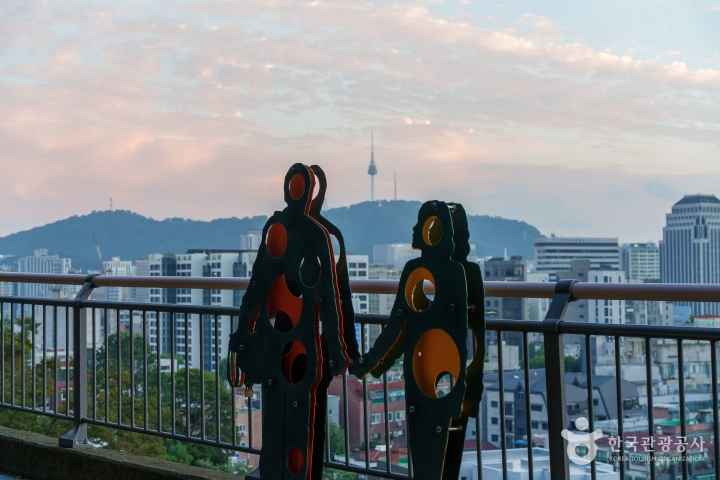
Just a short, uphill walk from the bustling streets of Daehangno lies Naksan Park, home to a charming mural village. This colorful neighborhood, adorned with vibrant street art and intricate wall paintings, offers a delightful change of pace. It’s an excellent spot for a leisurely stroll, offering panoramic views of Seoul, especially beautiful at sunset. Many murals depict whimsical scenes, characters, and cultural motifs, making it a popular spot for photography enthusiasts. Combining a visit to Daehangno’s theatres with an exploration of Naksan Park’s artistic alleys makes for a wonderfully well-rounded cultural day out.
Street Performers & Busking Culture
Beyond the formal theatre spaces, Daehangno’s streets themselves are a vibrant stage. The busking culture here is incredibly strong, especially in Marronnier Park and around Hyehwa Station Exit 2. You’ll encounter everything from passionate singers and instrumentalists to dynamic dance troupes, magicians, and even aspiring comedians. These free, spontaneous performances add an electric energy to the area and often serve as an introduction to emerging talents. Taking the time to watch these street artists is an essential part of the Daehangno experience and a testament to Seoul’s live performance scene.
Food & Local Cuisine
Daehangno, being a university street, is brimming with diverse and often affordable dining options, perfect for a pre-show meal or a post-performance discussion over drinks.
Trendy Cafes & Dessert Shops
Daehangno is a paradise for coffee lovers and dessert enthusiasts. The area is saturated with uniquely themed cafes, from cozy, rustic spots perfect for reading to quirky, artistic spaces ideal for people-watching. Many offer not only excellent coffee but also a wide array of pastries, cakes, and unique Korean desserts like bingsu (shaved ice). These cafes serve as popular meeting points for theatre-goers and a relaxing environment to discuss the performances you’ve just seen. Explore the side streets to find hidden gems with charming aesthetics.
Casual Korean Eateries & Street Food
Embrace the local flavors with Daehangno’s abundance of casual Korean restaurants. You’ll find everything from classic comfort foods like *kimchi jjigae* (kimchi stew) and *bibimbap* to sizzling *tteokbokki* (spicy rice cakes) and savory *pajeon* (green onion pancakes). Look for restaurants specializing in *jjimdak* (braised chicken) or *budae jjigae* (army stew), which are popular group dining options. Don’t shy away from the street food vendors, especially around Hyehwa Station, offering quick and delicious bites like *hotteok* (sweet pancakes) and *gyeranppang* (egg bread).
Korean BBQ & Chicken
No trip to Seoul is complete without experiencing Korean BBQ, and Daehangno has plenty of fantastic options. Gather your friends and grill marinated pork belly (*samgyeopsal*) or beef (*galbi*) right at your table. For something different, explore the numerous chicken restaurants offering fried chicken (*chimaek* – fried chicken and beer combo) or spicy *dakgalbi* (stir-fried spicy chicken). These are perfect for a lively dinner after an evening performance.
International & Fusion Dining
Given its youthful and diverse crowd, Daehangno also offers a good selection of international cuisine, from Italian pasta and pizzas to Japanese ramen and sushi. You’ll also find various fusion restaurants that blend Korean flavors with Western or other Asian culinary styles, providing creative and interesting dining experiences for those looking to try something different.
Getting There & Getting Around
Daehangno is one of Seoul’s most accessible neighborhoods, primarily thanks to its excellent public transportation links.
Seoul Subway
The easiest and most recommended way to reach Daehangno is by the Seoul Subway.
* Hyehwa Station (혜화역) on Line 4 is your primary destination. Most of the action, including Marronnier Park and the countless theatres, is directly accessible from its exits.
* Exit 2: Leads directly into the heart of Daehangno, towards Marronnier Park and many main theatres. This is often considered the main exit.
* Exit 3 & 4: Also bring you into the vibrant street areas, surrounded by restaurants and cafes.
* The subway system is efficient, clean, and has English signage, making navigation straightforward even for first-time visitors. A single journey typically costs around 1,250 – 1,400 KRW, depending on distance. Consider purchasing a T-Money card for convenience.
Buses
Numerous Seoul city buses also serve the Daehangno area, with stops around Hyehwa Station. This can be a good option if you’re coming from a part of the city not directly connected by Line 4. Bus routes are well-mapped on apps like Naver Maps or KakaoMap, which offer real-time tracking and English interfaces.
Walking
Once you arrive at Hyehwa Station, Daehangno is best explored on foot. The main streets are pedestrian-friendly, and many of the smaller theatres, cafes, and shops are tucked away in charming alleys perfect for strolling. The walk from Hyehwa Station up to Naksan Park Mural Village is also entirely manageable on foot, though it involves an uphill climb.
Taxis
Taxis are readily available throughout Seoul and can be convenient, especially late at night after performances. However, during peak traffic hours, the subway or bus can be faster. Standard taxis (orange or white) are metered and relatively affordable compared to Western cities. Deluxe taxis (black) offer a higher level of comfort at a higher fare.
Travel Tips & Practical Info
To make the most of your Daehangno experience, keep these practical tips in mind.
Booking Performance Tickets
Many larger productions and popular musicals in Daehangno can be booked online in advance. Websites like Interpark Ticket and Yes24 Ticket are primary platforms, but they are mostly in Korean. Some international ticketing sites or tour operators might offer tickets for major shows. For smaller, independent plays, you might be able to purchase tickets directly at the theatre box office on the day of the show, but popular ones can sell out. It’s always advisable to check a theatre’s website (often using Google Translate) or an expat community forum for advice on English-friendly booking or shows. Look for non-verbal performances if language is a significant barrier.
Best Time to Visit
Daehangno is vibrant year-round, but evenings and weekends are when it truly comes alive with performances and street activities.
* Evenings: Most plays and musicals start in the evening (typically 7:00 PM or 8:00 PM). Arrive an hour or two earlier to grab dinner or explore the park.
* Weekends: The area is buzzing with energy, street performers, and a lively atmosphere.
* Spring (April-May) & Fall (September-October): Offer the most pleasant weather for strolling and outdoor performances.
Language Considerations
While Daehangno is a popular tourist spot, most performances are in Korean.
* Non-Verbal Shows: Seek out performances designed to be understood without dialogue, such as mime, dance, or physical theatre.
* Subtitles: Occasionally, larger productions may offer English subtitles or a summary in English. Check with the theatre in advance.
* Street Performances: These are generally easy to enjoy regardless of language proficiency.
Cultural Etiquette for Theatre
* Punctuality: Arrive at the theatre well before the show starts. Latecomers may not be seated until an intermission, or not at all.
* Silence: Maintain silence during performances. Avoid talking, rustling bags, or using your phone.
* Photography/Recording: Photography, videography, and audio recording are strictly prohibited inside theatres.
* Applause: Applaud at the end of the performance, especially during the curtain call.
Budgeting for Performances
Ticket prices for performances in Daehangno vary widely.
* Indie/Small Theatres: Can range from 15,000 KRW to 30,000 KRW (approx. $12-$25 USD).
* Musicals/Larger Productions: Can range from 40,000 KRW to 80,000 KRW+ (approx. $35-$70+ USD) depending on the show and seating.
* Student Discounts: Some theatres offer discounts for students with valid ID.
* Street Performances: Free to watch, but a small donation to the performers is always appreciated.
Safety
Daehangno is generally very safe, even late at night. However, like any crowded area, be mindful of your belongings. Public transportation is safe and reliable for returning to your accommodation.
Where to Stay
While Daehangno itself doesn’t host many large hotels, there are charming boutique options and convenient accommodations in nearby districts that offer easy access to the performance scene.
Within Daehangno / Hyehwa Area
For ultimate convenience to the theatres and vibrant street life, consider staying directly in the Hyehwa district.
* Boutique Hotels & Guesthouses: You’ll find a selection of smaller, independently run hotels and cozy guesthouses. These often offer a more personal touch and immerse you fully in the local atmosphere. They are ideal for travellers who prioritize proximity to the artistic hub.
* Budget Accommodation: Hostels and budget guesthouses cater to younger travellers and those on a tighter budget, offering dormitory beds or private rooms.
Nearby Districts with Excellent Connections
Many visitors choose to stay in well-connected neighboring districts that offer a wider range of accommodation options while still being a short subway ride away from Daehangno.
Dongdaemun Area
* Mid-Range to Luxury Hotels: Dongdaemun is known for its shopping and vibrant night market, and it boasts numerous hotels ranging from comfortable mid-range options to luxury establishments.
* Excellent Connectivity: It’s only a few subway stops away from Hyehwa Station (Line 4), making it an incredibly convenient base for exploring Daehangno and other parts of Seoul.
Jongno & Myeongdong Areas
* Tourist Hubs: Jongno and Myeongdong are central tourist districts, offering a vast array of accommodation choices, from international chain hotels to traditional guesthouses.
* Cultural Proximity: These areas are also well-connected by subway (Line 4 and other lines) and bus, providing easy access to Daehangno as well as other major attractions like Gyeongbokgung Palace, Bukchon Hanok Village, and Insadong. They are ideal for those who want to combine a theatre-focused trip with broader Seoul sightseeing.
In Conclusion
Daehangno is far more than just a street; it’s the living, breathing soul of Seoul’s performing arts scene, offering an unparalleled glimpse into the city’s creative spirit. From the spontaneous energy of Marronnier Park’s buskers to the intimate dramas unfolding in countless small theatres, this district promises a rich tapestry of cultural experiences. By embracing its unique blend of traditional and avant-garde performances, savoring its diverse culinary delights, and navigating its vibrant streets, you’ll discover a side of Seoul that resonates with passion and artistic innovation. So, step away from the mainstream, immerse yourself in the dynamic world of Daehangno’s live theatre and indie performances, and let the captivating stories and talented artists leave an indelible mark on your Seoul adventure.
Discover more from Korea Visiting
Subscribe to get the latest posts sent to your email.