Can foreigners legally book Airbnb in Korea? As a guest, generally yes. You aren’t the one breaking any law, and Airbnb accepts foreign passports and international cards with no Korean phone number. The blocker is on the host side. Only listings registered as a Foreign Tourist Urban Homestay are lawful, and enforcement since late 2025 has pushed many officetel and studio listings off the platform.
So the real risk in 2026 isn’t being refused at checkout. It’s paying for a listing that gets shut down before you arrive. Below I explain why that happens, the exact checks I run before paying, the mistakes that cost travelers their bookings, and legal backups if your listing disappears.
Key Takeaways
- Booking as a foreign guest is generally legal. The license belongs to the host, not you.
- A lawful listing is a residential building run by a registered host who lives on the property.
- In Seoul, skip officetels, studios and one-room units unless the host gives you a registration number.
- Never pay off-platform, and never agree to “say you’re just friends.”
- Wehome, registered guesthouses and serviced residences are safer backups.
Can Foreigners Legally Book Airbnb in Korea? Why It Depends on the Host
Booking is legal for you as a guest. Whether the stay is legal depends entirely on whether the host holds a valid license, and that is where foreigners get caught out.
Why doesn’t Airbnb’s sign-up block foreigners?
It doesn’t, because Airbnb’s own checks are built for international travelers. You verify identity with a government-issued ID such as a passport, national ID card or driver’s license, and sometimes a selfie. Airbnb generally accepts Visa, Mastercard, American Express and JCB. That is the opposite of Korean ticketing sites, where phone-based identity verification tied to a Korean number stops foreigners at account creation. On Airbnb, you will get through the door easily, which is exactly why people assume every listing behind it is legal.
What makes a listing legal?
Legal listings must be registered as a “Foreign Tourist Urban Homestay Business” under the Tourism Promotion Act. The requirements are:
- The property is a residential building: a detached house, villa, apartment or traditional Hanok.
- The host lives in the property during your stay.
- The property has passed a fire safety inspection.
- In apartment complexes, the resident association may need to approve.
The license name matters too. It is written for foreign tourists, so you are the intended guest, not a gray-area guest.
What changed in 2025 and 2026?
Reporting on the rule change says that from October 2025 most studio apartments and officetels are no longer permitted on Airbnb in Korea. Legally they are commercial buildings, not residential ones, so they cannot hold the homestay license. Listing counts were expected to fall by 40 to 60 percent by 1 January 2026 as license verification became mandatory. Enforcement details keep shifting, so treat this as “as of 2026” and check the listing itself rather than trusting old blog posts, including this one.
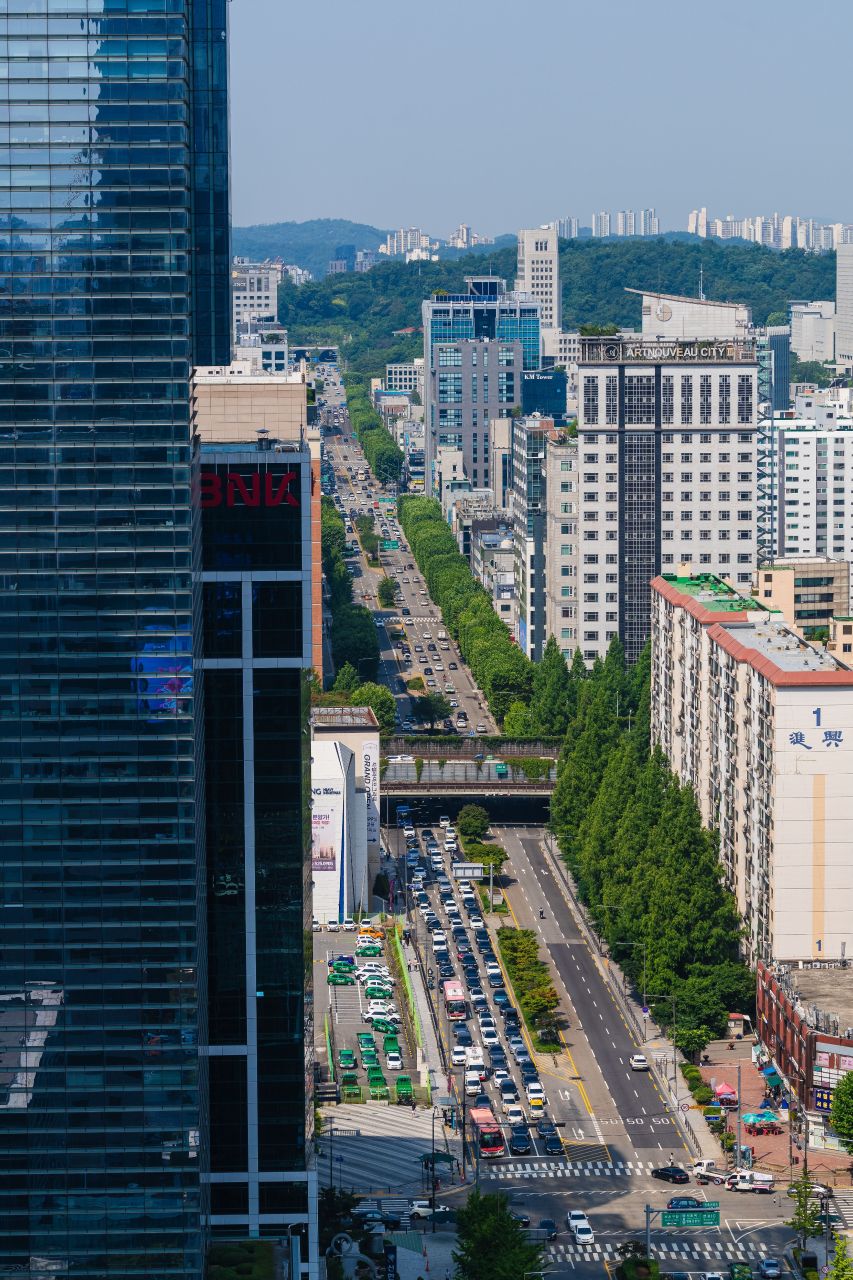
In practice the officetel ban is what I would build my whole search around. Officetels are the cheap, central, glossy one-room units that dominate Seoul search results. They are also the most likely to be cancelled on you.
What happens to guests when an illegal listing is caught?
Guests are generally not in legal trouble. The property is ordered to stop operating, and you have to find somewhere else, possibly on short notice. Hosts face fines of up to 20 million KRW (about $14,803 USD) and possible criminal charges. You lose nothing legally, but you can lose your Seoul base the week before your flight, which is bad enough.
How to Book a Legal Airbnb in Korea, Step by Step
The reliable path is to filter for listing types that can be licensed, confirm a registration number, and only then pay through Airbnb. This takes about ten minutes per listing and is the best insurance you have.
Step 1: What should you prepare first?
Have your passport ready for Airbnb’s identity verification. Add an international card (Visa, Mastercard, American Express or JCB). Your card issuer may add a foreign transaction fee, so check with your bank before you book. No Korean phone number or Korean card is needed.
Step 2: How do you screen out officetels and studios?
Read the description and photos for the property type. Words like “officetel,” “studio” or “one-room,” or a tower-style lobby with a keypad entrance, are warning signs. My rule is to start with detached houses, villas, apartments hosted by a resident, and Hanok stays. I only consider an officetel if the host produces a registration number, and I still treat that as a long shot.
Step 3: Where is the license number, and how do you read it?
Scroll through the listing’s details for registration or legal information and look for a business registration number. If you can’t find one, message the host before booking and ask for it directly. A legitimate host answers this question quickly and without irritation. Vague replies, “don’t worry, everyone does this,” or a push to move the conversation off Airbnb are all reasons to walk away.
For a second check, you can call the Korea Travel Helpline 1330, the national tourism helpline, which has English support. The local district office’s tourism department is the body that handles homestay registration, so it is the official place to confirm a number if you’re unsure.
Step 4: Does the host actually live there?
The law requires the host to reside in the property during your stay. Check whether the description mentions the host living in the home or on-site, and whether reviews mention meeting the host. A whole apartment with a lockbox, no host contact and many near-identical listings from the same account is a pattern I avoid.
Step 5: Do prices and reviews add up?
A price far below similar Seoul listings is a red flag, not a bargain. Read the reviews in full, and be wary of vague descriptions with few photos. Reviews that mention neighbors complaining, sudden cancellations or being told to stay quiet in the hallway all suggest an unlicensed operation.
Step 6: What do you do after booking?
Pay only through Airbnb and keep all messages in the app. Expect the host to ask for your passport details after booking, because registered accommodations must report foreign visitors to the authorities. Airbnb does not share your government ID with hosts, so this request is normal and separate. Send it through the Airbnb messages, not a public chat. There is no minimum stay in Seoul for licensed urban homestays, so one night is fine.
Save the confirmation, the address and the host’s contact details offline.
Common Mistakes That Get Bookings Cancelled
Most failed Airbnb stays in Korea come from four assumptions that each break for a specific reason.
Assuming “it’s on Airbnb, so it’s legal”
Airbnb lists what hosts upload, and travelers report that some hosts have faked documents. A visible listing proves nothing about the license, so the registration number and the property type are your only checks.
Booking a cheap officetel or one-room unit
Officetels are legally commercial buildings, so they can’t hold the residential homestay license. If a crackdown reaches the listing, it is ordered to stop operating and your reservation collapses, sometimes close to check-in. The low price is the reason it’s risky, not a perk.
Agreeing to “say you’re just friends”
If a host asks you to lie about your relationship to the host, treat it as a full stop. It signals that the host knows the stay is unlicensed. A registered homestay has no reason to coach your story, because registered accommodation reports foreign guests openly.
Paying or chatting off-platform
Moving to a bank transfer or a messaging app removes the payment record and support trail inside Airbnb. It is also the standard shape of housing scams, where a too-good-to-be-true offer asks for an online transfer. If the host insists, cancel.
Ignoring house rules like trash sorting
Korea enforces strict recycling. General waste goes in district-specific standardized bags sold at convenience stores such as GS25 and CU, and food waste needs special yellow bags or dedicated bins. Hosts in legal homestays usually explain this. Ask on arrival instead of leaving a bag on the street, since improper dumping can annoy neighbors and cost your host.
Staying Near Bukchon: Why Your Reservation Confirmation Matters
If you book a Hanok stay inside the Bukchon Hanok Village area, your reservation confirmation is more than a receipt. Bukchon runs a tourist visiting-hours rule that lodging guests are exempt from, and officials may ask you to prove it.
Here is what the Jongno district’s official information says as of 2026:
- The red zone around the Bukchon-ro 11-gil area covers about 34,000 square meters.
- Tourists may visit for sightseeing only from 10:00 to 17:00. Tourist visits are banned from 17:00 to 10:00 the next day.
- The rule took effect on 1 March 2025. The fine is ₩100,000, and it may be reduced by up to half.
- Exempt groups include residents, family or friends, shop customers, merchants and simple passers-by. Photos, video and loitering can still be fined.
- Officials may check ID, a lodging reservation confirmation, or a shop receipt to verify an exemption.
- Charter buses are banned on Bukchon-ro, Bukchon-ro 5-gil, Bukchon-ro 4-gil and Changdeokgung 1-gil since 1 January 2026, with fines from ₩300,000.
- The same rules apply to foreign tourists.
My advice is to keep the confirmation and your passport reachable on your phone, and don’t arrive in the zone by tour bus. Search Bukchon on Naver Map or Google Maps to orient yourself. The Smart Seoul Map shows the exact zone lines.

Alternatives If Airbnb Listings Keep Vanishing
If a listing disappears or you can’t verify a license, the safest fallback is a platform or property that is registered by design. Each option trades price, flexibility or convenience.
Is Wehome a legal Airbnb alternative in Korea?
Wehome is a government-approved, legal home-sharing platform with real-time license verification. Its official site offers “Instant Booking” listings confirmed without host approval. Sample Seoul nightly prices on the site have ranged from about ₩75,500 for a Gangnam J-stay to ₩250,000 for an Itaewon tree house, with a Seongbuk detached house around ₩120,000. Prices change, so check the live listing. Wehome is also on Naver Map and Google Maps. This is my first stop when I want an Airbnb-style stay with less legal guesswork.
What about longer stays?
For one week to several months, these are the options I would compare:
- LiveAnywhere: Short stays from one week to several months, accepts international cards, and often has low deposits of around KRW 300,000 (about $222). One example listing was a two-room house at KRW 2,560,000 (about $1,900) for 30 nights, utilities included, or KRW 656,000 (about $490) for seven nights.
- Enkostay: Designed for foreigners, helps with ARC housing documents, and typically needs no large deposit.
- Serviced residences: Weave Living, Blueground and Episode offer furnished units with flexible terms. They cost more but are the cleanest legally.
- Goshiwons and share houses: The budget route, with single rooms or shared housing and flexible monthly terms. Expect small rooms and shared facilities.
Should you just book a hotel or registered guesthouse?
For a solo trip or a short stay, yes. Registered guesthouses and hotels are generally fully legal, they are easy to find on major booking platforms and Naver Map, and you skip the license detective work. If you are traveling alone and the listing is borderline, this is what I’d choose.
Watch for scams on other sites
If you go outside major platforms, be careful with “too-good-to-be-true” rental offers that ask for online money transfers before you’ve seen a contract. Real estate scams target foreigners because they don’t know local norms, so stick with platforms that hold your payment.
Frequently Asked Questions
Is it legal for foreigners to book Airbnb in Korea?
Generally yes. As a guest you are not the one violating the law, and the license requirement applies to hosts. The catch is that an unlicensed listing can be shut down, leaving you to find another place, and hosts risk fines up to 20 million KRW.
How can I tell if an Airbnb in Korea is legal?
Look for a business registration number on the listing, or ask the host for it before booking. Check that the property is a residential building such as a house, villa, apartment or Hanok rather than an officetel or studio, and that the host lives there. If you can’t confirm it, ask the Korea Travel Helpline 1330 or the local district office.
Could showing an Airbnb reservation at immigration cause problems?
I have found no verified rule that a reservation itself is a problem. The cleanest situation is a booking at a licensed property, with the address saved. If the listing is unlicensed and you are unsure, confirm with an official source such as the 1330 helpline before you travel.
What happens if my Airbnb host is shut down before I arrive?
The property must stop operating right away, so you will need alternative accommodation, possibly at short notice. Contact Airbnb support through the app straight away and keep all messages there. Have a backup such as a Wehome listing or a registered guesthouse in mind.
Is there a minimum stay for Airbnb in Seoul?
Not for licensed urban homestays. Seoul doesn’t impose a minimum stay duration on them, so a single night is allowed. Individual hosts can still set their own minimums in the listing.
In Conclusion
Foreigners can book Airbnb in Korea, and as a guest you aren’t the one at legal risk. Your exposure is the listing. Since the late-2025 crackdown on officetels and studios, the safest approach is to treat every listing as unverified until you have seen a registration number, confirmed that it is a residential building with a resident host, and kept payment and messages inside Airbnb. Refuse any host who asks you to hide your relationship or pay off-platform. Keep a backup such as Wehome, a registered guesthouse or a serviced residence, because even a legitimate-looking booking can fall through. If you stay near Bukchon, keep your confirmation handy. Rules change, so verify with the listing and the official 1330 helpline before you pay.
Discover more from Korea Visiting
Subscribe to get the latest posts sent to your email.