This Seoul in November travel guide covers what actually changes week to week: average highs sliding from about 14°C down to near freezing, a narrow foliage window that closes faster than most first-timers expect, and a packing list that has to work for both a mild afternoon and a genuinely cold morning. November is a transition month in Seoul — it opens looking like a crisp autumn day and closes looking like the start of winter, and the biggest planning mistake I see is packing for only one of those two versions of the month. Whether you’re chasing fall colors at Gyeongbokgung Palace or figuring out how cold you’ll actually be standing outside a palace gate at 9am, the details below are built around verified weather data, official palace hours, and the questions travelers keep asking before they land.
Key Takeaways
- Seoul’s November temperatures drop fast: highs of about 12–15°C early in the month fall to 3–8°C by late November, with lows near 0°C.
- Peak autumn foliage in Seoul’s urban parks and palaces typically falls between early and mid-November, not the whole month.
- Layering with a removable insulated jacket beats packing one heavy coat — the day-to-night swing can exceed 10°C.
- Gyeongbokgung Palace is closed Tuesdays; Changdeokgung and Deoksugung are closed Mondays — plan your palace-hopping route around this.
- A Korean phone number or working eSIM matters more than most travelers expect, especially for hailing taxis via Kakao T.
Seoul Weather in November 2026: What to Expect
Seoul in November swings from mild autumn to the edge of winter within four weeks, so the date you land matters almost as much as the month you choose. Early November typically brings daytime highs of about 12–15°C (53–59°F) with overnight lows around 5–8°C (40–45°F) — comfortable for walking around in a light jacket. By late November, that shifts sharply: highs drop to roughly 3–8°C (37–46°F) and lows approach 0°C (32°F), which is genuinely coat-and-gloves weather, not just a cool evening.
Rain isn’t the main concern — the chance of precipitation hovers around 20%, and when it does fall it’s usually light, not the heavy monsoon-season downpours of summer. Humidity averages about 71%, which feels less muggy than summer but can still make a cold morning feel sharper than the thermometer suggests. One detail that catches first-timers off guard: daylight shrinks by roughly 50 minutes over the course of the month, so a 5pm sunset early on becomes a 4:30pm sunset by late November. If you’re planning a full day at a park or palace, build in that earlier dusk — golden-hour photos at places like Seoul Forest come noticeably earlier than they would in October.
Early November vs. late November: which should you plan around?
If foliage and mild walking weather matter more to you than budget or crowd levels, aim for the first two weeks of November. If you’re coming primarily for winter markets, Christmas light displays starting to appear at department stores, or simply prefer thinner crowds at major sights, late November works — just pack accordingly, because it’s a different season by then in all but name.
When Does Peak Autumn Foliage Hit Seoul in November?
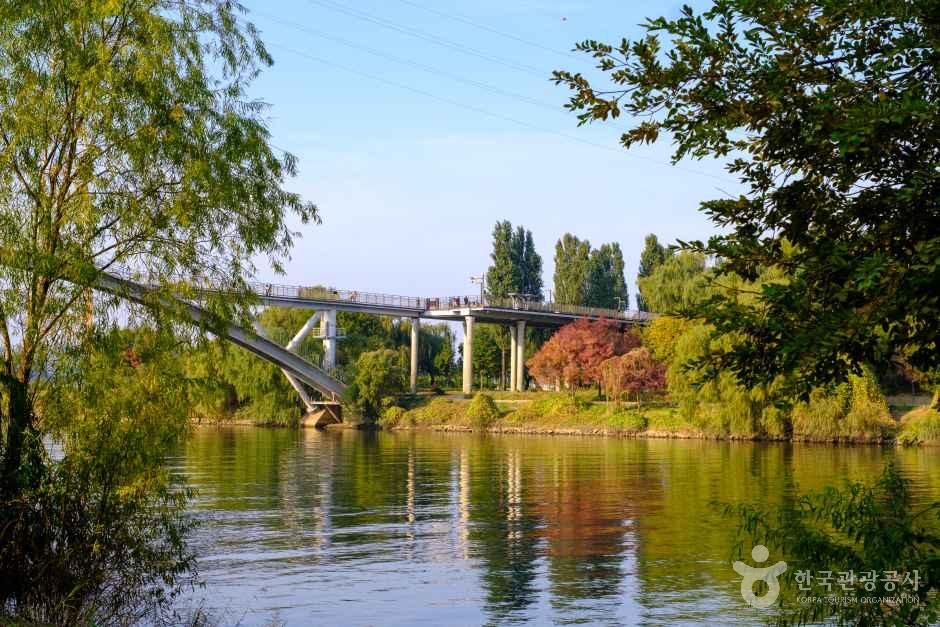
Peak autumn foliage in Seoul generally lands between late October and early-to-mid November, with the main window for vivid color in urban parks and palaces running roughly November 8–22. For 2026 specifically, forecasts point to two overlapping windows: October 28–November 10 broadly across the city, and November 8–18 for Gyeongbokgung Palace itself, where the tall ginkgo and maple trees along the inner walls tend to peak slightly later than street trees elsewhere.
The gap that catches people out: foliage forecasts are estimates, not guarantees, and they shift a few days year to year depending on temperature and rainfall. If your trip is fixed and you can only choose which week to prioritize sightseeing, I’d bias toward the first half of November rather than the second — by the last week of the month, many of the maples in exposed, wind-heavy areas have already dropped, even if the ginkgo trees are still holding gold leaves a bit longer.
Is late November too late for fall colors?
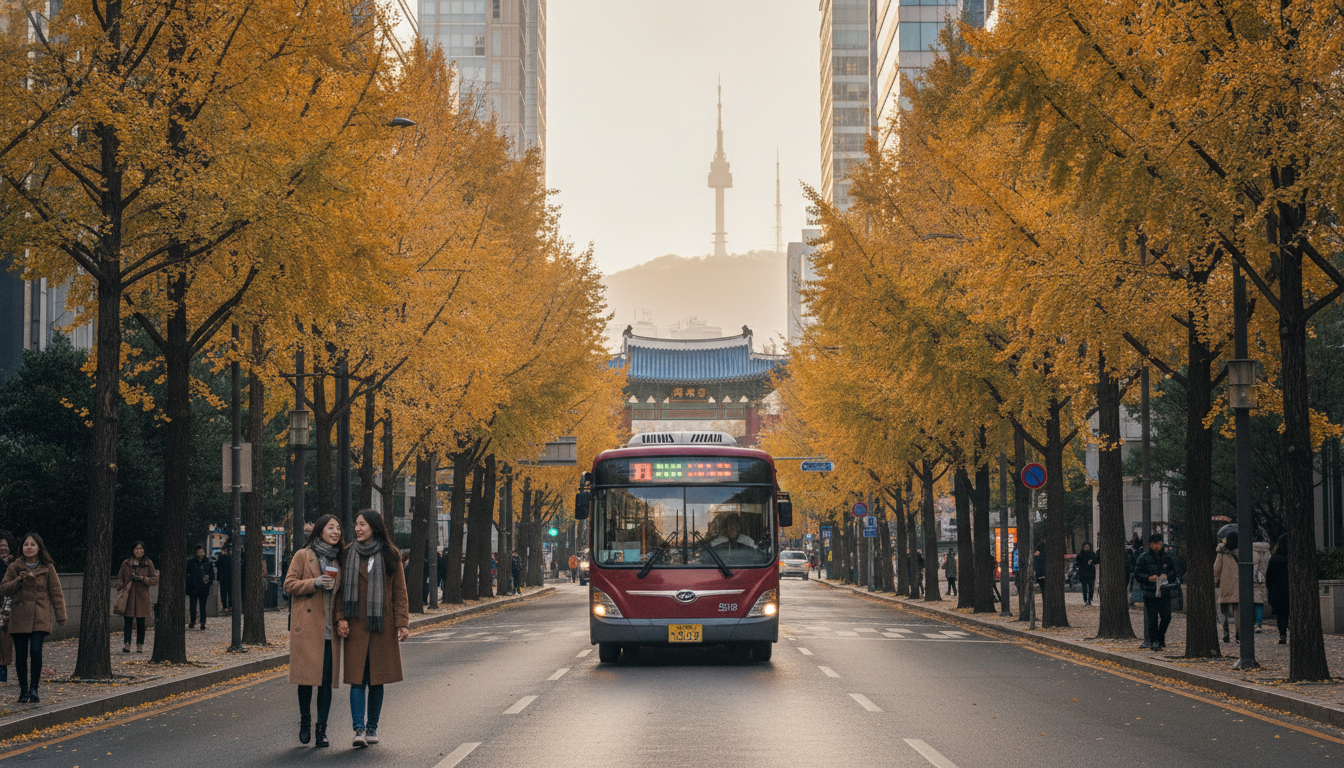
Not entirely, but it’s a gamble. Ginkgo trees, which turn a strong yellow and are common along palace walls and university campuses, tend to hold their leaves longer than maples. If you’re arriving after November 20, target ginkgo-heavy spots like Olympic Park rather than maple-dependent ones, and treat any remaining color as a bonus rather than the main event.
Best Foliage Spots in Seoul and How to Avoid the Crowds
The strongest foliage spots in Seoul in November are its palaces and large parks, and the single biggest lever you have to avoid crowds isn’t the spot you choose — it’s the day and hour. Official crowd data shows Gyeongbokgung Palace is busiest on Saturdays and least crowded on Mondays, while Deoksugung Palace runs the opposite pattern — busiest Saturdays, quietest Tuesdays. That’s genuinely useful for routing a trip: since Gyeongbokgung is closed Tuesdays anyway, a practical split is Deoksugung on Tuesday and Gyeongbokgung on Monday, saving weekend visits for spots with more open space, like the parks.
Gyeongbokgung Palace (161 Sajik-ro, Jongno-gu) is open 09:00–17:00 with last admission at 16:00 during November–February, and it’s closed Tuesdays. Admission is about 3,000 KRW for adults (19–64) and 1,500 KRW for youths, with free entry for children under 6, seniors over 65, and anyone wearing hanbok. Arrive right at opening if you want the inner courtyards without a crowd — by mid-morning on a clear autumn Saturday, the main gate area gets genuinely packed with photographers. Naver Map · Google Maps
Changdeokgung Palace and Secret Garden (99 Yulgok-ro, Jongno-gu) is my pick for a quieter, more atmospheric autumn walk than Gyeongbokgung — the Secret Garden’s pond and centuries-old trees are arguably the best single foliage backdrop in the city. Palace hours in November are 09:00–17:30 with last admission 16:30; it’s closed Mondays. General admission is about 3,000 KRW; the Secret Garden costs an additional 5,000 KRW and is entered on a guided tour only, so book ahead — same-day slots sell out on clear autumn weekends. Naver Map · Google Maps
Deoksugung Palace and Stone Wall Road (99 Sejong-daero, Jung-gu) has the advantage of long hours — general admission runs 09:00–21:00 with last entry at 20:00, so it’s the rare palace you can genuinely visit after work or dinner, when the ginkgo-lined stone wall path outside is lit and far less busy. It’s closed Mondays. The adjoining Deoksugung Stone Wall Road, near the British Embassy, is a free walking course and one of the most photographed ginkgo tunnels in the city in early-to-mid November. Deoksugung on Naver Map · Stone Wall Road on Naver Map
Namsan Park (231 Samil-daero, Jung-gu) works well for elevated views over the color below rather than close-up foliage — the cable car ride up is a good way to see the maple canopy from above before walking around N Seoul Tower. Observatory admission is 29,000 KRW for adults and 23,000 KRW for children (ages 3–12) and seniors (65+). The park itself is free and always accessible.
Seoul Forest (273 Ttukseom-ro, Seongdong-gu) and Olympic Park (424 Olympic-ro, Songpa-gu) are both free, spread out enough that they rarely feel as packed as the palaces even on weekends, and better suited to a slower morning walk than a rushed photo stop. Seoul Forest’s metasequoia and maple lanes are particularly good in the first half of November.
For all of these, the same crowd rule applies: aim for opening time or the last two hours before closing, and expect midday Saturday to be the peak crowd window everywhere, palaces especially.
What to Pack for Seoul in November 2026
Layering is the single most important packing strategy for Seoul in November, because the temperature swing within one day can be larger than the swing between two entire weeks. A light jacket that’s fine at noon in early November will not be enough at 7am, and a heavy coat that’s necessary in late November will be too warm on a mild early-month afternoon.
Build your kit around three layers: a base layer (long-sleeve shirt or thin thermal top), a mid layer (sweater, cardigan, or fleece), and an outer layer you can adjust — a warm jacket or light down coat works for most of the month, but if you’re traveling after November 20, bring or plan to buy a proper insulated winter coat. Add a scarf, gloves, and a hat; these matter more than people expect once wind picks up around open palace courtyards or the Namsan cable car station. Comfortable, broken-in walking shoes with actual grip matter too — palace grounds are gravel and stone, and by late November early-morning frost can leave some paths slick.
Pack a compact umbrella or light raincoat; with only about a 20% chance of rain on any given day, you don’t need heavy rain gear, but Seoul showers can be sudden. If you’re worried about clothing sizes — a common concern for larger or taller travelers — international-brand stores in Myeongdong and the outlet malls near Seoul Station carry wider size ranges than typical Korean fashion retailers; ABC-Mart in Myeongdong is a reliable stop if you need to buy proper walking shoes or boots on arrival.
Should I buy a coat in Korea instead of packing one?
It’s a reasonable plan. Many travelers underpack for the late-November cold snap and end up buying a padded jacket in Myeongdong or Dongdaemun once they feel the temperature drop — prices are often reasonable and the selection is aimed at exactly this kind of weather, so it’s not a bad backup if you’re short on suitcase space.
Getting Around Seoul: Transit Cards and eSIM Options
Getting around Seoul comes down to two practical decisions before you land: which transit card to use, and how you’ll get mobile data and a local number for apps like Kakao T. Get both sorted before your first full day and everything else — palaces, parks, markets — becomes far less friction.
T-money card: the classic reloadable transit card, usable on subway, bus, and most taxis nationwide, and also accepted as small-value payment at convenience stores. Buy one for about 2,500–4,000 KRW at any convenience store or subway station kiosk, top it up with cash, and it just works. Best for travelers who want the simplest, most universally accepted option and don’t need currency exchange built in.
WOWPASS: a card aimed specifically at foreign travelers that combines a T-money-style transit card with a currency exchange kiosk function — you insert foreign cash and it loads Korean won onto the card at a published rate. Useful if you’d rather avoid a separate money-changer stop, though the exchange rate is usually slightly less favorable than a dedicated exchange counter.
Climate Card (기후동행카드): an unlimited-ride pass covering Seoul subway and bus for a set period, aimed at travelers staying a week or more who plan to ride transit frequently within the city. It does not cover trips outside Seoul’s zone, including the AREX airport train, so it’s a poor fit if your itinerary includes day trips beyond the city. Confirm current pricing and coverage at the official Seoul city transit page before committing, since terms are periodically adjusted.
For connectivity, an eSIM installed before departure is the more convenient option over a physical SIM swap for most travelers, and it typically runs roughly $5–15 USD for a week of data depending on provider — no store visit required, and you keep your home number active for texts. A pocket WiFi router is the alternative if you’re traveling as a group and want to share one connection, but it’s one more device to carry and charge. Whichever you choose, make sure it gives you a working Korean number or at least reliable data, because that’s what most taxi and delivery apps assume you have.

Budget Guide: Entry Fees, Transport Costs, and Daily Estimates
A day of sightseeing in Seoul in November is inexpensive by major-city standards — most of your budget goes to transport and the occasional attraction fee, not entry tickets, since parks and stone-wall walks are free. Palace admission runs about 3,000 KRW per site (Gyeongbokgung, Changdeokgung general admission), with the Changdeokgung Secret Garden adding about 5,000 KRW for its guided tour. N Seoul Tower’s observatory is the priciest single attraction on a typical foliage itinerary at 29,000 KRW for adults.
From Incheon Airport into the city, options range widely: the AREX express train takes about 40–43 minutes for about 9,500 KRW, the AREX all-stop train takes about 60 minutes for roughly 4,150–4,750 KRW, an airport limousine bus takes about 60–90 minutes for roughly 9,000–17,000 KRW depending on destination, and a taxi fare from Incheon Airport to Seoul typically ranges from 60,000 KRW to 90,000 KRW including a toll of about 7,900 KRW, without a late-night surcharge, more if you’re arriving after midnight. For a solo traveler on a budget, the AREX all-stop train is the best value; for groups of three or four with luggage, a taxi or limousine bus often works out similarly per person and is far less hassle.
Once in the city, subway and bus fares are cheap per ride — budget roughly a few thousand won per trip if paying per ride rather than using an unlimited pass. A realistic daily sightseeing budget covering two palace visits, a couple of subway rides, and a coffee or street food stop lands somewhere in the 20,000–40,000 KRW range per person, before meals.
Common Mistakes Travelers Make in Seoul in November
The most consistent mistake is assuming “November” means peak foliage for the entire month. Peak color in Seoul’s urban parks and palaces is a roughly two-week window, generally somewhere between early and mid-November — travelers who book for the last week of the month based on a general “November = fall colors” assumption often arrive to find maples already bare, with only ginkgo trees still holding color.
The second mistake is packing one weight of jacket for the whole trip. Because highs fall from about 14°C early in the month to under 8°C by the end, a single mid-weight jacket that’s comfortable on day one can be genuinely inadequate by day ten. This is why layering, not a single “right” coat, is the actual solution.
The third mistake is trying to use Kakao T (the dominant taxi-hailing app) without a working Korean phone number. Kakao T’s signup requires SMS verification through a Korean mobile carrier, and many foreign eSIMs or international roaming numbers can’t receive that verification text, so account creation fails at the last step — right before you actually need a taxi. The workaround is using the taxi-call feature built into Naver Map, or Uber, which partners with local taxi fleets in Seoul and doesn’t require the same Korean-carrier verification.
The fourth mistake is underestimating icy pavement in late November and early December. Stone palace courtyards and older sidewalks can develop a thin frost or ice layer on cold mornings, and smooth-soled shoes or fashion boots without real tread make for a genuinely unsteady walk — bring shoes with actual grip if you’re traveling after mid-November.
Finally, some Korean restaurants — particularly Korean barbecue and hot pot spots meant for sharing — have a “minimum two people” ordering rule, because certain dishes are portioned and cooked for a table, not an individual serving. Solo travelers sometimes get turned away or told they’ll need to pay for two portions; it’s not personal, it’s how the kitchen is set up. Checking a spot’s format before you go, or sticking to single-serving formats like bunsik (Korean street-food style diners) or one-person hot pot chains, avoids the surprise.
Frequently Asked Questions
What is the best week to see autumn leaves in Seoul in 2026?
Based on current forecasts, the strongest window is roughly November 8–18 for palace areas like Gyeongbokgung, with broader city foliage often peaking slightly earlier, from late October into the first week of November. If your dates are flexible, the first half of November is the safer bet over the second half.
Do I need a winter coat for Seoul in November?
Early in the month, a warm jacket or light down coat is generally enough. By late November, temperatures approach freezing overnight and a proper insulated winter coat becomes necessary, especially for early-morning sightseeing or evening walks.
Is Seoul very crowded at major attractions in November?
Weekends, especially Saturdays, are consistently the busiest days at popular palaces like Gyeongbokgung and Deoksugung. Visiting on a weekday, and arriving right at opening or in the last couple of hours before closing, noticeably thins the crowds at the same locations.
How do I book a taxi in Seoul without a Korean phone number?
Kakao T’s account setup requires SMS verification through a Korean carrier, which foreign numbers often can’t complete. Using the taxi feature in Naver Map or the Uber app, which works with local taxi partners in Seoul, sidesteps that verification requirement.
Is late November too cold to enjoy sightseeing in Seoul?
It’s cold, not prohibitive — highs can drop to around 3–8°C with lows near freezing, so outdoor time needs proper layering, but palaces, markets, and museums remain fully open and enjoyable with the right gloves, hat, and coat. Many travelers simply shift toward more indoor stops, like markets and cafés, in the coldest stretches of the day.
In Conclusion
Seoul in November rewards travelers who plan around its two distinct halves rather than treating the whole month as one uniform “autumn” experience. Book your palace and park visits for the first two weeks if fall foliage is your priority, pack in true layers rather than a single coat, and sort out your transit card and eSIM before you’re standing outside Incheon Airport trying to figure it out. Route around palace closing days — Gyeongbokgung on Tuesdays, Changdeokgung and Deoksugung on Mondays — and favor weekday mornings or the last hour before closing to dodge the Saturday crowds official data consistently shows. Get those logistics right, and the rest of the trip, from ginkgo-lined walks to N Seoul Tower at dusk, takes care of itself.
Discover more from Korea Visiting
Subscribe to get the latest posts sent to your email.