This Gwanghwamun Deoksugung Seochon itinerary fits first-time visitors who want palaces, a historic square and a quieter hanok neighborhood in a single day without sprinting. The route starts at City Hall Station and ends in the evening at the lit-up gate. It covers about 5 km of walking and leaves room for lunch and a café break.
The route runs Deoksugung Palace, then Gwanghwamun Square, then lunch at Tongin Market, then an afternoon wander through Seochon, then a night view of Gwanghwamun Gate. Most legs are short walks, so you rarely need more than one subway ride.
Travelers on Reddit often call plans like this “too packed” or “very tiring.” So this plan visits one palace properly, treats Gyeongbokgung as an exterior photo stop, and builds in sit-down breaks.
Key Takeaways
- Go Wednesday to Sunday. Deoksugung is closed Mondays, and Gwanghwamun Gate and Gyeongbokgung are closed Tuesdays.
- Deoksugung costs 1,000 KRW for adults (as of 2026), and the 10,000 KRW Seoul Palace Pass is only worth it if you enter several palaces.
- The Deoksugung-to-Square walk takes about 15–20 minutes. Seochon is about a 9-minute walk from Gyeongbokgung Station Exit 5.
- Seochon is residential and low-key. Bukchon has visiting-hour limits, so this plan skips it.
Day 1 — Gwanghwamun Deoksugung Seochon Itinerary Hour by Hour
The best order for this day is Deoksugung in the morning, Gwanghwamun Square at midday, Tongin Market for lunch, Seochon in the afternoon and the gate at dusk. Palaces are quietest early, and lunch at Tongin Market sits naturally between the square and the Seochon alleys.
Morning: Deoksugung Palace (about 1.5 hours)
Take Subway Line 1 or 2 to City Hall Station and use Exit 1 or 2. The palace entrance is a short walk away. Adult admission is 1,000 KRW as of 2026. Visitors aged 18 and under (foreigners) or 24 and under (Koreans), or 65 and over enter free, and everyone enters free every Wednesday (Culture Day). Deoksugung’s official page has current notices. Map links: Naver Map and Google Maps.
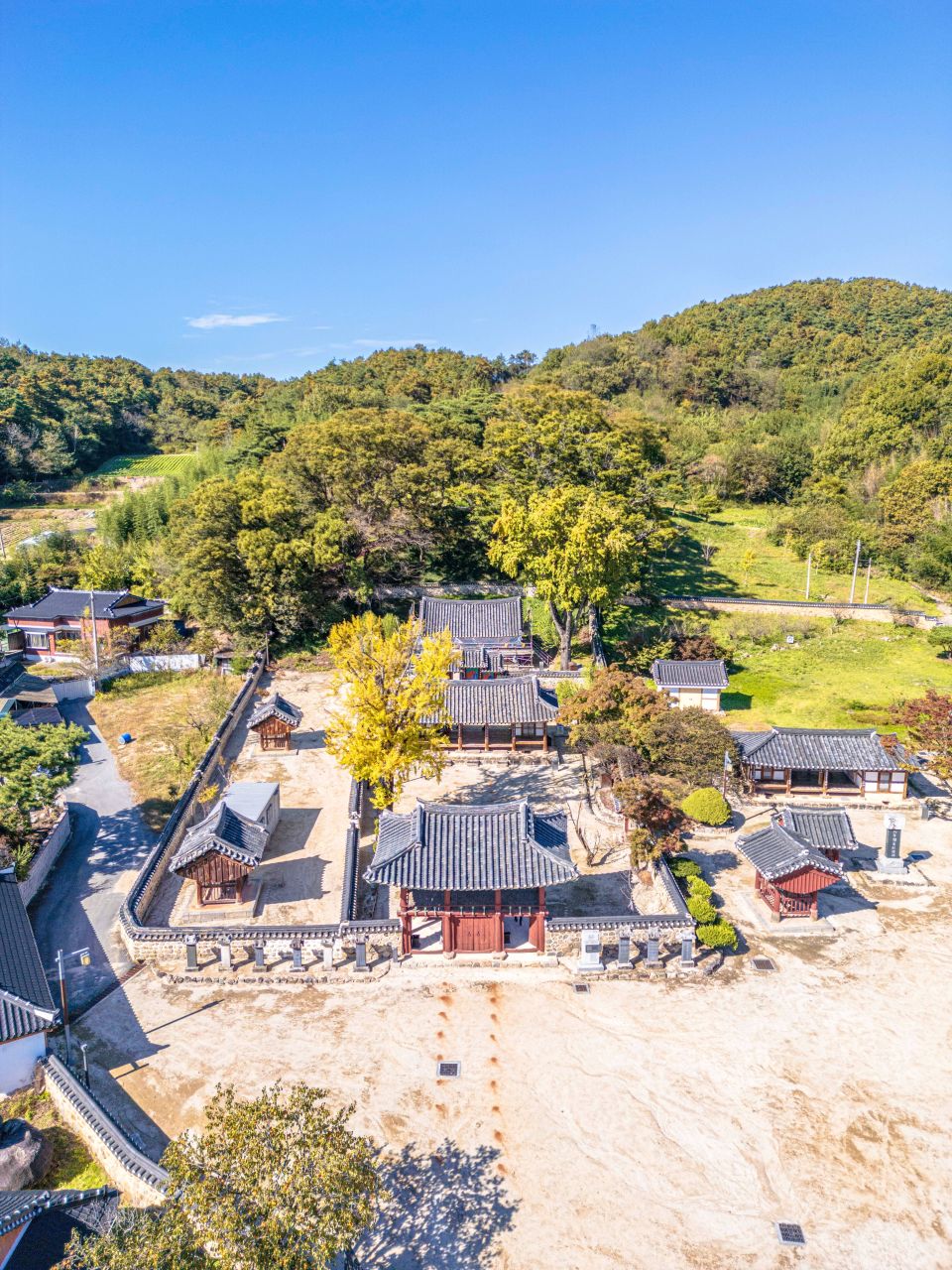
Deoksugung is unusual because Joseon-style halls stand beside Western-style buildings from the Korean Empire era. Start with the main hall area, then walk to Seokjojeon, the neoclassical hall. Interior tours of Seokjojeon need a reservation. Booking opens at 10:00 seven days before your visit, with 15 people per session. The basement exhibition needs no reservation.
Two construction notices apply in autumn 2026. According to the official site, Dondeokjeon Hall is closed for viewing from September 1 to October 25, 2026, and the outer wall is under repair from September 21 to November 19. Seokjojeon session times also change on October 8 and 14. Expect some scaffolding in photos, and check the page before you go.
The royal guard changing ceremony is held at the Daehanmun gate three times a day. Confirm the schedule when you arrive rather than building your morning around it.
Walk to Gwanghwamun Square (about 15–20 minutes)
Leave Deoksugung and walk north along Sejong-daero. It is a wide, flat boulevard, and Gwanghwamun Square lies straight ahead. There is no need for a subway transfer, since the walk takes about as long as the connection would. If you want a museum stop on the way, the free Seoul Museum of History on Saemunan-ro is a short detour. Check its opening days on Naver Map first, because it is closed Mondays.
Gwanghwamun Square and the King Sejong exhibit (about 1 hour)
Gwanghwamun Square is open around the clock and free. Its statues of King Sejong and Admiral Yi Sun-sin are the obvious photo stops. The underground exhibit “The Story of King Sejong” is the part Reddit travelers say not to miss, and it is also a cool, dry break on a hot or rainy day. Map links: Naver Map, Google Maps and the official site.
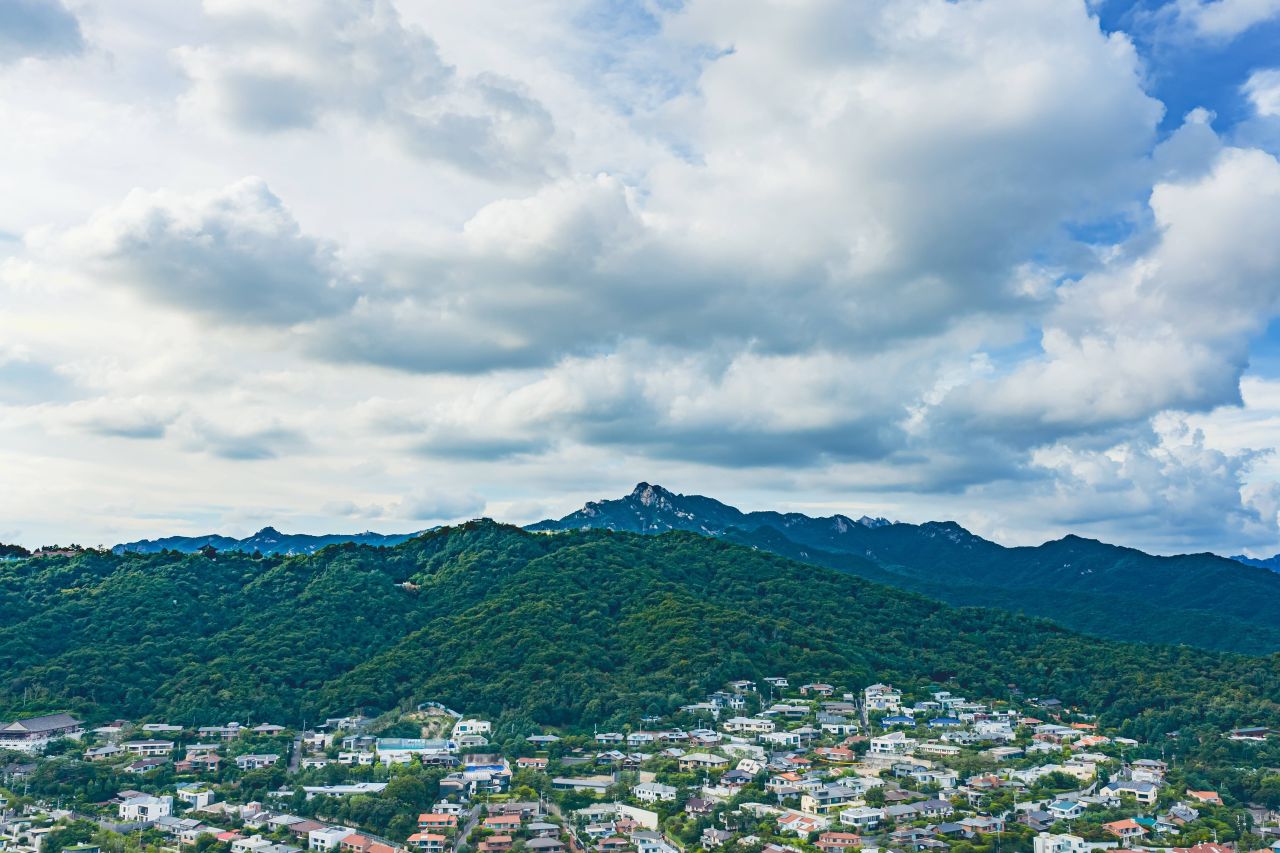
At the north end you face Gwanghwamun Gate, the main southern gate of Gyeongbokgung, built in 1395. Its three arched doors were once split by rank: the center for the king, the side doors for the crown prince and officials. I visited in October 2026 in the late afternoon, when a large crowd gathered in front of the gate with forested Bugaksan rising behind it. Korea Tourism Organization crowd data shows Saturdays are the busiest day here, so a weekday visit is far easier.
You can enter Gyeongbokgung Palace if you want. One palace per day is the more relaxed pace, so we suggest treating Gyeongbokgung as a photo stop today and saving the interior for another visit. If Deoksugung is not your priority, you could swap it for Gyeongbokgung and trim the morning.
Lunch and Tongin Market (about 1.5 hours)
From the square, walk about 10–15 minutes toward Gyeongbokgung Station (Line 3) and continue on to Seochon. Tongin Market is about a 9-minute walk from Exit 5. Map links: Naver Map, Google Maps, and the market’s official Instagram.
The market’s famous Dosirak Cafe works on coins. You exchange cash for a set of coins, about 10,000 KRW for 20 coins, then trade them at market stalls for side dishes and rice in a lunchbox. It runs only around midday, and the market closes on some Sundays. Check both on Naver Map before you commit your lunch to it.
If the coin system feels like too much, a calmer alternative near the gate is Solsot Gwanghwamun Gyeongbokgung Kate Twin branch (Google Maps), a Korean restaurant in a basement.
Afternoon: The Seochon Neighborhood (about 2 hours)
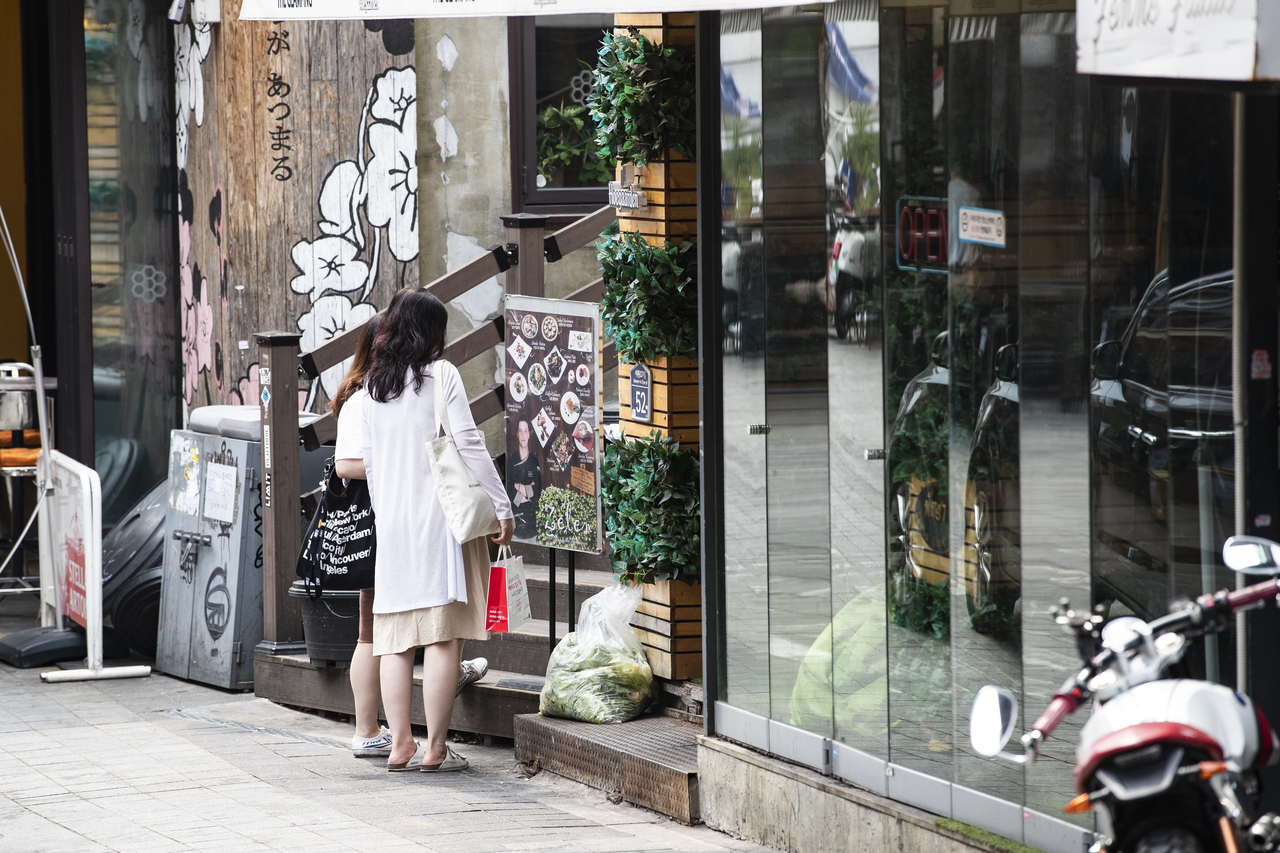
Seochon, the neighborhood west of Gyeongbokgung, is free to walk at any hour and feels like a lived-in residential area. Unlike Bukchon, it has narrow lanes with low houses, small galleries and family-run shops rather than tour groups. Wander the lanes around Tongin Market, then drift north without a fixed route. Getting a little lost is part of the appeal here.
Café stops, according to YouTube reviewers:
- Naeja Sanghoe: a hanok café known for its mugwort latte and injeolmi castella.
- Bonjirreu Bakery: about 5 minutes from Gyeongbokgung Station Exit 7, in a three-story house with roomy tables and croissants.
- A rooftop café 10–15 minutes from Gyeongbokgung Station, with a fourth-floor terrace looking toward Namsan and Inwangsan.
- Burger de Joseon: a hanok burger spot if you want something heartier.
Sit down for at least 30 minutes in the middle of the afternoon. The legs-up break matters more than one extra photo stop.
Evening: Gwanghwamun Gate at night (about 45 minutes)
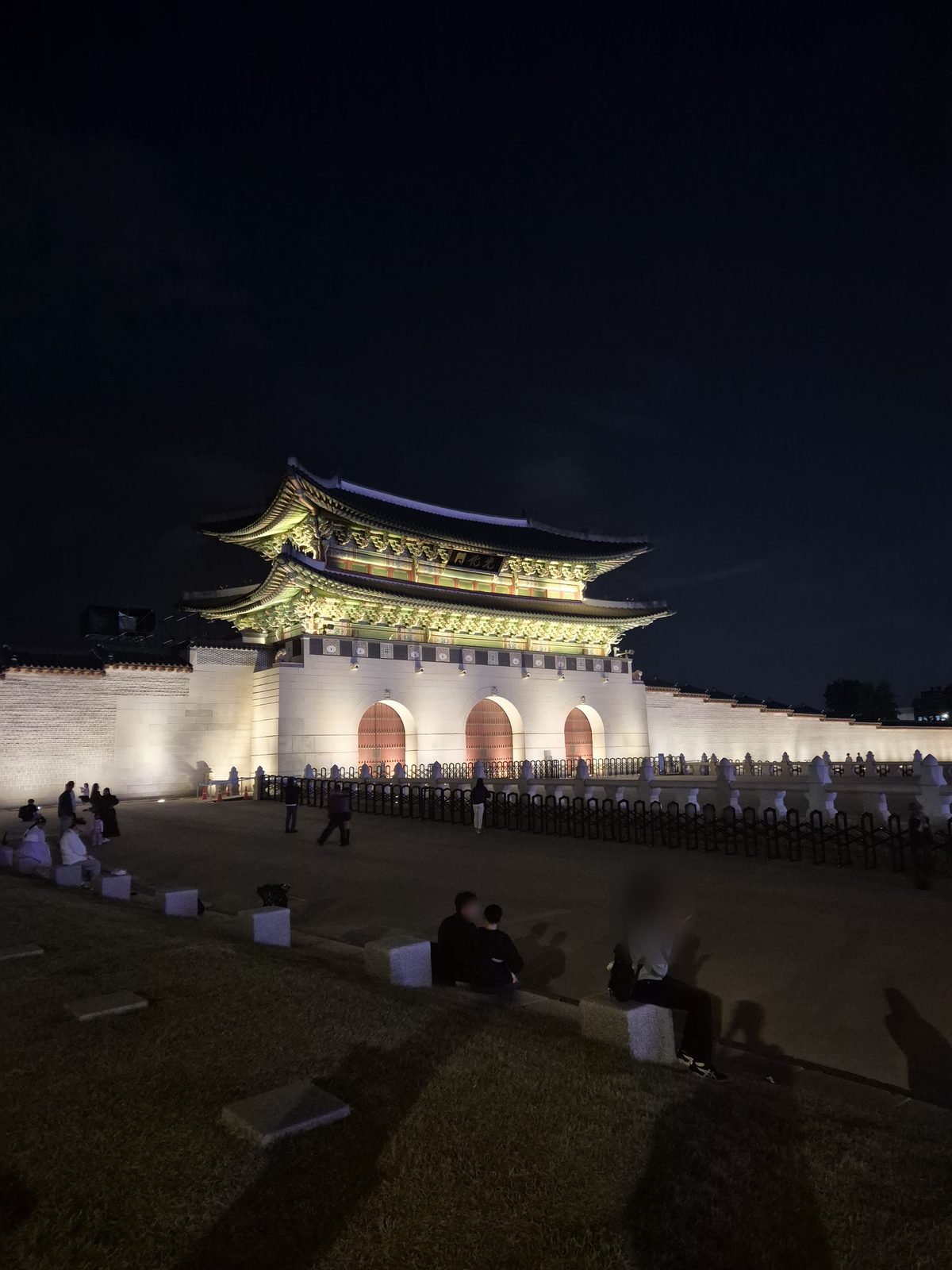
Walk back toward the square, about 10–15 minutes from the Seochon edge. At night, warm floodlights light up the three red doors and the tiled roof against a dark sky. I saw this in October 2026, with visitors sitting on stone blocks in the foreground. The gate is lit up, the square is open 24 hours, and you can hear the buses on Sejong-daero from the benches.
For dinner, a hanok craft beer pub called Molim opens in the evening, according to a reviewer (nine beers, snacks about 15,000–20,000 KRW). Otherwise, return to the City Hall or Gwanghwamun subway stations.

Common Mistakes When Planning This Gwanghwamun Route
The most common planning mistakes come from closing days and from stuffing too many palaces into one day. Both make the day feel worse than the route suggests.
- Going on a Monday or Tuesday. Deoksugung is closed Mondays. Gwanghwamun Gate and Gyeongbokgung are closed Tuesdays, so each day loses one anchor of this route. Pick Wednesday to Sunday.
- Adding Gyeongbokgung, Changdeokgung and Deoksugung together. Each palace takes 1.5–2 hours to see properly. Reddit travelers say that one palace in a day is enough, because three palaces blur together and your legs give out by Seochon.
- Booking the Seokjojeon interior at the last minute. Booking opens seven days before your visit, with 15 places per session. A same-day walk-up usually means the interior is full, so the free basement exhibition is the fallback.
- Choosing Bukchon as the afternoon stop. Bukchon’s red zone around Bukchon-ro 11-gil limits tourist visits to 10:00–17:00. Tourist activity outside those hours, including photos and sightseeing, can lead to a 100,000 KRW fine (since March 1, 2025). Seochon has no such restriction, so the plan stays simpler.
- Arriving at Dosirak Cafe late. The coin lunch service runs only for a limited window around midday. If you show up at 3 p.m., the cafe may be closed even though the market is still open.
Getting Around & Practical Tips
This route needs only one subway ride (to City Hall Station) because the sights are within walking distance of each other, so a single-ride T-money card is enough. Buy or top up T-money at a convenience store, or just use a foreign-friendly credit card.
Pacing and seasons
Start at 9:00–9:30 to avoid peak palace crowds. Allow about 6–7 hours of sightseeing plus meals. In summer, take your Seochon walk after 3 p.m. and use the underground Sejong exhibit as an air-conditioned break. In spring and autumn, the open square is best in the late afternoon. Winter evenings are cold, so bring a warm layer for the night view. If it rains heavily, the museum stops (Seoul Museum of History, the Sejong exhibit) are the best swaps.
Tickets and maps
The Seoul Palace Pass (10,000 KRW) covers Gyeongbokgung, Changdeokgung (including the Secret Garden), Changgyeonggung, Deoksugung and Jongmyo, valid for three months. It pays off only if you visit several palaces, which this plan doesn’t. Deoksugung alone is 1,000 KRW. Use Naver Map for directions in Korea, since Google Maps walking routes are far less reliable here. Kakao Map is useful for restaurant reviews.
Hanbok
Wearing hanbok gives free palace entry, and Deoksugung and Gyeongbokgung are the favorite places for photos. It also adds time for changing and returning the outfit, so skip it if you are short on hours.
If you have extra time
Insadong and Ikseon-dong are both near the route and can replace Seochon if you prefer shops and retro cafés. Ikseon-dong is known for its “newtro” (new retro) feel.
Frequently Asked Questions
Is one day enough for Gwanghwamun, Deoksugung and Seochon?
Yes, if you limit yourself to one palace interior. This plan takes about 6–7 hours of sightseeing plus meals, with about 5 km of walking. Trying to add a second palace interior is what makes the day feel “too packed” on travel forums.
What is the best day of the week for this itinerary?
Wednesday through Friday is the safest choice. Deoksugung is closed Mondays and Gwanghwamun Gate is closed Tuesdays. Korea Tourism Organization crowd data shows Saturday is the busiest day at all of the main sights, while Deoksugung is quietest on Sundays.
How far is Deoksugung from Gwanghwamun Square?
It is about 15–20 minutes on foot along Sejong-daero. The street is wide and flat, so most people walk rather than transfer on the subway.
How do I get from Gwanghwamun to Seochon?
Walk from the square to Gyeongbokgung Station, about 10–15 minutes. Tongin Market is about a 9-minute walk from Exit 5 of that station, and Seochon’s lanes start just beyond it. Use Naver Map for the exact path.
Is Seochon better than Bukchon?
It depends on what you want. Seochon is quieter, residential and free from visiting-hour limits, while Bukchon has the more famous hanok views but restrictions on tourists after 17:00. For a one-day plan with palaces, Seochon is the more relaxed choice.
In Conclusion
The simplest way to follow this Gwanghwamun Deoksugung Seochon itinerary is to start early at Deoksugung, walk to Gwanghwamun Square, eat lunch at Tongin Market, spend the afternoon in Seochon and finish at the lit-up gate. Pick a Wednesday to Sunday, reserve the Seokjojeon interior a week ahead if you want it, and treat Gyeongbokgung as an exterior photo stop. That keeps the day to about 6–7 hours of sightseeing with real breaks. Check the Deoksugung official page for the autumn 2026 construction notices, use Naver Map for directions, and keep one café stop in the afternoon. If you finish early, extend the evening in Insadong.
Discover more from Korea Visiting
Subscribe to get the latest posts sent to your email.