This Namdaemun Market guide exists because most first-time visitors arrive with the wrong mental map: they expect a single main street, a fixed food court, and clear signage, and instead they get a sprawling grid of covered arcades, wholesale buildings, and open-air stalls that all look the same from the outside. I’ve watched people do a full loop in ten minutes, conclude “that’s it,” and leave without ever finding the alley they actually wanted. The market rewards people who know roughly what they’re looking for before they arrive — which food alley, which shopping section, which entrance — and punishes people who wander in cold expecting a curated tourist experience. This guide covers exactly that: how to get in without backtracking, what’s genuinely worth eating, what’s worth buying versus skipping, and the mistakes that cost first-timers the most time.
Key Takeaways
- Hoehyeon Station Line 4, Exit 5, puts you directly at a market entrance — the easiest approach for first-timers.
- Kalguksu Alley and Galchi Jorim Alley are the two food alleys worth building a visit around; both are cash-friendly and crowded at lunch.
- Bargaining is expected in bulk-goods and non-food alleys, but not at posted-price food stalls.
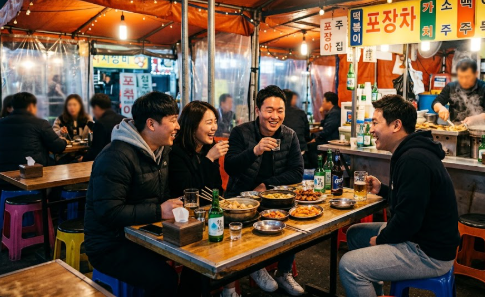
- The market has a night food scene, particularly for wholesale, and some food stalls operate into the night. Plan food stops for daytime for the main market experience, but expect some food options after dark.
- Budget at least two to three hours; walking the full loop before buying anything saves money on repeat items.
📍 Sungnyemun Gate — Essential Information
| Address | 40 Sejong-daero, Jung-gu, Seoul |
| Opening hours | 09:00-18:00 (Last admission 17:50) |
| Closed | Mondays |
| Website | www.heritage.go.kr |
| Map | Google Maps · Naver Map |
Namdaemun Market at a Glance
- Why visit: it’s Seoul’s largest traditional market and one of the oldest, and the closest thing the city has to one place where clothing wholesalers, dried-food importers, kitchenware shops, and street food vendors all operate side by side.
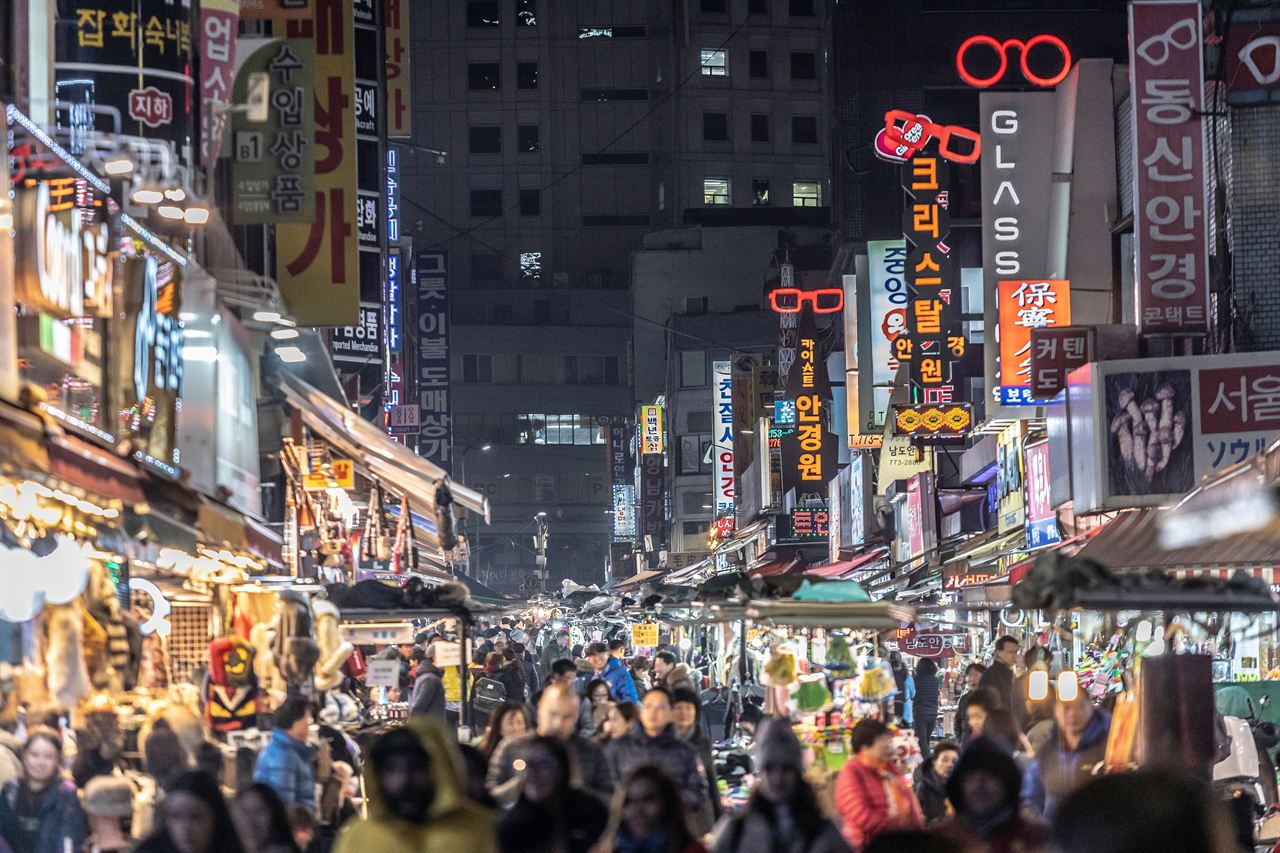
- What you’ll see and experience: narrow covered arcades stacked with goods to the ceiling, open lanes of food carts, wholesale buildings where shopkeepers sell by the box rather than the piece, and a rhythm that shifts completely between late-night-to-early-morning wholesale hours and midday tourist foot traffic.
- Getting there: Hoehyeon Station (Line 4), Exit 5, sits right next to the main entrance — the shortest route by far. It’s also a walkable 10–15 minutes from Seoul Station or Myeongdong Station.
- Tickets and admission: free — there’s no entrance fee anywhere in the market; you’re only budgeting for food and purchases.
- Tips from past visitors: give yourself at least two to three hours, wear shoes you can stand in on uneven pavement, and carry cash — many stalls, especially food vendors, don’t take cards. Walking one full loop before buying anything is the single best money-saving habit, since the same item can sit at different prices two stalls apart.
- Nearby spots worth combining: Sungnyemun Gate is essentially at the market’s doorstep, and Myeongdong’s retail strip is a short walk away if you want modern shopping after the traditional-market experience.

How to Get to Namdaemun Market
The fastest and least confusing route to Namdaemun Market is the subway to Hoehyeon Station, not a bus or taxi, because the exit drops you almost inside the market itself. Take Line 4 to Hoehyeon Station and leave through Exit 5 — the market entrance is immediately next to it, so there’s no street-crossing or guesswork involved. If you’re coming from Myeongdong, the walk is genuinely pleasant and takes about 10–15 minutes along Toegye-ro, which is useful if you’re already shopping there and want to add the market without a subway transfer. Coming from Seoul Station is a similarly short walk, and it’s an easy add-on if you’re arriving by KTX or the airport railroad and have a bag you don’t mind wheeling over a few blocks. Buses stop near Hoehyeon Station and at a dedicated Namdaemun Market stop, but unless your accommodation happens to be right on a direct route, the subway is simpler because bus stop locations and numbering can be hard to match up on the ground. Taxis work fine too and are common throughout Seoul, but given how central the market is, they rarely save meaningful time over the subway during the day.
One practical note: because the market is a dense grid rather than a single street, “arriving” and “finding your target stall” are two different problems. Knowing your entrance point — Exit 5 versus a walk-in from Myeongdong — changes which end of the market you land in first, so it’s worth deciding in advance whether you’re prioritizing the food alleys or the shopping sections, since they sit at different ends of the complex.
What to Eat at Namdaemun Market
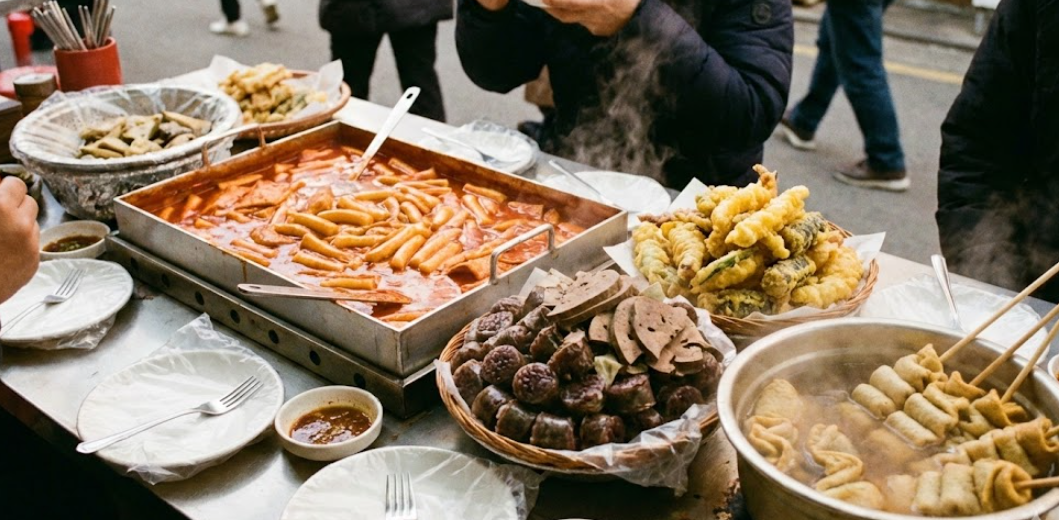
Namdaemun Market’s food scene is organized into alleys rather than a food court, and the two worth building a visit around are Kalguksu Alley and Galchi Jorim Alley. Skipping straight to a random stall usually means missing the ones locals actually queue for.
Kalguksu Alley
Kalguksu Alley is a row of side-by-side stalls serving hand-cut knife noodles in a hot anchovy or chicken broth, and it’s the alley that reads as “authentic old-market Seoul” more than anywhere else in the complex. Vendors here start their broths going before most of the city is awake, and the alley is genuinely busiest around midday, when office workers from nearby Jung-gu squeeze onto communal benches for a fast, cheap lunch. Expect steam rising off shared tables, elbow-to-elbow seating, and a menu that rarely goes beyond noodles, dumplings, and rice cake soup — that narrowness is the point, not a shortcoming.
Galchi Jorim Alley
Galchi Jorim Alley specializes in braised cutlassfish simmered in a spicy-sweet sauce with radish and potato, a dish that’s harder to find casually elsewhere in Seoul. This is the alley I’d point a first-timer toward if they want one dish that feels distinctly Korean rather than a street-food snack — it’s a proper sit-down meal, usually shared, and the sauce is the reason people come back. It pairs naturally with a Kalguksu Alley stop if you’re doing a two-alley food crawl, since they sit close together within the market.
Hotteok and the trending vegetable-filled version
Classic sweet hotteok — a griddled pancake filled with brown sugar, cinnamon, and nuts — is everywhere in the market, but the version generating real buzz on social feeds right now is a savory japchae-vegetable hotteok found near Gate 2, stuffed with glass-noodle japchae instead of sugar syrup. It’s worth seeking out specifically if you’ve already had the sweet version elsewhere in Seoul and want the market’s own twist.
Mandu at Gamegol
Gamegol Sonwang Mandu‘s Namdaemun main branch is a reliable dumpling stop with a longstanding local following — the mandu are hand-pleated and generously filled, and it’s an easy grab-and-go option if you’re moving between the food alleys and the shopping sections rather than sitting down for a full meal.
What to Buy at Namdaemun Market
Namdaemun Market is worth a shopping trip on its own, separate from the food, because prices on everyday goods run noticeably lower than department stores or Myeongdong retail — a direct result of the market functioning as a wholesale hub where retail buyers just tap into the same supply. Children’s clothing is the category I’d flag first: quality is consistently better than the price suggests, since many stalls sell direct from domestic manufacturers rather than through a retail markup chain. Kitchenware and household goods are another strong category — stainless bowls, ladles, cutting boards, and the kind of sturdy kitchen basics that outlast cheaper imports. Dried foods and ginseng stalls cluster in their own sections and are worth a look even if you’re not buying, since the sheer variety of dried anchovies, seaweed, and mushrooms gives a sense of how much of Seoul’s home cooking still runs through this market. Accessories and costume jewelry stalls run cheap and fast-moving, good for small souvenirs, while general household imports — the kind of miscellaneous goods that don’t fit neatly into a category — fill entire buildings and reward a slow browse more than a targeted search.
The habit that actually saves money here is walking a full loop before committing to a purchase. Because so many stalls carry overlapping inventory, the same scarf or kitchen tool can appear three or four times at different prices within a hundred meters, and buying at the first stall you like almost always means overpaying slightly.
Bargaining Etiquette and Specialty Alleys Beyond Food
Bargaining at Namdaemun Market works differently depending on what you’re buying, and applying it in the wrong place either wastes your time or comes across as out of place. In bulk-goods and wholesale-facing sections — clothing racks, household imports, accessory stalls — a modest counteroffer is genuinely expected, especially if you’re buying more than one item, and vendors will often round down without much resistance once you commit to buying two or three pieces rather than one. In food alleys, on the other hand, prices are posted and generally fixed; trying to haggle over a bowl of noodles reads as misreading the room rather than as savvy shopping.
One specialty section is easy to miss if you don’t know to look for it: the Flower Market operates on its own schedule tied to wholesale flower deliveries rather than typical shopping hours, and it has a distinct, sleepier atmosphere compared to the food and clothing alleys — buckets of stems lined up under fluorescent light, mostly serving florists and event buyers rather than casual browsers. It doesn’t show up in most general market write-ups, which is exactly why it’s worth seeking out if you’ve already done the standard food-and-clothing loop before.
Tax-Free Shopping Reality: Where Refunds Actually Work
Most individual stalls inside Namdaemun Market are small, cash-based operations that are not registered for the tax refund system, so if reclaiming VAT matters to your shopping plan, the market itself is largely not where that happens. This surprises a fair number of visitors who assume any big shopping destination in Seoul automatically offers tax-free checkout. If duty-free-eligible shopping is a priority alongside the market visit, registered tax refund shops nearby fill that gap — ABC-Mart‘s Myeongdong branch handles footwear brands like Nike, Adidas, and Puma with refund processing built in, and 8 Seconds‘s Myeongdong branch offers the same for its SPA fashion lines. Both sit within easy reach of the market, so a realistic itinerary treats Namdaemun as the place for cheap, cash-priced traditional goods and food, and treats these nearby retailers as the place for anything you specifically need a refund receipt for.
Mistakes First-Time Visitors Make at Namdaemun Market
The most common mistake is showing up expecting a lively late-night street food market. Namdaemun’s main food alleys are built around daytime and early-evening foot traffic tied to nearby offices and wholesale buyers, so visitors who arrive after dinner hoping for a Gwangjang-style night crawl find most stalls already closing up — though some stalls tied to the overnight wholesale trade do keep serving after dark. Plan the main food stops for daytime.
A second mistake is assuming cards work everywhere. Many food stalls and smaller shops are cash-only because they’re small, high-volume operations that would lose margin to card fees on low-priced items — carrying cash isn’t a nostalgic tip, it’s a functional requirement in several alleys.
A third mistake is trying to bargain at food stalls with posted prices, which mismatches an etiquette that belongs to the bulk-goods sections; it doesn’t offend anyone, but it doesn’t work either, since food pricing here isn’t set up as a negotiation.
A fourth mistake is treating the market as a single walkable loop you can “do” in twenty minutes. The maze-like layout of interlocking alleys and multi-floor wholesale buildings means a rushed visit sees maybe a fifth of what’s actually there, and most first-timers leave without ever finding the Flower Market or the alley they’d actually have preferred for lunch.
Best Time to Visit Namdaemun Market
Weekday mornings and early afternoons are the calmest window for browsing without crowds, while Saturdays bring the heaviest foot traffic of the week — a pattern that mirrors nearby Myeongdong retail, where official crowd tracking on stores like 8 Seconds shows the same least-crowded-Monday, busiest-Saturday rhythm. If your goal is easy movement through the alleys and time to actually compare prices before buying, a weekday visit between late morning and early afternoon avoids both the pre-opening wholesale rush and the Saturday crush. If you’re combining the trip with Sungnyemun Gate next door, keep in mind the gate is closed on Mondays, so a Monday plan works for the market but leaves that landmark off the table — Tuesday through Sunday keeps both options open.
Frequently Asked Questions
Which is better for street food: Namdaemun, Myeongdong, or Gwangjang Market?
For a traditional, alley-based street food experience with lower prices, Namdaemun is a strong pick, especially for Kalguksu Alley and Galchi Jorim Alley. Gwangjang Market has a bigger reputation for street food specifically and draws heavier tourist crowds and correspondingly higher prices, while Myeongdong leans more toward grab-and-go snack stalls than sit-down traditional dishes. If a maze-like, local-feeling market matters more than a famous food-market reputation, Namdaemun is the better fit.
Is Namdaemun Market expensive?
No — it’s generally one of the cheaper shopping and eating options in central Seoul, since much of it functions as a wholesale market where retail prices stay close to cost. Food alley meals and everyday goods like clothing and kitchenware are noticeably less expensive than department stores or curated tourist markets, though prices can vary stall to stall, which is why walking a loop before buying pays off.
Is Namdaemun Market open for food at night?
Partly — most food alleys are built around daytime and early-evening traffic, so the majority of stalls wind down by evening, but some stalls tied to the overnight wholesale trade keep serving after dark. For the full food-alley experience, plan your Namdaemun food stops earlier in the day.
What are the best things to buy at Namdaemun Market?
Children’s clothing, kitchenware and household goods, dried foods and ginseng, and small accessories stand out as the strongest value categories, largely because the market sells close to wholesale rather than retail. General import-goods buildings reward slow browsing over targeted searching.
How much time should I spend at Namdaemun Market?
Plan for at least two to three hours to cover a food alley, a shopping section, and enough of the layout to not feel lost. Visitors who allot less than an hour typically see only a small slice of the market and miss specialty sections like the Flower Market entirely.
In Conclusion
Namdaemun Market rewards a little preparation more than most Seoul destinations, simply because its size and maze-like layout punish aimless wandering. Come in with a plan: Hoehyeon Station Exit 5 for the easiest entrance, Kalguksu Alley and Galchi Jorim Alley for the food worth prioritizing, cash in hand for the stalls that won’t take cards, and a full loop before you buy anything you’re tempted to grab at the first stall. Skip expecting a full-scale night food scene, save the bargaining instinct for the bulk-goods alleys rather than food stalls, and pair the visit with Sungnyemun Gate right outside if your schedule allows. Two to three unhurried hours here will show you far more of Seoul’s traditional market culture than a rushed twenty-minute loop ever could.
Discover more from Korea Visiting
Subscribe to get the latest posts sent to your email.