Korea express bus foreigner booking runs into a wall almost immediately: the moment you try to pay with a non-Korean card on KOBUS, the transaction fails. The reason is structural, not random — these platforms are built around Korean-issued card authentication and, in many cases, a local phone number for identity verification, and neither exists for most short-term travelers. I’ve watched this trip up first-timers again and again: they assume the booking failure is a card problem, retry five times, and never realize the system was never going to accept a foreign card in the first place. The good news is that express buses remain one of the cheapest, most flexible ways to cross Korea, and there are working paths around the block — some already available now, and a major one that KOBUS itself announced for August 2026. This guide walks through exactly why the official sites reject foreign cards, what actually works today, and what changes when KOBUS opens up to international payments.
Key Takeaways
- KOBUS rejects most foreign cards because it relies on domestic 3D Secure authentication and, often, a Korean phone number.
- The LACHA app, built for foreign travelers, is currently one of the more reliable ways to prebook Korean express buses online with an overseas card, issuing a QR-code boarding pass instead of a printed ticket.
- KOBUS announced it would accept overseas card payments directly — express buses from August 2026, intercity buses from September 2026 — without needing a membership; confirm it works for your card before relying on it.
- Buying at the terminal counter with a foreign card or cash is still the most foolproof backup, and buses rarely sell out outside major holidays.
- Don’t confuse KOBUS (express buses) with Bustago (intercity buses) — they’re separate systems with separate booking rules.
Why This Blocks Foreigners Booking Express Buses in Korea
Korea express bus foreigner booking fails on official sites mainly because of two linked requirements: domestic card authentication and Korean-number identity verification. KOBUS (kobus.co.kr) is built for the domestic market, so its payment flow routes through Korea’s 3D Secure system, which checks your card against a Korean-issued bank profile — a step foreign-issued Visa or Mastercard simply can’t pass. Some of these forms also include a two-digit card password field, a Korean banking convention that doesn’t exist on international cards, so even if authentication somehow gets past the first hurdle, the payment form itself has no valid input for a foreign card number.
On top of that, the platform typically asks for a Korean mobile number to send a one-time verification code or booking confirmation. Without a local SIM, that field is a dead end. I’ve seen travelers try entering a hotel’s landline or a random 010 number just to get past the field — it sometimes lets you proceed to the payment screen, but the transaction then fails at the card step anyway, so you’ve wasted time solving the wrong problem. Understanding this order of failure — verification first, payment second — saves you from repeating the same broken attempt on a different browser or device.
What Actually Works: Booking Express Buses as a Foreigner
The most reliable working method right now is booking through the LACHA app, built specifically for foreign travelers, which accepts international payment methods and issues a QR code instead of routing you through Korean card authentication. Here’s the process, step by step:
- Search your route in the LACHA app’s Korea bus section. Popular express routes — Seoul to Busan (about 4 hours, from roughly ₩26,700), Seoul to Sokcho (about 2.5 hours, from roughly ₩17,200), Seoul to Jeonju, Seoul to Gangneung, and Seoul to Gwangju — are commonly listed with departure times and seat availability, though coverage keeps expanding.
- Pay with an international card or an easy-payment method. The app is built for overseas cards and easy-payment methods, so there’s no domestic-only step to get stuck on.
- Receive your QR-code boarding pass in the app. You show this at the terminal — no printed paper ticket needed, and no Korean phone number required to retrieve it.
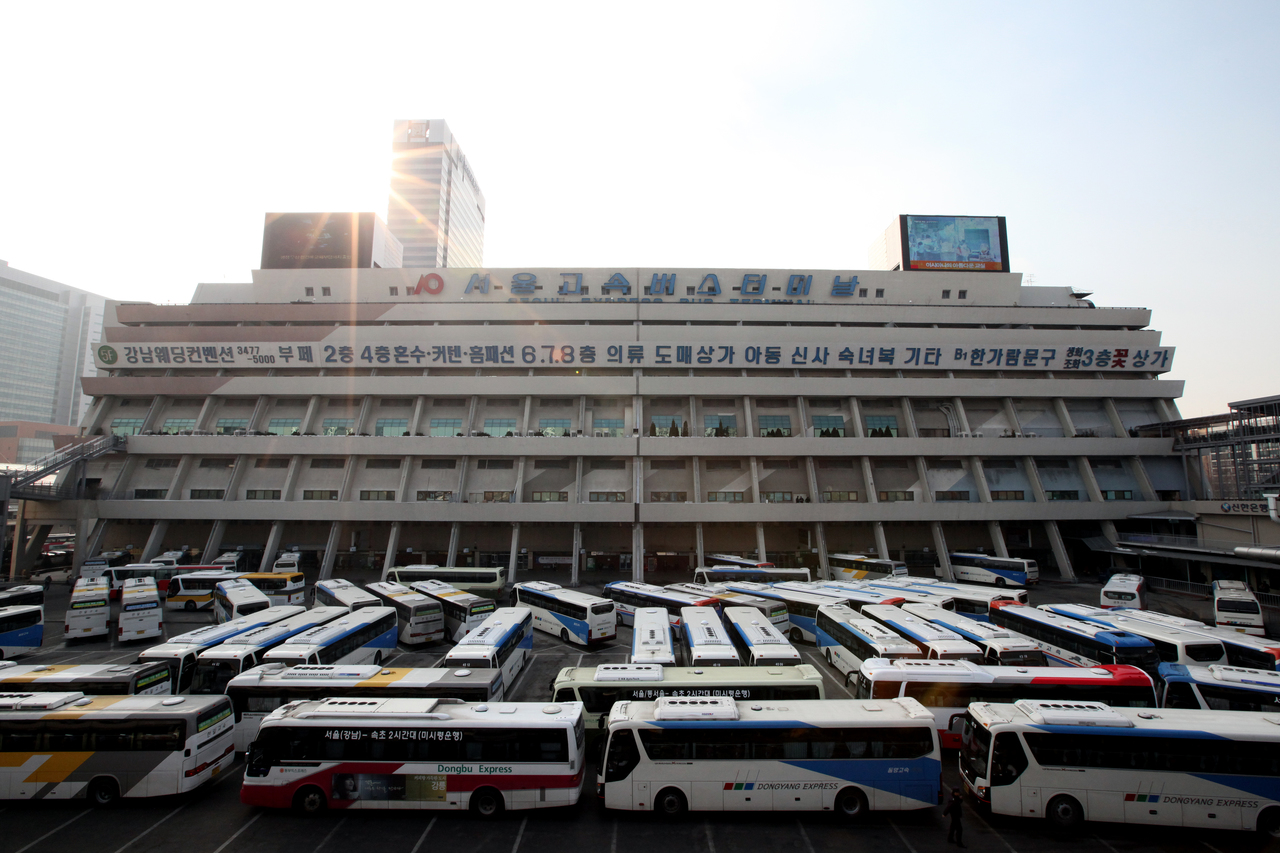
- Arrive at the correct terminal at least 20–30 minutes early. Large terminals like Seoul Express Bus Terminal have multiple gates, and buses generally depart on time regardless of how full the terminal looks.
Because LACHA is still a relatively new platform, it’s worth double-checking your specific date and route in the app before relying on it exclusively.
KOBUS’s 2026 Update: What Changes for Foreign Card Payments
KOBUS is set to fix its own foreign-payment gap directly, rather than leaving it entirely to third parties. In mid-2026, KOBUS announced it would accept overseas card payments for express bus tickets on its own website from August 2026, with intercity bus tickets following in September 2026 — and notably, without requiring a membership sign-up first. This matters because membership registration has historically been another wall for foreigners, often tied to the same Korean phone verification that blocks payment.
Once this rolls out, booking directly on kobus.co.kr should mean access to the full real-time seat map and the same prices Korean users see — something third-party platforms can’t always match, since markups and limited route selection are common complaints about booking through intermediaries. Until you’ve confirmed the update is live and working for your card, I’d still treat the LACHA app or in-person purchase as your primary plan, and test a KOBUS booking yourself before your trip rather than assuming the feature is active — official payment integrations like this sometimes launch in phases or slip in timing.
Should You Wait for the KOBUS Update or Book Now?
If you can’t confirm the rollout is live for your card, don’t wait — use the LACHA app or terminal purchase. Once the update is confirmed stable, booking direct on KOBUS should give you better route coverage for less-traveled connections and full transparency on pricing, since you’re paying the same fare as domestic users instead of a platform markup.
Common Mistakes That Waste Your Time
Confusing KOBUS with Bustago. KOBUS covers express buses (fewer stops, faster routes between major cities), while Bustago covers intercity buses (more stops, often cheaper, different terminal in some cities). Booking on the wrong platform, or assuming one system’s ticket works for the other’s terminal, means showing up with a ticket the driver can’t scan.
Assuming a random Korean phone number will fully work. Entering a placeholder number sometimes clears the format check on the form, but the actual verification code still needs to land somewhere — and even if you dodge that step, the card authentication behind it still blocks foreign cards. This wastes 10–15 minutes on a dead end that was never going to complete.
Trying vending machines at the terminal. Ticket kiosks at bus terminals are frequently tied to the same domestic-card infrastructure as the websites, so foreign cards and sometimes even foreign cash get rejected at the machine. Skip the kiosk and go to the staffed counter instead.
Booking on the LACHA app but expecting every intercity route to be listed. Its strength is major express routes between big cities; smaller intercity connections are often missing, so if your destination is a smaller town, terminal purchase or Bustago may be your only real option.
Not bringing the exact card used to book. If you prebooked online, some terminals ask you to insert or show the same card used for payment to release the printed ticket or confirm the QR code — a different card, even your own, can cause a hold-up at the counter.
Alternatives If Online Booking Fails
In-person purchase at the terminal counter remains the most foolproof backup, and it’s worth normalizing rather than treating as a last resort. Staffed ticket counters at Seoul Express Bus Terminal (Express Bus Terminal Station, lines 3, 7, 9) and the adjacent Central City Terminal — which handles Honam Line destinations like Jeonju and Gwangju, while the main terminal handles Gyeongbu and Yeongdong line destinations like Busan, Daegu, Gyeongju, Sokcho, and Gangneung — accept foreign cards and cash directly, no phone verification involved. My honest take: unless you’re traveling during a major holiday like Seollal or Chuseok, buses on popular routes rarely sell out, so walking up same-day is genuinely viable, not just a fallback.
For intercity routes where the LACHA app comes up empty, Hanpass is worth trying — it supports Mastercard and lets you hold a KRW balance in its wallet, though travelers have reported occasional booking hiccups, so I wouldn’t rely on it for a tight connection you can’t afford to miss.
If bus booking keeps failing and your route runs on rail, Korail’s official online booking platform is genuinely easier for foreigners to book online, with English support and international card acceptance for KTX. The trade-off: express buses run roughly 30–40% cheaper than KTX for comparable routes, so you’re paying for the convenience if you switch to rail purely to dodge the booking friction.
Frequently Asked Questions
Can foreigners book KOBUS tickets online right now?
Not reliably with a foreign card — KOBUS currently requires domestic card authentication that most international cards fail. Until you’ve confirmed the August 2026 update for express buses (September 2026 for intercity) is live for your card, your best options are the LACHA app or buying at the terminal counter.
Is booking through a third-party app more expensive than booking directly through KOBUS?
Apps like LACHA can carry a modest markup compared to the base KOBUS fare, since they’re handling the payment conversion for you. For most travelers the small premium is worth it in exchange for a booking process that actually completes.
Do I need to print my bus ticket if I book through an app?
No — apps like LACHA issue a QR-code boarding pass through email or the app, and terminal staff scan it directly. Bring your phone charged and the screen ready, since terminals can be noisy and crowded near departure time.
What’s the difference between KOBUS and Bustago?
KOBUS operates Korea’s express bus network (major city-to-city routes), while Bustago operates the intercity network (more frequent stops, often smaller towns). They’re separate booking systems, so a ticket or reservation on one won’t be recognized at a terminal or gate served by the other.
Should I just buy my ticket at the terminal instead of booking online?
For most routes and most days, yes — it’s simpler and avoids the payment issues entirely, since counters accept foreign cards and cash directly. The exception is major holiday periods like Seollal and Chuseok, when popular routes can genuinely sell out and prebooking becomes worth the extra effort.
In Conclusion
The core issue behind Korea express bus foreigner booking isn’t that the system is impossible — it’s that KOBUS was built around Korean card authentication and phone verification that foreign travelers simply can’t pass. Until you’ve confirmed KOBUS’s own foreign-card support (announced for August 2026 for express buses) works for you, your most dependable options are the LACHA app for advance booking with a QR-code pass, or walking up to the terminal counter with cash or a foreign card, which works on nearly any non-holiday day. Know which network you need — KOBUS for express routes, Bustago for intercity ones — and build in the 20–30 minute buffer at large terminals like Seoul Express Bus Terminal. Once the KOBUS update lands, direct booking should become the simplest path for real-time seats and fair pricing, but until it’s confirmed live, treat the LACHA app and in-person purchase as your reliable plan.
Discover more from Korea Visiting
Subscribe to get the latest posts sent to your email.