A hanok stay with a tea ceremony and home-cooked breakfast is the closest most travelers will get to living inside a 19th-century Korean household without giving up a private room and a real mattress option. I’ve stayed in enough hanok guesthouses around Bukchon Hanok Village to know the difference between a “traditional experience” that’s really just a hardwood floor and cold instant coffee, and one where a host family actually steeps seasonal tea and cooks rice, banchan, and soup the same morning you eat it. That distinction matters more than the architecture photos suggest, and it’s the whole point of this guide: which hanoks genuinely deliver the ritual, what the tea ceremony actually involves, and what nobody tells you about sleeping on a floor mat in a 100-year-old building near Gyeongbokgung Palace.
Key Takeaways
- A true “home-cooked” hanok breakfast is prepared on-site by the host with seasonal ingredients, not catered — properties like Cheong Yeon Jae serve it in a communal dining room and can adjust the timing on request.
- Rakkojae Seoul’s Hanbok Tea Ceremony runs about 90 minutes, costs around US$150 discounted from US$165, and requires guests to be 8 years or older.
- Not every tea ceremony requires a hanbok — some hanoks serve traditional herbal, root, or berry teas as a casual daily ritual rather than a paid, costumed event.
- Bukchon Hanok Village enforces a 10:00–17:00 tourist visiting window on Bukchon-ro 11-gil, with fines for violations starting March 2025 — hotel guests are exempt with a booking confirmation.
- Floor sleeping, paper walls, and inconsistent air conditioning are the three most common comfort complaints — ask about them before you book, not after check-in.
Top Attractions
Rakkojae Seoul Bukchon Hanok Hotel
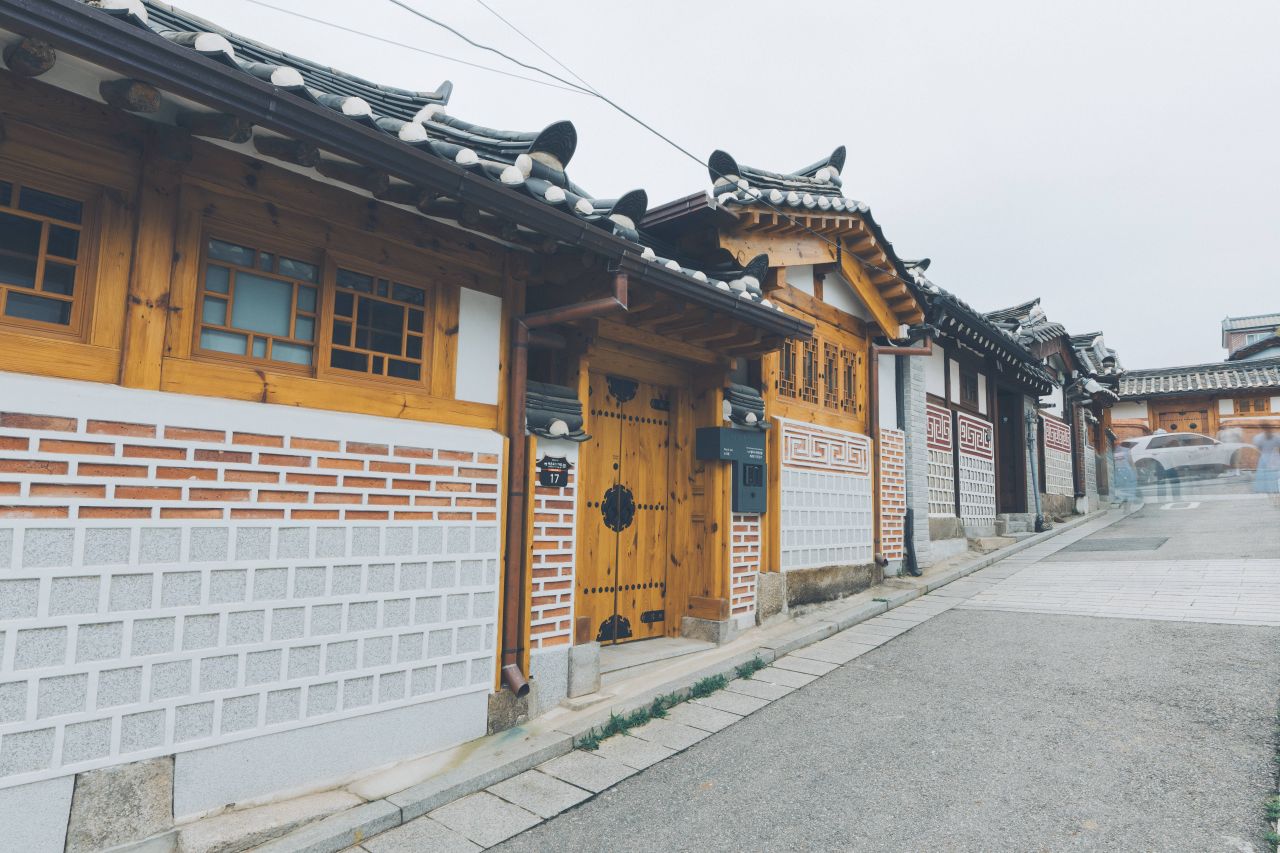
The must-do “attraction” here isn’t a monument, it’s the compound itself — a hanok complex with a 130-year history in Bukchon, restored by master carpenter Jeong Yeong-jin, whose daecheongmaru (wooden veranda), jangdokdae jar terrace, and pine-shaded courtyard give it the archetypal hanok look you see in every brochure. What sets it apart for this topic is the daily Rakkojae tea ceremony: about 90 minutes, offered daily with seatings that typically run mid-morning through mid-afternoon, priced around US$150 (discounted from US$165) for the Hanbok Tea Ceremony package, which includes a premium hanbok rental, three seasonal teas, and three handmade tea snacks. My honest take: the hanbok rental is worth it once, mainly for the photos on the daecheongmaru, but if you’ve already done a hanbok experience elsewhere, ask about a tea-only option without the costume. Note the minimum age of 8 for participants. Address: 218 Gahoe-dong, Jongno-gu, Seoul.
The Chae : Courtyard
This one solves the “I want a private, family-style hanok, not a hotel with hanok decor” complaint I hear most often from readers. The Chae, in Seochon near Gyeongbokgung Palace, books only one private hanok stay per day — meaning the whole traditional house, courtyard, and open-air foot bath are yours alone. Its tea ceremony centers on Korean mugwort tea served with proper teaware, a quieter, less performative ritual than a hanbok-and-photography package, and it’s my pick for travelers who want the ceremony without the costume. Address: 16 Jahamun-ro 1-ra-gil, Jongno-gu, Seoul.
Cheong Yeon Jae Hanok Stay
Cheong Yeon Jae, in Bukchon near Changdeokgung Palace, is the clearest example of what “home-cooked breakfast” should mean: a healthy, traditional Korean breakfast served daily in a communal dining room, made with fresh seasonal ingredients, with earlier service available on request for guests catching an early train. Originally built in 1935 and recently renovated, it keeps the tea ceremony as part of the guest experience rather than an optional paid add-on — worth it if you want the ritual folded into your stay rather than booked separately.
Bukchon Hanok Village
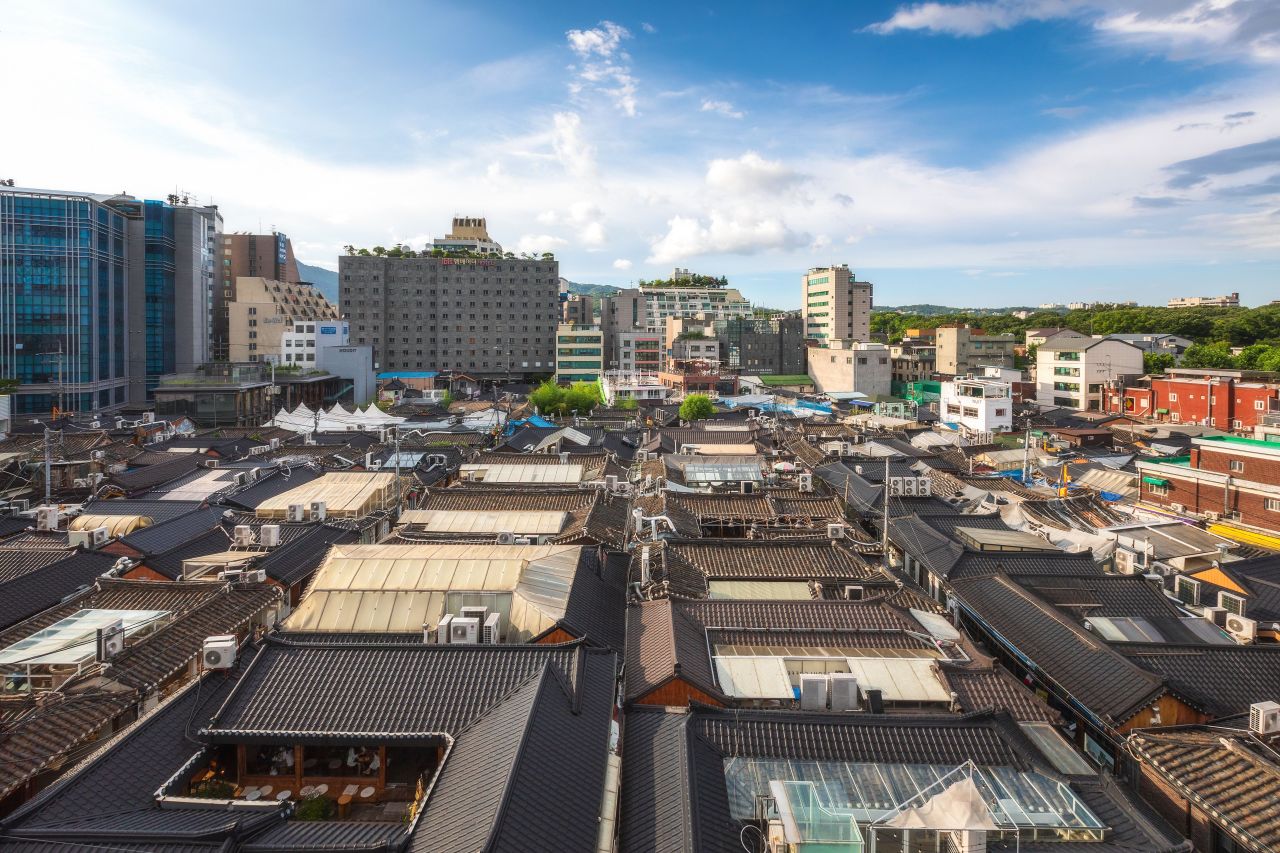
Walking Bukchon itself is the free version of this experience — hundreds of Joseon-era hanoks, many now guesthouses, tea houses, and cultural centers, spread across the hills between Gyeongbokgung, Changdeokgung, and Jongmyo Shrine. The official visiting window on the busiest lane, Bukchon-ro 11-gil, is 10:00–17:00, and residents have pushed back hard on tourist noise — violations now carry a 100,000 KRW fine as of March 2025. Go before 9:00 AM if you want the alleys empty; by mid-morning, tour groups fill the narrow lanes and every doorway shot has three strangers in it. Hotel guests staying inside the zone are exempt from the restriction with a booking confirmation.
Naver Map | Google Maps | Official Site
Gyeongbokgung Palace
Pair your hanok stay with Gyeongbokgung Palace, a five-to-ten-minute walk from most Bukchon and Seochon hanoks. Seeing the palace gates first thing in the morning, then walking straight into a quiet hanok breakfast, is the closest this itinerary gets to a coherent “day in old Seoul” rather than a checklist of separate attractions.
Food & Local Cuisine
What “home-cooked” actually means in a hanok
A genuinely home-cooked hanok breakfast is prepared on-site by the host or a small kitchen staff on the morning you eat it, from seasonal ingredients bought for that stay, not assembled off-site and reheated. Cheong Yeon Jae’s communal-dining-room model — steamed rice, a rotating set of banchan, a simple soup, and grilled or seasoned fish depending on the season — is the benchmark I’d use to judge any hanok advertising “traditional Korean breakfast.” Rakkojae also provides a traditional Korean breakfast, though the emphasis of a Rakkojae stay leans more toward the tea ceremony as the signature ritual. The tell for a catered, non-home-cooked breakfast is usually identical trays across every room and a fixed serving window with no flexibility — a real host kitchen can shift your meal earlier if you ask, the way Cheong Yeon Jae does.
The tea ceremony as a daily ritual, not a photo op
The most underrated part of a hanok stay is treating the tea ceremony as a slow, repeatable daily habit rather than a one-time paid event — sitting on the daecheongmaru with a cup of seasonal tea in the quiet hour after breakfast, before the village fills with day-trippers, does more for the “immersion” travelers say they want than the hanbok photos do. Rakkojae’s format — three seasonal teas paired with three handmade tea snacks over roughly 90 minutes — is deliberately unhurried; don’t book it back-to-back with a tight sightseeing schedule.
Tea ceremonies that don’t require a hanbok
If you’d rather skip the costume, look for hanoks serving Korean berry, root, or herb teas as a casual daily offering instead of a formal, ticketed Darye ceremony — The Chae’s mugwort tea service, paired with its private open-air foot bath, is exactly this style, and it’s genuinely more relaxing than a scheduled, hanbok-required session. My rule of thumb: if a listing calls it a “hanbok tea ceremony experience” with a set price per person, expect a costume and a booked time slot; if it’s described as tea “served daily” or “as part of the stay,” it’s usually low-key and included.
When breakfast isn’t included
Not every well-known hanok serves breakfast — Yedawon in Jeonju, for example, does not offer breakfast, so if you’re staying there, plan to walk into Jeonju Hanok Village for a market breakfast or a bowl of kongnamul gukbap before you factor “home-cooked” into your itinerary. Always check this specific detail before booking; “hanok stay” and “hanok stay with breakfast” are not interchangeable searches for a reason.
Getting There & Getting Around
Reaching Bukchon Hanok Village
Take Seoul Subway Line 3 to Anguk Station (Exit 2) and walk roughly 10 minutes uphill, or use Gyeongbokgung Station (Exit 5) if your hanok sits on the western side of the village near the palace. Both routes cost a standard subway fare of about 1,550 KRW with a T-money card (as of 2025) with a T-money card. Rakkojae’s Culture Lounge is a one-minute walk from the village entrance, which makes it a useful landmark even if you’re staying elsewhere in Bukchon.
Reaching Seochon and The Chae
Seochon sits on the opposite side of Gyeongbokgung from Bukchon — take Line 3 to Gyeongbokgung Station (Exit 2) and walk about 10–15 minutes through the quieter, less-touristed Seochon alleys. I actually prefer arriving here on foot from Bukchon rather than by taxi; the walk around the palace wall is flat, scenic, and gives you a natural transition between the two neighborhoods.
Getting around once you’re there
Bukchon’s steep, narrow lanes are built for walking, not vehicles — chartered buses are already banned on the main hanok streets, with fines up to 500,000 KRW for repeat violations once full enforcement starts in January 2026. Wheeled suitcases are the real practical problem: cobblestone alleys and narrow gates mean you’ll often carry your bag the last 50–100 meters by hand, so pack lighter than you think you need to for a hanok stay.
Essential Tips for Hanok Stay with Tea Ceremony and Home-Cooked Breakfast
Book the tea ceremony and breakfast as separate line items
Confirm in writing whether the tea ceremony and breakfast are included in your room rate or booked as add-ons — Rakkojae’s Hanbok Tea Ceremony is a distinct paid experience (around US$150) on top of the room, while Cheong Yeon Jae folds a home-style breakfast into the daily stay. Assuming one hanok’s package structure applies to another is the single most common booking mistake I see travelers make.
Protect the floors, and protect your back
Take your shoes off at the raised threshold and switch to the slippers provided — dragging a wheeled suitcase across original hardwood or ondol flooring is how guests damage decades-old finishes, so lift the bag over the doorstep or lay it on its side just inside the door instead of rolling it in. On the sleeping side, most hanok stays use a yo (a padded floor mattress) over the heated ondol floor rather than a Western bed; if you’re prone to back or shoulder pain, ask the host for an extra mat layer before your first night, since retrofitting comfort after a rough night’s sleep is much harder.
Ondol heating usually doesn’t reach the bathroom
The underfloor ondol heating that makes hanok bedrooms warm typically stops at the bathroom threshold, because bathrooms are almost always modern additions built with standard tile and plumbing rather than the traditional heated floor system — expect a noticeably colder bathroom floor, especially in winter, and pack slippers you don’t mind getting slightly damp.
What people get wrong about hanok stays
The biggest misconception is expecting ryokan-level service — a dedicated tea ceremony, a personal greeting, turn-down service — from every hanok guesthouse; smaller, budget hanok listings are often just a traditional building with a bed, no scheduled cultural program at all, which is why the properties named in this guide specifically build the ceremony and home-cooked meal into their offering rather than leaving it to chance. The second common mistake is assuming paper sliding doors (hanji) provide real sound insulation — they don’t, because their layered mulberry-paper construction is designed for airflow and light diffusion, not acoustic dampening, so noise from neighboring rooms and the alley outside carries through clearly. Pack earplugs if you’re a light sleeper. The third mistake is booking a hanok in peak summer without confirming air conditioning; many older hanok rooms rely on natural ventilation and can run uncomfortably hot from June through August, so this is a question to ask before you pay, not something to discover at check-in.
Booking a family-run hanok versus a corporate one
If you specifically want a hanok hosted by a local family rather than a professionally managed “hanok hotel,” search listings on Airbnb using terms like “hanok guesthouse” plus the neighborhood name, and read the host’s own description closely — family-run stays tend to mention the host cooking or serving guests personally, while corporate hanok hotels describe amenities and packages instead. Direct phone or email booking (as with The Chae’s concierge line) is also common for smaller family-operated hanoks that don’t list on major platforms at all.
Where to Stay
Bukchon Hanok Village, Seoul (heritage and full-service)
Bukchon is the strongest choice if the tea ceremony and breakfast are the priority, not an afterthought — Rakkojae’s Seoul properties and Cheong Yeon Jae both sit within this neighborhood, put you within walking distance of Gyeongbokgung and Changdeokgung, and room rates for Rakkojae’s hanok rooms have historically run roughly 250,000–450,000 KRW per night. Book early; the well-maintained, “grand” hanoks travelers rave about online sell out fastest.
Seochon, Seoul (private and quiet)
Choose Seochon over Bukchon if you want a private, whole-house stay rather than a shared guesthouse — The Chae’s single-booking-per-day model is the clearest example, and the neighborhood itself feels noticeably less crowded than Bukchon even during peak travel months.
Jeonju Hanok Village (culture and food, mixed amenities)
Jeonju remains the go-to for hanok density and street food, but confirm amenities individually — Yedawon, for instance, has a standard 2:00 PM check-in and 11:00 AM check-out but does not serve breakfast, so it suits travelers prioritizing the village’s food scene over an in-house home-cooked meal. Jeonju can feel touristy right at the main gate; walking two or three streets back from the entrance is usually enough to find quieter, less commercial hanok lanes.
Splitting your trip between a hanok and a hotel
If you’re torn between authenticity and comfort, my honest recommendation is to split it: book one or two nights in a hanok for the tea ceremony and breakfast ritual, then move to a standard hotel for the rest of the trip. This solves the two most common hanok complaints — floor sleeping and thin-wall noise — without giving up the cultural experience entirely.
Frequently Asked Questions
Where is the best place to put luggage in a hanok?
Keep your suitcase just inside the entryway, ideally lifted over the raised threshold or set on its side rather than rolled across the room, since wheeled bags are the main cause of scuffed hardwood and ondol flooring in older hanok buildings. Many hosts provide a small mat or tray specifically for this purpose — ask if you don’t see one.
Does the ondol underfloor heating extend to the bathroom?
Generally, no. Bathrooms in hanok stays are almost always modern additions with standard tile floors rather than the traditional heated ondol system, so expect the bathroom to feel noticeably colder than the bedroom, particularly in winter.
Can I do a tea ceremony without wearing a hanbok?
Yes — look for hanoks that describe tea as “served daily” or “part of the stay” rather than a ticketed “hanbok tea ceremony experience.” The Chae’s mugwort tea service is a good example of a low-key, no-costume option, as opposed to Rakkojae’s formal, paid Hanbok Tea Ceremony package.
Should I split my trip between a hanok stay and a regular hotel?
For most travelers, yes. A one- or two-night hanok stay delivers the tea ceremony, home-cooked breakfast, and cultural atmosphere, while a hotel for the remaining nights avoids extended floor-sleeping discomfort and thin-wall noise that can wear on longer stays.
How do I book an authentic, family-run hanok instead of a commercial one?
Search platforms like Airbnb for “hanok guesthouse” listings and read the host description for signs of personal, on-site cooking or service, since family-run hosts tend to describe themselves rather than list amenities. Smaller family-operated hanoks also often take direct phone or email bookings instead of listing on major hotel platforms.
In Conclusion
A hanok stay with a tea ceremony and home-cooked breakfast rewards travelers who treat it as a slow ritual rather than a checklist item — pick one property built around that experience, like Rakkojae Seoul, Cheong Yeon Jae, or The Chae, confirm exactly what’s included before you book, and give yourself at least one unhurried morning to actually sit with the tea rather than rushing to the next attraction. Protect the floors, pack earplugs for thin paper walls, ask about air conditioning in summer, and don’t assume every hanok offers ryokan-level service or breakfast by default. If floor sleeping worries you, split your trip between one or two hanok nights and a standard hotel for the rest. Done right, this is one of the most memorable 24-hour stretches available in Seoul or Jeonju — done carelessly, it’s just an uncomfortable night with good photos.
Discover more from Korea Visiting
Subscribe to get the latest posts sent to your email.