Seoul in March 2027 is really two seasons in one month. Early March still feels like winter, with average highs near 7°C (44°F) and lows just below freezing. By the last week, highs reach about 13°C (56°F) and the first cherry blossoms start to open. Plan around timing above all. Seoul’s blossoms usually start in late March and peak in early April for about 7–10 days, so a trip in the first half of March will almost certainly miss them.
Below I cover what the weather actually feels like, when and where to see blossoms, what to pack, and how to get around on a short trip. The Korea Meteorological Administration’s official 2027 bloom forecast usually comes out around February. Treat every date here as a planning range, and re-check before you book anything non-refundable.
Key Takeaways
- Average highs rise from about 7°C to 13°C (44–56°F) during March 2027, and lows climb from about -0.5°C to 5.5°C (31–42°F). Pack for cold mornings and mild afternoons.
- Cherry blossoms typically start in late March and peak in early April for 7–10 days. Aim to be in Seoul from about March 28 to April 5 if blossoms are the goal.
- Layers beat one heavy coat: a warm coat for early March, a light jacket or trench for late March, plus a scarf, umbrella and KF94 mask.
- Festival dates for 2027 aren’t announced yet. The 2026 dates fell between April 1 and April 12, so use them only as a rough guide.
What the Weather Is Really Like in Seoul in March 2027
Expect winter-like mornings and mild afternoons. Average daily highs climb from about 7°C (44°F) to 13°C (56°F) over the month, and average lows climb from about -0.5°C (31°F) to 5.5°C (42°F). Those are averages for Seoul, so a single week can swing either way.
How different are early and late March?
Very different. In the first days of March, mornings and evenings are cold enough that I’d still wear a proper winter coat. That’s especially true near the Han River, where wind cuts through thin layers. By the last week, a light jacket or trench coat is enough for daytime sightseeing, and you’ll want to carry it rather than wear it at 2 p.m.
Every day has a gap of roughly 7–8°C between the morning low and the afternoon high. The mistake is dressing for the afternoon photo you saw online. You will spend the first and last hours of each day in the cold.
What about rain, dust and dry air?
Rain is light and infrequent. The chance of a wet day rises from about 13% to 17% across the month, and snow is rare in March. Two things catch people off guard:
- Dry air: Your lips and skin will feel it, especially indoors with the heating on.
- Yellow dust: Occasional Gobi Desert dust storms can hit in spring, and tree pollen adds to poor air on some days. Locals commonly wear KF94 masks on these days, and I’d pack a few. Check a fine-dust (PM2.5) reading each morning and move your outdoor plans, like Han River walks, to a museum day when the reading is bad.

When Do Cherry Blossoms Bloom in Seoul, and How Reliable Is the 2027 Forecast?
Seoul’s cherry blossoms typically start opening in late March and peak in early April, and the full show lasts about 7–10 days. No one can pin down the 2027 dates yet. The Korea Meteorological Administration ( KMA ) is expected to publish its official 2027 forecast around February 2027.
Which dates should I book?
My advice is to build a window rather than a single day. If blossoms matter more than anything else, plan to be in Seoul from about March 28 to April 5. Trees bloom according to accumulated warmth, so a cold snap can push things back several days. A warm spell can pull them forward. A windy or rainy day during peak can strip petals in a matter of hours, so a full week gives you a spare day or two.
If your dates are fixed in the first half of March, don’t expect blossoms. Treat it as a cool-weather trip with palaces, museums and food, and count any early flowers as a bonus.
Are the spring festivals in March?
Mostly not. The 2026 dates are the best proxy I have, and they fell in early April:
- Seokchon Lake Cherry Blossom Festival: April 1–5, 2026.
- Seoul Grand Park Spring Flower Festival: April 4–12, 2026.
- Yeouido Spring Flower Festival: listed for early April in 2026 (sources gave April 3–7 or April 8–12). It is held along Yeouiseo-ro and admission is free.
Confirm 2027 dates on the Seoul city website and the Hangang park site a few weeks before you fly.
Where to See Blossoms and What to Do in Seoul in March
Yeouido Hangang Park, Seokchon Lake, Namsan Park and Seoul Grand Park are the strongest blossom spots. Gyeongbokgung Palace and Seoul Forest round out a March itinerary. Here is how I’d use each one.
Yeouido Hangang Park
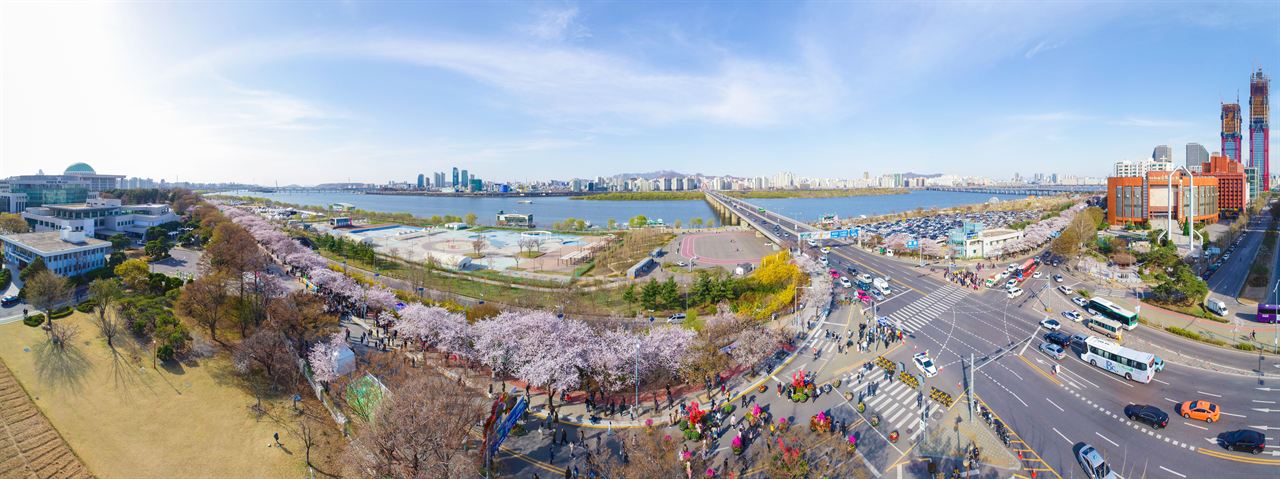
This is the classic blossom stop and the most crowded, so go on a weekday morning. The park is on 330 Yeouidong-ro, Yeongdeungpo-gu and is open 24 hours according to the Korea Tourism Organization, which makes an early or late visit easy. Yeouinaru Station on Line 5 puts you at the park’s edge. (Google Maps, Naver Map, official site)
Seokchon Lake
Seokchon Lake in Songpa-gu is a loop walk beside Lotte World, which makes it easy to pair with an indoor stop if the weather turns. The trees lean over the water, so it works well in the evening too. (Google Maps, Naver Map)
Seoul Grand Park
The spring flower festival here ran April 4–12 in 2026, so it suits a trip that runs into early April. Take Subway Line 4 to Grand Park Station. Note that the station’s address is in Gwacheon, Gyeonggi Province, just outside Seoul city limits. (Google Maps, Naver Map)
Namsan Park and N Seoul Tower
Namsan is a 265-meter hill in the middle of the city, and the park is open 24 hours per the Korea Tourism Organization. The Korea Tourism Organization’s crowd data shows Sundays as the busiest day and Mondays as the quietest, so a Monday visit is the easy win.
Ways up include the cable car, the green shuttle buses 01A and 01B, or a walk. The cable car is a 10-minute walk from Myeong-dong Station Exits 3 and 4. As of 2026, the tower observatory is ₩26,000 for adults and ₩16,000 for children. The cable car is ₩15,000 round trip or ₩12,000 one way for adults. Third-party ticket sites list the observatory at roughly US$15–24 depending on the package, so compare before you buy. My pick is to take the shuttle up and walk down through the park. (Google Maps, Naver Map, official site)
Gyeongbokgung Palace
This is the best cold-weather sightseeing anchor because you spend hours walking outdoors but the courtyards block some wind. Admission is ₩3,000 for adults (19+) as of 2026, and visitors wearing a hanbok (traditional Korean dress) enter free. From March to May the palace is open 09:00–18:00 with last admission at 17:00, and it’s closed on Tuesdays (the following business day if Tuesday is a public holiday). It’s at 161 Sajik-ro, Jongno-gu. Gyeongbokgung Station on Line 3, Exit 5, is about a 5-minute walk. The Korea Tourism Organization’s data shows Saturdays as the busiest day and Mondays as the quietest. Details are on the official royal heritage site.
Seoul Forest
Seoul Forest at 273 Ttukseom-ro, Seongdong-gu is a good fallback when the big blossom spots are packed. It opened on June 18, 2005 on the site of a former water treatment facility and has four themed parks. The park is open around the clock, but individual facilities keep their own hours, so check the official park site. (Google Maps, Naver Map)
What to Pack for Seoul in March
Pack for a 7–8°C swing within each day, using layers you can add or remove instead of one heavy coat. The exact mix depends on which half of the month you’re in.
Early March (roughly the first two weeks): A warm coat, a scarf, gloves or warm pockets, and a thermal or fleece layer. This is also where a windproof outer layer matters most.
Late March: A light jacket or trench coat over a sweater, plus long pants. This is the period you’ll shed layers by mid-afternoon.
All month:
- Shoes: Comfortable, broken-in walking shoes. Palace grounds, Namsan and park loops add up to several kilometers a day, and wet ground after rain is slippery in smooth soles.
- Rain gear: A compact umbrella or light raincoat. Rain is light, but it’s enough to ruin a photo day.
- Air quality: KF94 masks for dusty days, which you can buy locally.
- Skin care: Lip balm and moisturizer, because the air is dry.
- Warm-weather travelers: Add one extra layer beyond what you think you need. Wind near the river is what catches people from warmer climates off guard.
Climate Card vs T-money: Getting Around Seoul in March
For most first-timers in March, a T-money card is the simpler choice. The Climate Card only pays off if you’ll ride the subway or bus about five or more times in a day. Prices below are 2026 rates and may change by 2027.
T-money card:
- Costs about ₩4,000 for the card as of 2026, then you load value.
- Reload in ₩1,000 increments (up to ₩500,000) at convenience stores and subway stations.
- A single subway ride is about ₩1,550.
- Best for: short visits, light days, and anyone who wants to pay per ride.
Climate Card (short-term tourist pass):
- Unlimited subway and bus rides within Seoul: about ₩5,000 for 1 day, ₩10,000 for 3 days and ₩15,000 for 5 days as of 2026.
- The physical card costs ₩3,000, cash only, at subway stations or convenience stores.
- Best for: heavy sightseeing days with many hops, such as palace, Namsan and Yeouido in one day.
The break-even math is simple. A 1-day pass plus the card is about ₩8,000, which equals roughly five subway rides at ₩1,550. On a day when you take three or four rides, T-money is cheaper. When it’s cold and you’re hopping between indoor stops, the pass gets easier to justify. Check the coverage before you commit if you plan to go beyond Seoul. Grand Park Station, for example, has a Gwacheon address, so confirm the pass works there before relying on it.
Common Mistakes First-Timers Make in Seoul in March
The biggest mistakes come from assuming spring has fully arrived. Each of these fails for a specific reason.
- Booking a single “peak bloom” date. Blossoms follow accumulated warmth, so a cold week can delay them and a strong wind or rain can end the peak in a day or two. A window of several days is the only safe plan.
- Packing for the afternoon photo. Lows near freezing in early March mean you’re cold at breakfast and after sunset. Thin spring outfits leave you shivering by the river.
- Going to Yeouido on a festival weekend. Crowds concentrate on weekends and the festival dates. A weekday morning or a late-evening visit, when the park is open 24 hours, avoids most of the crush.
- Visiting Gyeongbokgung on a Tuesday. The palace is closed on Tuesdays, so you’d arrive at a locked gate. Saturdays are the busiest days, so aim for a Monday or Wednesday.
- Mixing up Seoul Grand Park and Seoul Children’s Grand Park. They are different places. Seoul Grand Park is reached via Grand Park Station on Line 4, while Seoul Children’s Grand Park is on Neungdong-ro in Gwangjin-gu. Putting the wrong one into a map app sends you across the city.
- Ignoring air quality. Yellow dust and pollen can make outdoor days unpleasant. Check the reading each morning and carry KF94 masks so you can adjust the plan instead of pushing through.
- Expecting early breakfast cafes. Many cafes open around 10 a.m., so early sightseers should eat at a convenience store or restaurant first.
Rainy-Day, Solo and Day-Trip Backups
Museums, Han River cycling and one well-chosen day trip cover most bad-weather days and go beyond the usual social-media checklist. Cold snaps and dusty days are common enough in March that you should have a backup ready.
Indoor days: The National Museum of Korea and the War Memorial of Korea are big enough to fill half a day each and keep you out of the wind. I’d rank them as the best answer to a dusty or rainy morning.
Outdoor alternatives: On clear days, cycling along the Han River or hiking one of Seoul’s mountains gives you a different view of the city. Dress in layers, since you’ll warm up quickly.
Solo dining: Naver Map is more useful than Google Maps in Korea for this. Search for restaurants and look for the solo-dining tag, which appears in Korean as “honbap”. It saves you from being turned away at places that prefer groups. If a traditional market feels overcrowded at midday, go earlier.
A day trip or overnight: If you have a spare night or two, I’d choose two nights in Gyeongju, where sites like Yangdong Folk Village reward a slower pace, over a single night in Jeonju. Cities farther south typically bloom before Seoul, so it can also stretch your blossom season.
Frequently Asked Questions
Is March a good time to visit Seoul?
Yes, especially the last week of March. Early March is cold and windy, while late March brings milder days and the start of the blossoms. Late March to early May is generally considered the sweet spot for pleasant weather.
When will the cherry blossoms bloom in Seoul in 2027?
Blooms typically start in late March and peak in early April, lasting about 7–10 days. The official 2027 forecast from the Korea Meteorological Administration is expected around February 2027. Until then, plan a flexible window of about March 28 to April 5.
What should I wear in Seoul in March?
Wear layers. Early March calls for a warm coat, scarf and sweater, and late March works with a light jacket or trench coat. Add comfortable walking shoes and a compact umbrella, because temperatures swing about 7–8°C between morning and afternoon.
How do I deal with yellow dust and pollen?
Check a fine-dust (PM2.5) reading each morning and wear a KF94 mask on bad days. Move outdoor plans like Han River walks to museums when readings are poor. Moisturizer and lip balm help with the dry air.
Should I buy a Climate Card or a T-money card?
For light sightseeing days, T-money is usually cheaper because a single subway ride is about ₩1,550 as of 2026. The Climate Card (about ₩5,000 for one day, plus a ₩3,000 card) pays off on days with roughly five or more rides. Check that your route stays within Seoul before you buy it.
In Conclusion
Seoul in March 2027 rewards flexible planning. Expect highs from about 7°C to 13°C (44–56°F), cold mornings and a real chance of dust, and pack layers, a scarf, an umbrella and KF94 masks. If blossoms are your goal, aim for roughly March 28 to April 5 and keep a spare day, because the peak lasts only 7–10 days and the official forecast won’t appear until around February 2027. Use weekday mornings for Yeouido Hangang Park, a Monday for Namsan and Gyeongbokgung Palace, and keep the National Museum of Korea or the War Memorial of Korea as your bad-air backup. For transport, start with T-money and switch to a Climate Card only on heavy multi-stop days. Re-check festival dates and prices closer to your trip, since all figures here are as of 2026.
Discover more from Korea Visiting
Subscribe to get the latest posts sent to your email.