You step out of Jongno 5-ga Station and the market is right there, with steam, sizzling oil and a dozen vendors waving you toward their stools. Before you’ve taken ten steps you have to decide where to sit, what to point at, and whether the price you can’t see on any sign is fair. Most first-timers end up at the first crowded counter and leave full but unsure they ate the right things.
This Gwangjang Market Food Guide gives you a plan before you walk in: which dishes are worth the queue, what they cost, how to order and pay, and where visitors most often get overcharged. It also covers the stalls that travelers praise and the ones they warn about, so you can eat well without wasting time.
Key Takeaways
- Start at the North Gate 2 line, where the bindaetteok, kalguksu, kkwabaegi and tteokbokki stalls cluster.
- Most single dishes cost ₩3,000 to ₩10,000. Yukhoe is the exception at ₩15,000 to ₩30,000 a plate.
- Say exactly what you want and ask the price first. Missing price tags and “mix it up?” upsells are the most common complaints.
- Jongno 5-ga Station Exit 7 is a one-minute walk from the market.
📍 Gwangjang Market — Essential Information
| Address | 88, Changgyeonggung-ro, Jongno-gu, Seoul |
| Website | www.kwangjangmarket.co.krjkm.or.kr |
| Map | Google Maps · Naver Map |
Gwangjang Market at a Glance
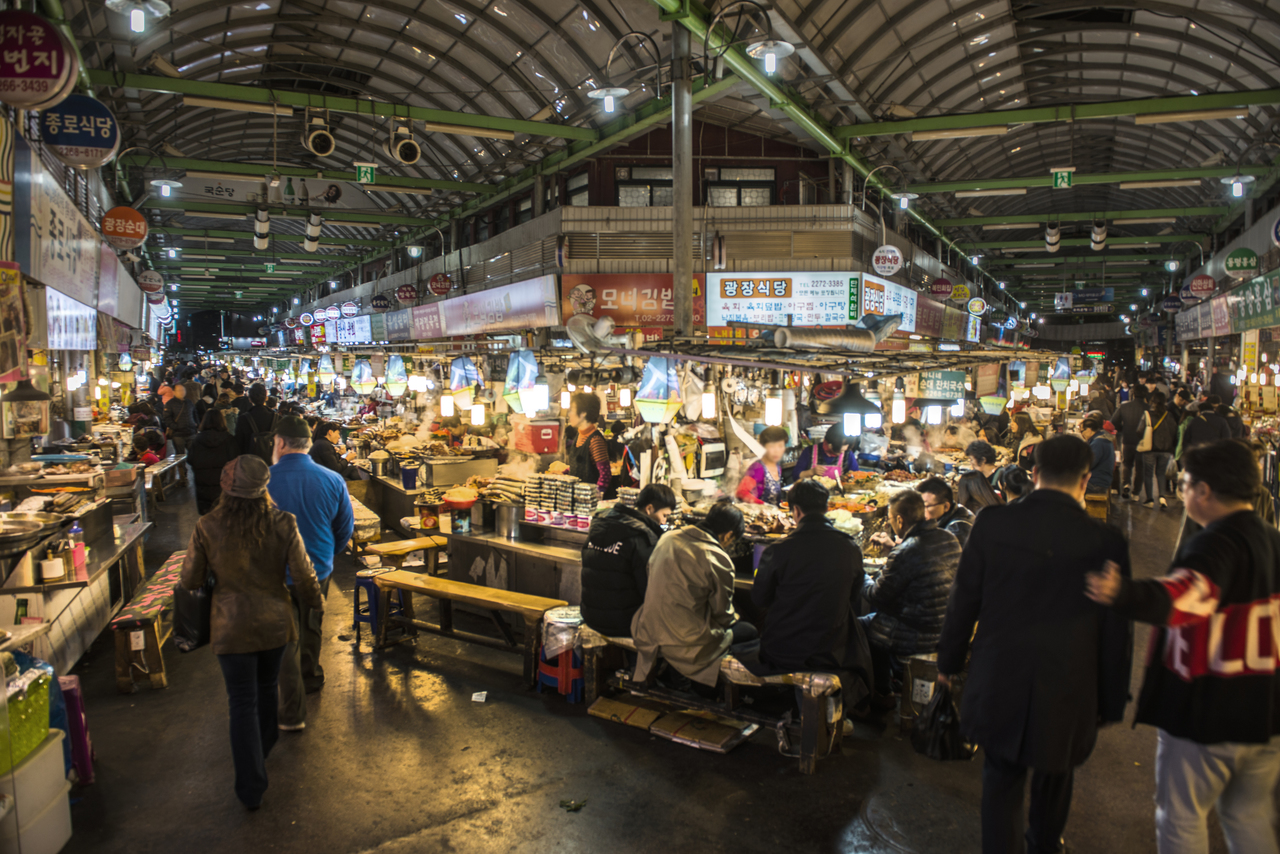
- Why visit: Gwangjang Market is Korea’s first permanent market, and its food street is one of the easiest places in Seoul to try many classic Korean snacks in one hour.
- What you will see and experience: Rows of shared counters, griddles of mung bean pancakes, bowls of hand-cut noodles, piles of mini gimbap and plates of raw beef tartare. The wholesale side of the market sells textiles, groceries, dried fish and traditional goods.
- Getting there: Jongno 5-ga Station on Line 1 is the closest, with Exit 7 about a one-minute walk away. Euljiro 4-ga Station (Lines 2 and 5) Exit 4 is a three-minute walk.
- Tickets and admission: There is no admission fee. You pay only for what you eat.
- Tips from past visitors: Visitors recommend choosing established stalls with proper signs, asking prices before ordering, and keeping a first-round budget of ₩20,000 to ₩30,000 per person.
- Nearby spots worth combining: Insadong, Cheonggyecheon Stream, Dongdaemun and Myeongdong are all reachable on foot from central Seoul.
How to Get to Gwangjang Market from the Subway
The fastest way to reach the market is Line 1 to Jongno 5-ga Station, where Exit 7 is a one-minute walk (about 41 m) from the market. A second option is Euljiro 4-ga Station, served by Lines 2 and 5, where Exit 4 is a three-minute walk (about 213 m).
Which station should you choose?
Choose Jongno 5-ga if you are coming from Line 1, because you surface almost at the market’s edge. Choose Euljiro 4-ga if you are coming from Line 2, which runs through Myeongdong, Dongdaemun and many hotel areas, or from Line 5. Both routes put you at the market within minutes, so pick whichever needs fewer transfers.
The subway base fare is ₩1,550 with a T-money transit card, or ₩1,650 with a single-journey ticket. Transfers within 30 minutes are free up to the distance-based fare (or 60 minutes between 9 PM and 7 AM), so a trip with one change does not cost double.
Can you walk or take a bus?
If you are staying around Insadong, Myeongdong, Dongdaemun or along Cheonggyecheon Stream, walking is realistic and lets you see the neighborhood. Several bus routes run along Jong-ro just north of the market. By taxi, drivers know the market by name, and Kakao T is the standard ride-hailing app.
Which map app works best?
Use Naver Map or KakaoMap for walking directions. Google Maps does not give reliable pedestrian routing in Korea, which is why a market only a few meters from the exit can still send you in circles. Inside the market, use North Gate 2 as your landmark. Many of the best-known stalls sit along that line.

Gwangjang Market Food Guide: The Dishes Worth Ordering
For a first visit, the dishes worth your appetite are bindaetteok, mayak gimbap, kalguksu and yukhoe, with kkwabaegi as a sweet finish. Most single dishes run ₩3,000 to ₩10,000, so you can taste several without a big bill.
Bindaetteok (mung bean pancake)
Bindaetteok is a crisp, golden pancake made from ground mung beans, fried in plenty of oil. Soonheene’s Bindaetteok is a famous stall, with prices typically ₩5,000 for a pancake and ₩3,000 for meat patties, with long lines at peak times. Takeout is usually pre-fried, so reheat it in an air fryer or a dry pan rather than a microwave. Eating it hot at the counter is the better experience.
Mayak gimbap (addictive mini rolls)
Mayak gimbap are bite-sized rice rolls with a thin filling, served with a mustard-soy dipping sauce. A portion is roughly ₩3,000 to ₩4,000. They are cheap and quick, which makes them a good opener while you decide where to go next. Monyeo Gimbap is praised by reviewers for its seasoning and wide tables, and it also serves mini tteokbokki, odeng and mini fried tofu rice.
Kalguksu (knife-cut noodles)
Kalguksu is a bowl of hand-cut wheat noodles in a light anchovy broth, and prices typically run ₩6,000 to ₩8,000. Cho Yonsoon’s Gohyang Kalguksu gained international fame through Netflix’s “Street Food: Asia”. Reviewers describe fast turnover but uncomfortable seating, so plan to eat quickly instead of lingering. Some noodle stalls sell out earlier in the day, so don’t leave this one for last.
Yukhoe (Korean beef tartare)
Yukhoe is raw seasoned beef, usually topped with egg yolk and pear slices, and it is the priciest item here at ₩15,000 to ₩30,000 per plate. Buchon Yukhoe is a highly recommended stall. Its main branch has the longest line, but reviewers note you can register for a waitlist in advance, which saves standing around. Many travelers on forums recommend the dedicated yukhoe alley over random street counters for this dish.
Kkwabaegi and sweet snacks
Kkwabaegi are twisted doughnuts, and the chapssal (glutinous rice) version is chewy, fluffy and crisp. The Twisted Donut stall is known for sweet rice, red bean, black rice and sweet potato flavors. In one video, two kkwabaegi plus a sweet potato doughnut cost ₩3,500, and the line moved reasonably.
Tteokbokki, Sundae and Other Stalls Along North Gate 2
The stretch along North Gate 2 holds most of the famous names, and it is also where you need to be careful. Reviewers list Kangga-ne Tteokbokki, Soonheene’s Bindaetteok, Parkga-ne Bindaetteok, Monyeo Gimbap and the Gohyang kalguksu stall along this line, plus the chapssal kkwabaegi stand.
Kangga-ne Tteokbokki and Gi-cheol-ne
Kangga-ne Tteokbokki has been open since 1997 and serves a sweet, radish-broth tteokbokki, mostly as takeout. Another reviewer praised the sauce and chewy rice cakes at Gi-cheol-ne, where tteokbokki, sundae and janchi guksu together cost ₩10,000. Sundae is Korean blood sausage, and the salt served alongside it was a highlight for that reviewer. Fresh watermelon juice there was also praised.
Fresh juice and trending stalls
For a drink, Daebong Sanghoe is mentioned for its fresh grape smoothie and other natural fruit juices. Garlic Boy (garlic bread with cream cheese) and Onion Cafe appear often in Instagram and YouTube vlogs. Treat them as optional extras once you have covered the classics.
How does the price compare with other markets?
Two comparison videos set Gwangjang against Gyeongdong Market. Tteokbokki at Gwangjang was ₩3,000 for six rice cakes, about half the amount per won compared with Gyeongdong. Sundae was ₩8,000 to ₩10,000 at Gwangjang versus ₩4,000 to ₩5,000 at Gyeongdong. Japchae was ₩5,000 at both, with a larger portion at Gyeongdong. Mixed jeon at ₩15,000 was larger at Gwangjang than the ₩14,000 plate at Gyeongdong. In short, Gwangjang is priced for convenience and fame, so go for the atmosphere and the signature dishes, not for the cheapest meal.
How to Order and Pay at Gwangjang Market
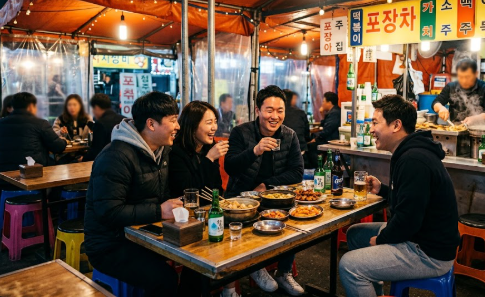
Ordering is simple once you know the pattern: choose a stall, sit or stand at the counter, say the dish and quantity, and pay when you order. Tipping is not customary.
What should you say?
Pointing works, but a few short phrases give you more control. Say the dish name and a number, such as “bindaetteok, two” or “kalguksu, one.” Ask “how much?” before they start cooking, since price tags are often missing. If you want only one thing, say it clearly. Reviewers report being asked “mix it up?” when ordering sundae, and a vague yes can turn a ₩8,000 plate into the ₩10,000 mixed version. Saying “sundae only” avoids that.
Dietary questions
Many dishes involve pork, beef, seafood broth or egg, and stalls rarely list ingredients. Kalguksu uses anchovy broth, and yukhoe is raw beef. If you avoid meat or seafood, ask about the broth and fillings before you pay, and consider bindaetteok without meat patties or plain kkwabaegi. A translation app on your phone helps with this.
Cash or card?
Most food stalls accept cards, including foreign ones. Still, carry ₩20,000 to ₩30,000 in small notes for older or smaller vendors who prefer cash. A budget of ₩20,000 to ₩30,000 per person is enough for a thorough tasting session. Onnuri vouchers are accepted at some stalls, according to one comparison video.
Common Mistakes at Gwangjang Market
The most common mistakes are ordering without a price, sitting down at the first stall that waves you in, and treating every counter as equal. All three come from the same cause: the market is crowded and fast, so decisions get made under pressure.
Not asking the price first
Price tags are often missing, so the price is whatever the vendor says at the moment you order. Visitors who skip this step report surprise totals. Ask before they cook, and check the total against the prices in this guide.
Following touts to a stool
Reviewers describe aggressive touting along the central lanes. A vendor who calls you over is not necessarily the best stall. Choose established shops with proper signs and visible customers, and walk past anyone who pushes.
Expecting every stall to be good
Some travelers and locals call the central street stalls a tourist trap, with pre-fried jeon and mediocre tteokbokki. Reviewers also mention missing saeng makgeolli, since many stalls only sell the bottled kind, and one noted leftover hairs on pork skin. Spend lightly on stalls you haven’t vetted, and put your money into the signature dishes above. Travelers also recommend upstairs restaurants and stalls along the side walls, which locals use more.
Arriving only at peak time
The market stays busy with foreign visitors into the evening. Forum users suggest going in the morning or after 5 PM for lighter crowds. Check the current hours on the information card or Naver Map before you go, since individual stalls keep their own schedules.
Sample Route and Budget for a First Visit
A good first route runs from the subway exit to North Gate 2, then through two or three savory stops and one sweet stop. Aim for about ₩20,000 to ₩30,000 per person.
A one-hour tasting plan
Enter from the Jongno 5-ga Exit 7 side and head toward North Gate 2. Start with mayak gimbap at about ₩3,000 to ₩4,000 to settle in. Move to bindaetteok at about ₩5,000, ideally at a counter where you can watch it fried. Share a bowl of kalguksu at ₩6,000 to ₩8,000, then finish with kkwabaegi or a fruit juice.
Adding yukhoe
If you want yukhoe, register for a waitlist at Buchon Yukhoe first, then eat other things while you wait. This is the dish that pushes your total up, so decide whether it’s worth ₩15,000 to ₩30,000 to you. Splitting a plate between two people keeps the bill down.
Where to go afterward
Because the market is central, you can walk on toward Insadong, Cheonggyecheon Stream or Dongdaemun. Eating first and walking afterward works well, since the market is tiring when crowded. If the lines are too long, travelers suggest alternatives such as Mangwon Market, Namdaemun Market and Gyeongdong Market for better value.
Frequently Asked Questions
What are the must-try foods at Gwangjang Market?
Bindaetteok, mayak gimbap, kalguksu and yukhoe are the standard first-timer picks, with kkwabaegi as a sweet extra. Most cost ₩3,000 to ₩10,000, except yukhoe at ₩15,000 to ₩30,000.
Is Gwangjang Market free to enter?
Yes, there is no admission fee. You only pay for the food and goods you buy.
Is Gwangjang Market better in the day or at night?
Both work. Forum users suggest the morning or after 5 PM for fewer crowds, while video reviewers describe a lively evening scene with many diners. Check current hours on Naver Map before your visit, since individual stalls differ.
Is Gwangjang Market a tourist trap?
Some travelers and locals say the central stalls are overpriced, and the main complaints are missing price tags, upselling and pre-fried food. You can avoid most of this by ordering the signature dishes at established stalls, asking prices first, and saying exactly what you want.
Do I need cash?
Most stalls take cards, including foreign ones, but small or older vendors may prefer cash. Carry ₩20,000 to ₩30,000 in small notes as a backup.
In Conclusion
Gwangjang Market works best when you arrive with a plan. Take Jongno 5-ga Station Exit 7 or Euljiro 4-ga Station Exit 4, head to the North Gate 2 line, and order the classics: bindaetteok, mayak gimbap, kalguksu and, if your budget allows, yukhoe. Ask the price before each order, say exactly what you want, and carry a little cash alongside your card. Keep about ₩20,000 to ₩30,000 per person for a full tasting, and skip any stall that pushes you in. With that approach you eat the best of the market and avoid the common traps.
Discover more from Korea Visiting
Subscribe to get the latest posts sent to your email.