You step out of Mangwon Station with an empty stomach and a dozen tabs of half-remembered food names open on your phone. Is the tteokgalbi line worth it? Where do you sit with a bag of fried chili peppers? Do you need cash? A Mangwon Market food guide is most useful when it answers those questions before you’re standing in a crowded alley, so here they are in the order you’ll meet them.
Mangwon Market is compact, local and easy to cover on foot. It rewards a plan more than most bigger markets do, because the best stalls sit close together and the queues cluster around a few names. Below you’ll find what to order, how to reach the market from Mangwon Station, when to go, where to eat your takeout, and the mistakes that cost first-timers time.
Key Takeaways
- Take Line 6 to Mangwon Station Exit 2. The market is about a 5-minute walk away.
- Plan on about 15,000–20,000 KRW per person for a full grazing meal (traveler estimate), though individual prices vary, so check each stall’s board before ordering.
- Go on a weekday, or after 11 AM and before 6 PM on a weekend, to balance liveliness and queues.
- Eat at the market’s Cafe M seating or carry your food to Mangwon Hangang Park.
📍 Mangwon Market — Essential Information
| Address | 27 Poeun-ro 6-gil, Mapo-gu, Seoul |
| Website | www.mangwonmarket.com |
| Best time to visit | Least crowded on Tuesdays; busiest on Saturdays (Korea Tourism Organization crowd forecast) |
| Map | Google Maps · Naver Map |
Mangwon Market Food Guide at a Glance
Mangwon Market is a small, neighborhood-run traditional market where you graze on fried, grilled and sweet snacks for a modest budget, then move on to a river picnic or a cafe street. It is a far calmer alternative to Gwangjang Market.
- Why visit: It feels like a working local market, not a tourist food court. Residents shop here for groceries, and the snack stalls sit between the produce and meat counters.
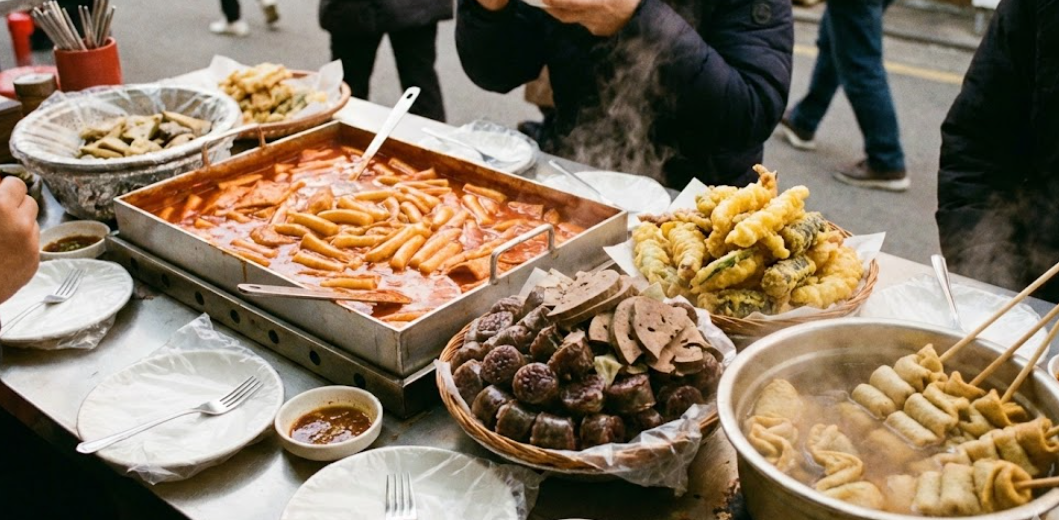
- What you will see and experience: Deep-fried chili peppers stuffed with meat, dakgangjeong (sweet crispy fried chicken), croquettes, grilled short rib patties, hotteok (sweet filled pancakes) and stalls selling banchan (Korean side dishes).
- Getting there: Line 6 to Mangwon Station, Exit 2, then about 5 minutes on foot (roughly 330–350 m). Turn right onto World Cup-ro 13-gil.
- Tickets and admission: Entry is free. You pay only for what you eat.
- Tips from past visitors: Visit on a weekday morning for quiet, or after 11 AM and before 6 PM for a good balance. Bring some small bills and a bag for trash.
- Nearby spots worth combining: Mangridan-gil for cafes and small shops, and Mangwon Hangang Park for a riverside picnic.

How to Get to Mangwon Market from Mangwon Station
The simplest route is Seoul Subway Line 6 to Mangwon Station, Exit 2, followed by a walk of about 5 minutes. The whole route is flat and needs no transfers if you’re already on Line 6.
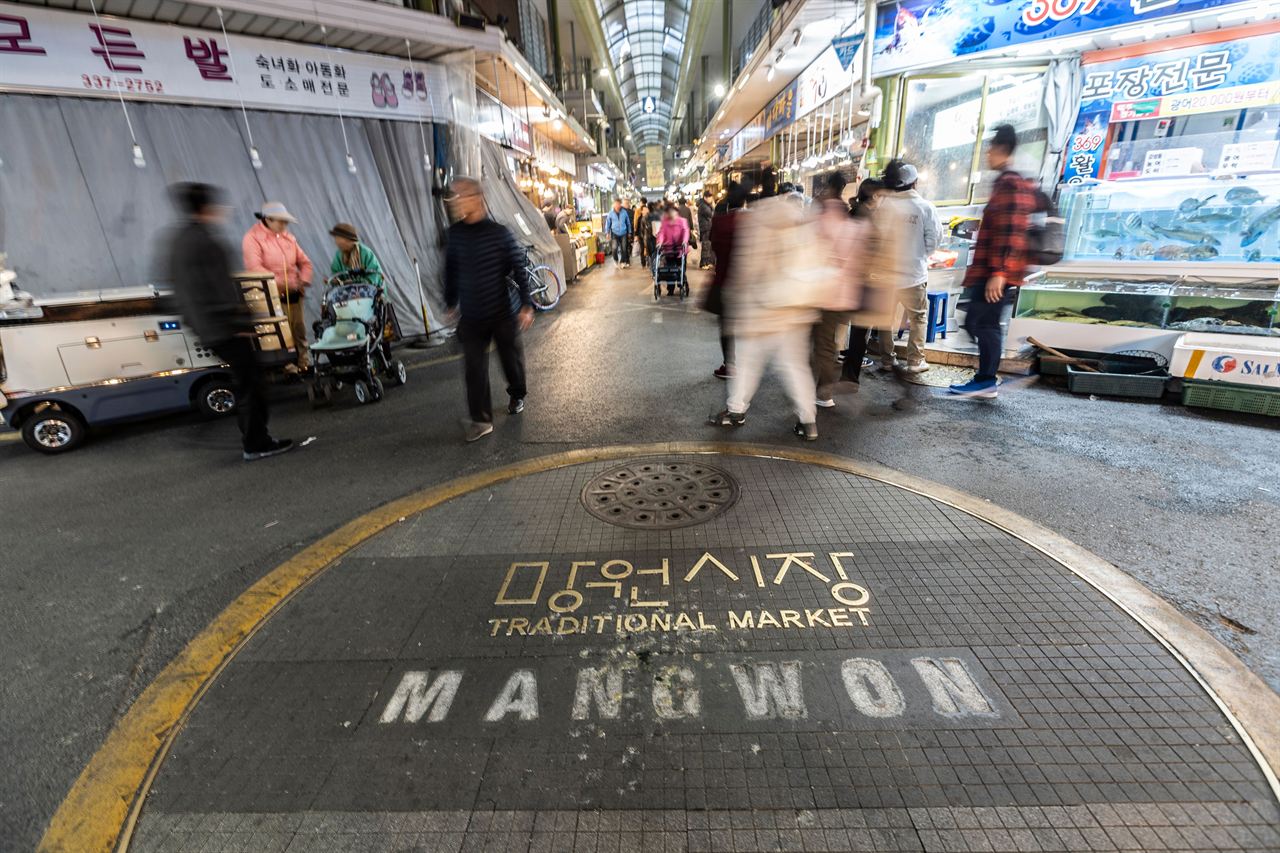
After you come up the Exit 2 stairs, walk straight for about 150 m, then turn right onto World Cup-ro 13-gil, where the market begins. The whole walk is about 330–350 m. You’ll see the street narrow and the stalls begin to spill out toward the road, which tells you you’re close. I find it easiest to follow the flow of people carrying shopping trolleys rather than the map pin. The pin can drop you at the association office entrance, where the market’s address lists a second-floor unit, and that isn’t where the food is.
Coming from Incheon Airport, take the Airport Railroad (AREX) to Digital Media City Station, transfer to Line 6, and ride to Mangwon Station. The trip takes about 55 minutes in total, so it works well as a first-day stop if you’re staying in the west of Seoul. Bus 7011 also serves the area if you’re coming from a neighborhood without a convenient subway link.
A note on navigation apps: some international travelers find Naver Map glitchy on foreign phones and switch to Kakao Maps. Both handle this walk without trouble, since it’s a single straight route. You can also open the market in Naver Map before you leave the hotel and screenshot it as a backup.
What to Eat at Mangwon Market: My Order of Attack
The best way to eat at Mangwon Market is to start savory, move to fried, and finish sweet. Filling up on the first thing you see is the most common way to miss half the market.
Wooyirak: Stuffed Fried Chili Peppers
Wooyirak is known for deep-fried green chili peppers stuffed with filling, and it’s my first stop because the crunch works best while hot. The peppers are usually mild. If you’re worried about heat, ask for a less spicy option or start with a small portion. Eat them within a few minutes, because the coating loses its crispness quickly in a paper bag.
Mangwon Tteokgalbi
Mangwon Tteokgalbi is famous for grilled short rib patties, and it often has a long line. The lines tend to move steadily because the meat is cooked in batches. My advice: join the line early in your visit rather than after you’re full, because the smell of grilled beef is the reason you’ll want it first. It’s worth the wait if you enjoy rich, sweet-savory meat. Skip it if you’re short on time and would rather try three cheaper snacks.
Basak Macha: Crispy Pork Cutlets
Basak Macha is popular for crispy pork cutlets, and it was featured on Netflix’s “Culinary Class Wars Season 2.” That exposure has added to the queue, so treat it as a planned stop and not a spontaneous one. The jalapeño tonkatsu is the item many travelers single out. It gives you a spicy kick without the heaviness of a full set meal.
Mangwon Handmade Croquette
Mangwon Handmade Croquette is my pick for value. It sells affordable croquettes and twisted doughnuts (kkwabaegi), and the small pieces make it easy to share. Order one of each and eat them standing at the side of the stall to keep the lane clear.
Dakgangjeong and Other Fried Chicken
Dakgangjeong is a sticky, sweet-spicy fried chicken that shows up at several counters. The Korea Tourism Organization also lists braised chicken and braised pigs’ feet among the market’s classics. Order a small box rather than a full one if you’re trying several stops.
Hotteok, Yakgwa and Marshmallow Ice Cream
Hoonhoon Hotteok is praised for sweet hotteok, a griddled pancake with a syrupy center. Wait a minute before biting in, because the filling can burn your tongue. Yakgwa, a honey-soaked traditional cookie, went viral on Korean social media and is a good takeaway gift. Marshmallow ice cream is the newer, more photogenic dessert, and it’s my choice when you want something light after the fried food.
How Much Does a Meal Cost and Do You Need Cash?
Most travelers spend about 15,000–20,000 KRW per person for a full grazing meal at Mangwon Market. That covers four or five snack stops, and it’s a figure based on traveler reports rather than a fixed price list, so check each stall’s board before ordering.
Individual snacks are inexpensive, which is why the total stays low even when you try many stalls. The trick is to buy one item from each stall and share, not to order a full serving of everything. If you’re traveling as a pair, you can sample six or seven items for roughly the same money as a single sit-down meal.
On payment: cards are widely accepted in Korea, but market stalls can be slower with them. Carry some small bills for the cheapest snacks and for stalls with a line, since a quick cash handoff keeps the queue moving. Also keep a small bag for trash, because bins in the alleys are limited.
When Is the Best Time to Visit Mangwon Market?
The best time is a weekday, or a weekend between about 11 AM and 6 PM. That window balances a lively atmosphere with manageable lines, and it avoids the peak crush.
According to Korea Tourism Organization crowd forecasts, Tuesday is the least crowded day at Mangwon Market and Saturday is the busiest, with an average relative concentration index of about 69.2 out of 100. If your schedule is flexible, Tuesday is when I’d go. You get room to look at the stalls and you won’t have to hold your food above your head to get through the alley.
Saturday is fine if you want the full energy and don’t mind waiting. The tteokgalbi and pork cutlet queues are longest then, so start with those and save the easy-to-grab items for later. Weekday mornings are the quietest, but some snack stalls are still setting up, so you may see fewer options. Individual stalls set their own hours and days off, so I’d avoid planning your day around one specific stall being open.
Is Mangwon Market Good for Groceries and Everyday Korean Life?
Yes. Beyond the snacks, Mangwon Market is a working neighborhood hub, and browsing the non-snack counters is one of the best ways to see how locals eat at home.
The market has been operating for over 40 years, and its stores are grouped into produce, meat, seafood, restaurants, processed foods and other goods. Walk slowly past the produce stalls and you’ll see what’s in season, from leafy greens to fruit stacked in baskets. The banchan counters are the most interesting for visitors. You’ll find trays of kimchi, seasoned vegetables and braised side dishes sold by weight. I find this a better souvenir of daily Korean life than any packaged snack, though you’ll need a way to eat or refrigerate them if you buy any.
If you’re staying somewhere with a kitchen, buying a few banchan and some rice turns the market into a cheap dinner. The market’s association also runs events and announcements throughout the year, such as a beer festival and photo contests, which shows how much of a community it is.
Where to Sit and Eat Your Market Food
Seating is the market’s biggest weakness. Mangwon Market has few places to sit, so plan where you’ll eat before you buy.
The most convenient option is Cafe M, which provides seating for market takeout. It’s useful when the weather is bad or when you’re with someone who can’t stand for long. For older visitors, this matters. Markets offer less comfortable seating than restaurants, and standing in a lane to eat a hot croquette isn’t ideal. If comfort is the priority, I’d choose a dedicated restaurant for a traditional Korean meal and use the market for snacks only.
The other popular choice is a picnic at Mangwon Hangang Park. The Korea Tourism Organization notes that the market’s location makes it a good place to shop for a riverside picnic. The park is on the north bank between Wonhyo Bridge and Seongsan Bridge, and it’s a wide grassy area with walking paths. It’s open 24 hours all year, with parking available. Check where the trash bins are before you settle in, and pack your waste out if you can’t find one.
A Half-Day Route: Market, Mangridan-gil and the Han River
A half-day route works best in this order: market first for lunch, Mangridan-gil for coffee, then the river for a late-afternoon picnic. Each stop is close to the next, so you’re not spending your energy on transit.
Start at the market when you arrive, ideally before 11 AM if you want shorter lines, and buy your picnic items last. Then walk to Mangridan-gil, the trendy strip of cafes and small shops. Cafes here can be crowded, with limited space and shorter hours, so I’d go early or accept that you may need to take your coffee to go. Save the vintage and small-shop browsing for the time when you’re waiting for a table.
Finish at Mangwon Hangang Park with your takeout. The park is often full of residents and visitors, especially at weekends, and it’s the busiest on Saturdays. On Thursdays it’s the quietest, per the Korea Tourism Organization forecast. If you have a beauty shopping list, the Olive Young branch on World Cup-ro near Mangwon Station is convenient to visit on the way back. It’s a Tax Refund Shop, so bring your passport.
Mangwon Market vs Gwangjang Market: Which Should You Choose?
Choose Mangwon Market if you want a relaxed, local experience with shorter lines, and choose Gwangjang Market if you want the famous food street and a wider range of dishes.
Gwangjang Market is Korea’s first permanent market and has a large food street that draws many tourists. It’s the better choice for sit-down dishes and variety. Mangwon is smaller, and the Korea Tourism Organization describes it as not very large but packed with delicious treats. It’s the better choice if you like snacks, want to see everyday shopping and want less crowding. If you’re in Seoul for several days, I’d do both, since they offer different things. If you only have time for one and you’re staying in the west, Mangwon is the easier day.
Common Mistakes at Mangwon Market
The most common mistakes come from arriving hungry, unprepared or at the wrong time. Each one costs you either time or comfort.
Filling up at the first stall. The market is compact, and the best-known stalls are spread throughout it. If you finish a large portion at the entrance, you’ll be too full for the tteokgalbi or cutlets later. Share small portions instead.
Arriving on a Saturday at noon. This is the busiest day, and the lines for the popular stalls are at their longest. You’ll spend more time standing than eating. A weekday or a mid-afternoon weekend visit avoids this.
Expecting comfortable seating. Because there are few seats, you may end up eating in a crowded alley. Plan for Cafe M or the river before you buy, especially with older companions.
Skipping the trash plan. Alley bins are limited. Without a bag, you’re left holding greasy paper, so carry a small bag and check for bins at the park.
Relying on one map app. If Naver Map doesn’t load on your phone, you can lose the walk from the station. Keep Kakao Maps as a backup.
Assuming every stall has the same hours. Individual stalls choose their own days off, so a specific stall may be shut when you arrive. Have two or three backup snacks in mind.
Frequently Asked Questions
How do I get to Mangwon Market from Mangwon Station?
Take Line 6 to Mangwon Station and leave through Exit 2. Turn right onto World Cup-ro 13-gil and walk about 5 minutes, or roughly 330–350 m. The route is flat and easy to follow.
Is Mangwon Market worth visiting if I’ve been to Gwangjang Market?
Yes, if you want a calmer, more local experience. Mangwon is smaller and has shorter lines, and it adds banchan counters, produce stalls and a nearby river picnic. Gwangjang is better for variety and sit-down dishes.
How much should I budget for food at Mangwon Market?
Plan on about 15,000–20,000 KRW per person for a full grazing meal, based on traveler reports. Individual stall prices vary, so check the price board at each stall before you order.
Is Mangwon Market suitable for older visitors?
It can be, but seating is limited. Cafe M offers seating for market takeout, and a nearby restaurant is a better choice for a traditional sit-down meal. Go on a weekday to avoid the crowds.
What else is there to do near Mangwon Market?
Mangridan-gil has trendy cafes and small shops, and Mangwon Hangang Park is good for a picnic with market food. Both are close enough to walk to, so you can build a half-day route around them.
In Conclusion
The best Mangwon Market food plan is simple. Take Line 6 to Mangwon Station Exit 2, walk about 5 minutes, and go on a weekday or between 11 AM and 6 PM on a weekend. Start with the popular names such as Wooyirak, Mangwon Tteokgalbi and Basak Macha, share small portions, and expect to spend about 15,000–20,000 KRW per person. Then take your takeout to Cafe M or Mangwon Hangang Park, since seating in the alleys is limited. If you have energy left, add Mangridan-gil for coffee. Carry small bills, a trash bag and a backup map app, and you’ll spend your time eating, not searching.
Discover more from Korea Visiting
Subscribe to get the latest posts sent to your email.