
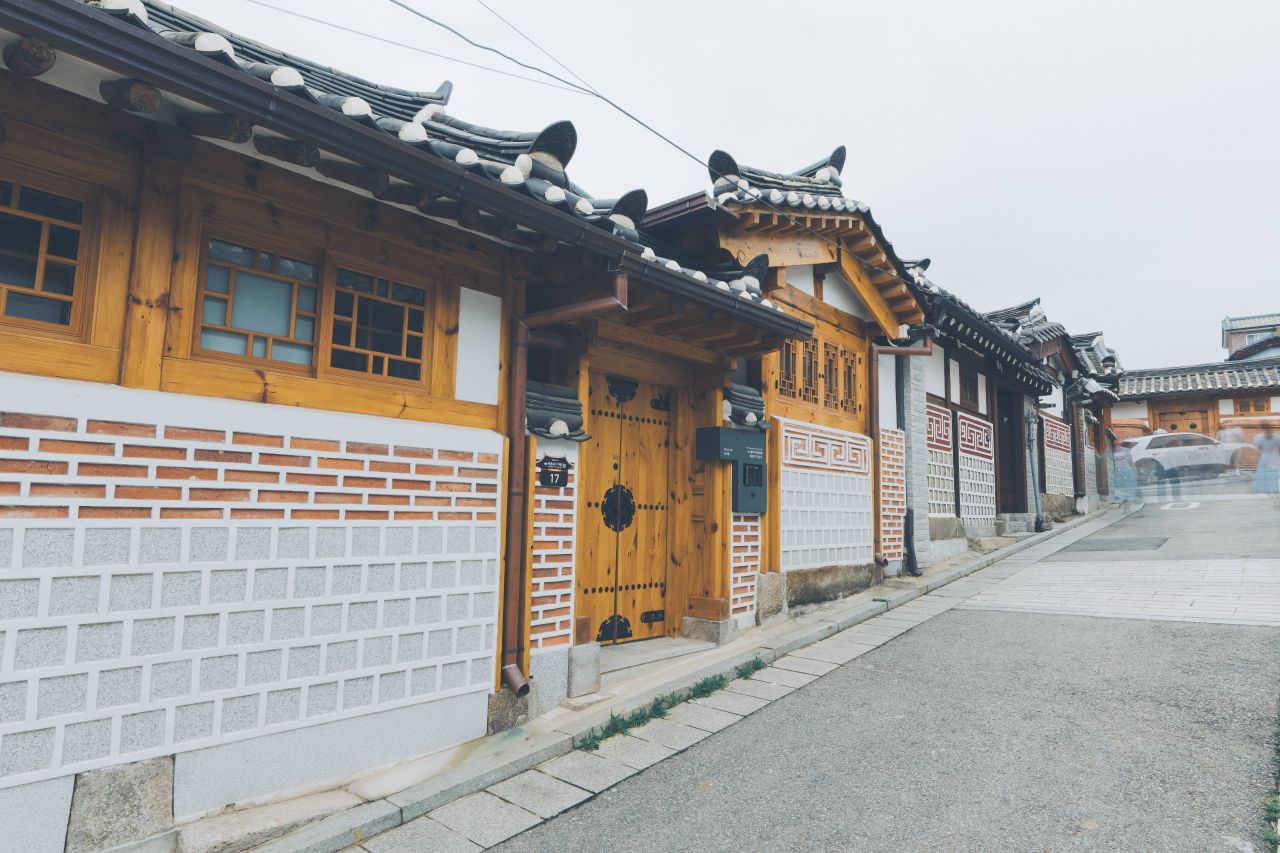
Standing at the entrance to Bukchon Hanok Village for the first time, most visitors face the same problem: no clear sense of which alley to walk down, which hours are actually restricted, or how not to end up on someone’s doorstep by accident. This confusion is understandable — Bukchon isn’t a fenced museum, it’s a living residential neighborhood layered on top of centuries-old hanok architecture, and the rules for visiting it are stricter and more specific than most first-timers expect. Between navigating from Anguk Station, figuring out the 10:00–17:00 visiting window, and deciding whether to squeeze in Insadong or Gyeongbokgung Palace the same day, a little planning goes a long way toward avoiding wasted steps and awkward moments with residents.
Key Takeaways:
- Bukchon Hanok Village is free to enter, but the core residential alleys are open to tourists only 10:00–17:00, with fines for violations.
- The closest subway stop is Anguk Station (Line 3), about a 10-minute walk from Exit 2 or 3.
- The “Eight Scenic Views of Bukchon,” concentrated around Gahoe-dong, are the main photo draws, but the area is a real neighborhood — quiet, respectful visiting is expected.
- Bukchon sits within walking distance of Gyeongbokgung Palace, Changdeokgung, and Insadong, making it easy to combine into a half-day palace-and-village route.
- Weekday mornings are noticeably calmer than weekend afternoons, when the alleys fill up fast.
📍 Bukchon Hanok Village — Essential Information
| Address | 37 Gyedong-gil, Jongno-gu, Seoul |
| Opening hours | 10:00-17:00 * Applies to road along Bukchon-ro 11-gil |
| Closed | N/A (Open all year round) |
| Parking | Not available |
| Website | hanok.seoul.go.kr |
| Map | Google Maps · Naver Map |
Bukchon Hanok Village at a Glance
- Why visit: Bukchon offers one of the few places in central Seoul where centuries-old hanok rooflines still form an unbroken streetscape, with modern skyline glimpses layered behind them.
- What you’ll see and experience: Sloped alleyways lined with traditional wooden houses, small craft studios and tea houses tucked into converted hanok, and photogenic viewpoints where tiled roofs cascade downhill toward the city.
- Getting there: The easiest approach is Anguk Station (Line 3), Exit 2 or 3, followed by a roughly 10-minute uphill walk into the village; several city bus routes also stop nearby for those coming from other parts of Seoul.
- Tickets and admission: Entry to the village itself is free; optional paid experiences like craft workshops or the observatory carry separate fees.
- Tips from past visitors: Go early on a weekday, keep voices down once inside residential lanes, and expect some uphill walking — comfortable shoes matter more here than in most other Seoul attractions.
- Nearby spots worth combining: Gyeongbokgung Palace, Changdeokgung, and the Insadong Cultural Street are all within easy walking or short-transit range.
How to Get to Bukchon Hanok Village
Anguk Station on Seoul Subway Line 3 is the most reliable starting point for reaching Bukchon Hanok Village, since it drops visitors within a 10-minute walk of the main alleys. Exit 2 or 3 leads directly toward the village entrance; from there, following the uphill signage through Gahoe-dong is straightforward even without a map.
For travelers coming from Seoul Station, the subway route via Line 1 to Jongno 3-ga and then transferring to Line 3 toward Anguk Station takes about 15 minutes and costs roughly ₩2,800–₩4,000. Budget-focused travelers can instead ride Line 1 to Jonggak Station and walk or take a short connecting hop, which takes closer to 20 minutes but costs only around ₩1,400–₩2,000. A direct taxi from Seoul Station takes about 4 minutes in light traffic and runs roughly ₩8,500–₩11,000 — convenient with luggage, but not necessarily faster once you factor in central Seoul congestion.
Travelers based near the Express Bus Terminal can take a direct Line 3 train straight to Anguk Station, a ride of about 17 minutes for roughly ₩1,500–₩2,200 — one of the more efficient cross-city connections in Seoul.
By bus, routes 109, 151, 162, 171, and 272 all stop within walking distance of Bukchon, and the green branch bus Jongno 02 is the one genuinely useful option for skipping the uphill walk, with stops inside the village itself (Bukchon Hanok Village Station and Donmi Pharmacy Station among them). This local shuttle is worth knowing about for anyone visiting in hanbok or traveling with kids, since the interior lanes climb steadily.
Arriving from Incheon International Airport, Airport Limousine Bus 6011 stops at Anguk Station — look for the stop between Exit 5 and 6 when arriving, and between Exit 1 and 2 when heading back to the airport. This makes a direct airport-to-Bukchon trip possible without switching to the subway at all, useful for travelers heading straight into the city center after landing.
Best Time to Visit Bukchon Hanok Village
Weekday mornings shortly after the 10:00 opening of restricted hours consistently offer the calmest experience in Bukchon Hanok Village, before tour groups and weekend crowds arrive. The residential alleys — particularly the narrow, steep lanes around Gahoe-dong — feel dramatically different depending on when you show up: an empty alley at 10:15 on a Tuesday can look completely different from the same spot at 2 pm on a Saturday, when visitors often queue for photos at the same viewpoints.
Because tourist access to the core residential zone is limited to the 10:00–17:00 window, timing your visit isn’t just about crowd avoidance — it’s a hard rule. Arriving right at opening gives the best combination of soft morning light and thin foot traffic, which also happens to be ideal for photography, since the low-angle sun highlights the curved rooflines without harsh shadows. Late afternoon, closer to 16:00, offers a second quieter window as day-trip crowds start heading toward dinner elsewhere in the city, plus warmer golden-hour tones that photographers on social media frequently chase in this neighborhood.
Seasonally, spring and autumn are the most comfortable months to walk Bukchon’s sloped streets, with mild temperatures that make the uphill sections far more manageable than in Seoul’s humid summer or icy winter. Rainy days, while less crowded, make the stone-paved alleys slippery, so sturdy footwear becomes essential rather than optional.
The Eight Scenic Views of Bukchon and Where to Find Them
The “Eight Scenic Views of Bukchon” refer to a set of designated viewpoints scattered through the village, and most visitors realistically only reach two or three of them without a specific plan. The most photographed cluster sits along the alleyways in Gahoe-dong, where the upward and downward views of stacked hanok roofs — with N Seoul Tower occasionally visible in the distance on clear days — form the backdrop seen in nearly every Bukchon photo shared online.
Rather than chasing all eight points in sequence, a more realistic approach for first-time visitors is to follow the natural uphill-then-downhill loop starting near the Bukchon Traditional Experience Center area, pausing at the two or three most scenic alleys, then continuing down toward Samcheong-dong. This avoids backtracking and keeps the visit efficient even for those short on time.
Because these viewpoints sit directly among private homes, common visitor feedback — echoed frequently by both residents and repeat travelers — is to keep noise low, avoid peering into doorways or windows for a better shot, and step aside quickly after taking a photo rather than lingering in front of a house. The atmosphere shifts noticeably for the better when visitors treat the lanes as someone’s front yard rather than a stage set.
Bukchon Traditional Experience Center and Craft Workshops
The Bukchon Traditional Experience Center gives visitors a hands-on alternative to simply walking and photographing, offering short craft sessions that run roughly ₩5,000 to ₩20,000 depending on the activity. These workshops typically cover traditional Korean crafts such as small dyeing, paper, or embroidery projects, and make a practical stop for travelers who want a tangible souvenir and a break from walking on a hilly route.
For visitors who prefer an elevated view over a hands-on activity, the Bukchon Observatory charges an entrance fee of ₩3,000 per person, which includes a complimentary drink — a reasonable trade for a panoramic seat overlooking the hanok rooftops without needing to time a specific alley visit for the perfect angle.
Renting a hanbok before entering Bukchon is one of the most common choices among first-time visitors, both for photos and for practical reasons: wearing a hanbok often grants free admission to nearby palaces like Gyeongbokgung and Changdeokgung. Travelers arriving in hanbok from a rental shop near Gyeongbokgung Palace typically walk the roughly 10–20 minutes north into Bukchon, and given the uphill terrain, it’s worth choosing a rental shop that allows short skirts or offers walking-friendlier options if a long day of walking is planned.

Hidden Cafes and Lesser-Known Spots Beyond the Main Alleys
Beyond the well-known Eight Scenic Views, Bukchon holds a scattering of small tea houses and rooftop cafes tucked into converted hanok that repeat visitors and local guides increasingly point newcomers toward once the main photo alleys start filling up. These spots tend to sit slightly off the primary tourist path — often one or two lanes away from the busiest viewpoint — and reward visitors who are willing to wander a little rather than beeline for the most-photographed corner.
Rooftop cafes in particular have become a popular alternative to street-level photography, since they offer an unobstructed view over the hanok roofscape toward the modern skyline beyond, all while seated rather than jostling for space on a narrow lane. Several of these spots see a spike in visits specifically around golden hour, when the low sun turns the tiled roofs a warm amber and the contrast between old and new Seoul becomes most visible.
For travelers who’ve already done the standard alley walk on a previous trip, or who are visiting Bukchon a second time, deliberately turning down a quieter side street rather than following the main flow of foot traffic is usually enough to find a calmer tea house or a less-crowded photo angle — Bukchon rewards a slower, more exploratory pace over a checklist approach.
Sample Itineraries for Different Visit Lengths
A one-hour visit works best as a focused loop: walk up from Anguk Station toward the main Gahoe-dong alleys, capture the two or three most iconic scenic-view points, and head back down toward Anguk Station or continue on foot toward Insadong. This tight version skips workshops entirely and prioritizes the photo alleys and general atmosphere.
A two-to-three-hour visit allows time to add one paid experience — either a short craft workshop at the Bukchon Traditional Experience Center or a seated break at the Bukchon Observatory — plus a slower walk through the quieter side lanes beyond the main scenic points. This pacing suits most first-time visitors well, since it balances the physical demands of the hilly terrain with enough downtime to actually enjoy a tea house stop.
For a half-day plan, combine Bukchon with Gyeongbokgung Palace and the Insadong Cultural Street: start at Gyeongbokgung in the morning (ideally in hanbok for free palace admission), walk roughly 10–20 minutes north into Bukchon around midday, spend one to two hours exploring the alleys and a workshop or cafe, then descend toward Insadong for lunch and shopping before catching the subway home from Anguk Station. This route minimizes backtracking and uses the natural downhill flow of Bukchon’s terrain to your advantage.
Visiting Bukchon Respectfully as a Residential Neighborhood
Bukchon Hanok Village is first and foremost a place where people live, and the visiting-hours restriction exists precisely because tourism pressure on residents has become a serious, ongoing concern for the neighborhood. The core zone along Bukchon-ro 11-gil is open to tourist visits only between 10:00 and 17:00, and entering for tourism purposes outside that window can result in a fine of ₩100,000 — a rule enforced specifically to give residents uninterrupted rest hours. Chartered tour buses face an even stricter restriction along a roughly 2.3-kilometer stretch covering Bukchon-ro and several connecting lanes, banned at all times including weekends and holidays, with fines starting at ₩300,000 for the first violation, increasing for repeat violations.
Exemptions exist for residents, their families and acquaintances, shop customers, merchants, and anyone simply passing through — but even exempt visitors can still be fined if they engage in obviously tourism-like behavior, such as extended photo sessions in front of private homes. Carrying ID, an accommodation booking confirmation, or having a clear reason such as visiting a specific shop is useful if approached during restricted hours.
Beyond the formal rules, the most consistently repeated advice from people who’ve spent real time in Bukchon is simple: keep your voice down, don’t peer into open doors or windows, avoid blocking narrow lanes for group photos, and be mindful that every “photogenic alley” is also someone’s daily commute home. Compared to livelier hanok districts, Bukchon has fewer shops and cafes precisely because it remains primarily residential — a trade-off that rewards visitors looking for atmosphere over interactive attractions, but frustrates those expecting a shopping-street experience.
Bukchon vs. Other Hanok Areas in Seoul
Bukchon isn’t the only hanok-style destination in Seoul, and knowing how it differs from nearby alternatives helps set realistic expectations before you go. Ikseon-dong, a short distance away, packs a dense cluster of hanok-style cafes, restaurants, and boutique shops into a compact grid — a livelier, more commercial experience than Bukchon’s quiet residential lanes, and often recommended to travelers who want more to do in less walking distance. Seochon, on the other side of Gyeongbokgung Palace, offers a similarly residential, low-key hanok atmosphere with fewer crowds than Bukchon, appealing to visitors who found Bukchon’s alleys too packed on a previous trip.
For travelers also planning a stop in Jeonju, it’s worth noting that Jeonju Hanok Village is a far larger, more immersive hanok district built around tourism and food culture, while Bukchon offers a more compact, palace-adjacent experience within central Seoul itself. Visiting both isn’t redundant — Bukchon suits a short stop woven into a Seoul palace day, while Jeonju rewards a dedicated half-day or full-day visit focused on food and a larger-scale hanok streetscape.
Travelers weighing a longer stay — for example, an extended family trip based in the Bukchon area while touring greater Seoul — should factor in the neighborhood’s hilly terrain and limited shops when choosing accommodation; a hanok stay here suits those prioritizing atmosphere and walkability to Gyeongbokgung and Changdeokgung over easy access to supermarkets, elevators, or flat, stroller-friendly streets.
Frequently Asked Questions
Is Bukchon Hanok Village free to visit?
Yes, walking through Bukchon Hanok Village itself is free. Optional paid experiences carry separate fees: craft workshops at the Bukchon Traditional Experience Center run about ₩5,000 to ₩20,000 depending on the activity, while entry to the Bukchon Observatory is ₩3,000 per person including a complimentary drink.
How do I get to Bukchon Hanok Village from Gyeongbokgung Palace, especially in a hanbok?
Bukchon is roughly a 10–20 minute walk north from Gyeongbokgung Palace, making it an easy add-on for travelers already wearing a rented hanbok from a shop near the palace. Because the route into Bukchon climbs uphill, choosing hanbok footwear and skirt length with walking comfort in mind is worth considering before setting out.
Is Bukchon worth visiting if I’m already going to Jeonju Hanok Village?
Yes, the two serve different purposes — Bukchon offers a compact, palace-adjacent hanok experience easily combined with a Seoul sightseeing day, while Jeonju Hanok Village is a larger destination built around food and immersive hanok culture. Visiting both adds variety rather than repetition, as long as expectations are adjusted for Bukchon’s smaller, quieter, residential scale.
What are the visiting hours for Bukchon Hanok Village?
Tourist access to the core residential zone along Bukchon-ro 11-gil is restricted to 10:00–17:00, with fines for entering outside these hours for tourism purposes. This rule exists specifically to protect residents’ privacy and rest during off-hours, so visitors should plan arrival and departure accordingly.
Is Bukchon Hanok Village crowded, and when should I avoid it?
Weekend afternoons are consistently the busiest, especially around the main scenic-view alleys in Gahoe-dong, where photo lines can form. Weekday mornings shortly after the 10:00 opening offer the quietest, most comfortable experience for both walking and photography.
In Conclusion
Bukchon Hanok Village rewards visitors who show up with a plan rather than wandering in blind: arrive via Anguk Station within the 10:00–17:00 window, prioritize a couple of the Eight Scenic Views alleys in Gahoe-dong, and build in time for a workshop, an observatory stop, or a quiet cafe if your schedule allows. Because the neighborhood is genuinely residential, the difference between a good visit and an awkward one usually comes down to timing and volume — go early on a weekday, keep noise down, and treat every alley as someone’s home rather than a photo backdrop. Pair the visit with Gyeongbokgung Palace and Insadong for an efficient half-day loop, and consider Ikseon-dong or Seochon if you want a livelier or quieter alternative on a return trip. With the visiting-hour rules and a rough route in mind, Bukchon becomes far easier to enjoy on a first visit.
Discover more from Korea Visiting
Subscribe to get the latest posts sent to your email.