If you’re wondering how to book KTX train tickets in Korea, the short answer is: use the official Korail website, since it accepts foreign credit cards and lets you reserve seats up to one month ahead. KTX (Korea Train Express) is Korea’s high-speed rail network connecting Seoul to Busan, Gyeongju, Gangneung, Daejeon, and dozens of other cities in as little as two hours, and for most travelers it’s faster and less stressful than flying domestically. The tricky part isn’t finding a train — it’s choosing the right booking channel, avoiding overpriced resellers, and knowing whether the Korail Pass actually saves you money. This guide walks through every practical decision: official site vs. third-party apps vs. station counters, individual tickets vs. the KR Pass, seat classes, payment troubleshooting, and what to expect at busy stations like Seoul Station.
Key Takeaways
- Book directly on Korail’s official site (letskorail.com/global) — it accepts most foreign credit cards.
- Tickets open 07:00 KST one month before departure and can be bought online until 20 minutes before the train leaves.
- Seoul–Busan runs about ₩59,800 one-way (roughly $42, as of 2026) and takes about 2h15m–2h30m.
- The Korail Pass (KR Pass) only pays off for travelers taking 3+ long-distance trips in a short window; casual visitors usually save money buying individual tickets.
- Avoid unauthorized resellers like Rail Ninja — Trip.com is an authorized third-party platform commonly recommended for its modest service fee and reliable foreign-card support.
What Is KTX and Do You Need to Book Ahead?
KTX (Korea Train Express) is South Korea’s high-speed rail service, run by state operator Korail, and yes — you should book ahead, especially for weekends, holidays, and popular routes like Seoul to Busan or Gyeongju. Unlike a subway ride, KTX seats are reserved rather than first-come-first-served, so walking up to a station without a ticket during peak times risks finding your desired train sold out. Tickets become available at 07:00 KST exactly one month before the departure date and remain bookable online until 20 minutes before departure, though standing tickets (ipseokgwon) can sometimes be purchased later if seats are sold out. As a first-timer, aim to book at least one to two weeks in advance for weekday travel, and as early as possible — ideally right at the one-month mark — for weekend trips, national holidays like Chuseok or Lunar New Year, or trains connecting to an early-morning flight. Note that KTX is operated by Korail and departs mainly from Seoul Station or Yongsan Station, while the separate SRT high-speed service (a different company) departs from Suseo Station in southern Seoul — double-check which station your ticket lists before you leave your hotel.

Where to Book KTX Tickets: Official Site vs. Third-Party Apps
The most reliable way to book KTX tickets is directly through Korail’s official channel — the Korail website (letskorail.com/global) — because it accepts foreign credit cards and gives you the same fare as Korean travelers pay. Third-party platforms like Trip.com and KKday are also usable but come with trade-offs worth understanding before you choose.
Korail Official Website
- Pros: No markup, real-time seat maps, full schedule flexibility, English interface, accepts most Visa/Mastercard foreign cards.
- Cons: The site and app’s UI feels dated and occasionally times out during payment; some travelers report failed transactions due to 3D Secure verification issues (see troubleshooting below).
- Best for: Anyone comfortable navigating a slightly clunky but functional booking flow, and anyone who wants to avoid extra fees.
Trip.com
- Pros: Authorized to sell Korail tickets, English-friendly interface, accepts foreign cards reliably, lets you pick specific seats, small added service fee.
- Cons: Fee is modest but not free; the KTX booking option can be buried under other train categories, so search carefully.
- Best for: Travelers who’ve had payment trouble on Korail’s own site and want a smoother checkout experience.
KKday / Trazy
- Pros: Familiar interfaces if you already use these apps for tours and attractions; occasionally bundle KTX with other travel products.
- Cons: Selection and route availability can be more limited than booking direct; confirm the ticket is a real reserved seat, not just a voucher requiring further exchange.
- Best for: Travelers already booking other activities through these platforms who want to consolidate purchases.
Unauthorized Resellers (e.g., Rail Ninja)
- Avoid these. They are not endorsed by Korail, typically charge significant markups over face value, and offer no advantage over the official site or Trip.com. Stick to authorized channels.
Station Counters and Kiosks
- Ticket counters at any KTX station accept foreign credit cards and are a solid backup if online booking fails — staff can usually assist in basic English. Self-service kiosks, however, may require a Korean-issued card or PIN-enabled chip card, so foreign travelers often have better luck at the staffed counter.
Booking KTX Tickets Step by Step
Booking a KTX ticket takes about five minutes once you know the flow: create an account (or book as a guest), search your route and date, select a train and seat, then pay. On the Korail website, start by entering your departure and arrival stations (for example, Seoul Station to Busan Station), your travel date, and number of passengers. The system will show a list of departures with times, duration, and remaining seat availability — trains showing “매진” or “Sold Out” have no more standard seats, though standing tickets may still exist. Choose Economy or First Class (Special Class), pick your seat from the car map if available, and proceed to payment. Enter your foreign credit card details; if using the mobile app, you may also see options for Korean payment methods like KakaoPay, which typically won’t work for cards issued outside Korea. Once payment clears, your e-ticket appears in the app or emails you a PDF — you do not need to print it, since conductors rarely check tickets in person and QR/booking-number verification on your phone is normally sufficient. If you booked as a guest without an account, save your reservation number, as you’ll need it to retrieve or modify the booking later.
Troubleshooting Foreign Credit Card Payments
Many international travelers hit a “payment failed” error on Korail’s site due to 3D Secure (3DS) authentication, a security step some foreign-issued cards aren’t configured to complete through Korail’s system. If your card keeps failing, try these fixes in order: switch to a different card (Visa tends to work more reliably than some Mastercard debit cards), or switch to Trip.com, which uses its own payment processor and generally accepts foreign cards without the same 3DS friction. If all else fails, book in person at any station ticket counter — staff there process foreign cards directly and can usually issue same-day or future-dated tickets without the online hiccups.
Individual Tickets vs. the Korail Pass (KR Pass)
For most short trips, buying individual KTX tickets costs less than the Korail Pass — the pass only makes sense if you’re taking three or more long-distance rides within a few days. The KR Pass is a foreigner-exclusive product offering unlimited rides on Korail trains (KTX, ITX-Saemaeul, and Mugunghwa; it does not cover SRT or metropolitan subways), but every ride still requires a free seat reservation made in advance, so it’s not a walk-on-and-go pass.
As of about 2026, adult KR Pass pricing runs roughly: 2-day Select about ₩131,000, 3-day Consecutive about ₩186,000, 4-day Select about ₩234,000, and 5-day Consecutive about ₩275,000 (Select passes let you choose non-consecutive days within a set window; Consecutive passes cover back-to-back days). Compare that to individual one-way fares — Seoul–Busan runs about ₩59,800 (~$42), Seoul–Gyeongju about ₩49,300 (~$35), and Seoul–Gangneung about ₩30,100 (~$22) — and you’ll see that a single round trip to Busan (about ₩120,000) already costs less than a 2-day pass. The pass earns its value on itineraries with multiple long-haul legs, such as Seoul → Busan → Gyeongju → Seoul within a few days. For a simple one-or-two-city trip, buy individual tickets; for a multi-city loop covering the country, run the math on your specific route before committing to the pass.
Are There Regional Discounts Worth Knowing About?
Yes — some Korean regions periodically run cashback or discount promotions for KTX travelers to boost local tourism, such as a Gyeongbuk-region offer providing partial cashback (around 50% in past promotions) on train tickets to encourage visits to Gyeongju and nearby areas. These promotions change year to year and are usually announced through regional tourism boards or the Korail site itself, so search for the current year’s offer before booking if you’re heading to a promotional region — don’t assume a discount is active without checking, since terms and availability shift each season.
KTX Seat Classes and What to Expect Onboard
KTX offers two seat classes — Standard (Economy) and First Class (Special Class) — and for most travelers, Standard is perfectly comfortable for the typical 1–3 hour journey. Standard seats are arranged similarly to airline economy class with a center aisle, decent legroom, and power outlets at most seats. First Class costs roughly 40–50% more but offers wider seats, more recline, quieter cars, and often complimentary snacks or drinks on longer routes — worth it if you want extra space or are traveling during a long trip like Seoul to Busan and prefer a quieter environment. One practical note competitors often skip: KTX trains have no dining car, so bring your own food and drinks, especially for routes over an hour; station convenience stores and kiosks near the platforms are the easiest place to grab something before boarding.
Navigating Seoul Station and Yongsan Station as a First-Timer
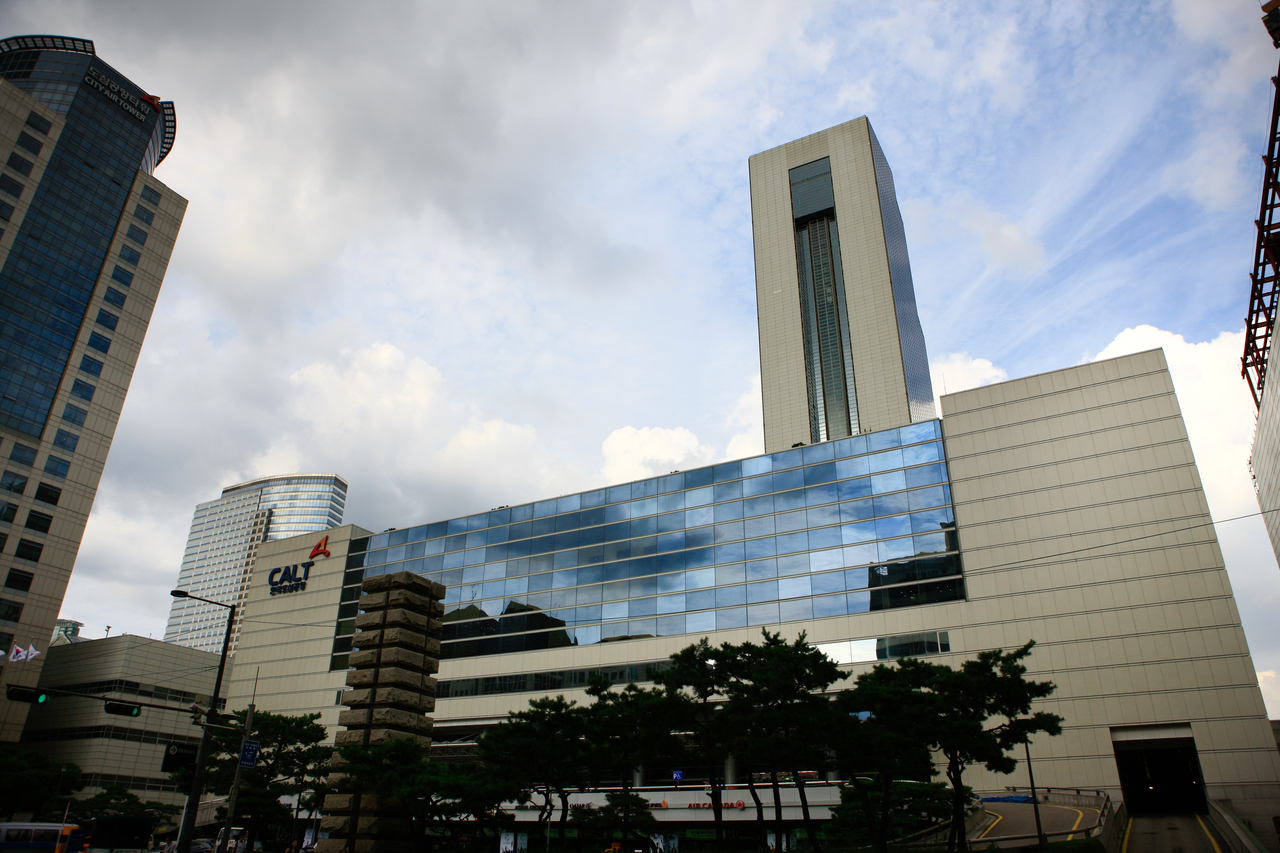
Seoul Station and Yongsan Station are Korea’s two main KTX departure points, and both are large, multi-level complexes without airport-style ticket gates, so first-timers should focus on finding the right platform rather than looking for a barrier to scan through. At Seoul Station, KTX platforms are accessed via escalators from the main concourse, where large digital boards display train numbers, destinations, and platform numbers in both Korean and English — arrive 15–30 minutes early to locate your gate calmly, since platforms can be a several-minute walk from the entrance. Yongsan Station, used for some Honam-line KTX services (toward Gwangju, Mokpo, and southwestern routes), has a similar layout with retail and dining above the platform level. Both stations have luggage lockers, convenience stores, and information desks with English-speaking staff near the main ticket gates. Double-check your ticket’s departure station in advance — Seoul Station and Yongsan Station serve different regional lines, and confusing the two is one of the most common first-timer mistakes, especially for travelers connecting onward to Incheon International Airport, since Seoul Station is also the terminus for the AREX airport express line.
Frequently Asked Questions
What is the best site for booking KTX tickets in English?
The Korail official website (letskorail.com/global) is the most reliable English-friendly option, since it’s direct from the operator with no markup. Train schedules shown are generally accurate and update in real time, though booking early for popular routes is still recommended.
Are KTX tickets bought through third-party platforms guaranteed, especially during holidays like Chuseok?
Authorized platforms like Trip.com generally confirm real reserved seats once payment clears, but availability during Chuseok or Lunar New Year can be extremely limited since Korean residents often get earlier or priority access to holiday tickets. If you’re traveling during a major holiday, book as early as the one-month window allows and have a backup plan, such as an earlier or later train.
Do foreign credit cards work on the Korail website, and do I need to print my ticket?
Most foreign Visa and some Mastercard cards work on Korail’s site and app, though occasional 3D Secure verification failures occur — trying a different card, the mobile app, or Trip.com usually resolves it. Printing is not required; your e-ticket or QR code on your phone is normally sufficient, since conductors rarely check tickets in person.
Is KTX First Class worth the extra cost?
First Class is worth it if you want wider seats, more legroom, and a quieter car, particularly on longer routes like Seoul to Busan, but it’s not essential for short hops like Seoul to Daejeon. Standard class is comfortable for the vast majority of travelers and costs noticeably less.
How far in advance should I book KTX tickets?
You can book from 07:00 KST exactly one month before departure, and booking one to two weeks ahead is usually enough for weekday travel. For weekends, holidays, or high-demand routes like Seoul–Busan and Seoul–Gyeongju, book as close to the one-month mark as possible to guarantee your preferred time and seat.
In Conclusion
Booking KTX tickets in Korea is straightforward once you know where to look: start with the official Korail website, keep Trip.com as your backup if foreign card payments fail, and steer clear of unauthorized resellers charging inflated prices. Book as early as the one-month window allows for weekends, holidays, and popular routes like Seoul–Busan or Seoul–Gyeongju, and run the numbers before buying a Korail Pass — it only pays off with multiple long-distance legs. Choose Standard class for most trips, pack your own snacks since there’s no dining car, and arrive 15–30 minutes early at Seoul Station or Yongsan Station to find your platform without stress. With these basics covered, KTX becomes one of the easiest and fastest ways to explore Korea beyond Seoul.
Discover more from Korea Visiting
Subscribe to get the latest posts sent to your email.