This Udo Ferry foreigner guide exists because of one recurring question I hear from travelers staring at the ticket counter at Seongsan Port: yes, foreigners can absolutely take the Udo Ferry, but a handful of specific rules — not general “foreigner restrictions” — are what actually trip people up. The confusion isn’t about the boat itself; it’s about paperwork most visitors have never seen before (a bilingual boarding declaration form), a vehicle rental system that quietly excludes most rental cars and many scooters, and a schedule that shortens without warning depending on the season. None of these are dealbreakers once you know what’s coming.
I’ve watched groups get stuck at the window because they assumed a driver’s license photo on a phone would work, or because they didn’t realize Udo is big enough that “just walking around” eats your whole afternoon. The ferry ride itself is the easy 15 minutes of this trip. Everything before and after it is where planning actually matters.
Key Takeaways
- Foreigners can take the Udo Ferry with a passport or Alien Registration Card (ARC) — no special foreigner permit exists.
- You must complete a Boarding Declaration Form for both the outbound and return legs; one form per group is usually enough.
- Most rental cars are banned on Udo for day-trippers; however, starting August 2025, eco-friendly rental cars (electric or hydrogen vehicles) are permitted. Other narrow exemptions include overnight stays, young children, seniors, pregnant travelers, or those with mobility difficulties.
- Scooters and mini cars require an International Driving Permit with a motorcycle (Category A) endorsement — a standard car IDP is not enough.
- Electric bikes and the public circular bus are the two rental-free ways to see Udo without navigating Korea’s license rules.
Why the Udo Ferry Feels Confusing for Foreigners (Even Though You Can Take It)
The Udo Ferry itself has no foreigner-specific restriction — the confusion foreigners hit comes from three unrelated systems bundled into one trip: port ticketing paperwork, Korea’s vehicle rental licensing rules, and a seasonal schedule that isn’t posted consistently online. Each of these has a real, checkable answer, but they get lumped together into a vague sense that “Udo might be complicated for tourists.”
The ticketing side is straightforward: any traveler with a valid passport or ARC can buy a ticket at the counter. What actually causes hesitation is the Boarding Declaration Form, a manifest requirement tied to Korean maritime safety law — every passenger on a vessel this size has to be individually recorded, and the counter staff won’t issue a ticket without it filled in correctly. That’s a paperwork step, not an identity check that singles out non-Koreans.
The bigger blocker, in my experience, isn’t the ferry — it’s what people expect to do once they land. Rental car and scooter rules on Udo are stricter than on mainland Jeju, and travelers who assume their Jeju rental car or their home-country license will simply carry over onto the island are the ones who end up stuck at the dock, car in tow, being turned back.
Udo Ferry Foreigner Guide: How to Buy Your Ticket at Seongsan Port, Step by Step
The reliable path for foreigners is: arrive at Seongsan Port (Google Maps) with your passport or ARC, fill out the Boarding Declaration Form, and buy a round-trip ticket at the counter. Doing these three things in the right order is what separates a five-minute purchase from a confused ten-minute back-and-forth with staff.
What to Bring Before You Get in Line
Bring your physical passport or ARC — not just a photo of it. Staff at the ticket window are recording your document number by hand or scanning it, and a phone photo often isn’t accepted as the verification standard for the manifest. If you’re traveling as a group, one person can usually handle the form, but everyone in the group still needs their own ID ready in case staff ask to cross-check names. Cash and card are both generally accepted at the counter, but I’d keep some cash on hand regardless — small ticket windows in Korea can have card reader issues on a bad day, and you don’t want that to be the reason you miss a sailing.
How to Fill Out the Boarding Declaration Form
The form asks for the basics — name, passport or ARC number, nationality, and contact information — and you’ll typically complete two: one for the outbound trip to Udo and one for the return. This is the step that stops most first-timers, not because it’s hard, but because it’s unfamiliar and often handed to you without much explanation. My advice: ask the counter staff directly for “the English form” — most Seongsan Port counters serving this route have handled enough foreign travelers to have one on hand, and pointing at your passport while asking is usually enough to get the right version. Write your name exactly as it appears on your passport, and if you’re in a group, one form per group is generally accepted rather than one per person — but confirm this with the staff at the window rather than assuming, since practices can vary by season and staffing.
How Often Do Ferries Run, and When Is the Last One Back?
Ferries between Seongsan and Cheonjin Port on Udo run roughly every 30 minutes and take about 15 minutes each way, with the first sailing typically around 7:30–8:00 AM and the last return generally between 5:00 and 6:30 PM depending on the season. Round-trip adult tickets run roughly ₩8,500–₩11,000 as of 2026, with reduced child and student fares — but treat these as starting figures and confirm the exact price and current departure times at the counter, since both shift with season and demand. I’d build in at least a 30–45 minute buffer before the last sailing you’re planning to catch; island transport (bus timing, e-bike return, walking back from a beach) eats time faster than it looks like it will on a map.
Is Jongdal Port a Better Option Than Seongsan?
Jongdal Port is a legitimate second departure point on Jeju, and it’s worth considering if Seongsan’s line is long or its next sailing doesn’t fit your schedule. It runs less frequently than the Seongsan–Cheonjin route, so it suits travelers with flexible timing more than those trying to catch a specific ferry. For a first Udo trip, I’d still default to Seongsan — it’s the busier route for a reason, with more frequent departures and more staff experienced in handling foreign travelers’ paperwork.
Common Mistakes That Waste Your Time at Seongsan Port
Most delays at the port come from a small set of repeatable mistakes, and each one has a specific mechanical reason behind it — not just bad luck.
Assuming a phone photo of your passport is enough. The Boarding Declaration Form ties directly into a maritime safety manifest, and staff need to visually verify and record the physical document. A photo can be blurry, cropped, or simply not trusted as a verification source, and you’ll be asked to step aside while others are processed — costing you a sailing, not just a few minutes.
Bringing a rental car to the port assuming it’ll cross with you. Most rental cars are not permitted on Udo for standard day-trippers; the exceptions are narrow — an eco-friendly rental (electric or hydrogen vehicle), proof of an overnight stay on the island, traveling with a child under 6, or being over 65 or pregnant with documented mobility needs. This isn’t a soft guideline enforced loosely — vehicles outside these categories are turned back at the dock, which means you’ve driven all the way to Seongsan for nothing. Park at Seongsan Port instead and plan your on-island transport separately.
Assuming any International Driving Permit lets you rent a scooter or mini car on Udo. Korean rental operators classify these vehicles under a motorcycle/moped category, which requires your IDP to carry a Category A (motorcycle) endorsement — something most travelers’ home-country IDPs simply don’t include unless they hold a motorcycle license at home. A standard car-category IDP looks valid at a glance but doesn’t satisfy this specific requirement, and enforcement on Udo tends to be stricter than travelers expect from mainland Jeju rental shops.
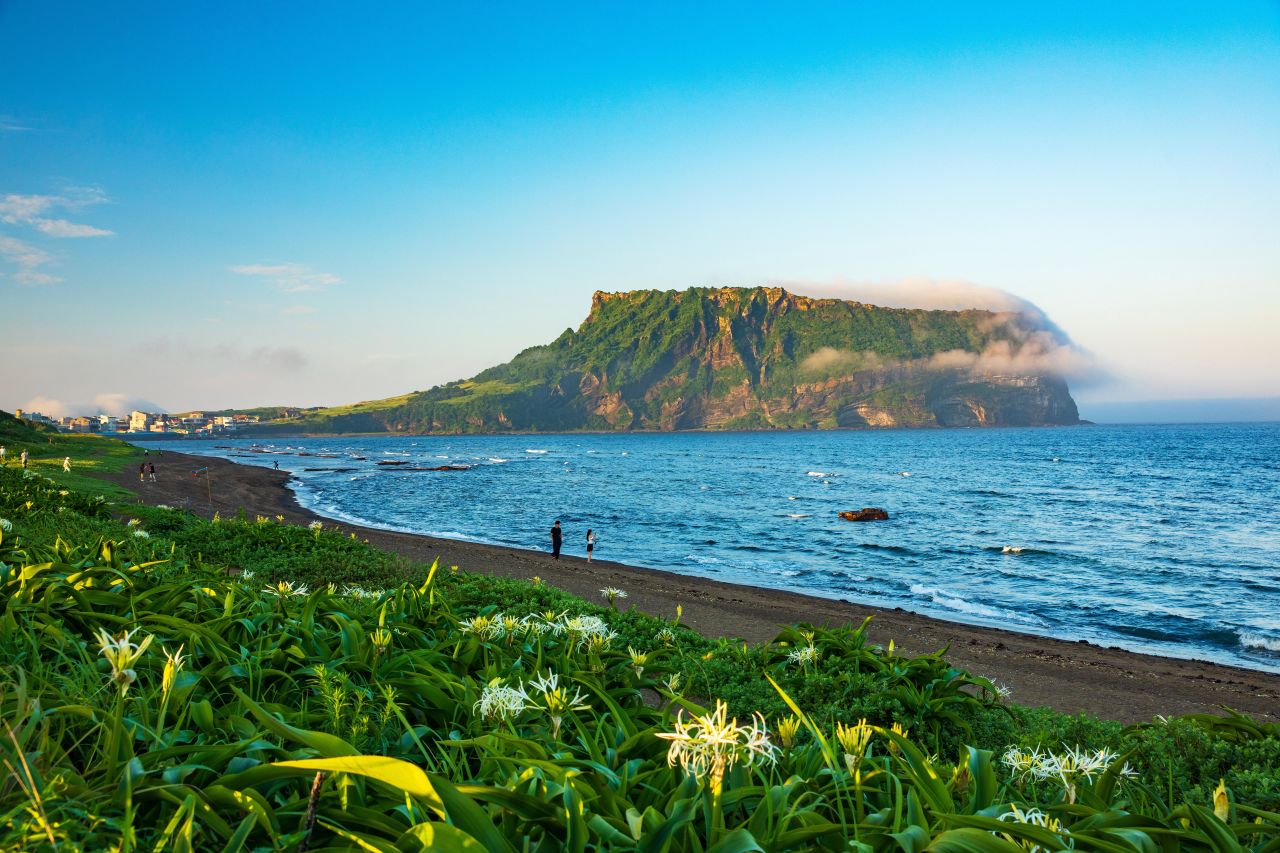
Underestimating how big Udo actually is. The island reads as small on a map, but circling it on foot in a few hours is unrealistic once you factor in beach stops, the walk up to Udobong Peak, and food breaks. Travelers who plan to “just walk it” often end up rushing the last hour and cutting it close on the return ferry — the single biggest cause of the “stranded overnight” scenario I’ve seen people worry about.
Not checking the seasonal schedule before arriving. The last ferry back shifts by an hour or more between peak season and off-season, and this isn’t something reliably posted on general travel sites. Confirm the day’s actual last departure at the ticket counter when you arrive, not from whatever schedule you found online the night before.
Getting Around Udo Island Without a Korean Driver’s License
The two transport options that work reliably for foreigners on Udo, without navigating Korea’s licensing rules, are electric bikes and the public circular bus. Both let you cover meaningful distance without the IDP category headache that trips up scooter and mini-car rentals.
Why an International Driving Permit Doesn’t Always Work
Korea issues rental eligibility based on vehicle class, and Udo’s popular mini cars and scooters fall under a moped/motorcycle classification rather than the standard passenger-car class most travelers assume covers everything. Your IDP needs the Category A motorcycle endorsement specifically — a distinction from the 1949 Geneva Convention permit categories that most car-only IDPs never include. Even travelers who arrive with a valid IDP for driving a rental car on the mainland get turned away from scooter counters on Udo for exactly this reason. If you’re not certain your home-country license and IDP include a motorcycle category, don’t assume the shop will make an exception — plan around electric bikes or the bus instead.
Electric Bikes and the Public Bus: The Reliable Options
Electric bikes are the most flexible choice — most rental shops near Cheonjin Port don’t require a special license for them, and they’re fast enough to reach Udo’s spread-out beaches without the licensing question ever coming up. The public circular bus is the budget option, running about every 15–30 minutes for roughly ₩7,000–₩10,000 for a one-day pass, though note it alternates direction — clockwise on even-numbered days, counter-clockwise on odd-numbered days — so check which way it’s running before you commit to a starting point.
With either option, the standard first stop for most visitors is Hagosudong Beach (Google Maps) for its clear, shallow-shelved water, followed by Geommeolle Beach (Google Maps) for its dark volcanic sand and sea cave, which sits close enough to Udobong Peak that most travelers combine both in one loop. Save room for Udo’s peanut ice cream on the way back to the dock — it’s the one stop nearly every visitor makes regardless of how they got around the island, and cafe queues for it build up noticeably by mid-afternoon.

What To Do If You Miss the Last Ferry or Can’t Rent a Vehicle
If your main plan falls through — you can’t rent a scooter, or you’re worried about the last ferry — the realistic fallback is to slow down your itinerary rather than force a full loop of the island in one visit. Prioritize one beach and Udobong Peak rather than trying to hit every popular spot, and treat the electric bike or bus as your baseline plan rather than a backup, since neither depends on a license category you might not have.
If you’re genuinely concerned about timing, build your day around the return ferry rather than the outbound one — decide what time you need to be back at Cheonjin Port to comfortably catch a sailing with buffer room, then work backward. Udo does have a small number of guesthouses if you decide in advance that you’d rather stay overnight and split the island across two calmer days instead of one rushed one — this also happens to be one of the documented exemptions if you were hoping to bring a rental car across. What I wouldn’t recommend is improvising an overnight stay on the spot after missing the last ferry; treat “confirm today’s last departure at the counter when you arrive” as a non-negotiable step, not a nice-to-have.
Frequently Asked Questions
Can foreigners take the Udo Ferry from Seongsan Port?
Yes. There’s no foreigner-specific restriction on the ferry itself — any traveler with a valid passport or Alien Registration Card can buy a ticket and board, the same as a Korean national with valid ID. The only extra step is completing the Boarding Declaration Form at the counter.
Do I need a Korean phone number or app to buy an Udo Ferry ticket?
No. Tickets are purchased in person at the Seongsan Port counter with cash or card, so you don’t need Korean phone verification, a Korean bank account, or a local app to book this trip — unlike many Korean event or transport tickets that require phone-based identity verification.
Can I take my rental car to Udo Island?
Generally no, unless it’s an electric or hydrogen rental car. Other rental cars are restricted on Udo for standard day-trippers, with exemptions typically limited to travelers staying overnight on the island, those traveling with a child under 6, and travelers over 65 or pregnant with documented mobility difficulties. Otherwise, park your car at Seongsan Port and use an electric bike or the public bus once you’re on Udo.
What license do I need to rent a scooter or mini car on Udo?
You need an International Driving Permit that includes a Category A motorcycle endorsement, not just a standard car-category IDP. Many travelers carry an IDP valid for cars but not motorcycles, which is why scooter and mini-car rentals on Udo turn away more foreign travelers than mainland Jeju rental counters do.
What happens if I miss the last ferry back to Jeju?
You’d need to arrange an overnight stay on Udo, since there’s no other way off the island once the last sailing departs. The safest approach is to confirm the day’s actual last departure time at the Seongsan or Cheonjin ticket counter as soon as you arrive, and build in a buffer rather than relying on a schedule you found online in advance.
In Conclusion
The Udo Ferry itself was never the hard part — foreigners can buy a ticket at Seongsan Port with nothing more than a passport or ARC and a completed Boarding Declaration Form. Where trips actually go sideways is downstream of the dock: assuming a rental car crosses over, assuming any IDP covers a scooter, or misjudging how much time Udo’s beaches and Udobong Peak actually take. Handle those three points — bring your physical ID, plan around an electric bike or the public bus instead of a vehicle rental, and confirm the day’s last sailing when you arrive — and the rest of the trip runs the way it looks on paper: a 15-minute ride to an island that rewards a slower, unhurried afternoon.
Discover more from Korea Visiting
Subscribe to get the latest posts sent to your email.