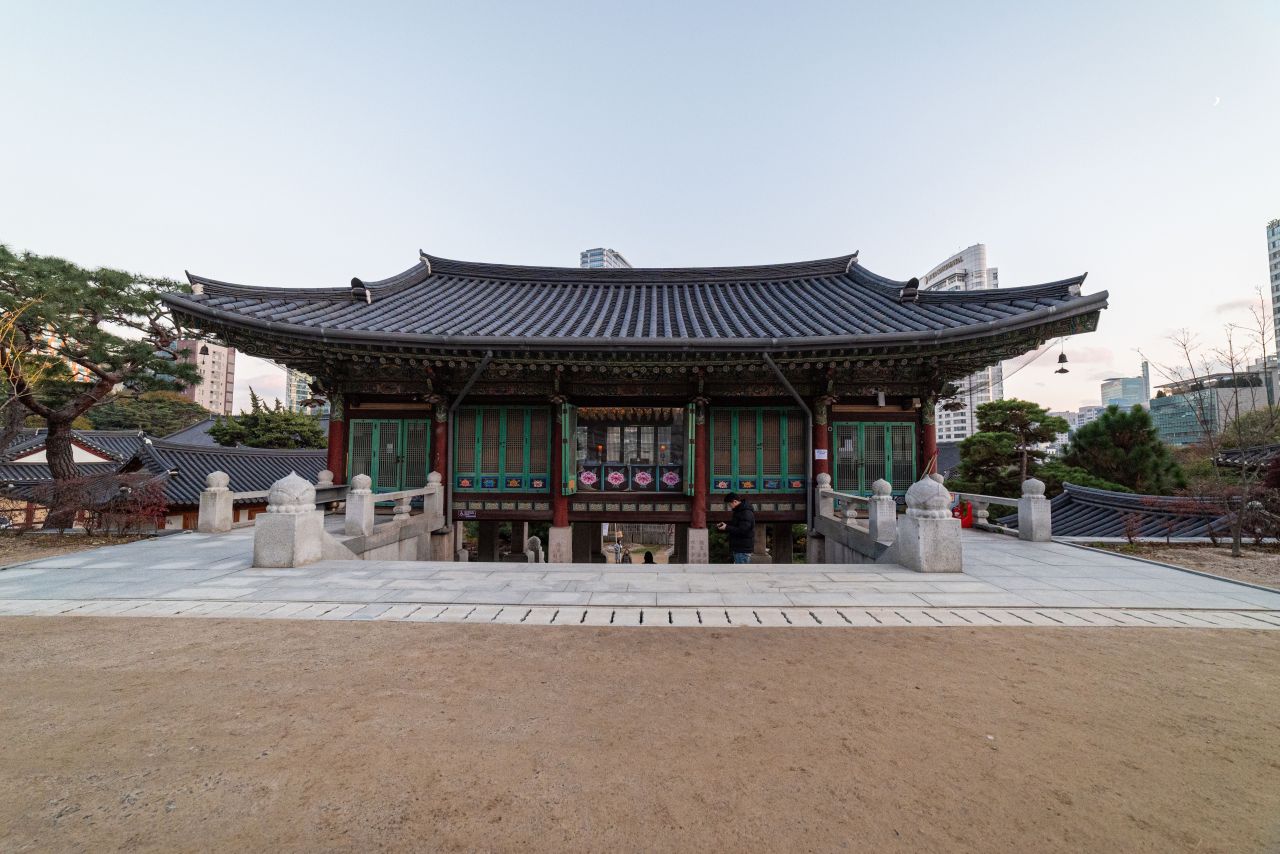
Yes — a Korean Temple Stay for foreigners is one of the easiest cultural bookings in the country, and you don’t need a Korean phone number, resident registration number, or PASS identity verification to do it. That single fact surprises a lot of travelers, because almost every other popular Korean booking system — concert tickets, KTX trains, some restaurant reservation apps — locks foreign visitors out at exactly that step. Temple Stay doesn’t work that way, but it has its own friction points: card payments that fail at the last screen, temples that turn out to have no English support, and popular dates that vanish weeks before you even open the site. I’ve worked through the official booking flow enough times, and watched enough people get stuck on the payment page, to know exactly where this process breaks and what actually fixes it.
This guide walks through why the blockers happen, the exact steps that work, the mistakes that cost people their preferred dates or temple, and what to do when the main booking route fails.
Key Takeaways
- Foreigners can book directly on the official English site, eng.templestay.com — no Korean phone verification required.
- The real obstacle is usually payment: some overseas cards fail Korean 3D Secure checks on the gateway.
- Roughly 30 of the 130-plus participating temples offer solid English support — filter for it before you fall in love with a temple.
- Book 3–4 weeks ahead normally, 6–8 weeks ahead for April–May and late October–November.
- If online payment fails, emailing the temple directly to arrange on-site payment is a legitimate, commonly used workaround.
Why This Trips Up Foreign Visitors
The good news first: a Korean Temple Stay for foreigners does not require the Korean-style identity verification (PASS app, resident registration number) that blocks so many other domestic bookings. The government-run Templestay program built its English portal specifically for international visitors, so the account-creation wall that stops you cold on Korean ticketing or delivery sites simply isn’t there.
The actual friction sits one step later, at payment. eng.templestay.com accepts international credit cards, but Korean payment gateways run 3D Secure (also called OTP or one-time-password verification) checks that some foreign-issued cards don’t complete correctly — the bank’s verification pop-up times out, or the card network doesn’t support the flow the gateway expects. The transaction looks like it should work, gets to the final confirmation screen, and then quietly fails. This isn’t a Temple Stay-specific bug; it’s the same 3D Secure mismatch that trips up foreign cards on various Korean retail sites, and it’s the single most common reason someone gives up thinking foreigners “can’t” book, when in fact the booking system itself is open to them.
A second, quieter blocker is expectation mismatch: many first-time searchers picture a loosely structured retreat they can drop into whenever they like. Templestay is a scheduled program with fixed capacity per session — you’re reserving a specific room and specific communal activities for specific dates, not requesting general access to a temple.
How to Book a Korean Temple Stay for Foreigners, Step by Step
The reliable path is booking directly through eng.templestay.com, the official English-language platform (also available in Chinese and Japanese) run by the Templestay program.
- Go to eng.templestay.com and set your filters first. Before browsing by region, tick the “English available” option. This immediately narrows the 130-plus participating temples down to the subset — roughly 30 — where staff, signage, or a guide can actually communicate with you in English.
- Pick a program type. Choose between One-day (a single afternoon, no overnight stay), Experience-oriented (structured activities like meditation, chanting, and temple food across an overnight stay), and Rest-oriented (a similar overnight framework but with more unscheduled free time). Match this to your energy level and interest, not just availability.
- Check the daily schedule listed on the temple’s page. Wake-up times as early as 3–4 a.m., seated meditation, and communal vegetarian meals are standard; read the specific schedule so there are no surprises.
- Select dates and room type. Standard pricing covers communal, gender-separated dormitory rooms. If you want a private room for 2–4 people, look for the “option pay” add-on fee at the same step — it’s not automatic.
- Pay with an international credit card. Have a backup card ready (see the mistakes section below) in case the first one fails 3D Secure verification.
- Save your confirmation email, which includes the temple’s direct contact information — you’ll want this if you have dietary needs or questions before arrival.
- Email the temple directly if you have allergies beyond a standard vegan diet (gluten, nuts, etc.). Temple kitchens default to vegan meals for everyone, but they need advance notice to accommodate specific allergies.
Programs generally run about ₩60,000–₩100,000 (roughly $45–$75 USD) per person per night, with experience-oriented stays often near ₩80,000 and rest-oriented stays near ₩60,000. Occasional promotional periods for foreign visitors have offered discounted one-night rates as low as ₩30,000 — worth checking the site’s notices before you book at full price.
Choosing the Right Temple and Program
The “best” temple depends entirely on what kind of experience you want, and picking based on scenery alone is the most common regret I hear about.
Seoul and nearby: easiest logistics
Geumsunsa Temple (Naver Map / Google Maps) in Jongno-gu is a frequently recommended pick for first-timers who don’t want a long transfer from the city, and it turns up often in traveler videos as a manageable, low-stress introduction to the program. If you don’t mind a short trip south of the city, Yongjusa Temple (Google Maps) in Hwaseong, Gyeonggi-do, is another named option worth checking for availability.

Busan: history and easy access
Beomeosa Temple (address: 250 Beomeosa-ro, Geumjeong-gu, Busan; Naver Map / Google Maps) dates back to 678 CE and sits on Geumjeongsan Mountain, one of the country’s oldest and most historically significant temples still running a full Templestay program.
Gyeongju: a different kind of program
If a purely meditative pace isn’t your goal, Golgulsa Temple (Naver Map / Google Maps) runs a Sunmudo (traditional Korean martial arts) program alongside standard temple activities — a genuinely different day than the typical meditation-and-chanting schedule.
Southwest: food-focused reputation
Baekyangsa Temple (Naver Map / Google Maps) has built a strong reputation around its temple food, gaining wider international attention after a feature on Netflix’s Chef’s Table. My pick here is temple food and gardens over an active program — skip it if you specifically want meditation intensity.
Is a mountain temple worth the extra travel time?
It can be, if immersion matters more to you than convenience. Temples further from Seoul or Busan tend to feel more removed from ordinary life — quieter grounds, less foot traffic outside your group — but they add real transfer time on both ends of a short stay. If you only have one night, weigh that travel time against the program length before booking something two-plus hours out.
Common Mistakes That Waste Your Time
Assuming you can just show up at any temple. This fails because Templestay reserves dormitory space and staff time for pre-booked cohorts running a fixed communal schedule — meals, meditation sessions, and room assignments are all planned around a known headcount. An unannounced arrival has nowhere to sleep and no slot in the day’s activities, so temples turn walk-ins away rather than improvise.
Skipping the “English available” filter. Roughly 30 of the 130-plus participating temples offer real English support; the rest run their programs in Korean only. If you book without filtering, you may end up at a temple where no one can explain the schedule, the etiquette rules, or what’s happening next — which turns a cultural experience into a confusing, isolating one.
Using a foreign card without a backup. Korean payment gateways run 3D Secure/OTP checks that some overseas-issued cards don’t complete correctly, so the transaction fails at the final confirmation step even though your card is valid and has funds. Having a second card from a different bank or network ready to try immediately saves you from losing a limited-availability date slot while you troubleshoot.
Booking last-minute for peak season. April–May and late October–November draw heavy domestic demand for the same weather and scenery that draws foreign visitors, and English-friendly temples have a small number of weekly slots to begin with. Waiting until a week or two out for these windows means the popular programs are already full; 6–8 weeks ahead is the realistic lead time.
Expecting a private room by default. Standard program pricing covers communal, gender-separated dormitory rooms — that’s the baseline experience the program is built around. Private rooms for 2–4 people exist at some temples, but only for an additional “option pay” fee selected at booking, not something you can request after arrival.
Not emailing about allergies beyond vegan. Temple kitchens prepare vegan meals for every participant by default, so a general “I don’t eat meat” concern is already handled. But gluten, nut, or other specific allergies aren’t accounted for automatically — the kitchen needs a direct email after booking to adjust, and showing up without one risks a meal you genuinely can’t eat.
What to Do If Booking or Payment Fails
If the online booking process breaks down, you still have legitimate, temple-sanctioned ways to complete your reservation — none of them require bending the rules.
Email the temple directly. Contact details are listed on each temple’s Templestay page and in your booking attempt confirmation. Explain that your card failed at payment, and ask whether you can complete the booking with a bank transfer or pay in cash on arrival — this has been a workable path for travelers whose 3D Secure verification simply won’t go through on the website.
Try a different card or issuer. Since the failure is usually about how a specific card’s bank handles the Korean gateway’s verification step, a card from a different bank or network sometimes clears the same transaction without issue.
Call the national tourist hotline for help in English. The 1330 Travel Hotline (+82-2-1330) supports English, Japanese, and Chinese, and can point you toward temples with open availability or clarify a booking question in real time.
Check the Templestay Information Center. Located at 56 Ujeongguk-ro, Jongno-gu, Seoul, this center normally offers in-person guidance on programs and bookings; note it underwent fire-restoration closure through the end of 2025, so confirm current opening status before planning an in-person visit in 2026.
Broaden your search instead of fixating on one temple. If your first-choice temple is fully booked, re-run the English filter across other regions — Seoul, Busan, and Gyeongju all have English-friendly options, and a different city on the right dates beats an empty calendar on the “perfect” one.
Frequently Asked Questions
Do I need to be Buddhist to join a Temple Stay?
No. Temple Stay is a government-supported cultural program open to people of any faith or no faith at all — you’re expected to follow the schedule respectfully, not to hold any particular belief.
Will there be English-speaking staff or monks?
It depends on the temple, so check before you book rather than assuming. Roughly 30 of the 130-plus participating temples offer solid English support (guides, staff, or materials); use the “English available” filter on eng.templestay.com and, if a specific temple matters to you, verify support level on its individual page.
How far in advance should I book?
Three to four weeks ahead is generally enough for standard dates. For peak seasons — April–May cherry blossom and late October–November foliage — book 6–8 weeks ahead, since popular English-friendly programs fill quickly.
Can foreigners really book without a Korean phone number?
Yes. Unlike many Korean ticketing and reservation platforms, eng.templestay.com does not require PASS phone verification or a Korean resident registration number. The friction foreigners actually hit is at payment, not identity verification.
What if I want a long, quiet, unstructured retreat instead of a scheduled program?
Standard Temple Stay programs are structured two-day/one-night formats with a fixed daily schedule, not open-ended silent retreats. If you’re looking for something closer to that, ask a specific temple directly by email whether an extended or rest-oriented stay is possible — availability for this varies and isn’t guaranteed through the standard booking flow.
In Conclusion
A Korean Temple Stay for foreigners is genuinely open to book online — the identity-verification wall that blocks so many other Korean reservations simply isn’t part of this system. What actually trips people up is payment (foreign cards failing 3D Secure checks), skipping the English-availability filter, and booking too close to peak season. Work the official eng.templestay.com flow with a backup card ready, filter for English support before you fall for a temple’s photos, and book 6–8 weeks out for spring and autumn. If payment still won’t clear, email the temple directly — arranging on-site payment is a normal, sanctioned fallback, not a workaround. Handle those three points and the booking itself is straightforward; the harder part is just deciding between a meditation-focused stay, a food-focused one like Baekyangsa, or an active program like Golgulsa’s Sunmudo.
Discover more from Korea Visiting
Subscribe to get the latest posts sent to your email.