A Jeonju day trip from Seoul is one of the most rewarding ways to spend a single day outside the capital, pairing a fast KTX ride with a genuinely different pace of life in Korea’s food capital. This itinerary is built for travelers who have exactly one day and want to see Jeonju Hanok Village, taste real Jeonju bibimbap, and get back to Seoul without feeling rushed. The route runs Yongsan Station → Jeonju Station → Jeonju Hanok Village → dinner back in Seoul, and it’s designed around realistic walking distances and buffer time, not a checklist crammed into eight hours.
Key Takeaways
- A Jeonju day trip from Seoul is easily doable via KTX (about 1 hour 26 minutes to 1 hour 53 minutes each way) departing mostly from Yongsan Station.
- Budget roughly 6-7 hours on the ground in Jeonju to see the Hanok Village properly without sprinting between sights.
- Gyeonggijeon Shrine, Jeondong Catholic Cathedral, and Omokdae are all within a 10-15 minute walk of each other inside the village.
- Eat Jeonju bibimbap for lunch, graze on street food through the afternoon, and pick up PNB choco pies before you leave.
- Book KTX tickets in advance for weekends — trains run frequently but fill up fast on Saturdays and holidays.
Getting There — Seoul to Jeonju
The fastest and most reliable way to reach Jeonju from Seoul is the KTX from Yongsan Station, taking about 1 hour 26 minutes to 1 hour 53 minutes depending on the service. One-way economy fares run about ₩34,600 (around US$25-32), with first class closer to ₩48,400 (2024-2026 pricing). Around 20+ KTX departures run daily, so morning options are plentiful, but weekend trains — especially early morning and Sunday evening returns — sell out, so booking a few days ahead through Korail’s app or website is worth the five minutes it takes.
The budget alternative is the express bus, which runs about 2 hours 40 minutes to 4 hours depending on traffic and costs around ₩22,000 one way (2025 pricing). It’s cheaper but eats into your day, and online booking for buses can be finicky for foreign travelers — buying in person at the terminal is often simpler if the app gives you trouble. For a true single-day trip, KTX is the clear choice: it roughly halves your travel time each way, which translates directly into more hours actually spent in Jeonju rather than in transit.
Is a Jeonju day trip from Seoul actually feasible?
Yes — with KTX, you can realistically get a 6-7 hour window in Jeonju while still catching an evening train home. Taking an early train (around 7:30-8:30 AM) and a return train around 8-9 PM gives you a full, unhurried day without needing to stay overnight.

Getting Around Jeonju
From Jeonju Station, the Hanok Village is about a 7-8 minute taxi ride (roughly ₩9,000-12,000) or a 25-30 minute ride on local city buses that run directly between the station and the village entrance. Taxis are the easiest option for a one-day itinerary since they save time on the front and back end of your trip, but if you want to save a bit of cash and don’t mind a short wait, ask your driver or check signage at the station for buses heading toward Hanok Village — several routes pass close to the main gate.
Once inside Jeonju Hanok Village, everything worth seeing is walkable. The village is open around the clock with no admission fee to enter, and its core sights sit within a compact grid of alleys, so you won’t need any further transit until you’re heading back to the station at the end of the day. Wear comfortable shoes — the alleys are cobblestone and gently sloped in places, especially around Omokdae.
Jeonju Hanok Village — What to See
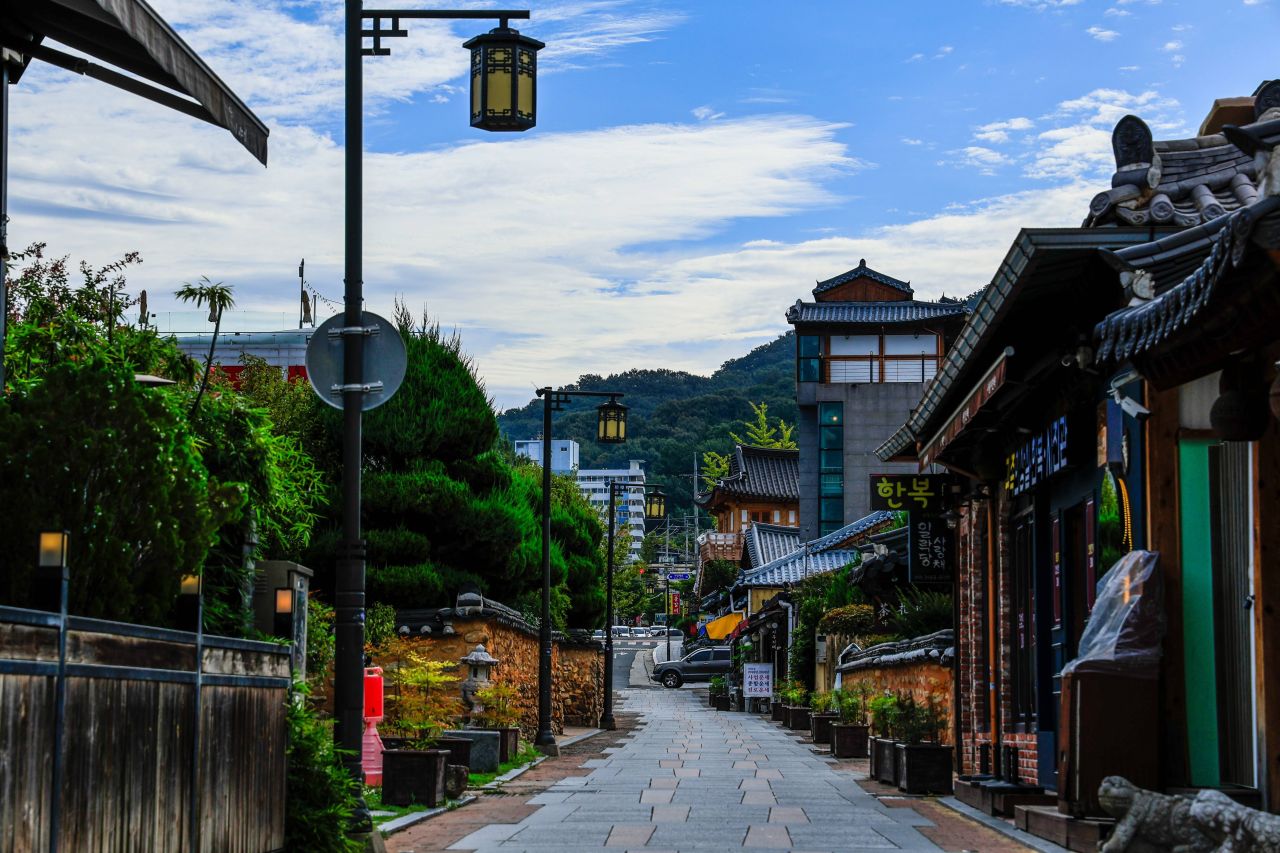
Jeonju Hanok Village is the heart of this trip, home to over 700 traditional hanok buildings and recognized as a UNESCO City of Gastronomy since 2012. Plan to spend at least 4-5 hours here to cover the main sights, eat properly, and still have time to wander the side alleys without watching the clock.
Gyeonggijeon Shrine
Built in 1410, Gyeonggijeon Shrine enshrines the portrait of King Taejo, founder of the Joseon Dynasty, and remains one of Korea’s best-preserved royal shrines — as well as a popular K-drama filming location. Admission is KRW 3,000, and the shaded courtyard is one of the calmest spots in the village. Check current hours and seasonal closing times before visiting, since hours shift by season. Budget about 30-40 minutes here.
Jeondong Catholic Cathedral
Just a short walk from Gyeonggijeon, Jeondong Catholic Cathedral was completed in 1914 and stands on the site where Catholic martyrs were executed during the Joseon Dynasty — it’s also the first Romanesque-style building in the Honam region. The red-brick facade makes it one of the village’s most photographed landmarks, and you don’t need much more than 15-20 minutes unless a mass is in session. Confirm the address and any visiting notes on the official cathedral site.
Omokdae Viewpoint
Omokdae sits atop a hill where Yi Seong-gye — later King Taejo — stopped to celebrate a military victory before founding the Joseon Dynasty, and today it’s the best rooftop-style panorama over the sea of tiled hanok roofs. The climb takes about 10 minutes via stone steps, and it’s worth timing your visit for late afternoon when the light is softer for photos. For a similar view with a coffee in hand, the nearby café Jeonmang offers a comparable rooftop outlook.
Hanbok Rental and the Alleys
Renting a hanbok is one of the most popular things to do here — most shops near the main entrance rent outfits by the hour, and wearing one gets you free or discounted admission at several sights, including Gyeonggijeon. If photos are a priority, rent first thing so you have hanbok time in the morning light before the alleys fill with crowds. Beyond the marquee sights, simply wandering the quieter side streets — away from the main thoroughfare — is where the village feels least touristy and most like a lived-in neighborhood.
Is Jeonju Hanok Village too touristy?
The main street can feel commercialized, especially around midday when crowds peak, but stepping one or two alleys off the main path reveals quieter residential lanes lined with tea houses and small workshops. Visiting on a weekday morning or heading toward Omokdae and the eastern edges of the village gives a noticeably calmer, more authentic experience.
Jeonju Food — What and Where to Eat
Jeonju’s reputation as Korea’s food capital is well earned, and the single dish you should not skip is Jeonju bibimbap, a richer, more elaborately garnished version of the dish than what’s typically served in Seoul. Hankook Jib, established in 1952, is widely credited as the first restaurant to serve Jeonju-style bibimbap and remains one of the most reliable places to try it. Expect a wait during peak lunch hours (noon-1 PM), so aim to arrive by 11:30 AM or push lunch slightly later to around 1:30 PM.
For dessert, PNB Bakery (Pungnyeon Jegwa), founded in 1951, is famous nationwide for its handmade choco pies — the original branch is worth a stop, and the pies also travel well if you want to bring some back to Seoul.
Street food is best explored around Nambu Market and the main Hanok Village alleys: shrimp dumplings (about KRW 2,000 per piece), soy milk hotteok (about KRW 2,000) and cream cheese hotteok (about KRW 2,500), and strawberry red bean mochi (about KRW 2,000) are all worth trying — prices have likely shifted somewhat since these figures were recorded, so treat them as a rough guide. Nambu Market, a short walk from the village, is also the better spot for a sit-down bowl of kongnamul gukbap (bean sprout soup) or kalguksu if you want something warm and less touristy than the main alley food stalls.
Beyond Bibimbap: Hanjeongsik and Makgeolli
If your schedule allows a second meal or you’re staying past dinner, Jeonju is also known for hanjeongsik, an elaborate multi-course traditional meal with dozens of small side dishes, and for its makgeolli culture — Samcheon-dong is the local rice-wine alley where ordering a kettle of makgeolli comes with a spread of anju (side dishes) included in the price. Both are more of an evening, sit-down experience and work best if you’re not racing for a return train.
Is Jeonju bibimbap really different from bibimbap elsewhere in Korea?
Yes — Jeonju bibimbap traditionally uses more numerous and more carefully prepared toppings, often including raw beef tartare (yukhoe), bean sprouts cooked in a particular local method, and a distinct sesame oil and gochujang balance. It’s considered the dish’s regional origin point, which is why food-focused travelers specifically seek out Jeonju rather than eating bibimbap in Seoul.
A Realistic One-Day Itinerary
The single biggest mistake in planning a Jeonju day trip is trying to fit in too much — a comfortable day covers the Hanok Village core plus one or two food stops, not every attraction in the city. Here’s a pacing guide that leaves room to actually enjoy the walk rather than checking boxes.
Take a KTX departing Yongsan around 7:30-8:30 AM, arriving in Jeonju about 1.5-2 hours later. From Jeonju Station, taxi to the Hanok Village (about 7-8 minutes) and arrive by mid-morning. Spend the first hour renting a hanbok if you want photos, then visit Gyeonggijeon Shrine (30-40 minutes) and Jeondong Catholic Cathedral (15-20 minutes), both a short walk apart. Have lunch around 12:30-1 PM — bibimbap at Hankook Jib or a market meal at Nambu Market. In the afternoon, wander the quieter alleys, graze on street food, and climb to Omokdae for the rooftop view (30-40 minutes total including the walk). Grab a coffee at Jeonmang or a similar rooftop café if you want to sit and take in the view before heading back. Stop by PNB Bakery for choco pies on your way toward the station. Aim to leave the village by 6-7 PM to catch an evening KTX back to Seoul (around 8-9 PM), giving you a comfortable buffer instead of sprinting for the last train.
This leaves the late morning through early evening — roughly 6-7 hours — for the village itself, which is enough to see everything listed above without feeling rushed. If you have more energy or arrive earlier, Jaman Mural Village, a short walk from Omokdae, makes a good optional add-on for photography.
Getting Around & Practical Tips
The most important practical decision for this trip is booking your KTX tickets in advance, particularly for weekend travel, since seats on popular morning and evening departures sell out days ahead. There’s no dedicated regional transit pass needed for a Jeonju day trip — taxis and occasional local buses cover everything, and cash or a T-money card works for local buses if you choose that route from the station.
Seasonally, spring (April-May) and fall (October-November) offer the most comfortable walking weather and the best light for hanbok photos, while summer (June-August) is hot and humid enough that an early start matters more. Winter is quieter and less crowded but colder for the Omokdae climb. If your visit falls during a special event — the Hanok Village periodically hosts a traditional performance parade with street performances like Jeonju gijeopnori and madangnori — check the official event schedule before you go, since dates vary.
Finally, don’t underestimate return-trip traffic and crowds on Sunday evenings and holidays; giving yourself an extra 30-45 minutes of buffer before your scheduled KTX departure is a smart hedge against a delayed taxi or a longer-than-expected queue at the station.
Frequently Asked Questions
Is Jeonju worth a day trip from Seoul?
Yes, most travelers who visit find it well worth the trip — the combination of a well-preserved hanok village, distinctive food culture, and a slower pace than Seoul makes it a strong change of scenery even for a single day. If you’re deciding between Jeonju and extra time in Seoul or Busan, Jeonju is best suited to travelers who prioritize food and traditional architecture over nightlife or shopping.
How do I get to Jeonju from Seoul?
The KTX from Yongsan Station is the fastest option, taking about 1 hour 26 minutes to 1 hour 53 minutes and costing around ₩34,600 one way in economy. Express buses are cheaper (about ₩22,000) but take about 2 hours 40 minutes to 4 hours, which cuts significantly into a single-day itinerary.
Do I need to book anything in advance for a Jeonju day trip?
Booking your KTX ticket a few days ahead is the main thing to prearrange, especially for weekend travel when trains fill up. Hanbok rentals and restaurant tables generally don’t require advance booking, though arriving at Hankook Jib before or after the noon-1 PM lunch rush will save you a wait.
Should I stay overnight in Jeonju instead of doing a day trip?
A day trip is genuinely doable and many travelers do it comfortably via KTX, but an overnight stay in a hanok guesthouse lets you see the village lit up in the evening and try a full hanjeongsik or makgeolli-alley dinner without racing a train. If your schedule is flexible, one night adds noticeable depth to the trip; if not, a well-paced day trip still covers the highlights.
What food should I try in Jeonju besides bibimbap?
Beyond Jeonju bibimbap, try kongnamul gukbap (bean sprout soup), kalguksu (knife-cut noodles), mandu (dumplings) from the street stalls, and PNB choco pies for dessert. If you have time for a sit-down dinner, hanjeongsik (a multi-course traditional meal) or a kettle of makgeolli in the Samcheon-dong alley round out a fuller culinary picture.
In Conclusion
A Jeonju day trip from Seoul works best when you resist the urge to over-schedule it: KTX gets you there and back in comfort, and 6-7 hours in the Hanok Village is enough to see Gyeonggijeon Shrine, Jeondong Catholic Cathedral, and Omokdae, eat a proper bibimbap lunch, and still wander the quieter alleys without watching the clock. Book your KTX seats ahead of time, especially for weekends, keep your itinerary to one core loop plus food stops, and build in a buffer before your return train. Whether you treat it as a single, well-paced day or extend it into an overnight stay for hanjeongsik and makgeolli, Jeonju delivers a genuinely different side of Korea within easy reach of the capital.
Discover more from Korea Visiting
Subscribe to get the latest posts sent to your email.