If you’ve searched for a Jogyesa Temple guide because you’re not sure whether the temple charges admission, which subway exit to use from Jonggak Station, or whether it’s even worth a detour on a packed Seoul itinerary, you’re not alone. Jogyesa sits in the middle of downtown Jongno, wedged between Insadong’s souvenir alleys and the office towers of central Seoul, which makes it easy to walk past without realizing it’s the headquarters of Korean Buddhism’s largest order. First-timers usually show up with three questions: how much does it cost, how do I actually find the entrance from the subway, and is 20-30 minutes here enough, or should I plan for longer. Here’s what actually helps once you’re standing at the gate.
Key Takeaways
- Entry to Jogyesa Temple is free year-round; only the Templestay programs carry a fee (from about ₩10,000).
- From Jonggak Station Exit 2, it’s a straight 5-7 minute walk — no transfers, no confusing turns.
- The temple grounds stay accessible well beyond typical hours, so an evening visit is realistic even outside festival season.
- The Lotus Lantern Festival (early May) transforms the courtyard into a canopy of thousands of lanterns — plan for heavy crowds if you go then.
- Jogyesa pairs naturally with Insadong, Bukchon Hanok Village, and Gyeongbokgung Palace since all four sit within a short walk of each other.
📍 Jogyesa Temple (조계사) — Essential Information
| Address | 55 Ujeongguk-ro, Jongno-gu, Seoul |
| Closed | N/A (Open all year round) |
| Parking | Available (Limited parking space; use of public transportation recommended) |
| Website | www.jogyesa.kr |
| Best time to visit | Least crowded on Sundays; busiest on Fridays (Korea Tourism Organization crowd forecast) |
| Map | Google Maps · Naver Map |
Jogyesa Temple at a Glance
Jogyesa rewards visitors who want a genuine, active Buddhist temple without leaving downtown Seoul — this is not a reconstructed museum piece, it’s a working religious center where monks live and worship daily. What you’ll see is centered on the Daeungjeon Hall, the temple’s main worship hall, framed by a 500-year-old white pine and a locust tree that predate the current buildings by centuries; the courtyard between them is where most of the temple’s daily and festival life happens. Getting there from Jonggak Station is about as simple as Seoul subway access gets — no confusing exit changes, just a short straight walk. Admission is free with no ticket booth or entry gate to pass through, though the separate Templestay programs run from roughly ₩10,000 depending on which one you choose. Past visitors consistently note that the temple feels most different from photos at dawn or dusk, when the lantern-strung courtyard empties out and the chanting from inside Daeungjeon carries further. For a combined outing, Jogyesa sits close enough to Gyeongbokgung Palace, Insadong, and Bukchon Hanok Village that you can string all four into a single half-day loop on foot.

Jogyesa Temple Guide: How to Get There from Jonggak Station
The fastest and most commonly used route to Jogyesa is Subway Line 1 to Jonggak Station (Google Maps), Exit 2. From there it’s a straight shot forward for roughly 70 meters, a street crossing, and another 100 meters or so — call it 5 to 7 minutes total, and the temple’s main gate becomes visible before you even finish the walk. This is the route I’d default to for anyone coming from City Hall, Seoul Station, or anywhere along Line 1, since there’s no exit confusion the way some Seoul stations have.
If you’re coming from the Bukchon or Samcheong-dong side, Anguk Station Exit 6 on Line 3 is the more convenient starting point — head south along Ujeongguk-ro for roughly 300-400 meters (about 5 minutes), and the temple entrance is across the street from Dongduk Gallery. It’s the better option if your day already has you near Gyeongbokgung or the hanok village and you’re working your way toward Jongno rather than starting fresh from a major transfer hub.
A third option, Gwanghwamun Station on Line 5, Exit 2, involves a longer 5-10 minute walk east, which makes sense mainly if you’re already exiting Gwanghwamun after a Gyeongbokgung visit and want to fold Jogyesa into the same walking stretch rather than backtracking to another station. Whichever route you pick, none of them require a transfer mid-walk or a taxi — this is one of the most subway-accessible major sights in central Seoul.
Things to Do at Jogyesa Temple
The centerpiece is the Daeungjeon Hall, and it’s worth pausing at the entrance rather than walking straight past it, since the hall houses three large Buddha statues and painted ceiling work that most first-time visitors miss because they’re focused on photographing the courtyard trees instead. Removing your shoes and stepping inside is welcomed even for non-practicing visitors, as long as you keep quiet and stay along the edges during active worship — this is one detail that trips people up, since it doesn’t always feel obvious that entry is allowed.
Outside, the two ancient trees flanking the courtyard — a white pine estimated at roughly 500 years old and a locust tree of similar age — are protected natural monuments that survived long before the current temple buildings were rebuilt in the 20th century. They give the courtyard a sense of scale that newer temple complexes in Seoul don’t have. Around the edges you’ll find smaller shrine buildings, a bell pavilion, and stalls selling prayer items and incense, which locals use for small offerings rather than souvenirs.
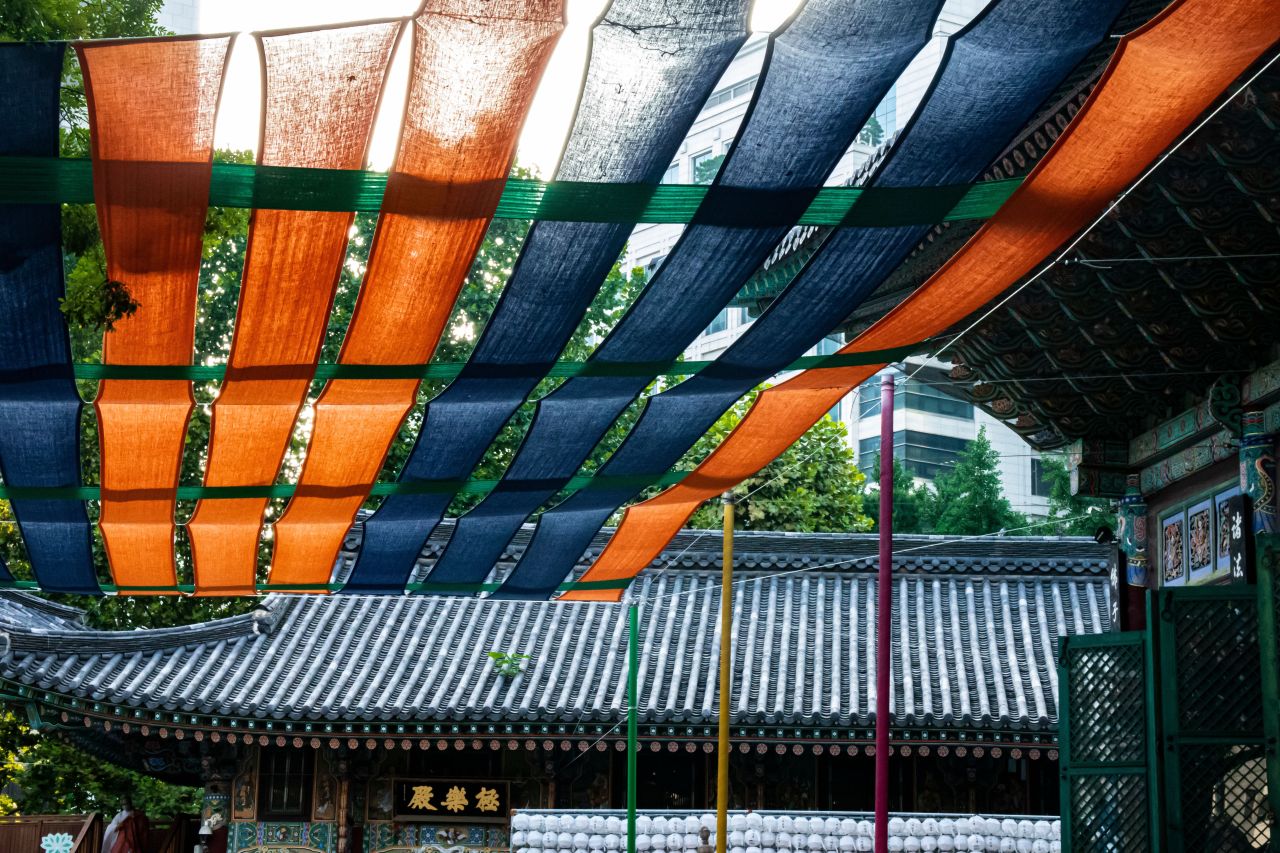
If you want a deeper read on the architecture, look for the symbolism in the roof brackets and dancheong (the multicolored paintwork under the eaves) — the colors and patterns aren’t decorative flourishes but follow a formal Buddhist color system, and temple staff or the information desk near the entrance can usually point you to an English pamphlet that explains it in plain terms.
Templestay Programs and Cultural Immersion
Templestay is where Jogyesa moves from a quick photo stop to an actual cultural experience, and it’s the detail most first-time guides gloss over. The self-guided “Always Templestay” option runs daily from 10:00am to 4:00pm and lets you move through meditation, tea, and temple spaces at your own pace without a group commitment — a good fit if your schedule is tight or you’re traveling solo and don’t want to coordinate around a fixed group time. The guided “Be a True Hero” program is a structured session running from 10:00am to 12:20pm covering monastic etiquette, a formal tea ceremony, and guided meditation, but it requires a minimum of 10 participants to run, so it’s not something you can always book solo on short notice — check availability before building your day around it. Programs like “Seon of Tea” ran on a limited schedule until mid-2026, so if a specific themed session interests you, confirm current offerings directly with the temple before planning around it, since these rotate. None of the Templestay programs are covered by the free general admission — expect fees starting around ₩10,000 depending on the program.
Lotus Lantern Festival and Jogyesa’s Other Seasonal Events
Jogyesa’s calendar has three distinct visual peaks, and timing your visit around one of them changes the experience completely. The Lotus Lantern Festival (Yeondeunghoe) around Buddha’s Birthday in early May is the big one — thousands of paper lanterns strung across the courtyard turn Jogyesa into one of the most photographed spots in Seoul after dark, but expect the crowd to be dense, especially in the evening when the lanterns are lit and foot traffic funnels through the same gate you’d use on any other day. If your priority is a good photo without shoulder-to-shoulder crowds, an early morning visit during the festival window, before the evening lantern-lighting crowd builds, tends to work better than a night visit.
From late June through August, sometimes stretching into mid-September, the Lotus Festival fills water tanks around the grounds with blooming lotus flowers — a quieter, less crowded alternative to May’s lantern festival, and one many visitors don’t know to time for. In autumn, a Chrysanthemum Festival has historically run through October and into November, adding another seasonal layer worth checking for if you’re visiting in that window.
Outside festival periods, don’t assume the temple goes quiet after dark. Travelers who’ve visited in the evening consistently note that the grounds stay open and walkable well past the main hall’s typical hours, and roaming the courtyard quietly at night — even without a festival — is one of the more underrated ways to experience Jogyesa without the daytime foot traffic.
Photography Tips for Capturing Jogyesa Temple
The shot most visitors are chasing — the one that circulates on Instagram — is a low-angle view looking straight up through the strung lanterns toward Daeungjeon’s roofline, best captured either during the Lotus Lantern Festival window or on any evening when the courtyard’s standing lanterns are lit, since Jogyesa keeps some lantern displays up outside the festival too. Shooting from near the base of the ancient white pine gives you natural framing on one side of the courtyard without needing a wide lens. For the hall itself, the cleanest exterior shot is from the courtyard’s diagonal corners rather than straight-on, which avoids catching the incense burner and prayer stalls in frame. If you’re after a quieter, less crowded composition, arrive within the first hour after sunrise — the light is softer, and you’ll have the courtyard largely to yourself before tour groups and the lunchtime foot traffic from nearby offices arrive.
Jogyesa vs Bongeunsa: Which Temple Should You Visit?
Choose Jogyesa if convenience and a compact downtown visit matter most; choose Bongeunsa if you want more breathing room and a larger complex set against Gangnam’s skyline. Jogyesa’s biggest advantage is location — it sits directly in the Jongno-Insadong-Bukchon cluster, so it fits into a walking itinerary without a dedicated subway trip. Bongeunsa, in southern Seoul’s Gangnam district, is larger and quieter on an average day, with a hillside layout and the striking contrast of a traditional temple set against COEX’s high-rises, but it requires a separate trip if you’re already based around Jongno or Myeongdong. If you only have time for one, Jogyesa makes more sense for a first Seoul trip built around the historic downtown core; Bongeunsa is the better pick if Gangnam is already on your route or you want a temple visit with more space to wander without the downtown foot traffic.
Combining Jogyesa Temple with Insadong, Bukchon, and Gyeongbokgung
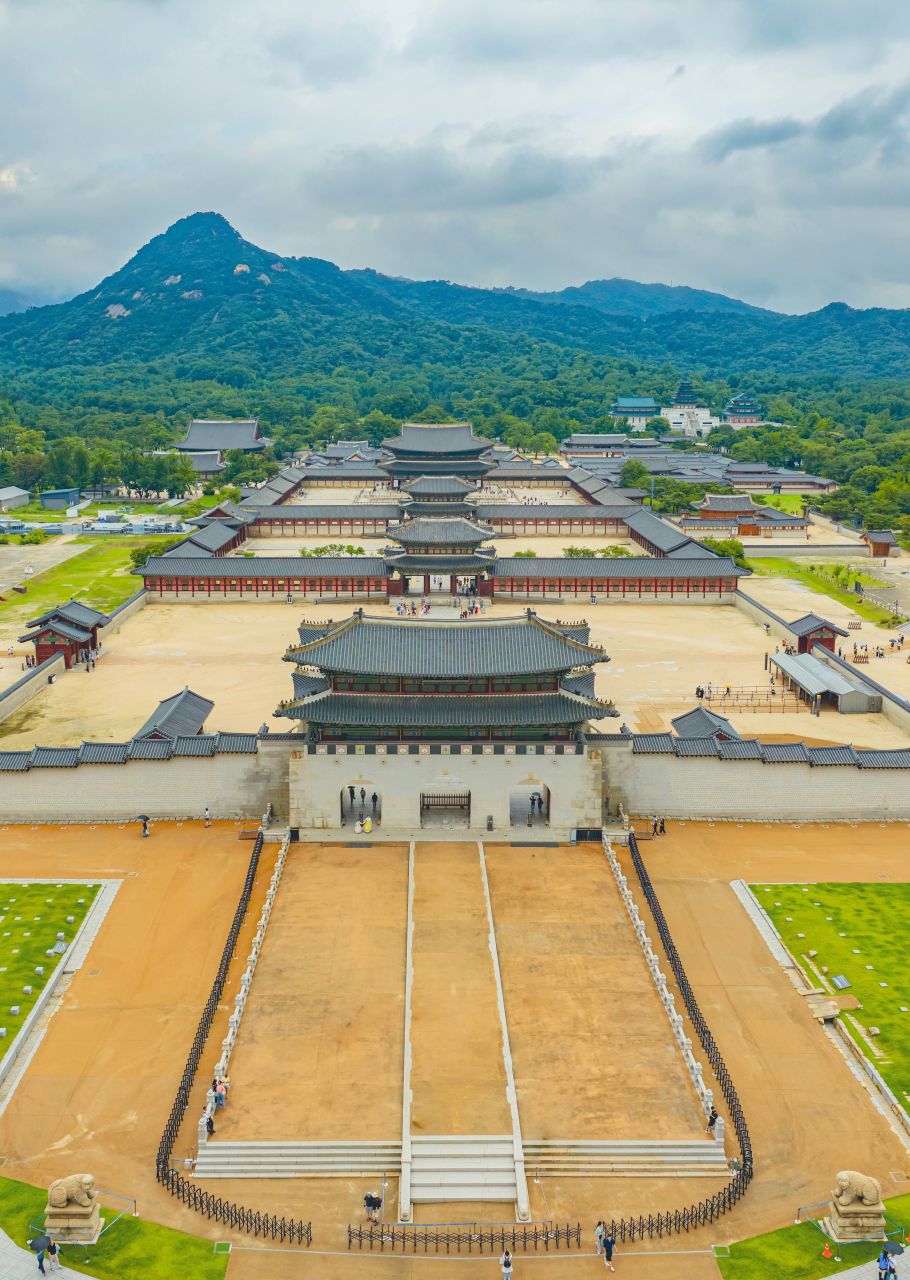
Jogyesa’s real advantage is that it was never designed to be a standalone stop — its location makes it a natural link in a downtown Seoul walking loop. Insadong’s craft shops and tea houses sit just a few minutes’ walk east, making it the easiest add-on if you’re hungry or want to browse after the temple. North toward Bukchon Hanok Village, the walk takes you past traditional roof lines that echo what you just saw at Jogyesa, which makes for a natural before-and-after comparison between a working temple and a preserved residential hanok district. West and slightly north, Gyeongbokgung Palace (official site) rounds out a half-day loop — check the palace’s current access notices before your visit, since sections of the grounds are periodically closed for restoration work. Doing Gyeongbokgung first thing in the morning, then Jogyesa, then finishing in Insadong or Bukchon for lunch is a sequence that keeps walking distances short and avoids doubling back.
Common Mistakes First-Time Visitors Make
Skipping the shoe-removal etiquette at Daeungjeon is the most frequent misstep — visitors assume the hall is a viewing-only space like a museum exhibit and either walk past it entirely or wander close in shoes, which draws quiet correction from staff since it’s an active worship hall, not a display. Another recurring error is timing a Buddha’s Birthday or Lotus Lantern Festival visit for the evening peak expecting a calm, uncrowded photo session — the festival’s evening lantern-lighting draws the heaviest foot traffic of the year, so anyone hoping for open courtyard shots should shift to an early morning visit instead. Visitors also frequently assume Jogyesa closes and locks up like a typical tourist attraction after a fixed hour; because the grounds function as a living religious site rather than a ticketed venue, the outer courtyard commonly stays accessible into the evening even when the main hall’s active hours are more limited — check current signage on site rather than assuming a museum-style closing time. Finally, some travelers worry the area becomes inaccessible during political rallies or protests, which do periodically occur in the wider Jongno-Gwanghwamun corridor; these gatherings are typically confined to specific streets and don’t close off the temple itself, but it’s worth checking recent local news if a rally is scheduled for your visit date, since street closures nearby can affect your walking route even if the temple stays open.
Frequently Asked Questions
Is Jogyesa Temple free to visit?
Yes, general admission to Jogyesa Temple is free with no ticket or entry fee required for the grounds and Daeungjeon Hall. The only costs come from optional Templestay programs, which start at roughly ₩10,000 depending on the session.
Can I visit Jogyesa Temple at night?
The outer courtyard commonly stays walkable into the evening, and during festival periods like Buddha’s Birthday, the lantern displays are specifically meant to be seen after dark. Main hall access hours are more limited than the grounds themselves, so if visiting a specific hall at night matters to you, check current posted hours on site rather than assuming late access.
Is Jogyesa worth visiting if I’m not interested in Buddhism?
Yes — you don’t need religious interest to appreciate the architecture, the centuries-old trees, and the contrast between a working temple and the surrounding city. Most visitors treat it as a cultural and historical stop rather than a religious pilgrimage, and staff are used to non-practicing tourists exploring respectfully.
How does Jogyesa compare to Bongeunsa for a first-time visitor?
Jogyesa is more convenient for anyone already exploring downtown Seoul’s Jongno, Insadong, or Bukchon areas, since it requires no dedicated subway trip. Bongeunsa offers a larger, quieter complex in Gangnam with a striking skyline backdrop, better suited if that area is already on your itinerary.
Do crowds at Jogyesa die down after the Lotus Lantern Festival’s main events?
Yes, foot traffic drops noticeably once the festival’s peak evening events conclude, and visiting a day or two after the main lantern-lighting typically means a calmer courtyard while the lantern displays are often still up. Early mornings during the festival window are generally the quietest time to see the lanterns without festival-night crowds.
In Conclusion
Jogyesa Temple works because it asks so little of your itinerary — free entry, a five-to-seven-minute walk from Jonggak Station, and a location that folds naturally into an Insadong, Bukchon, or Gyeongbokgung route. The visit rewards a bit of patience: pause at Daeungjeon Hall rather than walking past it, check the calendar for the Lotus Lantern Festival or Lotus Festival if timing matters to you, and consider Templestay if you want more than a courtyard walk-through. Aim for an early morning or evening visit if crowds are a concern, and don’t assume the grounds shut down after a fixed hour the way a ticketed attraction would. With the right timing and a clear walking route in mind, Jogyesa is one of the easiest, lowest-cost cultural stops to add to any central Seoul day.
Discover more from Korea Visiting
Subscribe to get the latest posts sent to your email.