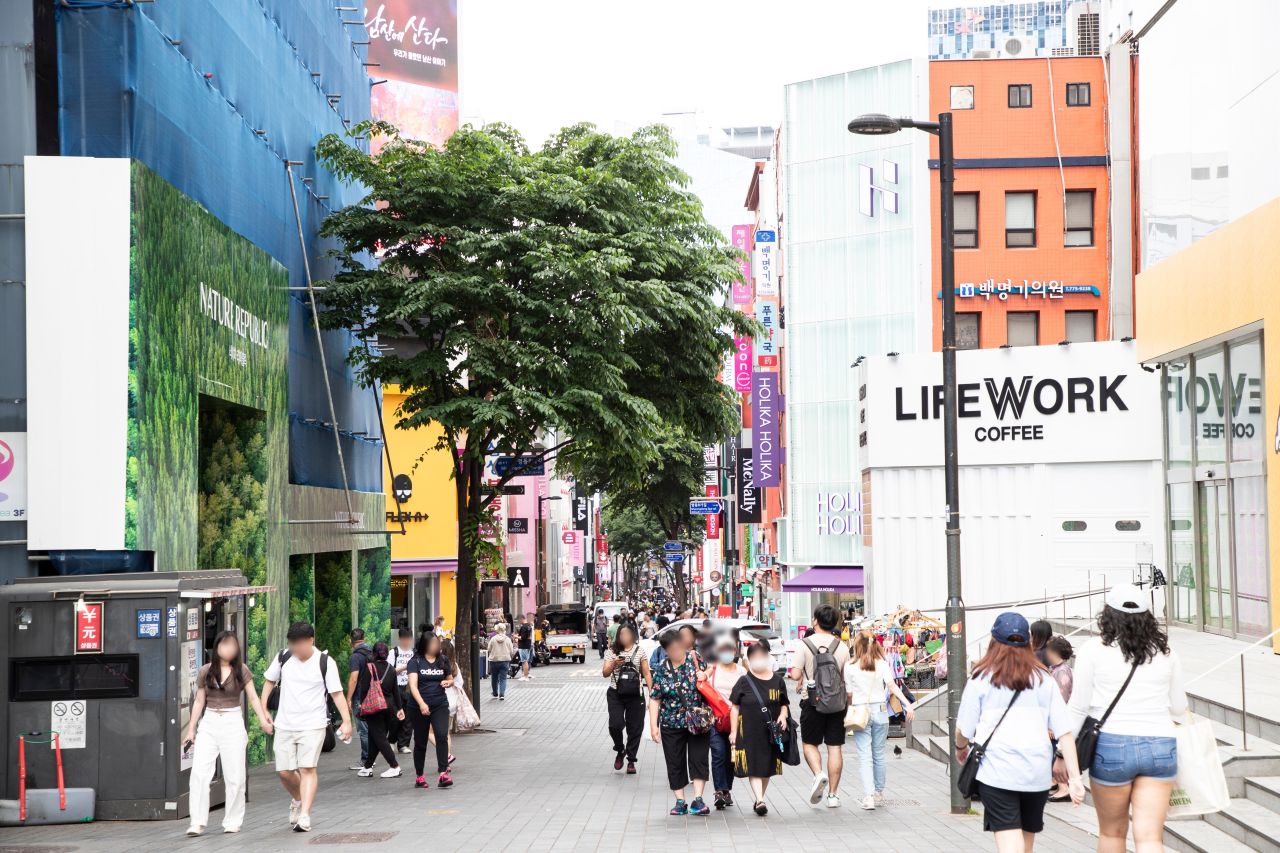
A Myeongdong travel guide becomes essential the moment you step out of Exit 6 at Myeongdong Station and find yourself facing a wall of neon signage, street vendors, and a crowd moving faster than you expected. First-time visitors usually have the same three questions running through their heads: when should I actually come, how do I get here without getting lost, and is this neighborhood worth the “too touristy” reputation everyone warns about online. Between K-beauty flagship stores, a sizzling night market, and a handful of landmarks tucked between shopping streets, it’s easy to wander in circles if you don’t have a plan before you arrive. This guide walks through the practical side of visiting — transportation, timing, what’s actually worth your feet, and how to avoid the common frustrations travelers run into once they’re on the ground.
Key Takeaways
- Myeongdong Station (Line 4, Exit 6 or 8) sits directly beneath the district, making it the easiest access point for first-time visitors.
- Mornings suit shoppers who want quieter aisles; evenings after 6 PM bring the street food stalls and the district’s signature energy.
- Spring and autumn offer the most comfortable walking weather, while summer sales and winter lights each have their own draw.
- Cash still matters here — many street vendors prefer it, and some charge extra for card payments.
- Beyond shopping, Myeongdong Cathedral, Nanta Theater, and the Bank of Korea Money Museum give the area cultural depth most visitors skip.
Myeongdong at a Glance
- Why visit: Myeongdong packs Seoul’s densest concentration of K-beauty shops, fast fashion, street food, and a few genuine cultural landmarks into a walkable grid, making it one of the most efficient introductions to the city.
- What you will see and experience: Multi-story cosmetic flagship stores blasting K-pop, alleyways lined with skewer and tteokbokki carts once the sun drops, department store window displays, and pockets of quiet around Myeongdong Cathedral just uphill from the main strip.
- Getting there: Most visitors arrive via Myeongdong Station on Line 4 — Exit 6 drops you straight into the shopping core, while Exit 8 leads toward the cathedral. Euljiro Ipgu (Euljiro 1-ga) Station on Line 2 works as a backup entry point from the Lotte Department Store side.
- Tickets and admission: Walking the district itself costs nothing — Myeongdong is an open street district, not a ticketed attraction, so admission only applies to specific experiences inside it, like the Nanta performance or a hanbok rental.
- Tips from past visitors: Wear shoes you’ve already broken in — the cobblestone-style paving and gentle inclines add up over a few hours, and most people end up walking far more than planned.
- Nearby spots worth combining: Namsan and N Seoul Tower, Namsangol Hanok Village, and the Euljiro café district are all a short walk or one subway stop away, making Myeongdong easy to pair with a half-day itinerary elsewhere in central Seoul.
Myeongdong Travel Guide Essentials: How to Get There
Getting into Myeongdong is straightforward once you know which exit to use, and the district is one of the best-connected shopping areas in Seoul for both subway and airport transfers. Myeongdong Station on Seoul Subway Line 4 sits directly under the neighborhood, with Exit 6 opening onto the main shopping street and Exit 8 pointing toward Myeongdong Cathedral. If you’re coming from the Line 2 side of the city, Euljiro Ipgu (Euljiro 1-ga) Station puts you closer to the Lotte Department Store end of the district, just a five-minute walk from the shopping core.
Coming straight from Incheon International Airport, the AREX Express Train to Seoul Station followed by a transfer to Line 4 toward Myeongdong Station takes around 40 to 55 minutes total and costs roughly ₩9,500. If you’d rather skip the transfer, Airport Limousine Bus 6015 runs directly to the Myeongdong area, taking about 70–90 minutes depending on traffic for around ₩17,000 — a good option if you’re carrying heavy luggage and want to avoid stairs and platform changes. Travelers already staying near Seoul Station have it easiest: Line 4 runs directly to Myeongdong Station in a single stop, about 3–5 minutes for roughly ₩1,400.
Once you’re on foot, Google Maps’ limitations in South Korea catch a lot of visitors off guard — walking directions and business locations are often inaccurate or missing entirely. Downloading Naver Map or Kakao Map before your trip solves this almost completely, and Kakao Taxi is the most reliable way to call a cab if you decide to skip the subway for a short hop.
Best Time to Visit Myeongdong: Morning Shopping vs. Night Market
The right time to visit Myeongdong depends entirely on what you’re after — mornings favor shoppers who want breathing room, while evenings deliver the district’s full personality. If browsing cosmetics counters or trying on clothes without shoulder-to-shoulder crowds is the priority, arriving before noon gives you first pick of shelves and shorter checkout lines, since the bulk of both local and tourist foot traffic builds through the afternoon.
Is Myeongdong better in the morning or at night?
Myeongdong genuinely functions as two different neighborhoods depending on the hour. By day, it reads as a shopping district — bright, busy, but manageable. Street vendors begin setting up carts in the late afternoon, and by evening the same streets fill with the smell of grilled skewers, the sound of vendors calling out, and noticeably heavier foot traffic. If the night market atmosphere — tanghulu, hotteok, rice cake skewers — is what drew you to Myeongdong in the first place, plan to arrive after dinner hours and expect a livelier, louder, more crowded version of the same streets.
Seasonally, spring (March–April) and autumn (September–November) bring the most comfortable walking weather for a district that’s almost entirely outdoors between stops. Summer trips often line up with seasonal sales across the shopping strip, while winter adds festive lighting and a colder but atmospheric version of the night market. Whichever season you visit, weekdays tend to be noticeably calmer than weekends, when both domestic and international visitor numbers peak.
Shopping in Myeongdong: K-Beauty, Fashion, and Department Stores
Myeongdong’s reputation as Seoul’s shopping capital holds up largely because of its density — you can compare dozens of K-beauty brands within a few blocks without ever leaving the district. The Olive Young Myeongdong Town flagship is one of the largest drugstore-format beauty stores in the city, stocking everything from sheet masks to sunscreen across multiple floors, and its long daily hours make it a reliable stop whether you shop early or late.
For a more department-store experience, the Lotte Department Store Myeongdong (Main Branch) anchors the northern edge of the district near Euljiro Ipgu Station, housing both mainstream fashion floors and a duty-free section popular with international visitors — including luxury counters such as BVLGARI’s tax-refund shop inside the Avenuel building next door. Shoppers chasing samples should temper expectations a little: many beauty counters now hand out fewer free samples than they once did, so budget for at least a few small purchases if trying products is the goal.
Beyond the big names, the side alleys running off the main pedestrian street hide smaller boutiques and accessory stalls worth a slower walk, especially for travelers who want something less mainstream than the flagship stores facing the main road.
Myeongdong Night Market: Street Food You Shouldn’t Miss
The Myeongdong Night Market is less a single market and more a slow transformation of the main streets, as carts roll in around 4 PM and are in full swing by 5 PM, operating until around 11 PM. Tanghulu — fruit skewers coated in hardened sugar syrup — has become one of the most photographed items in the district, alongside grilled cheese rice cake skewers and hotteok, the sweet filled pancake that’s a Korean street food staple in colder months.
Peak hours between 6 and 10 PM bring the heaviest crowds and the most vendors, so if photographing the stalls without a wall of people is a priority, arriving right as carts open around 5:30 PM gives a brief window of relative calm. Prices at some stalls have crept up in recent years and can feel steep for the portion size, so it’s worth treating the night market as an experience to sample a few items rather than a full dinner. Nearly all vendors expect cash, and change for large bills can be limited, so carrying smaller denominations makes transactions noticeably smoother.
Things to Do Beyond Shopping: Culture and Performances
Myeongdong holds more cultural weight than its shopping-district reputation suggests, anchored by Myeongdong Cathedral, the birthplace of Korea’s Roman Catholic community and still an active parish church for the Archdiocese of Seoul. The red-brick Gothic building sits on a small rise above the main shopping streets, and the short uphill walk from Exit 8 offers a genuinely quieter pace than the alleys below, along with a view back over the district.
For something more theatrical, Myeongdong Nanta Theater, located inside the UNESCO Building on Myeongdong-gil, stages the non-verbal comedy percussion show Nanta — a performance built around kitchen utensils and rhythm that works regardless of language, with tickets generally range from ₩40,000 to ₩70,000 and often cheaper when booked online in advance. A short walk away, the Bank of Korea Money Museum, housed in a Renaissance-style stone building that served as the actual central bank headquarters until 2001, is free to enter and covers the history of Korean currency across two floors of exhibition rooms — worth booking ahead if visiting on a weekend, since reservations are required during peak days. Hanbok rental experiences are also available around the district for those who want photos in traditional dress, typically running around ₩25,000, with discounts often available through booking platforms.
Trending Photo Spots and Hidden Corners
Myeongdong’s social-media-driven side has grown well beyond its street food, with a handful of spots pulling in visitors specifically for how they photograph. Several K-beauty flagship stores along the main strip lean into bold, colorful window displays and photo-friendly installations, giving visitors plenty of eye-catching backdrops that stand out sharply against the district’s grayer streetscape.
A short walk into neighboring Euljiro adds another layer worth exploring: Jeokdang Cafe has become known for its yanggaeng (Korean sweet bean jelly) desserts served in a stylishly minimal interior, a contrast to Myeongdong’s louder main strip. Within the district itself, keep an eye out for smaller pockets that don’t make it into most guidebooks — a colorful lantern-strung alley, a mural-covered side street, or a quiet corner lit with neon signage after dark. These spots reward wandering off the main pedestrian road for ten or fifteen minutes rather than sticking strictly to the storefront-lined center.
Where to Eat: Myeongdong Kyoja and Local Favorites
For a sit-down meal that locals actually recommend, Myeongdong Kyoja (Main Branch), just off Toegye-ro, is the district’s best-known destination for kalguksu (hand-cut noodle soup) and mandu (dumplings), and it’s frequently cited as the one proper restaurant meal worth prioritizing between rounds of street food. Its official site lists a handful of branches around the district if the main location has a line out the door, which is common during lunch hours.
Beyond this single well-known spot, the alleys just off the main shopping street hide smaller Korean barbecue restaurants and casual eateries that see far more local traffic than tourist foot traffic, generally offering better value than anything directly on the main pedestrian road. As with the night market stalls, it’s worth having cash on hand — smaller restaurants in the side streets don’t always accept cards smoothly, and some add a small surcharge for card payments.
Practical Tips: Payments, Navigation, and Comfort
Cash still carries real weight in Myeongdong, particularly at street food carts and smaller shops, where card machines are inconsistent and some vendors add a fee for using one. Withdrawing Korean won from an ATM that explicitly supports international cards — many convenience store ATMs do — avoids the compatibility issues some travelers run into with bank-branded machines. When paying by card anywhere in the district, always choose to be charged in Korean won rather than your home currency; accepting the merchant’s currency conversion (often labeled dynamic currency conversion) usually adds an unfavorable exchange rate on top of your card’s own foreign transaction fee.
Navigation is the other recurring headache for first-timers, since Google Maps doesn’t reliably route pedestrians or locate businesses in South Korea. Naver Map and Kakao Map both work far better for walking directions inside Myeongdong and across Seoul generally, and Kakao Taxi is the standard way to call a reliable cab if your feet give out before your itinerary does. Comfortable, already broken-in walking shoes matter more here than in most other Seoul neighborhoods — between the shopping strip, the night market alleys, and the uphill stretch toward the cathedral, most visitors end up covering far more ground than they expect.
Myeongdong Itineraries for Different Travelers
Myeongdong flexes depending on what kind of trip you’re building around it, and a little planning changes the experience considerably. Budget-focused shoppers do best arriving in the late morning, hitting Olive Young and the smaller cosmetic shops before the afternoon crowds build, then grabbing a few street food items around dinner rather than a sit-down meal, keeping cash on hand throughout to avoid card surcharges.
Travelers prioritizing a more upscale visit tend to center their day around the Lotte Department Store and its Avenuel duty-free wing, pairing a slower shopping pace with a proper meal at Myeongdong Kyoja before heading toward the cathedral for a quieter closing stop. For those more interested in culture than retail, starting at Myeongdong Cathedral in the morning, moving to the Bank of Korea Money Museum (booking ahead if it’s a weekend), and finishing with an evening Nanta performance builds a day that barely touches the shopping strip at all, proving the district has more range than its reputation suggests.
Is Myeongdong worth staying in as a base, rather than just visiting? For first-time visitors, yes — its central location and dense subway connections make it convenient for day trips elsewhere in Seoul, even though the main streets can feel loud and crowded, especially in the evening. Travelers who prioritize a quieter, more local-feeling neighborhood sometimes prefer basing themselves in Insadong or nearby districts instead and visiting Myeongdong for a few hours rather than staying overnight in the middle of it.
Frequently Asked Questions
Is Myeongdong worth visiting if it’s known for being touristy?
Yes — the “touristy” reputation is accurate but doesn’t cancel out the convenience and density of things to do. Its central location, strong subway connections, and mix of shopping, street food, and landmarks like Myeongdong Cathedral make it a practical stop even for travelers who prefer less crowded neighborhoods for the rest of their trip.
What is the best time of day to visit Myeongdong?
Mornings suit shoppers who want quieter stores and shorter lines, while evenings after 6 PM bring the district’s street food stalls and liveliest atmosphere. Choosing based on what you want to prioritize — calm shopping versus night market energy — matters more than any single “best” hour.
How do I get to Myeongdong from Incheon Airport?
The fastest route is the AREX Express Train to Seoul Station, then transferring to Line 4 to Myeongdong Station, taking about 60 minutes for roughly ₩9,450. Airport Limousine Bus 6015 runs directly to the Myeongdong area in about 70–90 minutes for around ₩16,000, which is easier if you’re traveling with heavy luggage.
Can I use my credit card everywhere in Myeongdong?
Cards work at most stores and restaurants, but street food carts and some smaller vendors prefer or require cash, and a few add a surcharge for card payments. It’s worth carrying some Korean won for the night market and always opting to be charged in won rather than your home currency when you do use a card.
Do I need to buy tickets in advance for Myeongdong attractions?
Walking through Myeongdong itself is free, but specific experiences like the Nanta performance, hanbok rentals, and weekend visits to the Bank of Korea Money Museum benefit from advance booking. Nanta tickets and hanbok rentals are often cheaper through online discount platforms than paying at the door.
In Conclusion
Myeongdong rewards a little planning far more than it rewards wandering in blind. Knowing that Myeongdong Station’s Exit 6 drops you into the shopping core, that evenings bring the night market to life while mornings suit calmer browsing, and that cash still matters at street stalls will save you the confusion most first-time visitors run into. Whether your priority is K-beauty shopping, a proper bowl of noodles at Myeongdong Kyoja, or a quieter stop at Myeongdong Cathedral, building your visit around these practical basics — transportation, timing, and payment habits — turns a potentially overwhelming district into one of the most efficient stops on a Seoul itinerary.
Discover more from Korea Visiting
Subscribe to get the latest posts sent to your email.