This one day in Insadong itinerary links three very different sides of old Seoul: the crafts-and-rooftops maze of Ssamzigil, the incense-scented calm of Jogyesa Temple, and the solemn, tree-lined grandeur of Jongmyo Shrine. It suits travelers based near Anguk Station or Jongno 3-ga Station who want a half-day loop that’s rich in culture without turning into a forced march — everything here sits within about a 20-minute walk of everything else. The route runs west to east: start at Insadong-gil and Ssamzigil in the late morning, cross over to Jogyesa Temple for lunch, then finish the afternoon at Jongmyo Shrine, whose UNESCO-listed grounds close by early evening.
I’d budget roughly four to five hours for this loop, including a sit-down lunch — enough to actually look at things rather than photograph and run.
Key Takeaways
- All three sites cluster near Anguk Station (Line 3) and Jongno 3-ga Station (Lines 1/3/5) — this is a walking itinerary, not a subway-hopping one.
- Ssamzigil typically doesn’t open until mid-morning, so this itinerary works better starting around 10:30–11:00 than at sunrise.
- Jongmyo Shrine requires a guided tour on weekdays; self-guided entry is available on Saturdays, Sundays, public holidays, and the last Wednesday of each month, so time your afternoon around the English tour slots.
- Keep this day to just these three stops — folding in Gyeongbokgung or Bukchon the same day is how a relaxed itinerary turns into a sprint.
- Insadong itself goes quiet after dinner, so don’t count on much nightlife here once the shops close.
Morning — Insadong-gil and Ssamzigil
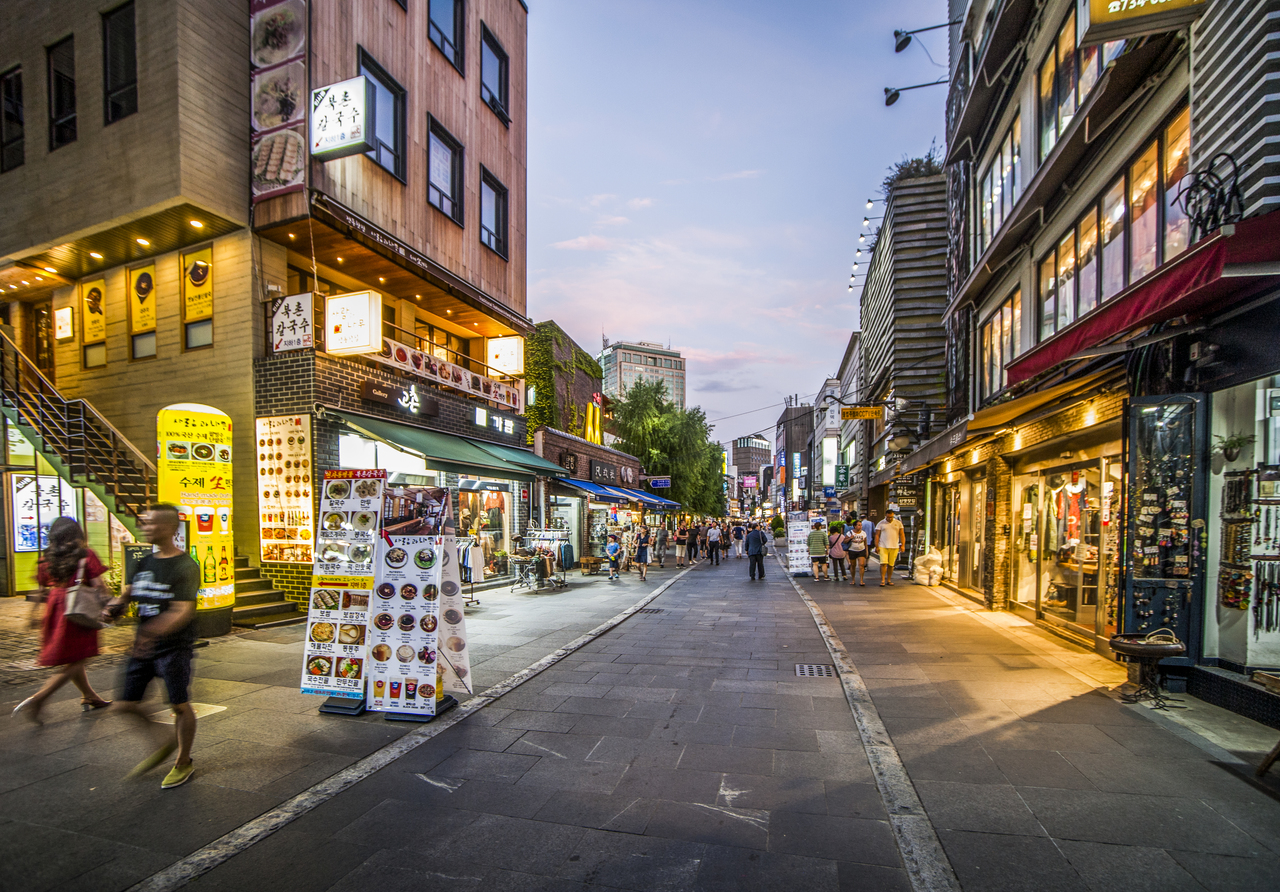
The morning belongs to Insadong-gil and Ssamzigil, and starting here works because Ssamzigil simply isn’t open at dawn — build your morning around a mid-to-late-morning arrival rather than an early one. Take Seoul Subway Line 3 to Anguk Station, Exit 6, and walk south for about 5–7 minutes to reach Insadong Cultural Street (also on Google Maps). This is the main pedestrian drag lined with galleries, tea houses, and craft stalls, and it’s wide enough that even weekend crowds don’t feel like a bottleneck.
Walk a few minutes further down the street to Ssamzigil (Google Maps), the building most people actually mean when they say they’re “going to Insadong.” Its spiral layout is the trick — a single ramp winds continuously from the ground floor to the roof, so you never backtrack through the same shopfronts twice. I’d give it 45 minutes if you’re browsing lightly, closer to 1.5 hours if you stop into a few of the craft workshops (several shops let you try pottery, stamp-carving, or hanji paper-making on the spot). The rooftop courtyard is the payoff at the top, and it’s also where you’ll find the “Ddongbbang” — poop-shaped bread that’s become one of the most photographed snacks in the neighborhood, mostly for the novelty rather than the flavor.
Is Insadong-gil worth walking before Ssamzigil?
Yes, but treat it as a 15-minute warm-up, not a destination in itself. Most of what’s genuinely worth buying — ceramics, brushes, hanbok accessories — is concentrated inside Ssamzigil’s stalls, so I wouldn’t linger on the main street chasing every storefront before you even reach it.

Midday — Jogyesa Temple and Lunch
Jogyesa Temple is the closest thing to a quiet reset button in central Seoul, and it’s an easy five-minute walk from Ssamzigil across Ujeongguk-ro. Jogyesa (Google Maps) is the head temple of Korea’s Jogye Order, first built in the late 14th century and rebuilt under successive names through the 20th century before its current identity took shape after Korea’s postwar Buddhist purification movement. The temple grounds themselves never really close, so there’s no risk of arriving at the wrong hour — you’re free to walk the courtyard, watch visitors bow at the main hall, and sit under the two enormous white pine trees that predate most of the surrounding city blocks.
Give it 20–30 minutes unless you time your visit for early May, when the Lotus Lantern Festival (Yeondeunghoe) around Buddha’s Birthday wraps the whole courtyard in layered paper lanterns — this is the version of Jogyesa that circulates on Instagram, and it’s worth planning your whole day around if the dates line up. On an ordinary day, Korea Tourism Organization’s own crowd data shows Sunday as the quietest day here and Saturday as consistently the busiest, so if your schedule is flexible, a weekday or Sunday visit gets you a genuinely calm hour.
Where to eat lunch near Jogyesa Temple?
For a sit-down Korean meal with an English menu, Doma Insadong (Google Maps, Instagram) is the pick locals and repeat visitors both recommend, and it works well whether you’re eating alone or in a group. If you’d rather try Korean barbecue, there’s Gyeongbokgung Gwanhun-jeom (despite the name, this is a restaurant, not the palace) tucked in the basement of a hotel a few minutes off Insadong-gil — Naver Map / Google Maps — though barbecue is generally better suited to two or more people, since dishes are portioned and priced for sharing. If spicy food isn’t your thing, jjimdak, seolleongtang, samgyetang, and bibimbap (ask for the sauce on the side) are the safest orders anywhere in this neighborhood.
Afternoon — Jongmyo Shrine
Jongmyo Shrine closes out the day with the most solemn atmosphere of the three stops, and it’s about a 15-minute walk east from Jogyesa along Jongno, or a quick one-stop subway ride if your feet need the break. The shrine sits nearest to Jongno 3-ga Station (Lines 1, 3, and 5), Exit 8 or 11, roughly a 5-minute walk from there (Naver Map, Google Maps) — see it on the official Royal Palaces and Tombs site. As a UNESCO World Heritage site, Jongmyo was the primary shrine where Joseon kings and queens were memorialized, built at the same time as Gyeongbokgung Palace under the dynasty’s founder, King Taejo — and it’s still the site of the annual Jongmyo Jaerye royal ancestral rite, one of the longest continuously performed rituals in the world.
The single biggest planning detail here is the guided-tour rule: on weekdays (Monday, Wednesday, Thursday, Friday), you can only enter as part of a scheduled guided tour, with English tours typically running four times a day — around 10:00, 12:00, 2:00, and 4:00. On Saturdays, Sundays, public holidays, and the last Wednesday of each month, the shrine switches to free, self-paced entry. As of 2026, admission runs about 1,000 KRW for adults aged 19–64, with free entry for visitors under 7 or over 64; if you’re also planning to see any of Seoul’s palaces this trip, the Royal Palace Pass — about 10,000 KRW and valid for three months across four palaces plus Jongmyo — offers a saving only if you plan to visit all five sites. The shrine also closes one day a week, so I’d confirm the current schedule and any holiday closures through the official site or a quick map search before building your afternoon around a specific time slot. Budget about an hour here either way — the paths are long and deliberately plain, and that plainness is the point after the ornamentation of the palaces.
Do you need to join a guided tour at Jongmyo Shrine?
On weekdays, yes — it’s the only way in, and arriving between tour departures means waiting for the next slot rather than walking straight through. Weekends, public holidays, and the last Wednesday of each month are the exception, when you can wander the grounds at your own pace without joining a group (the shrine is closed on Tuesdays).
Getting Around and Practical Tips for This One Day Insadong Itinerary
Everything in this one day Insadong itinerary is walkable, so a T-money transit card for the two subway rides (in and out) is really all you need — there’s no reason to buy a multi-day transit pass for this loop alone. The only thing worth pre-checking is Jongmyo’s guided tour schedule, since showing up mid-afternoon on a weekday without checking the tour times is the single most common way this itinerary gets derailed.
Common mistakes to avoid
- Arriving at Ssamzigil early morning. It typically doesn’t open until mid-morning, so an early start here just means standing outside a shuttered building — start your day around 10:30–11:00 instead.
- Assuming Jongmyo works like the palaces. Gyeongbokgung and the other palaces let you walk in freely most of the day; Jongmyo doesn’t, because weekday access is structured entirely around fixed guided-tour departures. Missing a departure time can cost you up to two hours of waiting.
- Booking a group-style Korean barbecue table solo. Many barbecue and hot-pot restaurants price and portion dishes for two or more diners, so a solo request can get turned down — it’s a menu-structure issue, not a language barrier, and it’s why an à la carte place like Doma is the safer solo pick.
- Treating Bukchon Hanok Village as a free-for-all photo backdrop. Since 2024, the core Bukchon-ro 11-gil lanes operate as a “Red Zone,” with tourist access limited to roughly 10:00–17:00 and fines of about 100,000 KRW for tourism-purpose entry outside that window — the same rule applies to foreign visitors.
How much should you add to this day?
My honest answer: not much. Several travelers online describe Seoul day plans that try to stack Insadong with Gyeongbokgung Palace and Bukchon Hanok Village in the same day (that combination deserves its own Gyeongbokgung–Bukchon–Insadong itinerary), and the recurring complaint is that everything ends up rushed. If you finish Jongmyo with energy left, walking over to Bukchon Hanok Village (Google Maps, official site) is a reasonable extension, but I’d treat Gyeongbokgung Palace as its own separate outing rather than a same-day add-on.
Is Insadong worth staying in at night?
For dinner and shopping, yes; for nightlife, no. Insadong quiets down noticeably after dark, especially in winter, which surprises travelers expecting Myeongdong-level buzz. If you want evening energy after this itinerary, loop back to Ssamzigil itself, since it stays open until about 20:30 and its rooftop looks noticeably different lit up at dusk than it does at midday.
When should I plan this itinerary around, seasonally?
Early May is the standout window if the Lotus Lantern Festival dates align with your trip, since Jogyesa’s lantern displays are the most photographed version of the temple. Spring and autumn generally make the outdoor walking between all three sites more comfortable than the height of summer, when Jongmyo’s largely unshaded courtyards get uncomfortably hot by early afternoon.
Frequently Asked Questions
Do I need to book anything in advance for Ssamzigil, Jogyesa, or Jongmyo?
No advance tickets are required for any of the three. The one scheduling detail to plan around is Jongmyo’s mandatory weekday guided tour, since you’ll want to arrive in time for one of the fixed English tour slots rather than showing up between departures.
How long does this Insadong itinerary actually take?
Plan for about four to five hours door-to-door, including a sit-down lunch — roughly 1–1.5 hours at Ssamzigil, 30 minutes to an hour at Jogyesa plus lunch, and about an hour at Jongmyo, with walking and subway transfers filling the rest.
Can I combine this with Gyeongbokgung Palace or Bukchon Hanok Village the same day?
You can walk to either from Jongmyo, but I wouldn’t recommend it. Reddit travelers consistently report that stacking Insadong with a palace and a hanok village in one day leaves every stop feeling rushed — better to treat this three-site loop as its own complete day.
Is Insadong quiet at night?
Yes, noticeably so, especially outside the main dinner hours and during winter. If you want evening atmosphere after finishing this itinerary, you can return to Ssamzigil before its evening closing to see the rooftop lit up.
What should I know before joining the Jongmyo Shrine guided tour?
Weekday entry is guided-tour-only, with English tours typically departing around four times a day, while weekends, public holidays, and the last Wednesday of each month allow free, self-paced entry. Because the shrine also closes one day a week, I’d confirm the current schedule through the official site or a quick map search shortly before your visit rather than assuming a fixed timetable.
In Conclusion
This one day Insadong itinerary works because it respects a simple rule: three well-chosen stops beat five rushed ones. Start late morning at Ssamzigil for crafts and rooftop views, slow down at Jogyesa around midday for lunch and a quiet courtyard, then close the afternoon at Jongmyo Shrine, timing your visit around its guided-tour schedule rather than fighting it. Keep the whole loop on foot between Anguk Station and Jongno 3-ga Station, resist folding in Gyeongbokgung or Bukchon the same day, and check current hours for each site via map links before you go rather than relying on a fixed number. Do that, and you’ll finish the afternoon with time to spare — whether that means a second pass through Ssamzigil at dusk or a relaxed dinner in Insadong before it quiets down for the night.
Discover more from Korea Visiting
Subscribe to get the latest posts sent to your email.