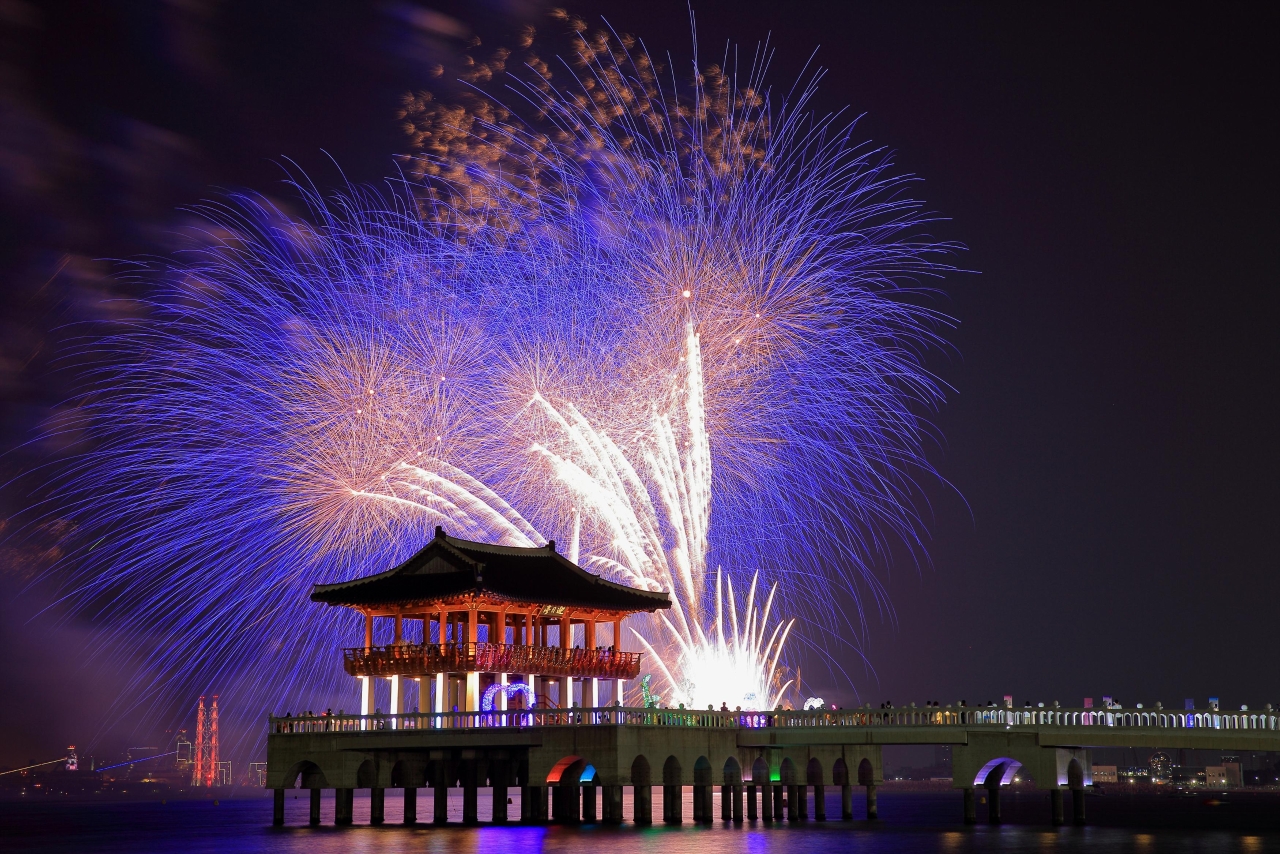
The Pohang Fireworks Festival 2026 sits at an odd crossroads right now: it’s one of the most photographed nights on Korea’s east coast, yet the calendar for next year still has an asterisk on it. I’ve tracked this event across several editions, and the pattern that matters most for planning isn’t the fireworks themselves — it’s how early you lock in your KTX seat and your viewing spot before the crowd does. The festival (officially the Pohang International Fireworks Festival, 포항국제불빛축제) mixes a fireworks contest, drone shows, street parades, and concerts across three days at Yeongildae Beach and the Hyeongsan River. Getting there from Seoul is straightforward on a direct KTX, but where you stand on the night — sound-heavy main zone versus a quieter beach — changes the experience completely.
Key Takeaways
- The 2026 edition is provisionally pointing to mid-to-late November, but the exact dates weren’t locked as of my research — verify on the official Pohang city and VisitKorea pages before booking.
- Public viewing is free; there’s no ticket required to watch the fireworks from the beach, the riverside park, or the surrounding streets.
- KTX from Seoul or Cheongnyangni to Pohang Station takes about 2 hours 15–30 minutes and costs roughly 53,900 KRW (2025 pricing) for a reserved seat.
- Hyeongsan River Sports Park gives you the full sound-synchronized show; Yeongildae Beach and Songdo Beach trade the sound system for elbow room and a sea breeze.
- Claim your spot by 16:00–17:00 on the main day — later than that, and the good sightlines are already covered in picnic mats.
When Is the Pohang Fireworks Festival 2026?
The Pohang Fireworks Festival 2026 does not yet have a single confirmed date as of this writing, and that uncertainty is itself the most important thing to know before you book. Historically the festival ran across a weekend in late May to early June, though some years shifted it to late July–early August. More recent scheduling has moved toward November, and several sources point to a window around November 19–22, 2026, with one figure specifically citing November 20, 2026. VisitKorea’s own listing shows November 20, 2026, but flags that the page is still carrying over 2025 details pending an official update — which tells you the city hasn’t finalized the calendar yet.
My advice: treat any date you read online right now, including in this article, as a strong planning estimate rather than a locked commitment. Check the Pohang City official site or the festival listing on VisitKorea again about 4–6 weeks out, since Korean regional festivals commonly confirm final dates only a couple of months ahead. If you’re booking KTX and hotels before that confirmation, book for the most likely weekend and keep the cancellation window in mind — most KTX tickets can be refunded with a small fee if plans change.
Why do the dates keep shifting between spring and November?
Regional festivals in Korea sometimes get moved to align with tourism promotion calendars, off-peak travel incentives, or municipal budget cycles, which is likely behind the swing from a summer slot to a November one in recent years. It’s not a sign of the festival being discontinued — Pohang’s fireworks festival has run for well over a decade — it just means the safest strategy is to check close to the date rather than rely on a single historical pattern.
Is the Pohang International Fireworks Festival Free to Attend?
Yes — public viewing of the Pohang International Fireworks Festival is free, with no ticket required to watch from the beach, the riverside park, or the streets in between. This is one of the most common points of confusion I see, because some Korean festivals do sell reserved seating for concerts or VIP zones, and people assume the fireworks themselves carry a similar cost. They don’t. The core fireworks displays, the drone shows, and the street parade are all open-air, free events. If there’s a paid concert stage on a given year, that’s a separate ticketed add-on rather than the main draw, so budget zero admission for the fireworks and treat any concert ticket as optional.
Best Viewing Spots — Hyeongsan River vs. Yeongildae Beach
Where you watch the show matters more than when you arrive, because the two main venues offer genuinely different experiences rather than just different sightlines. Hyeongsan River Sports Park is the festival’s core zone — this is where the fireworks are synchronized to music and narration, where the parade and concerts stage, and where the crowd energy peaks. If you want the full sensory package — sound, light, and spectacle timed together — this is my pick, but expect the densest crowd and the longest walk out afterward.
Yeongildae Beach and neighboring Songdo Beach give you the same fireworks in the sky but without the amplified sound system feeding the main stage — you get the visual show and the sea breeze, minus the choreographed audio. Skip the main zone entirely if you’re traveling with young kids or anyone sensitive to loud crowds; a beach blanket spot on Yeongildae is genuinely more comfortable, and the sand gives late arrivals more flexibility to shift and find a gap than a paved riverside crowd does.
For a different angle altogether, Hwanho Park, sitting on higher ground just behind Yeongildae Beach, gives a panoramic view over the whole bay — worth it only if you’d rather watch from a distance with breathing room than be inside the action. Its main attraction, the Space Walk, is open from 10:00 to 20:00 on weekdays and until 21:00 on weekends during April-October, with earlier closing times in November-March, and is closed on the first Monday of every month, though you’ll still want to climb up before dusk to get a clear rail spot. Songnim Theme Street near Songdo Beach is my recommendation specifically for photography — the tree-lined path and night lighting make a better foreground than the open sand, at the cost of a slightly more obstructed sky view.
Which spot suits which traveler?
If you want the full show with music sync and don’t mind crowds, go to Hyeongsan River Sports Park. If you’re with kids, want to leave early, or just want a relaxed evening, pick Yeongildae or Songdo Beach. If you want the best photos of the skyline with fireworks in frame, head to Songnim Theme Street or Hwanho Park.
How to Get to Pohang from Seoul by KTX
The fastest and most reliable way to reach the festival from the capital is a direct KTX from Seoul Station or Cheongnyangni Station to Pohang Station, taking roughly 2 hours 15 minutes to 2 hours 30 minutes depending on the specific train. A reserved seat runs about 53,900 KRW one-way as of 2025 pricing, so factor close to 110,000 KRW round-trip per person before you even book a hotel. Buy through the Korail website or the Korail Talk app, and do it as soon as your travel dates firm up — festival-weekend trains to a mid-size regional city like Pohang sell out well in advance, especially the evening return trains that everyone wants after the fireworks end.
One mistake I see foreign travelers make repeatedly: booking a morning-of outbound train and a same-night return, then discovering the last KTX back to Seoul departs well before the fireworks even start winding down. Check the return schedule before you buy the outbound leg — if the last convenient train is too early, plan on staying overnight in Pohang instead of trying to squeeze the whole trip into a single day.
Is there a faster or cheaper alternative to KTX?
Intercity buses connect Seoul to Pohang as well, running longer (typically 4+ hours) but at a lower fare, which can work if you’re not pressed for time or if KTX seats are already sold out for your date. For most travelers coming from Seoul specifically for the fireworks, though, KTX is worth the extra cost simply because it protects your evening — you don’t want to burn half a travel day sitting on a highway bus.
Getting from Pohang Station to the Festival Venues
Pohang Station is not next to the beach, so you’ll need a short second leg of about 15–20 minutes to reach Yeongildae Beach or the surrounding venues. City bus #209 covers this route directly and is the budget option most locals use, taking roughly 15–20 minutes depending on traffic. A taxi covers the same distance for about 6,000–10,000 KRW and is the better call on the festival’s peak evening, when buses fill up fast and taxi apps still generally outperform waiting at a packed bus stop.
My practical tip: if you’re taking the bus, do it well before the evening rush — Pohang’s local transit isn’t built for a sudden festival-night surge, and buses heading toward Yeongildae Beach after 17:00 on the fireworks day get standing-room-only fast. If you’re arriving same-day for the show, budget the taxi fare into your trip cost rather than gambling on bus timing.
What to Bring and How to Time Your Day
Treat the festival as a full-day outing that runs roughly 14:00 to 22:00, with the headline fireworks display typically starting around 20:00–21:00 — so plan to be near your chosen spot well before dark rather than aiming to arrive right at showtime. A light jacket is genuinely useful even outside deep winter, since the sea breeze off Yeongildae Beach cools the evening air noticeably once the sun is down. Bring a picnic mat or a foldable seat cushion — sand and grass are the norm at both main venues, and there’s no seating provided for the general public areas.
Arrive by 16:00–17:00 if you want a front-row spot at either the Hyeongsan River main zone or the beach; this is the window I’d treat as the real deadline, because by early evening the good sightlines are already lined with mats and the remaining space pushes you further back than most people expect. Pack cash or a T-money card for local food stalls and buses — some smaller vendors around a festival crowd may not run card readers smoothly under heavy foot traffic.
Common Mistakes First-Timers Make
Most problems at this festival come down to timing rather than logistics, and each one is avoidable once you know the mechanism behind it.
Assuming the fireworks festival has a fixed spring date every year. Because the schedule has moved between late spring, midsummer, and November across different years, travelers who book flights or hotels based on last year’s date sometimes lock in the wrong weekend entirely. Always re-verify the specific 2026 dates on an official source shortly before booking, not from a general search result that may reference an older year.
Booking a same-day return KTX without checking the last train time. The show often runs past 21:00, and the last Seoul-bound KTX from Pohang can depart earlier than the show’s natural ending, which leaves latecomers stranded planning an overnight stay they didn’t budget for. Check the full return schedule, not just availability, before locking in your outbound ticket.
Choosing the main zone without accounting for the exit crowd. Hyeongsan River Sports Park delivers the best synchronized show, but tens of thousands of people trying to funnel out through the same paths afterward means the walk back to a bus stop or taxi pickup point can take far longer than the show itself. If your KTX or bus connection is tight, the beach venues offer a faster, less bottlenecked exit.
Skipping accommodation booking because “it’s just a day trip.” Pohang hotel inventory is limited compared to Seoul or Busan, and festival-weekend rooms — especially anything walkable to Yeongildae Beach — get booked out weeks in advance. If you’re staying overnight, reserve as soon as your dates are set rather than waiting to see the final program.
Frequently Asked Questions
When will the official 2026 dates be announced?
As of my research, the exact 2026 dates hadn’t been formally confirmed — figures circulating point to a window around November 19–22, 2026, with November 20 mentioned specifically in some listings. Pohang City typically confirms festival dates a few months ahead, so check the official Pohang city site or VisitKorea again closer to autumn 2026 before finalizing bookings.
Do I need a ticket for the Pohang Fireworks Festival?
No — public viewing of the fireworks, drone shows, and street parade is free at all the main outdoor venues, including Yeongildae Beach and Hyeongsan River Sports Park. Any paid ticket you encounter would be for a separate reserved concert seat or VIP add-on, not for watching the fireworks themselves.
How early should I arrive to get a good spot?
Aim to be at your chosen viewing area by 16:00–17:00 on the main fireworks day. Arriving later than that at Hyeongsan River Sports Park usually means settling for a spot well back from the action, while the beaches stay slightly more forgiving thanks to their length and open layout.
Can I do this as a day trip from Seoul?
Yes, but only if you check the last return KTX time before booking, since the show can run past 21:00 and the final Seoul-bound train sometimes departs earlier than that. If the timing is tight, an overnight stay in Pohang removes the stress of a rushed exit.
What’s the best area to stay near for the festival?
Staying within walking or short-taxi distance of Yeongildae Beach puts you close to both the beach viewing area and reasonable transit back toward Pohang Station the next morning. Book this area as early as possible once your dates are set, since festival-weekend rooms sell out well ahead of the event.
In Conclusion
The Pohang Fireworks Festival 2026 rewards travelers who plan around two moving pieces: the still-unconfirmed exact dates and the KTX seats that sell out once those dates go public. Lock in your transport and lodging as soon as an official date lands, pick Hyeongsan River Sports Park if you want the full synchronized spectacle or the beaches if you’d rather watch in comfort, and get to your spot by mid-afternoon rather than at showtime. Double-check the return KTX schedule before committing to a day trip, and don’t assume this year’s date matches last year’s season. Handle those details early, and the rest of the night — free admission, an easy transit hop from Pohang Station, and one of the east coast’s biggest fireworks displays — takes care of itself.
Discover more from Korea Visiting
Subscribe to get the latest posts sent to your email.