Yeonnam-dong Gyeongui Line Park stretches for over a kilometer through quiet residential blocks, and if you arrive without a plan, you’ll likely burn your first hour just figuring out where the park actually starts, which exit to use, and which of the dozens of near-identical cafes is actually worth stopping at. Unlike a single attraction with one entrance, this is a long, narrow green corridor with side streets branching off in every direction — easy to get turned around in, especially on a crowded Saturday afternoon. First-time visitors usually want the same three things: a clear route through the park, a short list of stops that are actually worth the walk, and a sense of how much time to set aside. This guide breaks the neighborhood down into a manageable sequence so you spend less time backtracking and more time enjoying it.
Key Takeaways
- Gyeongui Line Forest Park is a free, 6.3 km linear park; the Yeonnam-dong section is best reached from Hongik University Station Exit 3, and Gyeongui Line Book Street from Exit 6.
- Weekday mornings are noticeably calmer than weekend afternoons, when the park and its side streets get packed.
- The real character of Yeonnam-dong is in the alleys off the park, not on the main path itself — budget time to wander.
- Combine your visit with Mangwon or Yeonhui-dong if you want a quieter, more local pace nearby.
📍 Yeonnam-dong — Essential Information
| Address | Yeonnam-dong, Mapo-gu, Seoul |
| Opening hours | Open 24 hr |
| Closed | Varies by shop and facility |
| Parking | Available |
| Map | Google Maps · Naver Map |
Yeonnam-dong Gyeongui Line Park at a Glance
Yeonnam-dong Gyeongui Line Park rewards visitors who treat it as a slow, wandering experience rather than a single sight to check off — the park itself is simple, but the neighborhood around it is where the actual discovery happens.
Why visit: It’s one of the few places in Seoul where a genuinely walkable green space, independent cafes, small galleries, and late-night eats all sit within a five-minute radius of each other.
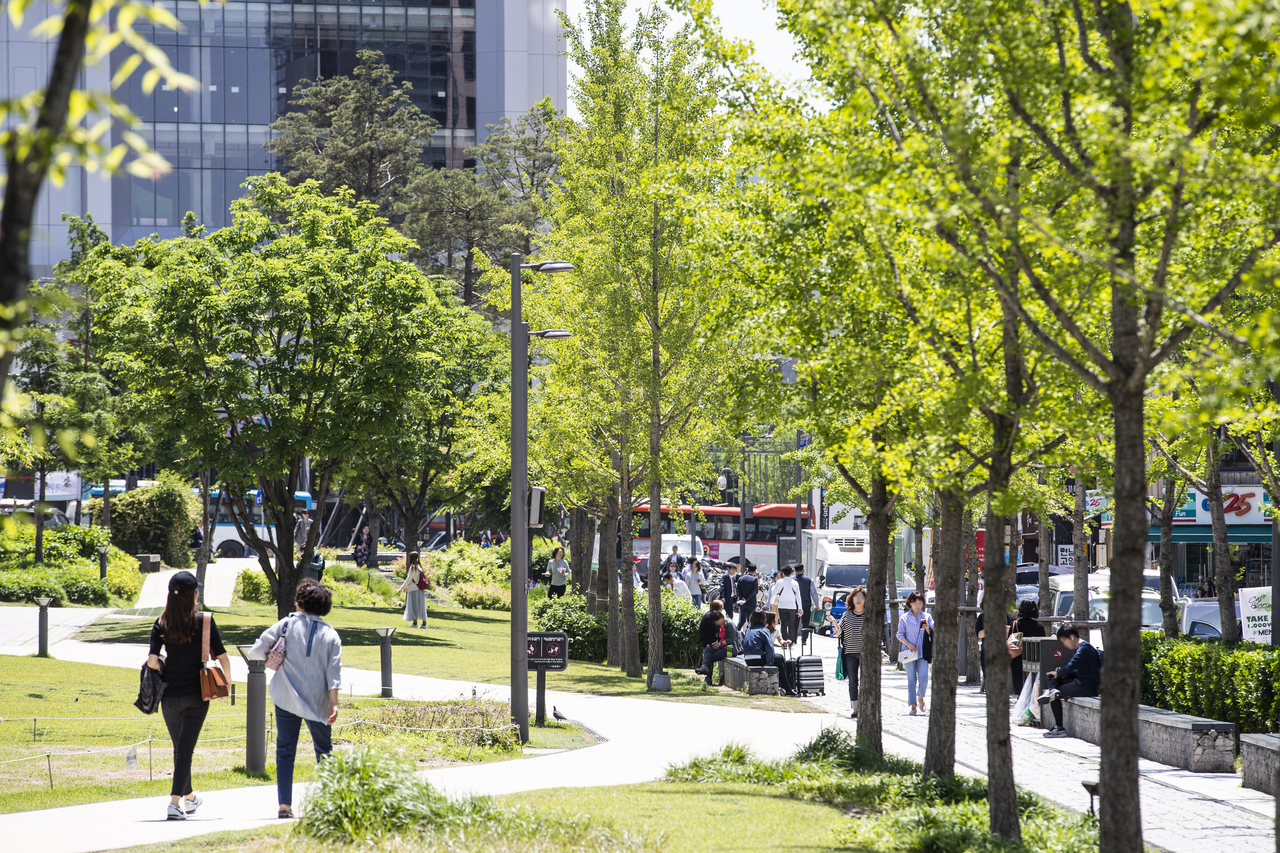
What you’ll see and experience: A tree-lined former railway corridor with lawns, benches, and small sculptures, flanked by low-rise buildings converted into cafes, bars, boutiques, and studios — plus a steady stream of dog walkers, picnickers, and photographers, especially near sunset.
Getting there: The Yeonnam-dong stretch is a short walk from Hongik University Station Exit 3 (Seoul Subway Line 2, Airport Railroad, and Gyeongui-Jungang Line all stop here), while Gyeongui Line Book Street is closer to Exit 6 — the two are connected, so most visitors just walk between them.
Tickets and admission: Free to enter and walk through; you only pay for what you eat, drink, or buy along the way.
Tips from past visitors: Wear comfortable shoes — the real charm is in the side alleys, not the main path, and you’ll cover more ground than expected. Bring a portable map app, since many shops are tucked into unmarked buildings.
Nearby spots worth combining: Gyeongui Line Book Street sits right at the northern end near Exit 6, making it an easy add-on to the same walk.

7 Things to Do on Gyeongui Line Park in Yeonnam-dong
The most efficient way to experience Yeonnam-dong Gyeongui Line Park is to treat it as a loose loop — start at one end of the park, drift through the side streets, and let the alleys pull you off course. Here are the seven things visitors consistently point to as the core of a first visit.
1. Walk the Yeonnam-dong stretch of Gyeongui Line Forest Park
Start with the park itself. The Gyeongui Line Forest Park segment running through Yeonnam-dong is the liveliest part of the full 6.3 km corridor — a long, tree-shaded lawn where locals jog, picnic, and walk dogs. Enter near Exit 3 and simply follow the green strip north; it naturally funnels you toward the cafe district and eventually the book street.
2. Browse Gyeongui Line Book Street
Just past the northern end of the park, Gyeongui Line Book Street is a pedestrian-only row lined with bookshops, publishing houses, and small stalls. It’s a good place to slow down for twenty minutes, browse Korean design books or stationery, and pick up a snack from one of the street carts before continuing your walk.
3. Cafe-hop through the side streets
This is where Yeonnam-dong earns its reputation. Step even one block off the main park path and you’ll find rows of independently designed cafes — some minimalist, some maximalist, each with a distinct interior worth photographing. Rather than picking one cafe from a list, most visitors do better by walking a few blocks and choosing whichever one has a line short enough to be worth the wait, or an interior that catches their eye through the window.
4. Hunt for niche shops and stationery finds
Beyond cafes, Yeonnam-dong is packed with small specialty shops — vintage clothing racks, independent stationery stores, and prop shops catering to Korea’s “dakku” (deco sticker and journal decorating) culture. These are easy to miss if you stick to the main road, so check side alleys one block back from the park for the more interesting finds.
5. Have a meal with a park view
Several restaurants along the park’s edge have windows or patio seating that look directly onto the green strip. Yeonnam-dong Wai-tap, a Western-style restaurant a short walk from the park, is one option for a sit-down meal in the area if you want a break between walking segments. Check current listings on Instagram before heading over.
6. Bring or make friends with a dog at a pet-friendly cafe
Yeonnam-dong is known for its dog-friendly culture, and Hippo Brunch House is one of the better-known pet-friendly brunch spots, with space for dogs to hang out while you eat. It’s a good stop if you’re traveling with a pet or simply enjoy a cafe with a livelier, more social atmosphere. More details are on the cafe’s official Instagram.
7. Round off the night at a coin noraebang
Once cafes start closing, Yeonnam-dong’s coin karaoke booths (coin noraebang) become a low-key, low-cost way to end the evening — typically around 500 to 1,000 KRW per song, paid per play rather than by the hour. They’re common along the side streets near the park and require no reservation.
How to Get to Yeonnam-dong Gyeongui Line Park
Hongik University Station is the single access point that matters for this trip, and knowing which exit to take saves a surprising amount of walking. The station is served by Seoul Subway Line 2, the Airport Railroad, and the Gyeongui-Jungang Line, making it reachable directly from both central Seoul and Incheon International Airport without transfers for many routes.
For the main Yeonnam-dong park area and cafe district, take Exit 3 and walk straight into the park — you’ll be standing in the green corridor within a few minutes. If Gyeongui Line Book Street is your priority, Exit 6 drops you closer to that end instead. Since the park and book street are connected by the same walking path, it’s easy to enter from one exit and exit from the other, effectively turning the visit into a one-directional stroll rather than a there-and-back trip.
Taxis are also a reasonable option if you’re coming from elsewhere in Mapo-gu or arriving late at night when subway frequency drops, though traffic on the narrow streets around Yeonnam-dong can slow things down during weekend evenings.
Best Time to Visit and Avoiding the Weekend Crowds
Weekday mornings are consistently the calmest window to experience Yeonnam-dong Gyeongui Line Park, while weekend afternoons and evenings draw the heaviest crowds of the week. If your schedule is flexible, aim for a weekday visit before noon — cafes are quieter, the park path is easy to walk without dodging groups, and you can take photos without waiting for a gap in the crowd.
One recurring frustration among first-time visitors is that some shops open later in the morning, which can make an early visit feel a little empty compared to neighboring Hongdae, where storefronts tend to open earlier. A practical middle ground is to start with the park itself in the morning — since it’s outdoors and always accessible — and shift toward cafes and shops as the late morning arrives and businesses open their doors. Weekend visits are still worthwhile, especially if people-watching and a lively atmosphere are part of what you’re after, but expect to wait for tables and to share the walking path with a steady stream of other visitors.
Where to Eat and Shop Near Gyeongui Line Park
Food and shopping in Yeonnam-dong cluster tightly around the park, so you rarely need to walk more than a few minutes between stops. Beyond the cafe-hopping already covered, the neighborhood has a strong lineup of sit-down restaurants tucked into converted houses along the side streets — Western, Korean, and fusion menus are all well represented, and portions and pricing skew toward a younger, cafe-going crowd rather than tourist-heavy setups.
For visitors doing tax-free shopping before heading home, two verified tax-refund locations sit conveniently along the route: the GS25 Yeonnam Hoho branch, located near Gyeongui Line Forest Park at Yeonhuiro 1-gil 45 (rather than directly on Gyeongui Line Book Street), is useful for last-minute snacks and everyday items with tax-refund processing, and the CheongKwanJang branch near Hongik University Station carries Korea’s well-known red ginseng products, a popular gift choice for visitors bringing something back for family. Neither requires a special trip — both sit directly on the walking path between the station and the park.
Nearby Neighborhoods Worth Combining With Your Visit
Yeonnam-dong pairs naturally with two neighboring areas if you have extra time or want a change of pace. Yeonhui-dong, just to the west, has a quieter, more residential feel with its own set of well-regarded cafes and restaurants, and it’s within walking distance for visitors who want to escape Yeonnam-dong’s weekend crowds without traveling far. Mangwon, a short trip away, is worth combining for its traditional market and a different, more local-oriented atmosphere than the cafe-and-boutique scene around the park.
Neither addition requires a full extra day — both work well as an hour or two tacked onto either end of a Yeonnam-dong visit, especially if you’re already staying in the wider Hongdae–Mapo area.
Frequently Asked Questions
How is Yeonnam-dong as a tourist destination?
Yeonnam-dong works well as a half-day or evening stop rather than a full-day destination on its own — it’s compact, walkable, and dense with cafes, small shops, and restaurants centered on Gyeongui Line Forest Park. It’s best suited to visitors who enjoy slow wandering and cafe culture rather than checklist-style sightseeing.
Are there cafes with outdoor seating in Yeonnam-dong?
Yes, many cafes along the park’s edge and on the side streets have outdoor patios or window seating facing the green corridor. Availability changes often as cafes rotate and renovate, so it’s worth walking a block or two and checking a few options in person rather than committing to one in advance.
What are the essential things to do for first-time visitors?
Walking the park, browsing Gyeongui Line Book Street, and cafe-hopping through the side streets cover the core experience most first-timers are looking for. Beyond that, seeking out niche shops, a park-view meal, and a coin noraebang round things out for a fuller day.
Is Yeonnam-dong crowded, and when should I avoid it?
Yes, Yeonnam-dong gets notably crowded on weekend afternoons and evenings, when both the park path and popular cafes fill up quickly. Weekday mornings offer a considerably calmer experience with shorter waits and easier photos.
How do I get to Yeonnam-dong Gyeongui Line Park?
The easiest access point is Hongik University Station, served by Seoul Subway Line 2, the Airport Railroad, and the Gyeongui-Jungang Line. Use Exit 3 for the main park and cafe area, or Exit 6 if you’re heading straight to Gyeongui Line Book Street.
In Conclusion
Yeonnam-dong Gyeongui Line Park is easiest to enjoy when you stop trying to plan it street by street and instead give yourself a loose loop: enter through Exit 3, walk the park north toward Gyeongui Line Book Street near Exit 6, and let the side alleys pull you off the main path for cafes, small shops, and meals. Go on a weekday morning if you want it quiet, or embrace the weekend crowd if you’d rather people-watch. Either way, budget more time than you think you need — the neighborhood’s real character lives in its side streets, not its main road, and the businesses tucked one block back are usually the ones worth the detour.
Discover more from Korea Visiting
Subscribe to get the latest posts sent to your email.