A DMZ day trip from Seoul is one of the few travel experiences in the world where you can stand at the edge of an active Cold War frontier and be back in your Seoul hotel in time for dinner. This itinerary is built for first-time visitors with one free day who want to see the Third Infiltration Tunnel, Dora Observatory, and Imjingak Park without wasting hours guessing at bus schedules. The short version: most people join a half-day or full-day guided tour (about 6–9 hours door-to-door), because the DMZ sits inside a restricted military buffer zone that individual travelers cannot enter on their own. Below I walk through what a realistic tour day looks like hour by hour, what a budget self-guided version to Imjingak looks like, and what to actually expect once you’re there — because the experience is more emotional history lesson than scenic viewpoint, and knowing that in advance changes how you’ll feel about the day.
Key Takeaways
- A DMZ day trip from Seoul almost always requires a licensed guided tour — the restricted zone isn’t open to independent access.
- Bring your physical passport; no photocopies or digital IDs are accepted for entry.
- The Joint Security Area (JSA) has been closed to visitors since July 2023, so most itineraries center on the Third Tunnel, Dora Observatory, and Imjingak Park instead.
- A realistic full-day tour runs about 6–9 hours including round-trip transport from Seoul; a budget DIY trip to Imjingak alone can be done in about half a day for around ₩3,000–6,000 each way in transport.
- Expect a physically demanding descent into the Third Tunnel and a solemn, reflective mood rather than a scenic “wow” moment — pack accordingly and manage your expectations.
Imjingak Park & Freedom Bridge
Imjingak Park is the starting point for almost every DMZ itinerary and the only site in this area you can technically reach without a tour. From Seoul, the DIY route is: subway to Munsan Station or Seoul Station, then a local bus or taxi onward — roughly about 2 hours 45 minutes for the subway to Munsan Station (₩3,460–₩4,892 each way), with additional cost and time for onward local bus or taxi. A DMZ shuttle bus running round-trip from central Seoul directly to Imjingak takes about 5 hours 40 minutes round trip, which tells you how much of the day is simply transit even before you reach the restricted checkpoints beyond the park.
Once inside, budget about 45–60 minutes at Imjingak. The Freedom Bridge, where prisoners of war crossed back into South Korea after the armistice, is the emotional centerpiece — thousands of ribbons and messages left by separated families are tied along the fences nearby, and it’s a genuinely quiet, moving sight even before you’ve reached anything “official.” The rusted Steam Locomotive, riddled with bullet holes from the Korean War, sits just off the main plaza and takes only a few minutes to see. The North Korea Experience Hall, which opened in April 2025, adds a newer indoor stop if you want a break from the sun or rain. This is also where you’ll find the ticket office for the local DMZ Peace Tour if you’re going the budget route — individual walking tickets to the Third Tunnel run about ₩9,200 for adults, or about ₩12,200 if you take the monorail down. I’d only recommend the fully independent route if you’re comfortable with Korean-language signage and don’t mind the risk of a sold-out or early-closed ticket counter; most travelers find the guided option far less stressful for what it saves in planning time.

Third Infiltration Tunnel
The Third Infiltration Tunnel is the single most physically demanding stop on any DMZ itinerary, and it’s worth knowing that before you go. Discovered in 1978, this tunnel was dug by North Korea toward Seoul and descends steeply underground — visitors walk down a long sloped access tunnel (or ride the monorail one-way for an extra fee) before reaching the actual infiltration tunnel itself, where the ceiling drops low enough that anyone over about 175cm will be bending or ducking for a stretch. Bring water and wear real shoes (see our Korea packing list); sandals and the incline don’t mix, and I’ve watched more than a few visitors turn back partway down simply because they hadn’t expected the climb back up. Photography is not allowed inside the tunnel itself, so don’t plan on the visit for photo content — plan on it for the physical, visceral sense of how close and real this conflict still is.
Plan for about 45–60 minutes here total, including the walk down, the tunnel itself, and the walk (or monorail ride) back up. Most tours pair this stop with a short video presentation beforehand, which adds another 15–20 minutes but gives useful context before you go underground.
Dora Observatory
Dora Observatory is where the itinerary shifts from underground tension to an above-ground view across the actual DMZ into North Korea, and it’s usually the most photographed stop of the day. On a clear day, telescopes let you see the North Korean propaganda village of Kijong-dong and its towering flagpole in the distance; on a hazy or fine-dust day — common in spring — visibility can be disappointingly limited, so keep expectations flexible depending on the season. Plan for about 20–30 minutes here, since most of that time is simply queuing for a telescope and taking in the panorama from the viewing deck.
This stop is easy to combine with a quick visit to Dorasan Station nearby, sometimes billed as “the last station before North Korea.” A one-way symbolic ticket costs about ₩2,500, and as of April 2026 a DMZ Peace Joint Train running from Seoul Station to Dorasan resumed service on the second and fourth Fridays each month, for travelers who specifically want the train experience over a bus tour. For most day-trippers on a standard tour, though, this stop is a 10-minute photo op rather than a boarding point.
Optional Add-Ons — Suspension Bridges & JSA Status
Many full-day tours bundle in an extra site beyond the core DMZ loop, and the Gamaksan Suspension Bridge is my pick among these if your tour offers a choice. It’s a genuinely scenic, high-vantage-point bridge walk that gives the day a lighter, more visually rewarding note after the sobering weight of the tunnel and observatory — several tours pair it specifically for that emotional contrast. Budget about 30–45 minutes if it’s included.
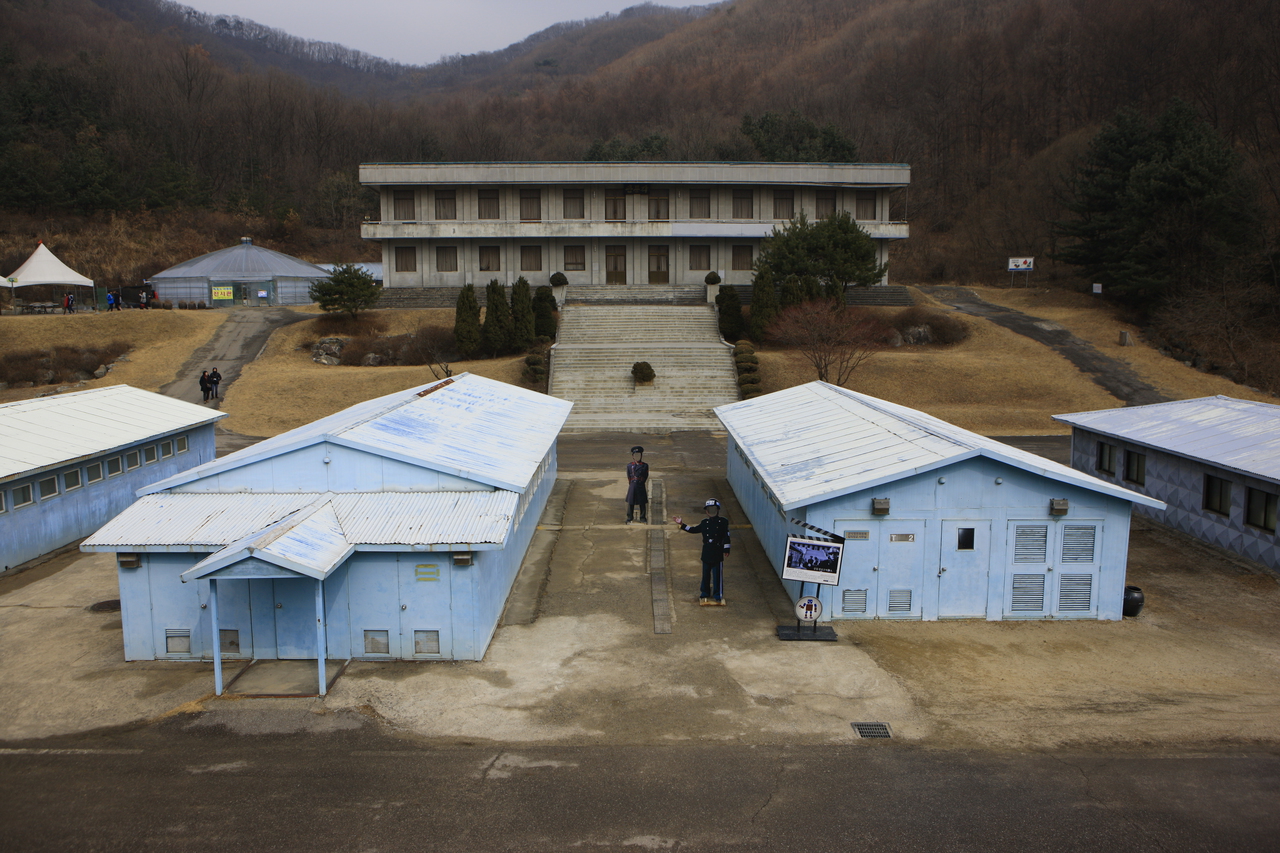
It’s important to set expectations correctly on the Joint Security Area: the JSA, where the famous blue conference buildings straddle the border and soldiers stand face to face, has been closed to visitors since July 2023 and is not part of current itineraries, no matter what an older blog post or outdated tour listing might suggest. If a tour advertises JSA access, confirm directly with the operator before booking — this is one of the most common sources of traveler disappointment I see in trip reports. North Korean defector Q&A sessions, offered by some tour operators as a substitute highlight, are a worthwhile add-on if available; they tend to leave a stronger impression than any single physical site on the route.
Getting Around & Practical Tips
Getting to and around the DMZ area works best through a booked tour, since the restricted zone requires group clearance that individual travelers can’t arrange on the spot. Most operators (bookable through platforms like Viator, Trazy, or GetYourGuide) run half-day tours of about 4–5 hours covering Imjingak and the Third Tunnel, or full-day tours of about 6–9 hours that add Dora Observatory, Gamaksan Bridge, and sometimes lunch. Pricing for organized tours from Seoul generally starts around US$35–50 for the basic half-day format, with fuller-day packages that include transport, guide, and site admissions running closer to about ₩70,000 (roughly US$50–60).
A few things worth pre-booking or checking in advance: reserve your tour at least a few days ahead in high season (spring and fall weekends fill fastest), and always bring your original physical passport — no photo, no photocopy, no digital scan will get you through the checkpoint. Because this is an active military zone, tours can be cancelled or rerouted without notice for security reasons; build in flexibility if you’re visiting on a tight schedule, and avoid scheduling anything time-critical immediately afterward. Spring (April–May) and fall (September–October) offer the most comfortable walking weather and generally the clearest visibility from Dora Observatory; summer brings heat and haze, and winter can be bitterly cold and windy on the open viewing decks. Comfortable, closed-toe shoes are non-negotiable given the Third Tunnel’s incline, and bringing your own water bottle is smart since options thin out once you’re past Imjingak. If you’re going the independent Imjingak-only route, double-check current ticket office information for the local DMZ Peace Tour before you go, since counter hours and closures shift — the Naver Map link above is the most reliable place to confirm current details.
Frequently Asked Questions
Is a DMZ day trip from Seoul worth it?
Yes, if you go in with the right expectations: it’s a historically and emotionally significant experience rather than a scenic bucket-list photo op. Travelers who describe it as “underwhelming” are usually expecting dramatic visuals; the real value is standing at a still-active Cold War border and hearing the human stories tied to it, especially the Freedom Bridge and defector accounts where available.
Can I visit the DMZ without a guided tour?
You can independently reach Imjingak Park and buy local Third Tunnel tickets at the on-site office there, but you cannot enter the restricted DMZ zone itself without a licensed tour or authorized transport, since infrequent public transit and checkpoint requirements make a fully independent trip impractical for most visitors. The DIY route works best if you’re comfortable navigating Korean signage and building in extra buffer time.
Is the JSA (Joint Security Area) open to visitors?
No — the JSA has been closed to visitor tours since July 2023 and is not included in current DMZ itineraries. If a tour listing still advertises JSA access, treat it as outdated and confirm directly with the operator before booking.
How long does a DMZ tour from Seoul take?
Most organized tours run about 6–9 hours round trip from central Seoul, including transport, the Third Tunnel, Dora Observatory, and Imjingak Park; shorter half-day options covering just Imjingak and the tunnel run closer to 4–5 hours. Add extra time if your tour includes Gamaksan Suspension Bridge or a defector Q&A session.
What should I wear or bring for the Third Tunnel?
Wear comfortable, closed-toe shoes and bring water, since the descent is steep and the tunnel ceiling is low enough that taller visitors will need to duck. Photography isn’t permitted inside the tunnel, so travel light through that section and save your camera for Dora Observatory and Imjingak.
In Conclusion
A DMZ day trip from Seoul rewards travelers who plan around its realities rather than its marketing: book a licensed tour a few days ahead, bring your physical passport without exception, and pace the day across Imjingak Park, the Third Infiltration Tunnel, and Dora Observatory rather than trying to add too much. Expect about 6–9 hours door-to-door for a full-day tour, a genuinely demanding climb at the tunnel, and a mood that leans reflective rather than scenic — the JSA remains closed, so set that expectation before you book. If time is tight, the budget Imjingak-only route via Munsan Station is a legitimate half-day alternative for around ₩3,000–6,000 in transport. Either way, this is a trip best taken for what it actually offers: a rare, sobering look at a border still frozen in an unfinished war.
Discover more from Korea Visiting
Subscribe to get the latest posts sent to your email.