This Seoul fall foliage itinerary packs Gyeongbokgung Palace, Changdeokgung Palace, Deoksugung Palace, and Namsan into one realistic day, without the rushed, checklist-style pacing most guides suggest. I’ve built this route around actual subway transfer times and palace layouts, not just a list of famous names. It suits first-time visitors who want the classic postcard version of autumn in Seoul — golden gingko trees against hanok rooflines, then a sunset view over the city from N Seoul Tower — without burning out by 3pm. The route runs from Gyeongbokgung Station in the morning to Myeongdong and Namsan by evening, roughly 8-9 hours including meals, and it works whether you’re solo, as a couple, or traveling with parents who don’t want a marathon.
Key Takeaways:
- Peak fall foliage in Seoul typically falls between late October and early November, though the exact window shifts year to year with weather.
- This one-day route covers Gyeongbokgung, Changdeokgung, Deoksugung, and Namsan/N Seoul Tower using about 3-4 subway/bus legs, each roughly 10-20 minutes.
- Skipping one palace (not all three) is the easiest way to avoid an overpacked day if you’re traveling with seniors or want a slower pace.
- Namsan Cable Car tickets are sold on-site at the base station, so budget extra queue time there, especially on weekends.
Morning — Gyeongbokgung Palace
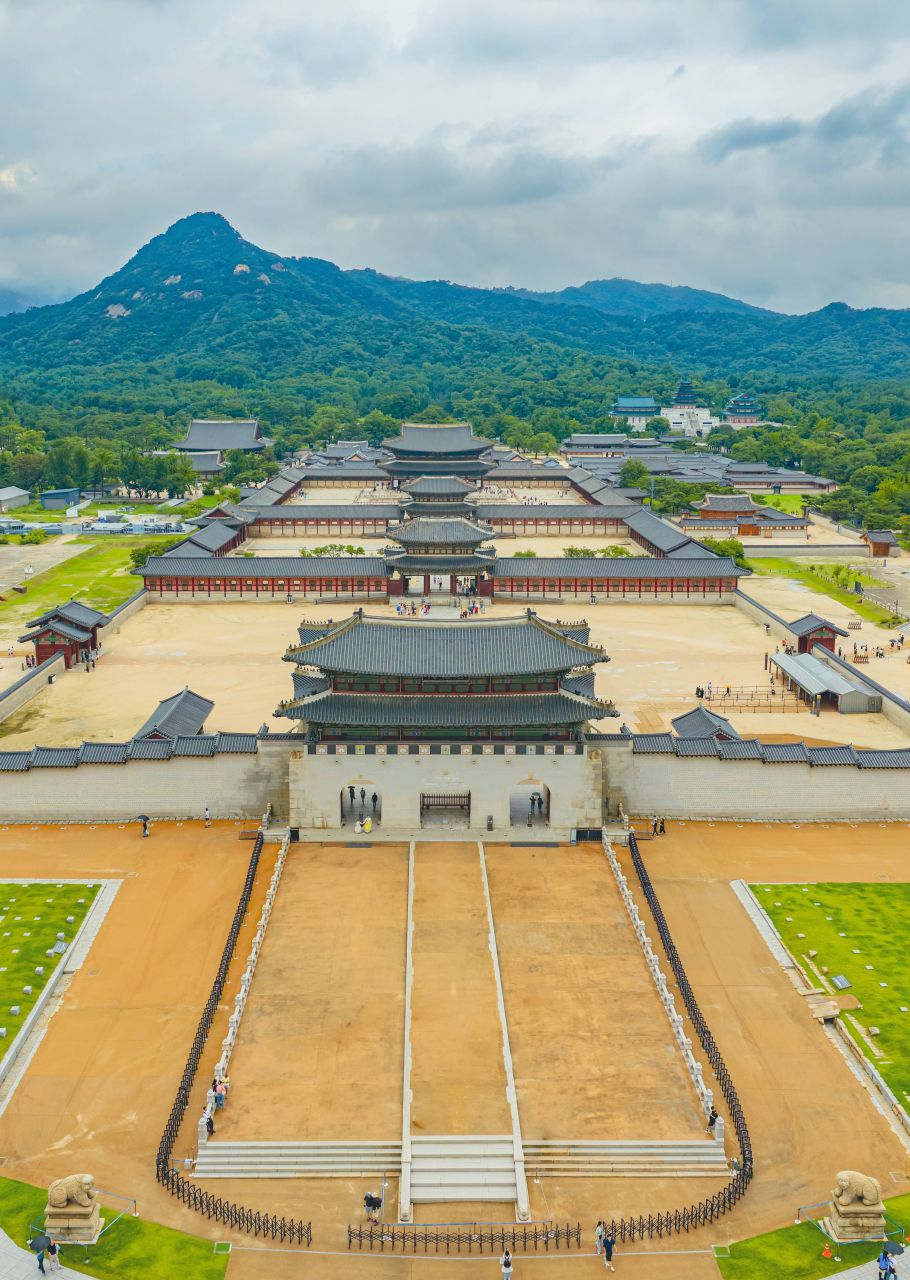
Start your Seoul fall foliage itinerary at Gyeongbokgung Palace, the largest and most photogenic of the city’s five palaces, and arrive as close to opening as you can manage. I’d get to Gyeongbokgung (Gyeongbokgung Station, Line 3, Exit 5, about a 3-minute walk) by around 9am. The courtyard in front of Geunjeongjeon Hall and the maple trees lining Hyangwonjeong Pond are the two spots everyone photographs, and both get genuinely crowded by mid-morning — Korea Tourism Organization crowd data shows Gyeongbokgung is consistently busiest on Saturdays, so if your schedule is flexible, aim for a weekday, when it runs quietest.
Budget about 1.5-2 hours here. If you time it right, the Royal Guard Changing Ceremony at Gwanghwamun Gate runs at 10:00 and 14:00 (about 20 minutes each) — the morning slot fits naturally if you arrive at opening. Most first-timers stick to the main courtyard and miss Hyangwonjeong Pond tucked toward the back of the grounds, which in late October reflects the surrounding maples on calm mornings and draws a noticeably thinner crowd than the front gate area. Admission is about 3,000 KRW for adults (19-64); it’s free if you’re wearing hanbok, which also gets you into Changdeokgung and Deoksugung the same way. Check exact hours and closing days on the official palace site before you go, since they shift seasonally.
From Gyeongbokgung, walk or take a short taxi (about 10-15 minutes) toward Bukchon, or head directly to Changdeokgung by subway — Anguk Station (Line 3) is one stop from Gyeongbokgung Station, about 5-8 minutes including the transfer walk.
Where to eat near Gyeongbokgung
Stick to the Tongin Market or Seochon neighborhood just west of the palace for a quick, casual lunch before moving on — it’s a five-minute walk and avoids the tourist-priced cafes directly at the palace gates.

Midday — Changdeokgung Palace and the Secret Garden
Changdeokgung Palace, a UNESCO World Heritage Site, is the itinerary’s second stop and one of the best spots for foliage viewing in the city. Reach Changdeokgung via Anguk Station (Line 3, Exit 3), about a 320-meter walk. Plan to be here by late morning to early afternoon, roughly 11:30am-1:30pm including lunch nearby.
Changdeokgung’s main palace grounds are where the real autumn color lives — old-growth trees, quiet courtyards, and paths that feel far less staged than the crowds at Gyeongbokgung. General admission is about 3,000 KRW, and the maple-lined courtyards near Injeongjeon Hall draw a noticeably thinner crowd than the front gate area at Gyeongbokgung, especially if you arrive on a weekday. The palace’s Secret Garden (Huwon) is a separate, reservation-only guided tour with its own ticket — if you want to include it, book through the official palace site well in advance, as slots are limited.
If you’re combining several palaces in one visit, the four-palace-plus-Jongmyo combination ticket runs about 10,000 KRW for adults and is valid three months — worth it if you’re doing Gyeongbokgung, Changdeokgung, and Deoksugung all in this itinerary.
From Changdeokgung, take Line 3 from Anguk Station toward City Hall Station (Line 1/2) for Deoksugung — about 20-25 minutes including the transfer.
Afternoon — Deoksugung Palace and the Stone Wall Path
Deoksugung Palace is the most relaxed stop on this route and the best fit if you’re traveling with anyone who doesn’t want more stairs after two palaces already. Deoksugung sits right at City Hall Station (Line 1/2, Exit 1/2/12), about a 2-minute walk, and admission is only about 1,000 KRW for adults — free for those over 65, under 19, in hanbok, or visiting on Culture Day (the last Wednesday of the month). Note that Dondeokjeon Hall is closed for viewing from September 1 to October 25, 2026, so don’t plan around it if you’re visiting in that window.
Give this stop about an hour, then walk directly to the adjacent Deoksugung Stone Wall Path, which runs along the palace’s outer wall. This is where the itinerary earns its “romantic” reputation — gingko trees turn gold along the stone wall in late October and November, and the path is lit in the evening, so it works equally well at 3pm in daylight or after dark if your schedule runs late. It connects naturally to Jeongdong-gil, a street with cafes and small museums including the Seoul Museum of Art, if you want a slower half hour before heading to Namsan.
From Deoksugung/City Hall, take Line 2 to Chungmuro Station or continue to Myeongdong Station (Line 4) for the Namsan approach — about 10-15 minutes.
Evening — Namsan Park and N Seoul Tower
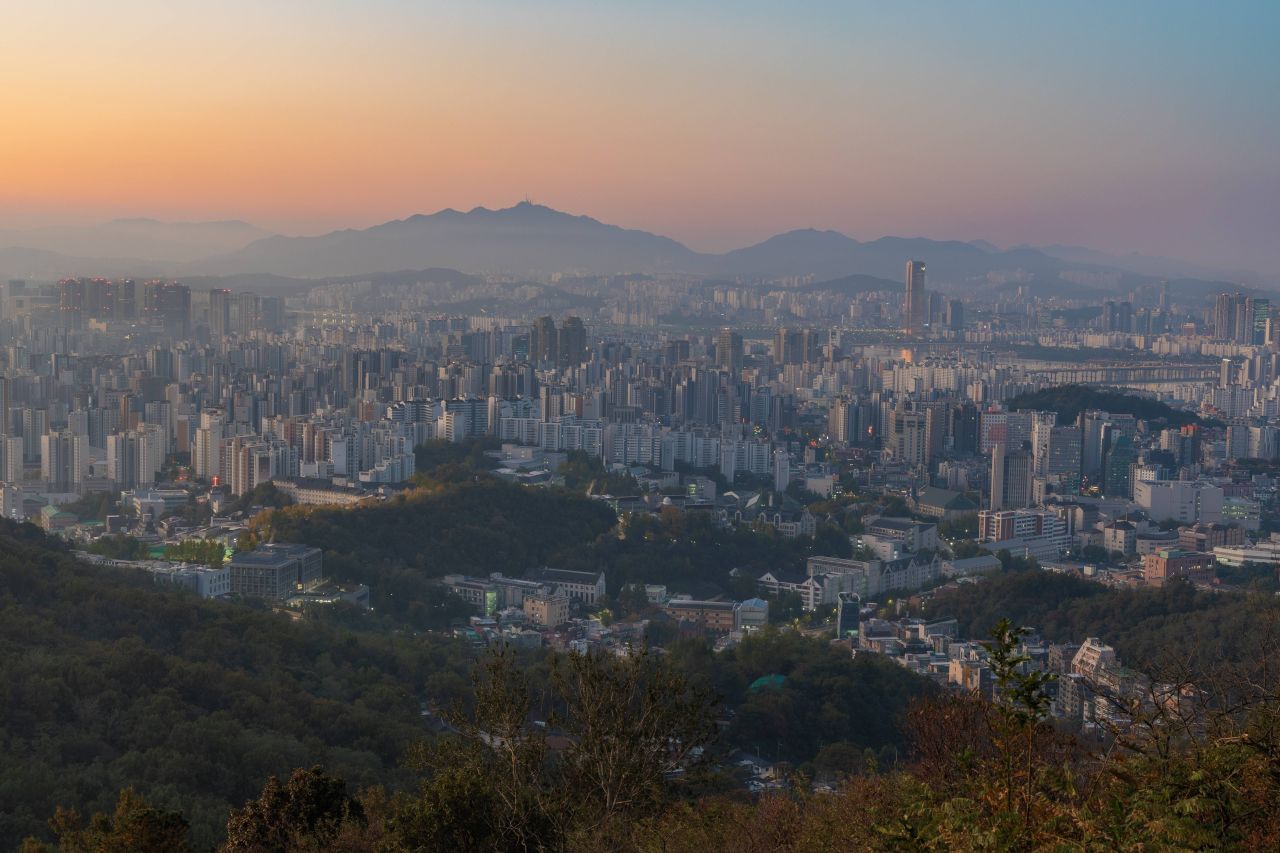
Namsan Park and N Seoul Tower close out this Seoul fall foliage itinerary with the city’s best panoramic view, and timing this for late afternoon into sunset is the whole point — you get the fall colors on the mountain and the skyline lit up as it gets dark. Get to Myeongdong Station (Line 4, Exit 3) first, about 10-15 minutes from Deoksugung by subway.
From Myeongdong, you have two realistic options to reach Namsan Park and N Seoul Tower: walk about 10-15 minutes uphill to the cable car base station, or catch the public shuttle bus (01A/01B) from the Myeongdong area for about 1,400 KRW, T-money accepted. The Namsan Cable Car runs about 10:00-23:00 and costs about 15,000 KRW round-trip for adults (about 12,000 KRW one-way) — tickets are sold on-site at the base station (check the operator’s site for current online options before you go). Budget extra queue time here, especially on weekends, since this is a common bottleneck first-timers don’t expect.
The observatory deck at N Seoul Tower runs from 10:30-22:30 on weekdays and 10:00-23:00 on weekends and holidays, with last admission 30 minutes before closing — check the official N Seoul Tower site for current hours before you go. My pick for photos is the terrace just below the tower itself rather than the paid observatory line — you get most of the same skyline view of fall foliage on the surrounding slopes without the ticket queue, and it’s a better spot to catch the sunset if you’re not planning to go all the way up. Give this stop 1.5-2 hours including transit up and down.
Where to eat near Namsan
Myeongdong at the base of the mountain has the widest range of options for dinner after you come down — it’s dense enough that you won’t need to plan ahead, unlike the more limited choices directly at the tower.
Getting Around & Practical Tips
The fastest way to move through this itinerary is a rechargeable T-money transit card, which covers every subway ride and the Namsan shuttle bus without needing cash each time. Individual Seoul subway fares run about 1,400-1,800 KRW per ride as of 2026, so four to five rides in a day adds up to roughly 6,000-9,000 KRW — cheap relative to the time it saves over walking between these distant palace sites.
Palace admission and cable car tickets in this itinerary can typically be bought same-day, so there’s no hard reservation deadline to plan around. If you’re visiting on a weekend, expect Saturday to be the busiest day at both Gyeongbokgung and Deoksugung according to Korea Tourism Organization crowd data; shifting this itinerary to a weekday, especially Monday-Wednesday, meaningfully thins the crowds at every stop except Changdeokgung, which is closed Mondays.
Fall foliage timing is genuinely hard to pin down more than a couple weeks out — treat late October through early November as the target window, but check a current-year foliage forecast a week or two before you travel rather than locking in dates far in advance. If you’d rather not do three palaces in one day, dropping to two (Gyeongbokgung plus Deoksugung, or Changdeokgung plus Deoksugung) and adding a slower neighborhood walk — Bukchon Hanok Village or Ewha Womans University’s campus color — makes for an easier pace without losing the palace-and-Namsan structure.
For travelers considering a day trip further out for foliage — places like Seoraksan or Nami Island get suggested often — I’d skip them for this itinerary. Round-trip travel alone eats 4-5 hours, which doesn’t leave enough time to also do palaces, and it turns a full, well-paced day into a rushed one in the opposite direction.
Frequently Asked Questions
When is peak fall foliage in Seoul?
Peak color typically falls in the last week of October through the first week or two of November, though the exact timing shifts with that year’s weather. Check a current foliage forecast about one to two weeks before your trip rather than planning strictly by calendar date months in advance.
Can I do all three palaces and Namsan in one day without rushing?
Yes, but it requires an early start (around 9am at Gyeongbokgung) and realistic pacing — roughly 1.5-2 hours per palace and about 1.5-2 hours at Namsan, connected by 10-25 minute subway or walking transfers. If you’re traveling with seniors or prefer a slower day, drop to two palaces instead of three.
Are these palaces suitable for travelers with seniors or limited mobility?
Deoksugung is the easiest of the three — flatter grounds, more seating, and shorter walking distances. Gyeongbokgung and Changdeokgung’s main courtyards are manageable, with paved paths and plenty of open space, making them workable for most visitors at a slower pace.
How much does this itinerary cost in entrance fees?
Roughly 3,000 KRW for Gyeongbokgung, about 3,000 KRW for Changdeokgung, about 1,000 KRW for Deoksugung, and about 12,000-15,000 KRW for the Namsan Cable Car — around 19,000-22,000 KRW total per adult before food and transit, as of 2026. The four-palace combination ticket (about 10,000 KRW) can lower this if you’re visiting all four palaces within three months.
In Conclusion
This Seoul fall foliage itinerary works because it respects real travel time instead of cramming five attractions into eight hours on paper. Start early at Gyeongbokgung, take your time at Changdeokgung around midday, keep Deoksugung as your relaxed afternoon stop, and save Namsan for golden hour into evening. The subway connections between each stop run 10-25 minutes, which is enough of a buffer to actually enjoy each palace rather than photograph it and leave. If the day feels tight on paper, cut one palace rather than rushing all three — Deoksugung and Changdeokgung’s main grounds pair well together for a lighter half-day, or add Gyeongbokgung back in if you’re moving at a brisker pace. Check the season’s foliage forecast closer to your trip rather than relying on last year’s timing.
Discover more from Korea Visiting
Subscribe to get the latest posts sent to your email.