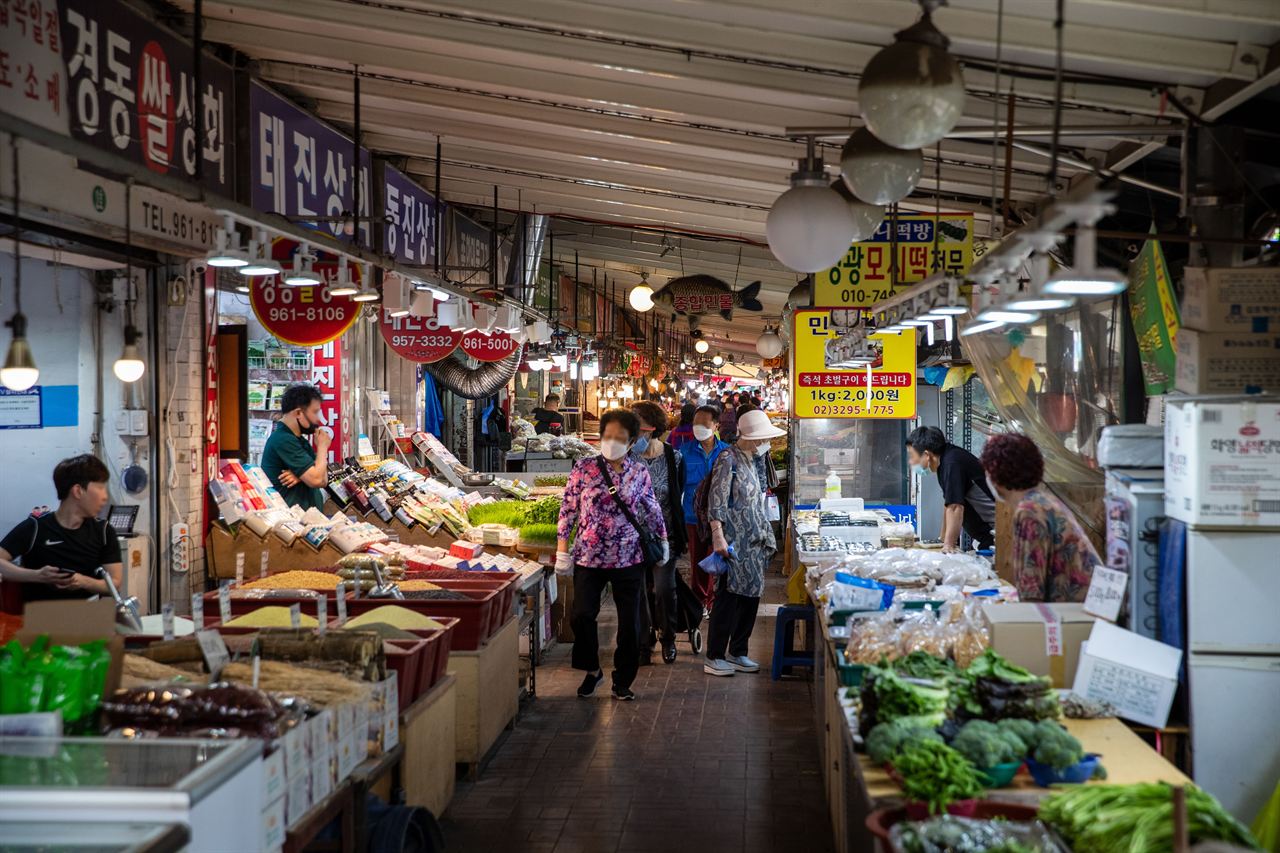
You step out of Jegi-dong Station and the street is packed with stalls, hand carts and sacks of dried roots, and no sign points to a café. That is how most people meet the Gyeongdong Market Starbucks 1960 guide problem: the famous store is real, but it sits inside a working market, up a staircase, behind a door you can easily walk past. Add the smell of fresh seafood, narrow alleys and vendors who have no interest in giving directions, and a simple coffee stop can turn into twenty minutes of circling.
I have sorted the route into simple steps: which exit to take, which gate to enter, where the staircase is, and what to eat once you are inside. Set aside two to three hours, wear shoes you can walk in, and bring a small bag for snacks.
Key Takeaways
- Take Line 1 to Jegi-dong Station, Exit 2, then walk about 5 to 6 minutes to Gate 4 of the Gwangseong Shopping Mall entrance.
- Inside Gate 4, go up the stairs on the right, turn left, and enter the door on the left to reach Starbucks 1960.
- Entry to the market is free, and the food is cheap compared with Gwangjang Market.
- Go on a weekday if you can. Saturdays are the busiest day, and Wednesday is the quietest.
- Ask for prices before you buy any unlabeled herbs or ginseng.
📍 Gyeongdong Market (Starbucks 1960) — Essential Information
| Address | 3, Gosanja-ro 36-gil, Dongdaemun-gu, Seoul |
| Best time to visit | Least crowded on Wednesdays; busiest on Saturdays (Korea Tourism Organization crowd forecast) |
| Map | Google Maps · Naver Map |
Gyeongdong Market Starbucks 1960 at a Glance
- Why visit: This is one of Seoul’s least touristy traditional markets, and a converted 1960s theater sits inside it as a café. You get a real working market and a good coffee break in one trip.
- What you will see and experience: Rows of medicinal herbs, dried goods, fresh produce and seafood, plus street snacks and a few old-school restaurants. The Starbucks 1960 store keeps a retro theater feel, with tiered seating that reflects the building’s past.
- Getting there: Line 1 to Jegi-dong Station, Exit 2. From Jegi-dong Station on Naver Map or Google Maps, the market entrance is a short walk away.
- Tickets and admission: Free to enter. You only pay for what you eat or buy.
- Tips from past visitors: Go hungry, carry some cash for small stalls, and compare prices before buying herbs or ginseng. The market also accepts Onnuri vouchers.
- Nearby spots worth combining: Gwangseong Shopping Mall (the arcade you walk through to reach the café), the Gyeongdong Small Theater, and the Cheongnyangni food court area a few minutes away.
How to Get to Gyeongdong Market from Jegi-dong Station
The easiest way to reach Gyeongdong Market is Subway Line 1 to Jegi-dong Station and out through Exit 2. From the exit, the market’s outer stalls start almost immediately, and the walk to the café takes about 5 to 6 minutes.
Which subway line and how long does it take?
Only Line 1 serves the station. From Jonggak Station, the ride takes roughly 9 minutes and costs about ₩1,400 to ₩2,000 depending on the card and fare type. From Seoul Station it takes about 13 minutes, for about ₩1,500 to ₩2,100. Fares change, so check the current rate on your transit card. If you are staying in Myeongdong or near City Hall, a transfer to Line 1 at Seoul Station is the simplest option. These are the stations I would start from: Jonggak Station and Seoul Station, which is also the Korail hub if you arrive by train.
Why Exit 2 and not another exit?
Exit 2 puts you on the market side of Wangsan-ro, so you skip crossing the busy road and hunting for a crosswalk. Some travelers report a walk of about 10 minutes to the far end of the market, which is realistic once you stop to look at stalls. Because the market is spread out, the distance to your first stall is short, while reaching the café takes a few more minutes.
A quick tip on maps
Use Naver Map or Google Maps with the station name, not just the market name. Searching only for the market can drop your pin on the far side, and the interior has almost no signage in English. I set the pin on the station first and then follow the steps in the next section.
Finding Starbucks 1960 Inside the Market
Starbucks 1960 is on an upper floor inside Gate 4 of the market’s Gwangseong Shopping Mall, so the trick is to enter through the right gate and follow four short steps. Most first-timers miss it because it sits above street level with no big sign at the entrance.
Step-by-step route from the station
From Exit 2 of Jegi-dong Station, walk toward the market until you reach Gate 4 of Gwangseong Shopping Mall. Enter, and go up the stairs on your right. At the top, turn left and go through the door on your left. That door leads into the café. If you reach the top of the stairs and see only shops, you have taken the wrong stairs, so go back down and check the gate number.
What is the café like inside?
The store occupies a converted 1960s theater, and the design plays with that history. Expect a warm, old-cinema atmosphere with tiered seating and a stage feel, quite different from an ordinary Starbucks. You order at the counter, and the menu follows the usual Starbucks range, so a familiar drink is easy to get. The store is listed as a community-focused branch, which is why its look leans toward local heritage.
When should I go?
Korea Tourism Organization data shows Saturdays as the busiest day around the market and Wednesdays as the quietest, so a midweek visit gives you the best chance at a good seat. I would plan the café as a mid-visit rest stop after an hour of walking, not as the first thing you do. Aim for a table near the tiered seating if you want photos, and expect a bit of competition on weekends.
You can check the official Starbucks Korea website for the current store information before you go.
Navigating the Market Without Getting Lost
Gyeongdong Market is a maze of covered alleys, arcades and open-air rows, so the best strategy is to pick one anchor point and work in loops around it. Walking in a single direction until you hit the edge is the fastest way to end up tired and turned around.
How is the market organized?
The market is best known as Korea’s largest herbal medicine market, and the outer streets around the station are packed with dried roots, mushrooms, jujubes and ginseng. Fresh produce and seafood sit in other zones, and the covered arcades hold small restaurants and snack shops. The rows of similar-looking goods can feel identical, which is exactly why first-timers lose their sense of direction. I use the Gwangseong Shopping Mall gate as my home base and return to it after each loop.
What will confuse me most?
Similar items are the top confusion. Many types of ginseng and sweet potatoes look almost the same, and labels are usually in Korean only. The sensible move is to point, ask for the price, and compare at a second stall before you pay. A vendor may quote a higher price to someone who clearly does not know the product, so a quick comparison protects your wallet. Prices at traditional markets are often negotiable only for larger purchases, so do not expect to haggle on a single snack.
What about the smell and the crowds?
The seafood zone has a strong smell that some visitors find overwhelming, especially on a warm day. If that bothers you, skirt that section and stay in the herb and snack areas. The market can also have noisy, tipsy customers in the evening near the pubs. I keep evening visits to the main lit lanes, and I save the later part of the day for the food streets.

What to Eat at Gyeongdong Market
The best food at Gyeongdong Market is cheap, filling and unfussy: cutlets, gimbap, sundae, fried chicken and hot soups. Prices below come from visitor reports and can change, so treat them as rough guides.
Which places are worth a stop?
Wang Eomma Gimbap is known for huge pork cutlets and thick kimchi tuna gimbap. A cutlet is reported at about ₩8,000, and the weekday noon rush brings a wait. For a big meal, Yuk-jak in the Cheongnyeonmol food court is known for a very large special cutlet, reported at about ₩14,000, but the wait can reach an hour and it can sell out early.
For a sit-down lunch, a Chungcheongdo-style set meal is reported at around ₩6,000, with various main dishes like stews or noodles available as a ₩1,000 add-on. Andongjip in the Cheongnyeonmol basement serves noodle soup and pancakes, and its QR menu comes in four languages, which helps if you cannot read Korean. For the classic cold noodle dish, Gyeongdong Market Pyongyang Naengmyeon is on the second floor of its building, so look up instead of along the street.
What about the evening food?
Dapeojwo, a seafood pub, is reported to have dishes ranging from about ₩10,000 to ₩20,000 per person, and a group of three paid about ₩48,000 including the table fee. It is loud and crowded, and a weekday arrival around 6:30 pm meant about an hour’s wait. A tip from visitors is to ask for shrimp heads in your ramen for free. Nam-eun Tongdak’s half-and-half chicken is about ₩21,000, and it can sell out.
Is it cheaper than Gwangjang Market?
Reviewers say yes. Gyeongdong’s sundae is reported at about ₩4,000 per kilogram, and Gwangjang’s was roughly double for a smaller portion of tteokbokki. My pick for a first-time visitor is to eat here first and treat Gwangjang as a second stop if you want the more tourist-oriented experience.
Seasonal Buys, Herbs and Shopping Tips
The most useful shopping rule at Gyeongdong Market is to browse first and buy last. The herb section is huge, and prices vary between stalls, so a lap around before you commit saves money.
What can foreigners realistically buy?
Dried jujubes, roasted grain teas, sliced ginseng and packaged herbal teas travel well and make easy gifts. Fresh produce changes with the season, so what you see in autumn will differ from spring. Ask the vendor what is in season, since that answer is more useful than any printed list. Anything perishable is a poor choice if you are flying out within a day or two.
How does it compare with a branded ginseng shop?
If you want a guaranteed-quality gift with clear labeling, a branded shop is easier. JungKwanJang has a Jonggak Station branch that is listed as a tax refund shop, and it is a premium red ginseng brand with a long history. At the market, you gain lower prices and variety, but you must judge the quality yourself. There is also a NoBrand branch on the second floor of the market building, listed as a tax refund shop, which is handy for everyday snacks and household goods.
Should I use cash or card?
Carry some cash. Small stalls and snack carts often prefer it, and some are cash only. Onnuri vouchers are accepted at many stalls, which matters if you are given one. Arcade games at Cheongnyang Arcade cost about ₩200, a small detail for a fun break.
Common Mistakes First-Time Visitors Make
Most problems at Gyeongdong Market come from timing and preparation, not from the market itself. Each mistake below fails for a specific reason.
Going to the wrong entrance for the café
Walking in from the wrong gate means you will not see the stairs on the right, so you end up circling the shops. The route only works from Gate 4, so confirm the gate number before you start climbing.
Arriving at peak lunch or dinner hours
Popular stalls have lines at weekday noon, and the evening pubs fill up fast. Because cutlets and chicken can sell out, arriving late means the best dish is gone. Go slightly before or after the rush.
Buying herbs or ginseng on the first stall
Similar products sit at very different prices, and labels are in Korean. Buying at the first stall means you have no benchmark, so you risk overpaying. Check two or three stalls first.
Skipping cash
Small vendors may not take cards, so an empty wallet can stop you at the last step of a snack purchase. Bring small bills.
Expecting a polished tourist market
This is a working local market, so the alleys are tight, the floors can be wet, and stall owners are busy. Skip this place if you want a calm, guided experience. Wear closed shoes and keep your bag zipped.
Frequently Asked Questions
Is Gyeongdong Market good for tourists?
Yes, if you want a less touristy, local market with lower prices. It is Korea’s largest herbal medicine market and also has produce, seafood and street food. It is less polished than tourist-oriented markets, so go with some preparation.
Is entry to Gyeongdong Market free?
Yes, entry is free. You only pay for food, drinks and anything you buy at the stalls.
How do I find Starbucks 1960 in the market?
Take Exit 2 from Jegi-dong Station and walk to Gate 4 of the Gwangseong Shopping Mall. Go up the stairs on the right, turn left at the top, and enter the door on the left. The walk from the station takes about 5 to 6 minutes.
Are the vendors trustworthy or do they overcharge tourists?
Most prices are fair, but you should still compare. Ask the price before you take an item, check a second stall for herbs or ginseng, and carry small bills so you can pay the exact amount.
What is the best day to visit?
Korea Tourism Organization data shows Wednesday as the least crowded day and Saturday as the busiest. A weekday visit outside the lunch rush gives you shorter lines and an easier time finding a seat at the café.
In Conclusion
For a smooth Gyeongdong Market Starbucks 1960 visit, take Line 1 to Jegi-dong Station, leave through Exit 2, and head straight for Gate 4 of the Gwangseong Shopping Mall. Go up the stairs on the right, turn left, and enter the door on your left. Plan for a weekday, since Wednesday is the quietest day and Saturday the busiest. Eat first at the cutlet and gimbap stalls, then rest in the café after your first lap through the herb rows. Carry small bills, compare prices before buying anything unlabeled, and use the Gwangseong gate as your anchor so you never lose your bearings. With that plan, the market feels manageable, even on a first visit.
Discover more from Korea Visiting
Subscribe to get the latest posts sent to your email.