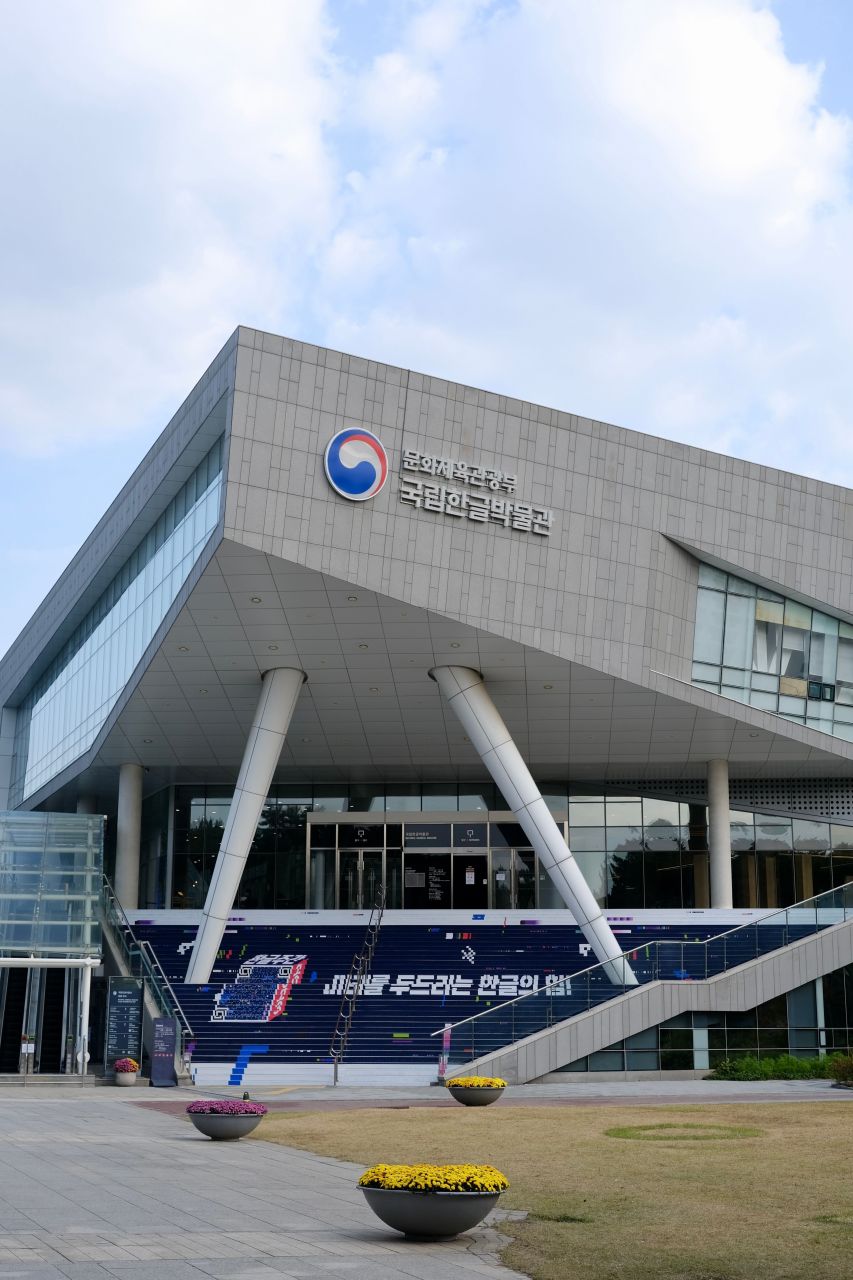
Searching for National Hangeul Museum Ichon Station attractions usually starts with a plan to see the museum and ends with the discovery that it is closed. The museum is shut for fire-damage repairs and expansion work, and its own notice says it will stay closed until the second half of 2028. That is a lot of wasted effort if you only find out at the gate.
The good news is that Ichon Station sits in one of the most useful pockets of Yongsan. A national museum, two parks, a river promenade and a war history museum are all within a short walk or one quick ride. I’ve planned this area around the closure, with walking times, realistic time budgets and the mistakes that cost first-timers the most energy.
Key Takeaways
- The National Hangeul Museum is closed for fire-damage repairs and expansion work until the second half of 2028. Confirm its status on the official site before you go.
- Ichon Station Exit 2 (Line 4 or Gyeongui-Jungang Line) is the gateway to the National Museum of Korea, Yongsan Family Park and the riverside.
- Admission is free at the National Museum of Korea’s permanent exhibitions and the War Memorial of Korea, and it stays free at the Hangeul Museum once it reopens.
- Do not stack three museums in one day. Pair one big museum with one park or river walk.
📍 National Hangeul Museum — Essential Information
| Address | 139, Seobinggo-ro, Yongsan-gu, Seoul |
| Website | www.hangeul.go.kr |
| Best time to visit | Least crowded on Mondays; busiest on Saturdays (Korea Tourism Organization crowd forecast) |
| Map | Google Maps · Naver Map |
National Hangeul Museum at a Glance
- Why visit: This is Korea’s dedicated museum for its own alphabet, Hangeul. Even with the closure, the neighborhood around it is one of Seoul’s easiest cultural half-days.
- What you will see and experience: When the museum is open, it covers the history and value of Hangeul through a permanent exhibition, activities and education programs. The building has one basement level and three levels above ground, plus an outdoor lawn and rest area. The first floor holds a Hangeul library, and the second floor has the permanent exhibition hall, a café and a cultural product shop.
- Getting there: Take Seoul Subway Line 4 or the Gyeongui-Jungang Line to Ichon Station and use Exit 2. From there it is a straightforward walk of about 300–500 meters toward the National Museum of Korea complex.
- Tickets and admission: Free.
- Tips from past visitors: Check the closure status before you leave your hotel. When the museum is open, pair it with the National Museum of Korea next door. Expect limited English explanations in places, and expect it to be smaller than the neighboring national museum.
- Nearby spots worth combining: National Museum of Korea, Yongsan Family Park, Ichon Hangang Park, War Memorial of Korea, I-Park Mall at Yongsan Station, Amorepacific Museum of Art and the cafés and restaurants of Dongbuichon-dong.

Is the National Hangeul Museum Open Right Now?
No. The museum’s own notice says it is closed for fire-damage repairs and expansion work until the second half of 2028, with exhibitions and education programs running at outside venues in the meantime. Admission will remain free once it reopens.
Many older guides, and plenty of map listings, still describe the museum as if it were open. I’d treat any page that doesn’t mention the closure as out of date. The most reliable source is the museum’s own official website. Check it the week you travel, because reopening dates on large construction projects can move.
You can still walk the site and see the exterior and grounds. That is worth a few minutes as a photo stop, but it is not a reason to make the trip on its own. My advice is to treat the museum as a future visit and use this area for everything else on the list below. If Hangeul is the reason you came to Korea, I’d time a return trip around the reopening and around Hangeul Day on October 9, which normally draws big crowds to the museum.
How to Get to Ichon Station and Around the Area
Ichon Station Exit 2 is the starting point for every place in this guide, and both Line 4 and the Gyeongui-Jungang Line stop there. The station is officially signed as Ichon with the National Museum of Korea as its subtitle, so follow the museum signage once you are underground.
From Exit 2, walk straight toward the National Museum of Korea complex. The National Hangeul Museum and the National Museum of Korea sit side by side, and Yongsan Family Park is just beyond them. I’d allow 10 minutes from the platform to the museum entrance, since Ichon is a big station with long corridors.
Ichon Hangang Park is a separate walk in the other direction, toward the river. Yongsan Station is one stop away on the Gyeongui-Jungang Line, which is the easiest way to reach I-Park Mall. For the War Memorial of Korea, the Samgakji side of Line 4 is the smart alternative to walking on a hot or rainy day. Buy or load a transit card before you arrive so you can tap through gates without stopping.
7 National Hangeul Museum Ichon Station Attractions, Ranked by Walking Distance
The seven places below run from the closest, at the station exit, to the ones that need a short ride. Most are free, and all of them can be reached without a taxi if you plan the order well.
1. National Museum of Korea
The National Museum of Korea is the anchor of the area and the best replacement for a closed Hangeul museum. It sits directly next to the Hangeul Museum, and admission to the permanent exhibitions is free. The collection runs from ancient times to the modern era, and the outdoor grounds hold pagodas and large stone works too big for the galleries. There is also a Children’s Museum, useful if you are traveling with kids.
I’d budget at least two to three hours, and more if you like archaeology. The official site is museum.go.kr, and you can open it on Naver Map or Google Maps. Korea Tourism Organization forecasts show Saturdays as the busiest day and Tuesdays as the quietest, so a weekday morning gives you the most breathing room.
2. Yongsan Family Park
Yongsan Family Park is the best place to reset after a museum, and it is only about a five-minute walk from the museum complex. The park covers roughly 75,900 square meters (about 19 acres) on land that was once part of the U.S. military base Yongsan Garrison, including its golf course. You will find a big grassy field, a pond, a 2 km walking path, a natural education site and Taegeukgi Park. Pigeons and wild pheasants live in the park, which surprises many first-time visitors.
The park is open 24 hours all year, so timing is flexible. Plan 30 to 60 minutes. Here are the Naver Map and Google Maps links.
3. Ichon Hangang Park
Ichon Hangang Park is where you go when you want open sky and river views instead of galleries. It is a 10 to 15 minute walk from the museum complex, and it runs along the north bank of the Han River. The park has bike paths, sports fields, an inline skating rink, water sports facilities and a nature learning center built around a restored wetland. You can also follow Hangangdaegyo Bridge to Nodeulseom Island in the middle of the river. The park appeared in the TV drama “Sisyphus: The Myth.”
It is open 24 hours all year, and the best moment is late afternoon into sunset. I’d give it 45 to 90 minutes. The Hangang Park official site has facility details. Maps: Naver Map and Google Maps.
4. War Memorial of Korea
The War Memorial of Korea is the most substantial second stop if you want history rather than art. It is about a 15-minute walk from the museum complex, and permanent exhibitions are free. The museum was established on June 10, 1994 and holds about 33,000 artifacts, with roughly 10,000 on display indoors and outdoors. There are six indoor halls, including the Korean War Room and the Large Machinery Room.
It is heavy going emotionally, so I’d not schedule it right after another big museum. Give it at least 90 minutes. The official site is warmemo.or.kr, and you can open it on Naver Map or Google Maps.
5. I-Park Mall (Yongsan Station)
I-Park Mall is the easiest rainy-day or hot-day fallback. It is a large shopping and dining complex connected to Yongsan Station, one stop from Ichon on the Gyeongui-Jungang Line. Come here for a meal, air conditioning or a quick shopping break, not as a sightseeing highlight. I’d give it about an hour. See the official site, or use Naver Map and Google Maps.
6. Amorepacific Museum of Art
The Amorepacific Museum of Art is a compact contemporary art stop that suits a short second museum visit. It is at 100 Hangang-daero in Yongsan, so plan on a short transit or taxi hop rather than a stroll from Ichon. Because exhibitions change and I cannot confirm what is on now, I’d check the museum’s official Instagram before going. Maps: Naver Map and Google Maps.
7. Dongbuichon-dong Neighborhood
Dongbuichon-dong is where I’d eat, because it is the local neighborhood around Ichon Station rather than a tourist strip. It is known for a varied food scene, including Japanese restaurants, and for trendy cafés. My approach is to walk a few blocks off the main road and pick a place with a local crowd. I won’t name a single restaurant here, since menus and openings change quickly. Plan about an hour for a relaxed meal or a café stop after the park.
What Can You Do Here Instead? A Half-Day Route That Works
The most efficient plan is one big museum, one green space and one meal, which fits comfortably in a half day. I’d start at Ichon Station Exit 2, spend the morning at the National Museum of Korea, and eat in Dongbuichon-dong. Then walk to Yongsan Family Park or Ichon Hangang Park for the afternoon.
If you prefer history over art, swap the National Museum of Korea for the War Memorial of Korea, and keep the river walk for the end of the day. If it is raining, use I-Park Mall at Yongsan Station as your indoor stretch instead of the parks.
For a Hangeul-focused day while the museum is closed, my pick is the National Museum of Korea plus a check of the Hangeul Museum’s official site. Its closure notice says exhibitions and education programs continue at outside venues, so check which ones are running before you plan around it.
Common Mistakes That Cost First-Timers Time
The biggest mistake is arriving without checking whether the Hangeul Museum is open. Search results and older articles do not always mention the closure, so you can spend the trip to Ichon just to find a construction site.
Trying to do three museums in one day. Travelers often ask whether the National Hangeul Museum, the National Museum of Korea and Leeum Museum of Art fit in one day. They technically can, but the National Museum of Korea alone is large, and Leeum is across Yongsan in Hannam-dong. You end up rushing all three and remembering none. I’d choose one large museum plus one park.
Choosing Saturday. Korea Tourism Organization forecasts show Saturday as the busiest day for both the National Hangeul Museum and the National Museum of Korea. Crowds slow everything down, from the entrance queue to the café. A weekday morning is calmer.
Underestimating walking distances. The listed walking times look short on a map, but you cross roads and long station corridors. A 15-minute route becomes 25 with a stop or a wrong turn, so add a buffer if you have a fixed plan.
Using Google Maps for everything. Navigation in Korea works far better on Naver Map. Walking routes and exit numbers are more accurate there, so I’ve linked Naver Map alongside Google Maps for the places above.
What to Expect When the National Hangeul Museum Reopens
When the National Hangeul Museum reopens, expect a smaller, focused museum rather than a full-day destination. Travelers often describe the main exhibit as relatively compact, which is why pairing it with the National Museum of Korea next door works so well.
Two features stand out in visitor accounts. One is a children’s museum section, useful for families. The other is a long dark corridor lined with illuminated acrylic plaques of scripture, which is a memorable visual. On the practical side, non-Korean readers report limited English explanations in places, so I’d read a short Hangeul introduction beforehand. Knowing that the alphabet was designed to be learnable, and how its consonants and vowels are built, makes the displays much more meaningful even without full translations.
Plan around Hangeul Day on October 9 carefully. It typically draws large crowds when the museum is open, so I’d visit a few days earlier or later if you want space to look properly.
Frequently Asked Questions
Is the National Hangeul Museum closed?
Yes. It is closed for fire-damage repairs and expansion work until the second half of 2028. Check the official website before traveling, since reopening dates can change.
How do I get to the National Hangeul Museum from Ichon Station?
Take Line 4 or the Gyeongui-Jungang Line to Ichon Station and leave by Exit 2. Walk straight toward the National Museum of Korea complex, about 300–500 meters. The Hangeul Museum sits right beside the National Museum of Korea.
Is it free to visit the museums near Ichon Station?
Admission to the National Hangeul Museum is free, as are the permanent exhibitions at the National Museum of Korea and the War Memorial of Korea. Yongsan Family Park and Ichon Hangang Park are also free to enter and open 24 hours. Prices at other venues, such as the Amorepacific Museum of Art, vary, so check the official channel.
Can I visit the National Hangeul Museum, National Museum of Korea and Leeum in one day?
It’s possible on paper, but I wouldn’t. The National Museum of Korea takes at least two to three hours on its own, and Leeum is a separate trip across Yongsan. Choose one large museum and add a park or a meal.
Does the museum have English explanations?
Travelers report that English explanations are limited in places. If you are visiting after it reopens, read a short introduction to how Hangeul works first so the exhibits make sense.
In Conclusion
The National Hangeul Museum is closed until the second half of 2028, but the area around Ichon Station still rewards a well-planned day. Start at Exit 2 and make the National Museum of Korea your main stop. Add Yongsan Family Park or Ichon Hangang Park for fresh air, or the War Memorial of Korea if you want history. Eat in Dongbuichon-dong, and use I-Park Mall at Yongsan Station as your rainy-day backup. Avoid Saturdays, don’t stack three museums into one day, and use Naver Map for walking routes. Check the museum’s official site before you go, then plan a return trip once the doors reopen in 2028.
Discover more from Korea Visiting
Subscribe to get the latest posts sent to your email.