This one-day Hongdae, Yeonnam-dong, Ewha, and Sinchon itinerary links four of Seoul’s most walkable university neighborhoods into a single, realistic route you can actually finish without rushing. All four areas sit along or near Subway Line 2 within about a 15-minute radius of each other, which is exactly why they work well together in a single day rather than as separate trips. The plan below moves from quiet morning cafés in Yeonnam-dong, through Hongdae’s shopping and street culture at midday, to Ewha Womans University’s campus in the afternoon, and finishes with dinner and nightlife in Sinchon — with honest travel times so you don’t end up spending your day on the subway instead of in it.
Key Takeaways
- Yeonnam-dong, Hongdae, Ewha, and Sinchon are all reachable from each other in under 15 minutes by subway, making a single-day loop realistic.
- Start in Yeonnam-dong before 10 AM to enjoy its cafés before the weekend crowds arrive.
- Budget about 2–2.5 hours for Hongdae — it’s the area where plans most often run over.
- Ewha’s campus is free to enter, but confirm current access rules via Naver Map before you go.
- Save Sinchon for dinner and evening — it’s the most affordable area for a filling last meal.
Yeonnam-dong — Morning Cafés Along the Gyeongui Line Forest Park
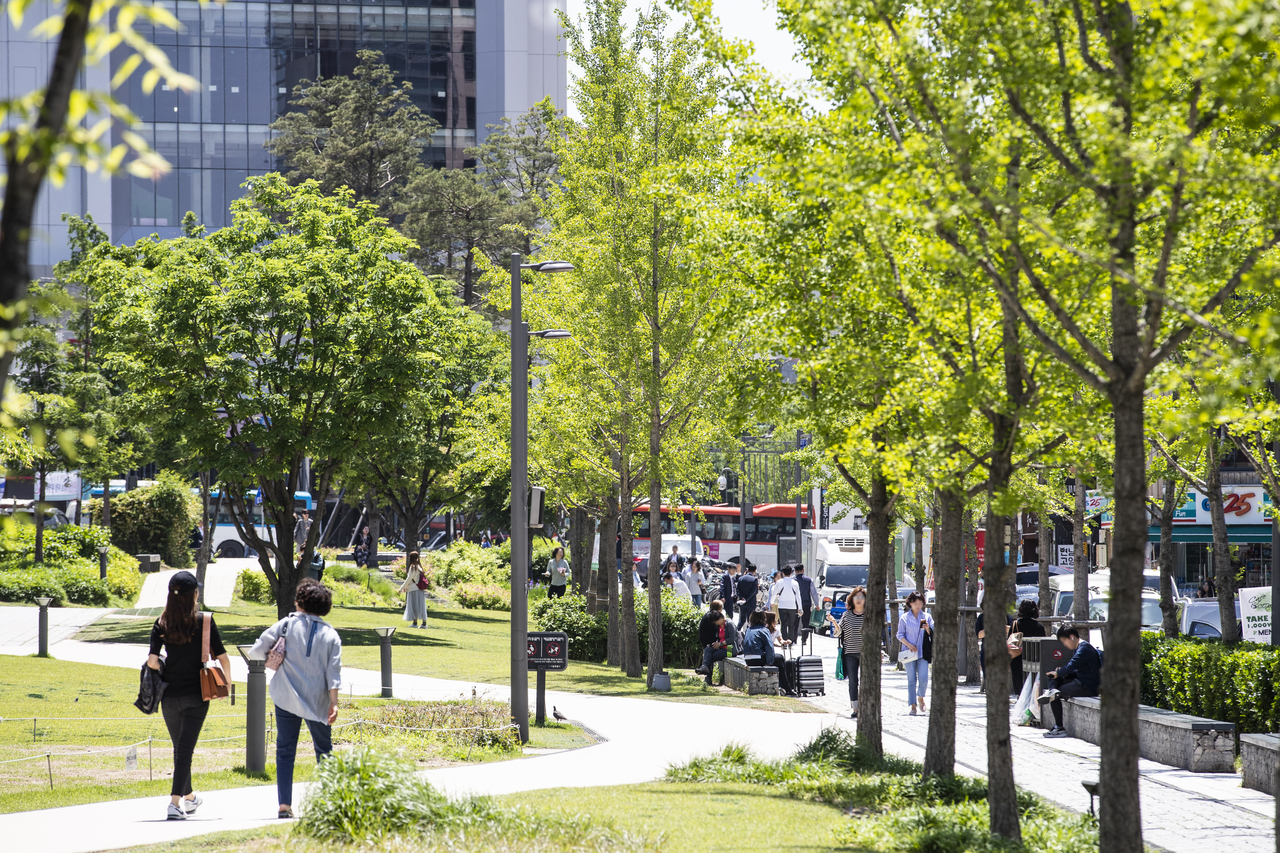
Yeonnam-dong is the calmest stop on this route, so it works best as your first destination before the rest of Hongdae wakes up. The neighborhood sits directly along the northern stretch of the Gyeongui Line Forest Park (nicknamed “Yeontral Park” for its resemblance to a miniature Central Park), a former railway corridor now lined with cafés, independent shops, and tree-shaded benches. It’s a five- to ten-minute walk from Exit 3 of Hongik University Station, so if you’re staying in Hongdae the night before, this is an easy way to start the day on foot rather than by subway.
Arrive by around 9:30 AM if you can. Pfiff Espresso Bar is best visited before 10 AM, when it’s noticeably quieter, and starting here sets a relaxed pace for the rest of the neighborhood. For something more substantial, Hippo Brunch Haus (85, Seongmisan-ro 17-gil, Mapo-gu) serves full brunch plates, while Jo & Dawson’s French toast draws lines on weekends — visit on a weekday if your schedule allows. Oats Coffee is worth a stop for its einspanner if you want a second coffee before moving on. If you’re chasing a specific photo spot, a few Instagram-famous cafés in the wider Yeonnam-dong area — such as Coffee Nap Roasters, known for its tiered brick patio, and Ice Art Cafe, known for hand-carved ice sculptures — are also within walking distance, though both tend to draw queues by midday.
Plan for about 1.5 hours here total: one café stop for breakfast, a 20–30 minute stroll along the forest park, and maybe one browse through a small design or vintage shop. Resist the urge to add a fourth café — this is the part of the day where over-scheduling shows up fastest.

Hongdae — The Hub of This One-Day Yeonnam, Ewha and Sinchon Itinerary
Hongdae is the busiest and most activity-dense stop on this route, so it deserves the longest block of time — realistically 2 to 2.5 hours rather than a quick pass-through. From Yeonnam-dong, it’s a 10–15 minute walk back toward Hongik University Station, or you can simply follow the forest park south until the crowds and shopfronts pick up.
The core experience here is street-level: the main shopping alleys around the university, indie fashion boutiques, and — on weekend afternoons — busking and street performances near the university’s front gate. Beyond general shopping, Hongdae has developed a niche around themed and collectible experiences worth building into your afternoon. A maid-and-butler café in the area offers a fully in-character “Kawaii mansion” experience, complete with a chanted “delicious-ification” ritual before you eat and a hand-feeding service for snacks — fun if you go in with a sense of humor, awkward if you don’t. For food, a no-signage sandwich shop known locally as Slice is worth tracking down for its best-selling Red Bean Toast; other menu items run sweeter and richer than expected, so first-timers are usually better off ordering the signature item rather than experimenting.
If collectible shopping interests you, Hongdae has several gacha and figure stores clustered within a few blocks of each other, including Gacha X (a single-floor shop with anime capsule toys), Jijikoming Market, and Figure Center. Pulls typically run about ₩4,000–₩12,000, with standalone figures and boxed sets priced higher, from roughly ₩28,000 up to ₩70,000–₩160,000 for full sets. Stock rotates and popular characters sell out by early afternoon, so if this is a priority, do it before lunch rather than after. Anime and game pop-up stores also rotate through the area every few months — check what’s currently running before you go, since availability changes fast and reviewers consistently note that the best goods are picked over by mid-afternoon.
For lunch, eat in Hongdae rather than waiting for Sinchon — the area has dense, affordable options on nearly every side street, and grabbing something here keeps your pace on schedule. If you’re staying overnight, guesthouses like BB Hongdae Line put you within walking distance of both Yeonnam-dong and the subway line you’ll use for the rest of the day.
Ewha — An Afternoon Campus Walk
Ewha Womans University is the shortest stop on this route, and it works best as a focused afternoon break between Hongdae’s midday crowds and dinner in Sinchon. From Hongdae, the ride to Ewha Womans University Station on Line 2 takes about 4 minutes (₩1,400–₩2,000), so fitting it in doesn’t require cutting your Hongdae block short.
The campus is free to enter, but access rules for visitors can change, so confirm the current situation on Naver Map before you go. Keep this stop to a focused campus walk rather than a full block of sightseeing — one primary stop here is enough to keep the rest of the day on schedule.
Sinchon — Dinner, Nightlife and the University Plaza
Sinchon is the natural place to end the day, offering the most affordable dinner options on this route and an energetic evening atmosphere driven by its concentration of university students. From Ewha Womans University Station, Sinchon Station is just one stop away on Line 2 and also within easy walking distance, so this transition takes only a few minutes.
For dinner, Sinchon’s side streets are built for budget eating: Cochon Tonkatsu serves tonkatsu for about ₩4,000, Byuldang Kimchi-jjim offers kimchi-jjim for about ₩5,000, and Yamano Ramen has Japanese-style ramen for about ₩5,000 — all solid, no-frills options near the station. For something more substantial or dessert-focused, The PIE HOLE (20, Yeonsero 5-na-gil, Seodaemun-gu) and It’s Good Bakery Cafe (30, Yeonsei-ro 4-gil, Seodaemun-gu) are both well-regarded, though as with any restaurant, confirm current hours via their listings rather than relying on posted hours that may have changed.
After dinner, Sinchon’s central plaza and surrounding streets are where the local “lived-in” leisure culture shows up — noraebang (karaoke rooms) and PC cafés are genuinely part of how Sinchon is used by locals, and dropping into one for an hour is a more authentic way to close the night than chasing another sightseeing stop. If your energy is fading by this point, that’s a sign the day is paced correctly — Sinchon is meant to be the wind-down, not another full-effort stop.
Getting Around & Practical Tips
This itinerary runs almost entirely on Subway Line 2, supplemented by short walks, so a T-money card (available at any convenience store or subway station) covers the entire day. Total subway costs across the three connecting legs — Yeonnam-dong to Hongdae (free, walking), Hongdae to Ewha (about 4 minutes, ₩1,400–₩2,000), and Ewha to Sinchon (one stop) — come to roughly ₩3,000–₩4,000 total, so there’s no need to buy a special transit pass for a single day covering this compact area.
Pacing is the single biggest factor in whether this day feels enjoyable or rushed. Travelers consistently report that overpacking the schedule — especially trying to add extra appointments like DIY workshops or fixed-time bookings — creates more anxiety than it’s worth. If you want to add a trending activity like a custom perfume-making class or a Korean cookie-decorating workshop in Yeonnam-dong, book it in advance through the studio’s Instagram or Naver reservation page, and treat it as a replacement for a café stop rather than an addition to an already full afternoon.
Seasonally, spring (April–May) and fall (late September–November) are the most comfortable for the walking-heavy stretches of this route, particularly the forest park in Yeonnam-dong. Summer is workable but plan indoor breaks — cafés and the university’s covered walkways — during the hottest hours. Weekends bring noticeably heavier crowds to Hongdae’s shopping streets and gacha shops, so if your schedule is flexible, a weekday run of this itinerary will feel far less congested, especially around lunchtime in Hongdae and dinnertime in Sinchon.
Frequently Asked Questions
How many activities can realistically fit into one day covering Hongdae, Yeonnam-dong, Ewha, and Sinchon?
Four core stops — one per neighborhood — is the realistic ceiling for a comfortable day, with one meal and roughly one “extra” activity (a café, a workshop, or a themed café) layered in per stop. Trying to add fixed-time appointments on top of all four areas is the most common cause of a rushed, stressful day according to traveler feedback.
What’s the best order to visit these four neighborhoods?
Starting in Yeonnam-dong before 10 AM, moving to Hongdae for late morning and lunch, then Ewha in the afternoon, and finishing in Sinchon for dinner follows both the geography and the natural energy curve of the day — quiet start, busy midday, wind-down evening. Reversing the order works too, but starting in the calmest area (Yeonnam-dong) makes the transition into Hongdae’s crowds feel less abrupt.
Do I need reservations for cafés or workshops in Yeonnam-dong and Hongdae?
Most cafés don’t require reservations, but popular spots like Jo & Dawson can have weekday-vs-weekend wait differences worth planning around. Trending DIY workshops (perfume-making, cookie classes) and some themed cafés do fill up, so book those a day or two ahead through the venue’s Instagram or Naver reservation page if you want a guaranteed slot.
Is it better to walk or take the subway between Hongdae and Sinchon?
The subway (about 11 minutes) is the more time-efficient option for most travelers, while walking the roughly 21-29 minute route is only worth it if you specifically want to see the street-level transition between the two areas. A taxi is available too, running roughly ₩6,500–₩8,500, though it isn’t necessarily faster than the subway once traffic is factored in.
Can this itinerary work as a half-day instead of a full day?
Yes — pairing just two adjacent areas, such as Yeonnam-dong and Hongdae, or Ewha and Sinchon, makes a solid half-day if you’d rather not cover all four in one go. Trying to compress all four areas into half a day is not recommended, since it reproduces the over-scheduling problem this itinerary is specifically designed to avoid.
In Conclusion
A one-day route through Yeonnam-dong, Hongdae, Ewha, and Sinchon works because the four areas are genuinely close together — the challenge isn’t distance, it’s pacing. Start early in Yeonnam-dong’s quieter cafés, give Hongdae the longest block of time since it has the most to see and do, keep Ewha to a focused campus visit, and let Sinchon be the low-effort dinner-and-wind-down finish. Stick to roughly one primary stop per area plus one optional extra, confirm current hours and access for the university campus via Naver Map rather than assuming they’re fixed, and book any trending workshop in advance rather than hoping to fit it in on the fly. Followed at this pace, the day covers Seoul’s university-district culture — food, shopping, architecture, and nightlife — without leaving you more tired from transit than from actually enjoying it.
Discover more from Korea Visiting
Subscribe to get the latest posts sent to your email.