Seoul in October delivers some of the most comfortable weather of the year, sitting right between summer’s humidity and winter’s bite — which is exactly why it doubles as the city’s biggest festival month and its best window for photogenic autumn color. I’ve found that the trickiest part isn’t deciding whether to go (October is close to a no-brainer), it’s figuring out how the month actually splits into two different trips: a mild, still-summery early October and a genuinely crisp, jacket-required late October. Get that timing wrong and you’ll either overpack fleece for 20°C afternoons or freeze at an outdoor festival in a t-shirt.
This guide breaks down what the weather actually does week by week, which festivals are worth building a day around versus which to skip if you hate crowds, when foliage peaks in the city (not the mountains), and exactly what to put in your bag.
Key Takeaways
- Seoul in October averages highs of 18–20°C early in the month, cooling to about 16°C by month-end, with lows dropping from the high single digits to around 7°C.
- Rain is rare — about 52mm total for the month with only a 13–20% daily chance — so October is one of the driest months to visit.
- Peak autumn foliage in Seoul typically lands mid-to-late October, though many urban parks look best in the very last days of the month.
- October hosts the K-Royal Culture Festival, Seoul Silver Grass Festival, Seoul Autumn Festa, and — usually right at the September–October boundary, with the exact date shifting each year — the Seoul International Fireworks Festival.
- Pack for two different climates in one trip: light layers for early October, a real jacket and scarf for late October evenings.
Seoul in October: Weather, Temperatures and Rain
Seoul in October is dry, mild, and steadily cooling — daytime highs slide from about 18–20°C (65–68°F) in the first half of the month down to roughly 16°C (60°F) by Halloween, while overnight lows drop from the high single digits to around 7°C (46°F). That 10–13°C daily swing is the single most important weather fact for this trip: mornings and evenings feel genuinely cold, but a sunny 2 PM afternoon at Gyeongbokgung can still feel like late summer.
Humidity averages 66–67%, which is a huge relief after Seoul’s sticky July–August, and you’ll get about 7 hours of sunshine most days with clear, high skies — the kind of light that makes autumn foliage photos look almost unreal. Rain is the least of your worries: total monthly rainfall is only about 52mm, spread across days with just a 13–20% chance of precipitation. I still pack a compact umbrella rather than rely on that low probability, since a single passing shower can catch you mid-palace-visit with nowhere to shelter.
One thing worth flagging: October also falls within Korea’s fine-dust season transition, so air quality isn’t guaranteed to be pristine every day. It’s not a reason to avoid the trip, but if you’re sensitive to particulate pollution, a basic dust mask in your bag costs nothing to carry.

Top Autumn Festivals in Seoul This October
October is Seoul’s densest festival month, and the trick to enjoying it is picking two or three events rather than trying to hit all of them — the fatigue of festival-hopping in a compressed timeframe is a real complaint I see repeated by travelers who tried to cram everything into one week.
K-Royal Culture Festival
This is the festival I’d prioritize if you only have time for one. Held every spring and autumn across Seoul’s five royal palaces, the fall 2025 edition ran October 8–12, and I’d expect similar dates in 2026 (confirm exact 2026 dates closer to the season, since they aren’t fixed year-to-year). It brings nighttime performances, traditional music, and special access to areas of the palaces normally closed to daytime visitors — a completely different atmosphere from a regular palace visit, since the crowds thin out after dark and the lantern-lit courtyards feel far more intimate than the daytime tour-group shuffle. Check the palace administration’s official site for the confirmed 2026 program once it’s published.
Seoul Silver Grass Festival
Held annually at Haneul Park (also on Google Maps), this is the one I send people to for the “sea of silvery pampas grass” photo that circulates every autumn. In 2024, the park extended its hours until 10 PM during the festival period, which matters a lot — the site sits on a hill above the Nanjido landfill park with limited shade, so an early-evening visit avoids both the midday sun and the worst of the crowds, and the golden-hour light on the grass is genuinely better than a noon visit. Getting there involves a walk up a fairly steep hill (steps or a shuttle bus at peak times), so wear the walking shoes, not sandals.
Seoul Autumn Festa
This is less a single festival and more a citywide umbrella of events. The 2025 edition ran October 4 through November 12, opening with a performance at Seoul Plaza in front of City Hall (official site). Because it spans multiple venues over six weeks, I treat it as a backdrop rather than a destination — check the official listings for whatever pop-up market or performance happens to coincide with your dates rather than building a whole day around it.
Seoul International Fireworks Festival
Worth knowing about even though it usually falls right at the edge of October (it ran September 27 in 2025, and on October 5 in 2024) — the exact date shifts year to year, so verify before you plan around it. It’s held at Yeouido Hangang Park (official site) and draws some of the densest crowds of the year — arrive at least two hours early to claim riverbank space, and expect subway stations near Yeouinaru to be jammed for an hour after the show ends.
Day Trip Option: Suwon Hwaseong Cultural Festival
If you have a free day and want to escape the Seoul crowds entirely, tour packages list October 4–11, 2026 for this festival at the UNESCO-listed Hwaseong Fortress in Suwon — about 1 hour from central Seoul by subway (Line 1), or 30-35 minutes by faster regional trains operating on the same route. It’s a good pressure-release valve if you’ve already done the Seoul palace circuit and want to see traditional Korean fortress architecture without the density of a downtown event.
Peak Foliage Timing and Where to See It
Autumn foliage in Seoul typically peaks mid-to-late October, but the exact week varies enough by location that I’d plan for a foliage window rather than a single date. Mountain and hillside spots color up first; low-elevation urban parks lag behind by one to two weeks.
When does autumn foliage actually peak in Seoul?
Officially, mid-to-late October is the general peak. In practice, travelers who’ve timed multiple autumn trips consistently point to the very end of October through the first days of November — roughly October 30 through November 5 — as the sweet spot for fully-colored urban parks and palace grounds, since the earlier “peak” window often means trees are only partway turned in the flatter parts of the city.
Where to see it
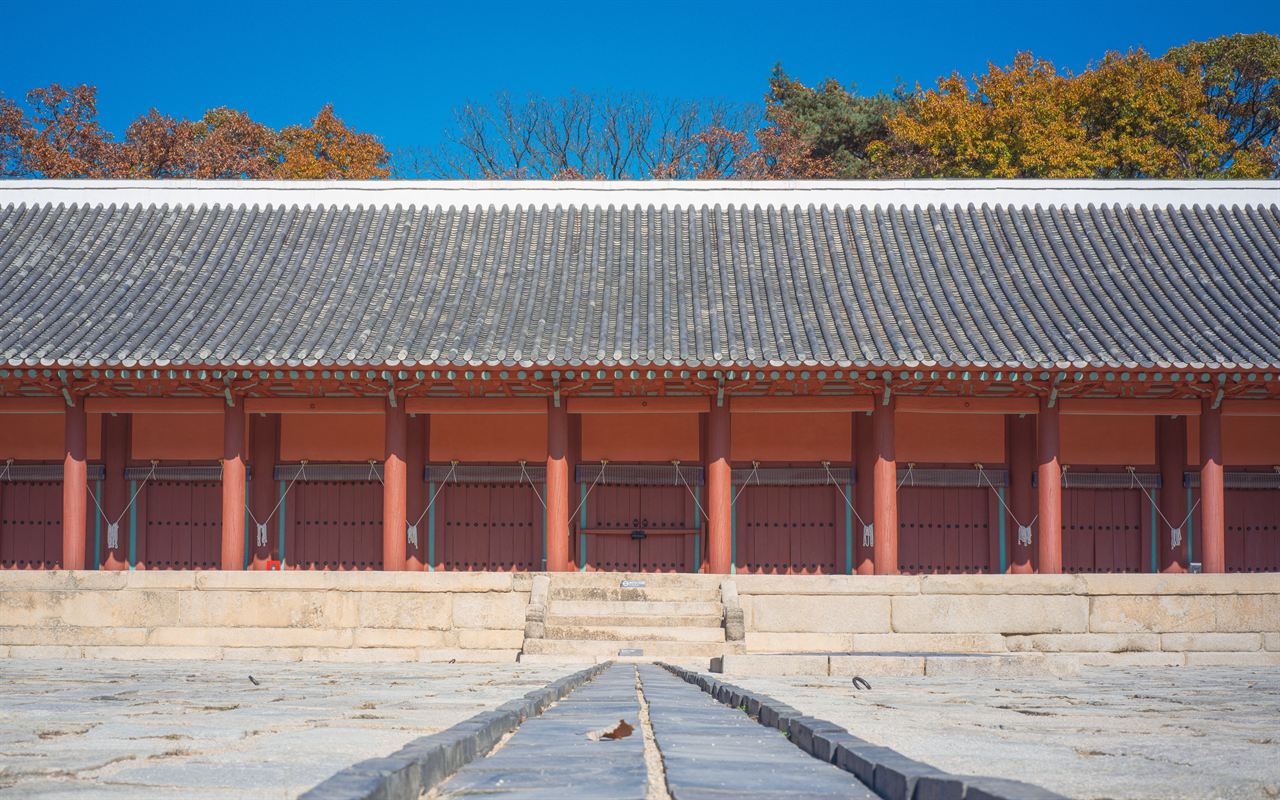
Gyeongbokgung Palace is the classic choice — the maple trees along the stone walls and the reflection in the Gyeonghoeru pond pool are the postcard shot, best caught in the last two hours before closing when the crowds thin and the light turns gold. Namsan turns earlier than downtown parks because of its elevation, so it’s a good pick if you’re visiting in the first half of October and want color before it appears elsewhere. For a quieter, more leisurely walk, Deoksugung Palace and Seoul Forest are the spots I’d point a first-timer to over the more famous options — both get a fraction of the foot traffic of Gyeongbokgung while offering comparably good ginkgo and maple color in late October.
What to Pack for Seoul in October
Packing for Seoul in October means packing for two different climates within one trip, since the temperature swing from early to late month — and from midday to midnight on any given day — is bigger than most first-timers expect.
Early October vs. late October
In the first half of the month, days can still feel like late summer (highs around 18–20°C in direct sun), so light layers — a t-shirt or light long-sleeve with a thin cardigan or shirt jacket — cover most daytime situations. By the last week of October, daytime highs drop to around 16°C and evenings dip toward 7°C, which genuinely calls for a proper jacket, not just a sweater. My rule of thumb: whatever you’d wear on a mild early-spring day at home is close to right for a late-October evening in Seoul.
The layering system that actually works
A base layer (t-shirt), a mid layer (light sweater or hoodie), and an outer layer you can stuff into a daypack (a compressible puffer or windbreaker) covers the entire month without overpacking. A scarf is worth the small amount of luggage space — it does more for comfort on a cold night walk along the Han River than an extra sweater would.
Footwear and extras
Comfortable walking shoes are non-negotiable — palace grounds, hillside parks like Haneul Park, and hiking sections of the old city wall trails all involve more walking than a typical city-break, and cobblestones plus stairs punish anything without real support. Sunscreen and a hat still matter despite the cooler air, since October still gets about 7 hours of clear sunshine a day and UV exposure adds up on long outdoor festival days. A compact umbrella covers the (low but nonzero) chance of rain, and a basic fine-dust mask is a cheap insurance policy if the air quality dips.
Beating the Crowds at Seoul’s Top Attractions in October
October in Seoul means good weather colliding with peak tourist season, so the city’s marquee sights get noticeably busier than in the shoulder months — and knowing the specific crowd pattern for each one is more useful than generic “avoid weekends” advice.
Gyeongbokgung Palace
Gyeongbokgung Palace (161 Sajik-ro, Jongno-gu — Naver Map / Google Maps) is closed on Tuesdays, and Korea Tourism Organization crowd data shows the palace is consistently least crowded on Mondays and busiest on Saturdays. In September–October, it’s open 9:00 AM–6:00 PM with last admission at 5:00 PM, admission is about 3,000 KRW for adults (1,500 KRW for ages 7–18, over 64, or anyone wearing hanbok), and the Royal Guard Changing Ceremony runs at 10:00 AM and 2:00 PM daily except Tuesdays. If a nighttime opening is announced for the second half of 2026 (the palace flagged this as upcoming but hadn’t published exact October dates as of late August 2026), it’s worth checking the official site again shortly before your trip, since palace night sessions sell out fast and rarely get announced far in advance.
N Seoul Tower and Namsan
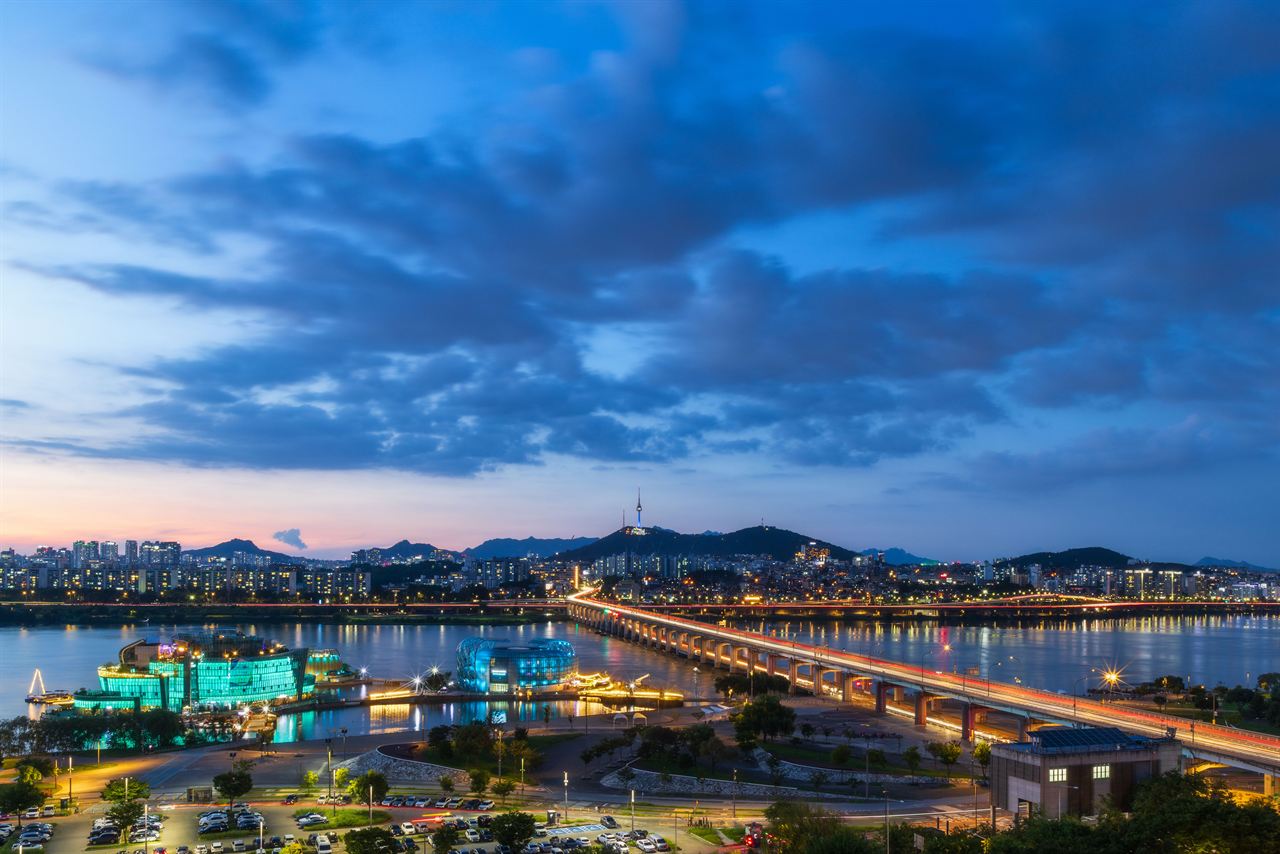
N Seoul Tower (105 Namsangongwon-gil, Yongsan-gu) is open year-round, with observatory hours of 10:30 AM–10:30 PM on weekdays and 10:00 AM–11:00 PM on weekends. Adult admission runs about 29,000 KRW (children and seniors about 23,000 KRW, 2025 pricing). Both the tower and the Namsan Cable Car that carries most visitors up the hill share the same crowd pattern — quietest on Tuesdays, busiest on Saturdays — so if flexibility allows, a weekday evening ascent gets you the skyline views without the line for the cable car ticket window. Sunset in October falls in the late afternoon, so a 5–6 PM cable car ride times nicely with both daylight and lit-up night views on the same trip.
Hyper-local picks worth the detour
If you’ve already done the palace-and-tower circuit on a previous trip, Ikseon-dong’s hanok-lined alleys and Bukchon Hanok Village both give you traditional-architecture photo opportunities with a fraction of Gyeongbokgung’s crowd density, especially on a weekday morning. For a nighttime alternative to the standard tourist trail, Cheonggyecheon Stream lit up after dark is a genuinely pleasant, crowd-light walk that most first-timers skip in favor of bigger-name sights.
Common Mistakes First-Timers Make Planning October in Seoul
Most October planning mistakes come from treating the month’s “average” weather as a single number instead of a range, or from underestimating how much logistics differ from a Western city trip.
Packing only for the “average” temperature. The 18–20°C average high sounds like light-jacket weather, but it masks a 10°C+ swing between a sunny 2 PM and a 7 AM subway commute. Travelers who pack based on the daytime average alone are consistently cold on evening festival visits or Han River walks — bring the scarf and the packable jacket even if the forecast looks mild.
Assuming Gyeongbokgung is open every day. It’s closed Tuesdays (with the closure shifting to the next business day if Tuesday is a holiday). Building a tight one-week itinerary without checking this means arriving to a locked gate and having to reshuffle an entire day’s plan on the spot.
Overpacking the itinerary across multiple cities. A common ask is squeezing Seoul, Busan, and Jeju — or Seoul plus several day trips — into four or five days. The travel time between cities (Busan is roughly 2.5–3 hours by KTX, Jeju requires a flight) eats a full day each way, so cramming in three destinations usually means seeing none of them properly. I’d rather do Seoul thoroughly plus one nearby day trip (Suwon, for example) than rush a multi-city loop.
Relying on Google Maps for walking and transit directions. Google Maps’ turn-by-turn transit routing is unreliable in Korea because of data restrictions; Naver Map or Kakao Map are what locals actually use, and they’re the only ones with accurate real-time bus and subway data. Arriving without one of these installed means missed connections and wrong exits at multi-line stations like Gyeongbokgung or Jamsil.
Not getting a T-money card immediately. Subway ticket machines and buses expect a rechargeable transit card, not cash fares tapped directly — a physical T-money card (available at any convenience store, about a few thousand KRW for the card itself plus top-up) or a WOWPASS (which also handles currency exchange) solves this on arrival. Showing up without one means fumbling with single-journey paper tickets at every station, which slows down a day that’s already packed with festival-hopping.
Skipping breakfast planning. Korean hotel breakfast isn’t a given the way it is in some countries, and many first-timers underestimate this. Convenience-store options plus chains like egg-sandwich shops fill the gap reliably and are everywhere near subway exits, so it’s less a “problem” than something worth knowing before your first jet-lagged morning.
Frequently Asked Questions
Is October a good time to visit Seoul?
Yes — October is widely considered one of the best months to visit Seoul, combining mild daytime temperatures (about 16–20°C), low rainfall (about 52mm for the whole month), and peak autumn foliage in the second half of the month. The main trade-off is that these same conditions make it one of the busiest tourist months, so popular sights like Gyeongbokgung are more crowded than in the off-season.
What should I wear in Seoul in October?
Layer for a temperature swing of roughly 10–13°C between midday and early morning: a light base layer, a mid layer like a sweater or hoodie, and a packable jacket for evenings. By late October, add a scarf and treat the evenings as genuinely cold rather than just “cool.” Comfortable walking shoes matter more than any single clothing item, given how much ground you’ll cover at palaces and parks.
Is Gyeongbokgung Palace open every day in October?
No — Gyeongbokgung is closed on Tuesdays (shifting to the next business day if a holiday falls on Tuesday). In September and October it’s open 9:00 AM to 6:00 PM with last admission at 5:00 PM, and it’s officially least crowded on Mondays and busiest on Saturdays.
Can I combine Seoul with Busan or Jeju in a short October trip?
It’s possible but tight, and most experienced travelers advise against squeezing both into a short window. Busan is about 2.5–3 hours away by KTX and Jeju requires a flight, so each add-on effectively costs a full travel day; a better use of a short trip is usually Seoul plus one closer day trip, like Suwon.
Do I need to book festival tickets in advance for October in Seoul?
Most of Seoul’s autumn festivals — the Silver Grass Festival, Seoul Autumn Festa, the K-Royal Culture Festival’s general palace access — are free or don’t require advance tickets, though special night-viewing sessions at palaces sometimes do sell out. It’s worth checking each festival’s official page a few weeks ahead, since Korean event details are typically finalized only about a month before the event.
In Conclusion
Seoul in October rewards travelers who plan around its two-phase climate rather than one average number: pack light layers for the first half of the month, a real jacket and scarf for the second, and build in flexibility for the mid-to-late-October foliage window rather than locking in a single date. Prioritize one or two festivals instead of chasing all of them, check Gyeongbokgung’s Tuesday closure before you build your itinerary, and get a T-money card and Naver or Kakao Map installed before your first subway ride. Do that, and October delivers what it’s known for — clear skies, comfortable walking weather, and some of the best color of the year at very little cost in rain or heat.
Discover more from Korea Visiting
Subscribe to get the latest posts sent to your email.