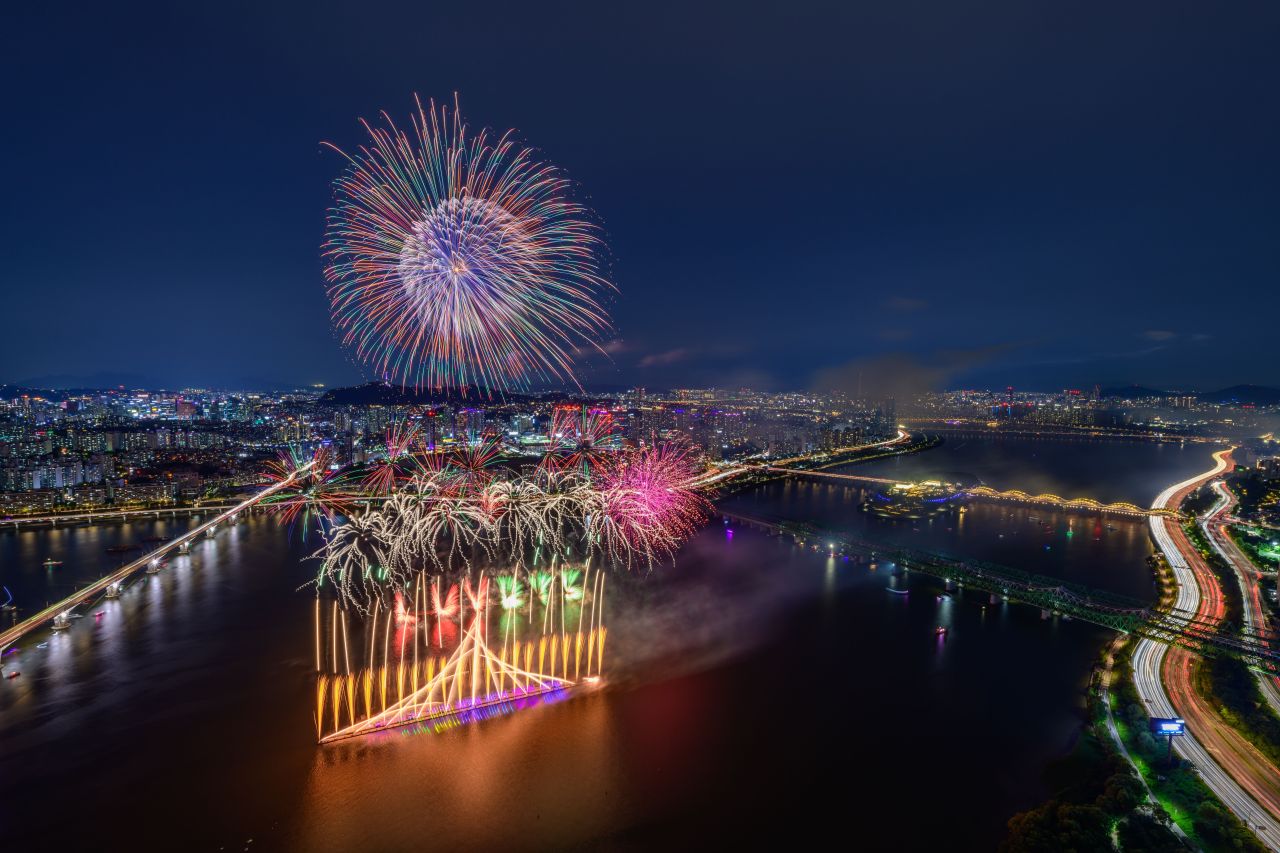
The Seoul International Fireworks Festival 2026 takes place on Saturday, September 5, 2026, along the Han River, and where you stand that evening will make or break your night. This is Seoul’s single biggest annual event — organized by Hanwha Group and pulling in over 1 million spectators — so the difference between a comfortable viewing spot and three hours stuck in a crowd crush comes down to planning, not luck. I’ve watched this festival unfold from several different vantage points over the years, and the pattern is consistent: the closer and more famous the spot, the earlier you need to claim it and the harder the exit becomes. This guide breaks down exactly where to watch, when the show starts, how to get in and out without getting stranded, and the mistakes that trip up nearly every first-time visitor.
Key Takeaways
- The 2026 festival is on Saturday, September 5, with the main fireworks display running roughly 8:00–9:10 PM.
- Yeouido Hangang Park is the main venue and the most crowded; Ichon Hangang Park and Nodeul Island offer solid views with noticeably less chaos.
- Avoid Yeouinaru Station on event day — it’s the closest stop but frequently closes or skips trains due to overcrowding.
- Free spots require arriving by early-to-mid afternoon (1:00–2:00 PM); paid options like Nodeul Island’s assigned seating cost about 110,000–165,000 KRW.
- Plan your exit route before the show ends — the post-fireworks subway crush is often worse than the crowd during the display itself.
What Is the Seoul International Fireworks Festival 2026?
The Seoul International Fireworks Festival 2026 is a free, single-night pyrotechnics event held over the Han River, with the main show launched from barges near Yeouido on Saturday, September 5, 2026. It’s organized by Hanwha Group and has grown into one of the largest fireworks displays in Asia, drawing teams from multiple countries who compete with choreographed sequences set to music.
The festival isn’t just the fireworks — daytime programs and fringe events typically start around 1:00 PM, with an opening ceremony around 7:00–7:20 PM leading into the main display, which usually runs about an hour, roughly 8:00 to 9:10 PM. Some years add an after-party or riverside clean-up campaign that stretches activity until closer to 9:30–11:00 PM. Exact 2026 program details beyond the main show timing are subject to official confirmation closer to the date, so treat the daytime schedule as a general planning guide rather than a fixed itinerary.
The official grounds are free to enter, but that “free” comes with a catch most first-timers underestimate — over a million people trying to occupy the same few kilometers of riverbank.

Best Viewing Spots Compared
There’s no single “best” spot for the Seoul International Fireworks Festival — the right choice depends on whether you prioritize proximity, comfort, or a quieter atmosphere. I’ve grouped the main options by what kind of experience they actually deliver, not just how close they sit to the launch barges.
Yeouido Hangang Park (Naver Map / Google Maps) — the main venue and closest to the barges. Pros: unobstructed, dead-center view; the daytime program stage is right here. Cons: the single most crowded location in the entire event, with the park physically filling up hours before the show. This suits fireworks purists who don’t mind sitting on a mat for five-plus hours to get the best angle in the house — I’d skip it if you’re traveling with young kids or anyone who gets anxious in dense crowds.
Ichon Hangang Park (Naver Map / Google Maps) — the official secondary viewing area, on the opposite bank near Yongsan. Pros: a genuinely good, slightly angled view of the same fireworks with meaningfully more breathing room than Yeouido, plus easy access from Ichon Station. Cons: still dense near the show, and the view is angled rather than head-on. My pick for anyone who wants a real festival atmosphere without the full Yeouido crush.
Nodeul Island (Naver Map / Google Maps) — sits mid-river between Yeouido and Ichon and offers both free lawn areas and a paid, assigned-seating zone. This is the closest thing to a “comfortable” option: elevated terraces, food and drink stands, and a shorter walk back to the subway than fighting through Yeouido’s crowd. Worth it if you’d rather pay for a guaranteed spot than gamble on arrival time.
Namsan Park and N Seoul Tower (Naver Map / Google Maps) — a distant, elevated alternative for anyone who wants the panoramic Seoul skyline shot rather than the up-close blast. Pros: no ground-level crowd crush at all, and the wide-angle view is genuinely striking for photos — this is where you get the “fireworks over the city” shot that circulates on Instagram, since the elevation puts the whole Han River basin and skyline in frame. Cons: you’re too far to hear or feel the show, and it’s not the same visceral experience. My pick for couples wanting a calmer, more romantic evening, or photographers chasing a skyline composition rather than a close-up burst shot.
Bridges like Mapo Bridge and Hangang Bridge also draw pedestrian crowds, but note that Yeouidong-ro — the road connecting the south end of Mapo Bridge to the 63 Building — is typically closed to vehicle traffic from about 2:00 PM to 10:00 PM on event day, so plan any bridge viewing as a walk-in, not a drive-by.
2026 Event Schedule and Program
The Seoul International Fireworks Festival 2026 runs on a single day, Saturday, September 5, 2026, with daytime programming from around 1:00 PM and the main fireworks display from roughly 8:00 to 9:10 PM. The opening ceremony typically kicks off around 7:00–7:20 PM, immediately before the main show, and some editions extend into an after-party or riverside clean-up campaign that can run until 9:30–11:00 PM.
If your only goal is the fireworks themselves, you don’t need to arrive at 1:00 PM sharp — but you do need a plan for when to lock in your spot, and that timing depends entirely on your chosen location (covered below). Treat any specific daytime program listing you find online as provisional until the organizers publish the final 2026 schedule closer to the event.
How to Get There and Back
Getting to the Seoul International Fireworks Festival is straightforward; getting away from it afterward is the part that actually needs planning. For daytime arrival, Yeouido Station (Line 5 and Line 9), Saetgang Station (Line 9), and Mapo Station (Line 5) are the recommended entry points for Yeouido Hangang Park — all three sit far enough from the epicenter that trains still run normally through the afternoon. For Ichon Hangang Park, use Sinyongsan Station (Line 4) or Ichon Station (Line 1 and 4).
Skip Yeouinaru Station (Line 5) on event day if you can. It’s the closest stop to the main venue, which is exactly why it becomes a bottleneck — expect closures or trains skipping the stop entirely once crowd density crosses a safety threshold, something Seoul Metro does routinely at mega-events like this. I’d treat “closest station” and “fastest way in” as two different things here; walking an extra 10–15 minutes from Yeouido or Mapo Station is almost always faster than gambling on Yeouinaru staying open.
The return trip is where most visitors get caught off guard. When 1 million-plus people try to leave the same riverside area within a 30-minute window, every nearby station backs up simultaneously. My honest advice: don’t rush for the first train out. Walk 10–15 minutes away from the river toward a side-street café or convenience store, let 45 minutes to an hour pass, and then head to the subway — by then the platform crush has usually thinned to something manageable. Taxis and buses are essentially unusable in this window because the surrounding roads, including the Yeouidong-ro closure near Mapo Bridge (roughly 2:00 PM–10:00 PM), are either shut or gridlocked.
Free Viewing vs Paid Seating
Watching the Seoul International Fireworks Festival is free everywhere along the public riverbank, but paid options exist for travelers who’d rather guarantee a spot than compete for one. The free route means claiming ground space at Yeouido or Ichon Hangang Park — realistically by early-to-mid afternoon, around 1:00–2:00 PM, if you want anything better than a distant sliver of a view. That’s not an exaggeration; the park fills from the front, and by late afternoon the closer sections are simply gone.
For 2026, organizers also ran a free lottery for reserved viewing — the “Golden Ticket” draw through the LifePlus Tribe app — with entries closing August 23, 2026. If you’re reading this before a future year’s deadline, it’s worth applying, since winners get assigned viewing areas without the all-day sit-and-wait. If that window has already closed for the year you’re reading this, watch for the same lottery format to return in subsequent editions.
The paid alternative is Nodeul Island’s premium seating, such as the Orange Play Zone, with assigned seats running about 110,000 to 165,000 KRW as of 2026. This is worth it if your evening is short on time or patience — you show up closer to showtime, sit in a confirmed spot, and skip the multi-hour ground-claiming ritual entirely. Some hotels and river cruises along the Han also sell fireworks-viewing packages, though pricing and availability shift year to year, so check directly with the operator rather than relying on last year’s rates.
Common Mistakes First-Timers Make
The single biggest mistake is underestimating how early “early” needs to be — showing up at 4 or 5 PM expecting to find lawn space near Yeouido Hangang Park, when the closer sections have often been claimed since early afternoon. The mechanism is simple: with over a million attendees funneling into a few kilometers of riverbank, space fills from the front outward, and by mid-afternoon the only remaining ground is at the back, often with a partially blocked sightline.
The second mistake is heading straight for Yeouinaru Station after the show because it’s the “closest” stop. It’s frequently the first station to close or skip trains once crowd density spikes, which means you can end up walking further anyway, plus waiting in a station that’s not even taking passengers. Building in a buffer stop at Yeouido or Mapo Station saves real time.
The third mistake is not planning a distinct exit strategy from the entry route. Many roads that were open for pedestrian access earlier in the day — including the Yeouidong-ro stretch near Mapo Bridge — are closed to vehicles for the event window, so a taxi or rideshare pickup near the venue simply isn’t an option post-show. If you’re not walking to a working subway station, you’re not leaving quickly.
Finally, trash disposal trips up a surprising number of international visitors. Korean event etiquette expects you to pack out what you bring or use the designated bins near park facilities rather than leaving mats, food containers, or bottles on the lawn — cleanup crews and other attendees notice, and abandoned trash is one of the most visible signs of a first-timer at Korean outdoor festivals. Bring a small trash bag, and you’ll blend in rather than stand out.
Frequently Asked Questions
Where are the best places to watch the Seoul International Fireworks Festival?
Yeouido Hangang Park offers the closest, most direct view but is also the most crowded. Ichon Hangang Park and Nodeul Island give a strong view with meaningfully less congestion, while Namsan Park and N Seoul Tower suit travelers who want a distant, panoramic skyline shot instead of an up-close experience.
Do I need a ticket or have to camp overnight for a good spot?
No overnight camping is required — free viewing along the public riverbank is open to everyone, but arriving by early-to-mid afternoon (around 1:00–2:00 PM) is necessary for a decent free spot. If you’d rather skip the wait entirely, the Nodeul Island premium seating area sells assigned seats for a fee, and a free lottery for prime spots has run in past years via the LifePlus Tribe app.
Is the Seoul International Fireworks Festival free?
Yes, entry to the public viewing areas along the Han River is free. Fees only apply to optional extras like assigned premium seating on Nodeul Island, river cruise packages, or hotel room views.
How crowded is the subway after the fireworks end?
Extremely crowded — with over a million attendees leaving the riverside area within roughly the same 30–60 minute window, nearby stations back up fast. Waiting 45 minutes to an hour at a nearby café before heading to the subway, rather than rushing out immediately, usually results in a far less stressful ride.
Which subway station should I avoid on event day?
Avoid Yeouinaru Station (Line 5) if possible — it’s the closest stop to the main venue but is frequently closed or skipped by trains due to severe crowding. Yeouido Station, Saetgang Station, and Mapo Station are more reliable entry and exit points.
In Conclusion
The Seoul International Fireworks Festival 2026 rewards planning over spontaneity. If you want the closest possible view and don’t mind a long sit, claim ground at Yeouido Hangang Park by early afternoon on September 5, 2026. If you’d rather trade a bit of proximity for comfort, Ichon Hangang Park or Nodeul Island’s paid seating are the smarter picks — and if you just want the iconic skyline photo, Namsan Park or N Seoul Tower will do it without any crowd fight at all. Whichever spot you choose, build your exit plan before the show even starts: skip Yeouinaru Station, expect the Yeouidong-ro closure near Mapo Bridge, and let the crowd thin for 45 minutes to an hour before heading underground. Get those three decisions right — where to sit, when to arrive, and how to leave — and this becomes one of the most memorable nights Seoul has to offer rather than a logistical headache.
Discover more from Korea Visiting
Subscribe to get the latest posts sent to your email.