Figuring out the best things to do in Yongsan, Seoul is trickier than it looks, because this district doesn’t fit into a single neat category — it’s part military history, part K-pop pilgrimage site, part hipster café alley, and part riverside park, all spread across an area too large to walk in one go. First-timers often show up expecting a compact, Instagram-ready neighborhood like Bukchon or Ikseondong, then realize the National Museum of Korea sits nearly two kilometers from Yongnidan-gil, and that Yongsan Station and Sinyongsan Station — despite the similar names — are entirely different stops. I’ve mapped out the district’s real geography and subway logic so you don’t waste half a day figuring out which exit to use or how far the next stop actually is. Below is a working list of the ten spots worth building a Yongsan day around, plus the transit details, admission notes, and common missteps that trip up visitors doing this for the first time.
Key Takeaways:
- Yongsan splits into distinct clusters — museums near Ichon/Samgakji, nightlife-adjacent cafés at Yongnidan-gil, and Haebangchon near Noksapyeong — so plan by cluster, not by walking between all of them.
- The National Museum of Korea and The War Memorial of Korea both offer free permanent-exhibition admission, making Yongsan one of the most budget-friendly museum days in Seoul.
- Yongsan Station (Line 1, KTX) and Sinyongsan Station (Line 4) are commonly confused despite being a short walk apart.
- HYBE Headquarters is a working office, not a museum — don’t plan a special trip expecting a tour.
- Naver Map, not Google Maps, is the reliable navigation tool for walking directions and bus routes here.
National Museum of Korea at a Glance
- Why visit: It’s Korea’s largest museum and the anchor of any Yongsan itinerary, covering thousands of years of Korean history in one visit.
- What you’ll see: Bronze-age artifacts, Goryeo celadon, Joseon royal treasures, a dedicated Children’s Museum, and outdoor grounds with stone pagodas too large for indoor display.
- Getting there: Take Line 4 or the Gyeongui-Jungang Line to Ichon Station and use Exit 2 — the museum connects directly via an underground passage, so you barely surface into traffic.
- Tickets and admission: Permanent exhibitions are free; special traveling exhibitions require a separate paid ticket, bookable through the museum’s own reservation page.
- Tips from past visitors: The building itself is enormous — plan at least two hours if you want to see more than the highlights, and don’t skip the outdoor courtyard, which many rushed visitors miss entirely.
- Nearby spots worth combining: Yongsan Family Park sits right by the museum grounds, making it an easy add-on for a picnic or a walk after the galleries.

The War Memorial of Korea: Korea’s Military History Up Close
The War Memorial of Korea gives visitors a sobering, detailed look at the Korean War and Korea’s broader military history, and it’s free to enter — a fact many first-timers don’t realize until they’re already at the gate. Reach it via Samgakji Station (Line 4 or 6), Exit 12, which puts you almost directly at the entrance without a long walk. Inside, six halls cover everything from the Expeditionary Forces Room to a Large Machinery Room stacked with tanks and aircraft, and the outdoor plaza displays fighter jets and armored vehicles kids tend to gravitate toward immediately. What surprises most first-time visitors is the scale — this isn’t a small memorial hall but a genuinely full museum, and rushing through in under an hour means missing most of the roughly 10,000 artifacts on display. I’d pair this with the National Museum of Korea only if you’re comfortable with a full museum-heavy day; back-to-back, both venues easily add up to four or five hours on your feet.
Is Yongsan Worth a Full Day, or Just a Few Hours, for First-Timers?
Yongsan rewards a full day if you’re interested in museums, café culture, and quiet river views, but it’s easy to condense into a half-day if your Seoul itinerary is tight. The honest tension here is that Yongsan doesn’t have one obvious “must-see” the way Gyeongbokgung or Bukchon does — its appeal is spread across several distinct experiences that don’t naturally connect on foot. If you only have a few hours, I’d pick one cluster rather than trying to sample all of it: either the museum pair (National Museum of Korea plus War Memorial of Korea), or the café-and-view combo of Yongnidan-gil and Haebangchon. Trying to do both clusters plus Yongsan Electronics Market and Nodeul Island in one day is where most visitors run out of energy — the district covers several kilometers north to south, and subway transfers between clusters eat more time than the walking distances suggest on a map.
Leeum Museum of Art and Amorepacific Museum of Art: Yongsan’s Art Scene
Yongsan’s two flagship art museums, Leeum Museum of Art and Amorepacific Museum of Art (APMA), draw visitors as much for the architecture as for the exhibitions inside. Leeum, reachable via Hangangjin Station (Line 6), Exit 1, houses both traditional Korean art and a serious contemporary collection, with ticket prices that vary by the current exhibition rather than a flat entry fee. APMA sits inside the Amorepacific headquarters near Sinyongsan Station (Line 4), Exit 1 or 2, and is worth visiting for the building alone — a minimalist white cube designed by David Chipperfield that photographs beautifully even from the plaza outside. Tickets here are also exhibition-dependent, so I’d check what’s currently showing before committing, since the value shifts a lot depending on whether a major touring show is up. First-timers sometimes assume these are free like the National Museum; budget for a ticket at both.
Leeum: Naver Map | Google Maps
APMA: Naver Map | Google Maps
Yongnidan-gil: Cafes and Boutiques Along Yongsan’s Trendiest Alleys
Yongnidan-gil is where Yongsan’s café-hopping crowd concentrates, a cluster of narrow alleys packed with independent coffee shops, small boutiques, and design-forward eateries that have taken over what used to be a quiet residential slope. It’s accessible from Sinyongsan Station (Line 4), Samgakji Station (Line 4, 6), or Yongsan Station, and honestly the walk-up itself — a gentle incline past low-rise buildings turned into storefronts — is part of the appeal. What’s currently pulling in visitors, beyond the general café scene, are a handful of specific spots getting heavy social-media attention: a Ghibli-themed café called Dotori Yongsan, a photogenic dessert spot known as Sam Sam Sam, and Teddy Beurre House, a bear-themed bakery with a distinctly whimsical interior. I’d treat these as bonus stops rather than the main plan — they’re small, seating is limited, and lines form fast once a place gets attention online, so check current wait times on Naver Map before making a special trip. The broader alley has enough variety that missing one specific café isn’t a real loss.
Haebangchon: Rooftop Namsan Views and Sunset Walks
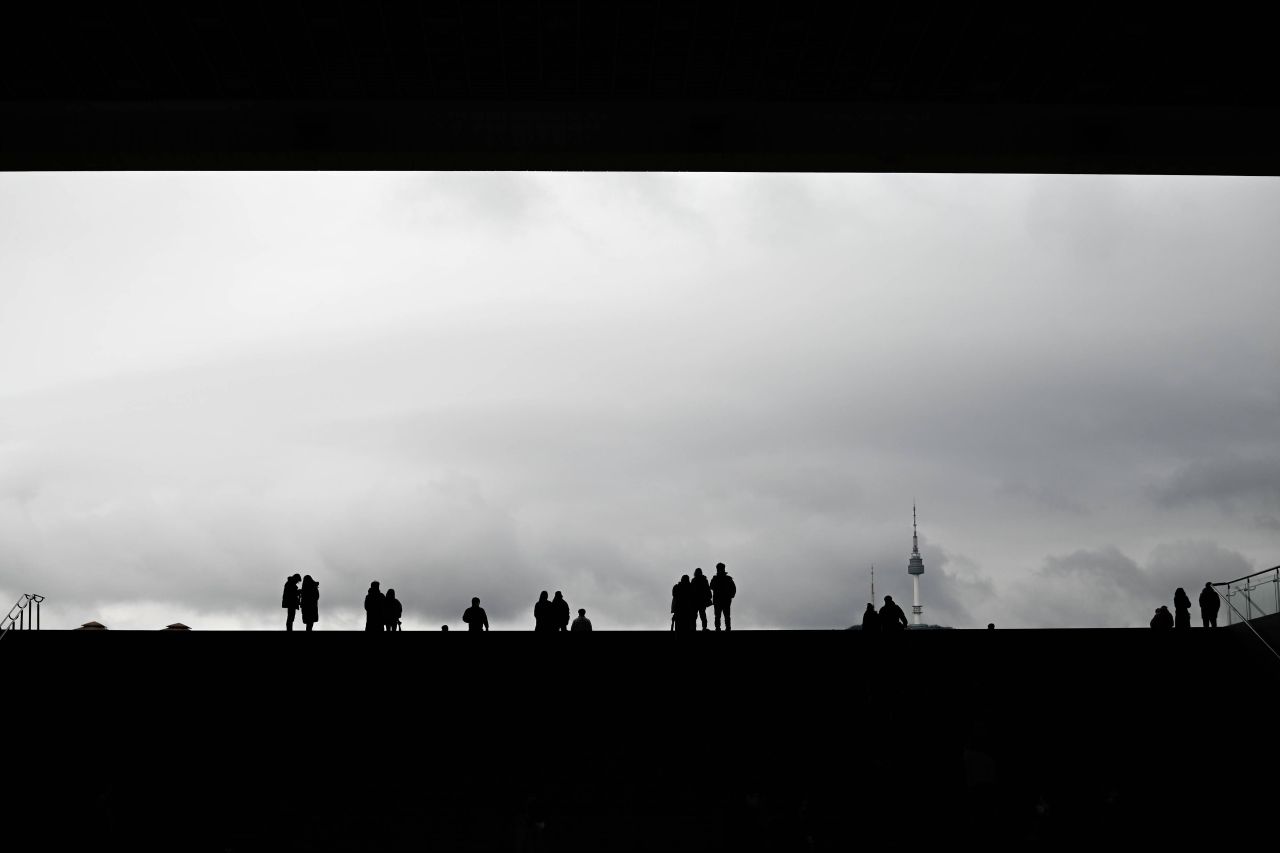
Haebangchon, or HBC, is Yongsan’s hillside neighborhood known for rooftop bars and restaurants with unobstructed views of Namsan Tower, and it draws a different crowd than Yongnidan-gil — longer-term expats and a more low-key evening scene rather than daytime café tourism. Get there via Noksapyeong Station (Line 6), Exit 2, either walking uphill directly or catching the local green bus Yongsan02 if you’d rather skip the incline. The neighborhood’s real draw is timing: arrive an hour before sunset and you’ll catch the tower lighting up as the sky shifts, which is the exact window most rooftop spots fill up fastest. What catches first-timers off guard is how residential and unpolished HBC feels compared to more manicured tourist areas — narrow sloped streets, a mix of old low-rise housing and newer bars, and a genuinely lived-in texture rather than a curated strip. It pairs naturally with Itaewon, which sits just one stop away and shares the same general nightlife orbit.
I’Park Mall and Yongsan Station: Shopping, Dining, and KTX Transfers
I’Park Mall is Yongsan’s main shopping and dining hub, directly connected to Yongsan Station (Line 1, KTX) — Sinyongsan Station (Line 4) is a separate stop about a kilometer away and is not directly connected to the mall — which makes it one of the most convenient stops in the district for anyone also catching a KTX train elsewhere in Korea. Entry to the mall itself is free, and it functions as a practical rest stop as much as a shopping destination — food courts, a cinema, and a wide spread of Korean and international brands under one roof. I’d use it less as a dedicated destination and more as a logical stopover if you’re already passing through Yongsan Station, especially on a day when weather makes the outdoor neighborhoods less appealing. The direct KTX connection also makes this a sensible last stop before heading to Busan or other regions, since you can shop or eat right up until boarding.
Yongsan Electronics Market: Seoul’s Tech Bazaar
Yongsan Electronics Market is a sprawling multi-building bazaar of electronics vendors that’s less polished than a modern mall and more like a browsing-and-bargaining experience carried over from an earlier era of Seoul shopping. Free to enter, it’s accessible via Yongsan Station (Line 1, Gyeongui-Jungang Line), Exit 3, and spreads across several separate buildings, each with dozens of small independent stalls rather than one unified store layout. What first-timers underestimate is how much price and product legitimacy varies stall to stall — this isn’t a fixed-price retail environment, so comparing a few vendors before buying, and confirming warranty terms directly with the seller, matters more here than in a standard electronics store. I wouldn’t come here expecting rock-bottom deals on mainstream gadgets the way the market’s reputation once suggested; it’s more interesting now as a browsing experience and for niche components or secondhand gear than as a guaranteed bargain destination.
Ichon Hangang Park and Yongsan Family Park: A Green Escape by the Han River
Ichon Hangang Park and Yongsan Family Park give visitors a break from Yongsan’s museum-and-shopping density with open riverside lawns and shaded walking paths, both free to access. Ichon Hangang Park is reachable via Ichon Station (Line 4 or Gyeongui-Jungang Line), Exit 4, with a five-to-ten-minute walk to the riverbank, while Yongsan Family Park connects via the same station’s Exit 2, sitting close enough to the National Museum area that combining the two is easy. The family park in particular works well as a wind-down after museum hours — flatter, quieter, and shaded compared to the open riverside promenade, which gets more sun exposure and cyclist traffic. I’d bring a mat or blanket if you’re planning to sit for a while, since bench seating is limited relative to the park’s size, and evenings here draw a steady mix of joggers, families, and picnicking groups once the day’s heat breaks.
Nodeul Island: A Quiet Escape on the Han River
Nodeul Island is a small, free-admission island in the middle of the Han River that’s been converted into a low-key cultural space with a music venue, café, and open lawn areas, offering a noticeably quieter alternative to Yongsan’s busier attractions. Get there via Nodeul Station (Line 9), Exit 2, then walk across the pedestrian bridge connecting the station directly to the island. What makes it worth the detour is the contrast — after the density of Yongsan Electronics Market or the crowds around I’Park Mall, Nodeul Island feels almost empty, with river views on both sides and none of the foot traffic you’d expect this close to central Seoul. It’s not a major sightseeing stop with a long list of things to do, so I wouldn’t build a whole day around it, but as a 30-to-60-minute add-on for river views or a quiet coffee, it’s a solid choice, especially if you’re already near Line 9.
HYBE Headquarters: A Stop for K-pop and BTS Fans
HYBE Headquarters draws a steady stream of fans, particularly BTS fans, who come to photograph the exterior of the building, but it’s important to set expectations correctly: this is a working corporate office with no public admission, museum, or scheduled tours. Reach it via Sinyongsan Station (Line 4) or Samgakji Station (Line 4, 6). What trips up first-timers is assuming there’s some kind of visitor center or gift shop attached — there isn’t a consistent one, and any pop-up events or fan experiences are announced separately and aren’t guaranteed to coincide with your visit. I’d treat this as a five-to-ten-minute photo stop folded into a Yongnidan-gil visit rather than a standalone destination, since the building itself offers little beyond the exterior view, and traveling here specifically without checking for current events risks a disappointing, empty-handed stop.
Getting to Yongsan and Around: Subway Lines for Every Stop on This List
Yongsan is unusually well-connected for a district this spread out, served by Line 1, Line 4, Line 6, Line 9, the Gyeongui-Jungang Line, and KTX trains through Yongsan Station, but that same connectivity means you’ll be switching lines frequently rather than walking between attractions. The museum cluster (National Museum, War Memorial) sits closer to Ichon and Samgakji stations, the café-and-nightlife cluster (Yongnidan-gil, Haebangchon) centers on Sinyongsan and Noksapyeong, and the river-facing spots (Ichon Hangang Park, Nodeul Island) each need their own station. I’d map out which cluster you’re prioritizing before leaving your hotel rather than trying to string all of Yongsan together on foot — the distances look shorter on a map than they feel in practice, especially on a hot or rainy day. Subway cars through this area get noticeably crowded during the evening rush around 5 to 6 p.m., so if you’re heading out for Haebangchon’s sunset views, expect a tighter ride than earlier in the day. For walking directions and bus routes once you’re above ground, Naver Map consistently outperforms Google Maps in Korea and is worth having installed before you land.
Common Mistakes When Planning Things to Do in Yongsan, Seoul
The single biggest mistake is confusing Yongsan Station and Sinyongsan Station — they sound almost identical, but Yongsan Station (Line 1, KTX, I’Park Mall) sits roughly a kilometer from Sinyongsan Station (Line 4, near Yongnidan-gil and HYBE), and typing the wrong one into a taxi or map app adds a real, avoidable detour. Another recurring error is treating Yongsan as one walkable cluster the way Bukchon or Insadong function — it isn’t; the museums, the café alleys, and the riverside parks are separated by enough distance that walking between all of them in one day burns hours you could spend actually enjoying each spot. Visitors also frequently assume HYBE Headquarters offers some kind of visitor experience beyond the building’s exterior, only to find a standard office lobby with no public access. At Yongsan Electronics Market, first-timers sometimes expect fixed, clearly marked pricing the way a department store operates, then get frustrated when quotes vary stall to stall — that variability is baked into how the market has always worked, not a sign of being overcharged. Finally, arriving at Haebangchon’s rooftop spots right at sunset without checking ahead often means finding the best-positioned seats already taken, since that’s the exact hour locals and regulars target too.
Frequently Asked Questions
Is Yongsan worth visiting if I only have a few days in Seoul?
It’s worth a half-day for most itineraries, especially if you’re drawn to museums or café culture, but it’s not usually the top priority for a first, very short trip focused on palaces and traditional neighborhoods. If your schedule is tight, pick one cluster — either the museums or Yongnidan-gil and Haebangchon — rather than trying to cover all ten spots in a single visit.
Is Yongsan a safe area for tourists, including solo travelers?
Yes, Yongsan is generally considered a safe, central district and works well as a home base for exploring Seoul by public transport. It has less concentrated nightlife than areas like Hongdae, so solo travelers looking for an active evening scene may find themselves traveling one or two stops to Itaewon or elsewhere after dark.
How do I get from Yongsan to Itaewon or Myeongdong?
Itaewon is essentially adjacent to Yongsan and reachable in a few minutes by subway or a manageable walk from Haebangchon. Myeongdong takes roughly 15 to 20 minutes by subway from Yongsan Station, typically involving one transfer depending on your starting point within the district.
Can I see the museums and Yongnidan-gil in one day?
It’s possible but ambitious — the museum cluster and the café cluster sit far enough apart that you’ll need a deliberate subway transfer between them, not a walk. I’d plan museums in the morning, then head to Yongnidan-gil or Haebangchon in the afternoon and evening once energy for reading exhibit placards runs low.
Are Leeum and Amorepacific museums worth paying for?
They’re worth it if you’re genuinely interested in contemporary art or architecture, since both museums are known as much for their building design as their collections. If your budget is focused on free attractions, the National Museum of Korea and War Memorial of Korea already cover Yongsan’s most substantial permanent-exhibition content at no cost.
In Conclusion
Yongsan rewards visitors who plan by cluster rather than trying to walk the whole district in one stretch. Start with the free museum pair — the National Museum of Korea and The War Memorial of Korea — if history is your priority, then dedicate a separate block of time to Yongnidan-gil’s cafés and Haebangchon’s sunset views over Namsan Tower. Save Yongsan Electronics Market, I’Park Mall, and the riverside spots at Ichon Hangang Park or Nodeul Island for whenever they fit your route naturally, rather than forcing all ten stops into a single day. Double-check whether you need Yongsan Station or Sinyongsan Station before you head out, keep Naver Map handy for walking directions, and you’ll spend far more time enjoying Yongsan than figuring out how to get around it.
Discover more from Korea Visiting
Subscribe to get the latest posts sent to your email.