Stepping off the subway at Ichon Station, most first-time visitors to the National Museum of Korea have no idea whether they’re walking into a quick one-hour stop or a half-day commitment — and that uncertainty is exactly what trips people up. The museum is one of the largest in Asia, its galleries wrap around three floors and multiple wings, and without a rough plan, it’s easy to wander for twenty minutes just looking for the entrance, let alone the artifacts you actually came to see. Add in questions about whether you need to buy a ticket, when the crowds thin out, and how to get there without getting lost in Yongsan-gu, and a visit that should feel relaxing can start to feel like homework. The good news is that most of these uncertainties have consistent, predictable answers once you know where to look.
Key Takeaways
- Permanent exhibitions and the Children’s Museum are free to enter; only select special exhibitions charge a separate fee.
- Ichon Station (Line 4 / Gyeongui-Jungang Line), Exit 2, is about a 5-minute walk to the museum entrance.
- Thursdays run the lightest crowds; Saturdays are consistently the busiest day of the week.
- Extended evening hours on Wednesdays and Saturdays are the best window for a quieter, unhurried visit.
- The Room of Quiet Contemplation, home to the Pensive Bodhisattva, is the one gallery locals and repeat visitors say not to skip.
📍 National Museum of Korea — Essential Information
| Address | 137 Seobinggo-ro, Yongsan-gu, Seoul |
| Website | www.museum.go.kr |
| Best time to visit | Least crowded on Thursdays; busiest on Saturdays (Korea Tourism Organization crowd forecast) |
| Map | Google Maps · Naver Map |
National Museum of Korea at a Glance
Why visit: It’s the country’s flagship museum of Korean history and art, built to give first-time visitors a single, comprehensive introduction to everything from prehistoric artifacts to royal court treasures — all without paying an admission fee.
What you’ll see and experience: Expect sweeping permanent galleries covering archaeology, history, and fine arts, an outdoor plaza with stone pagodas too large to display indoors, rotating special exhibitions, and a dedicated Children’s Museum built around hands-on learning rather than glass cases.
Getting there: The museum sits in Yongsan-gu, reachable by a short walk from Ichon Station on Line 4 or the Gyeongui-Jungang Line — most visitors coming from central Seoul or Gangnam can get there directly by subway in well under 30 minutes.
Tickets and admission: Entry to the permanent exhibitions and the Children’s Museum is free; only temporary special exhibitions require a separate paid ticket, so budget extra time (and possibly a small fee) if a special show is running during your visit.
Tips from past visitors: Pick two or three galleries that genuinely interest you instead of trying to cover the whole museum, use the free lockers near the entrance to travel light, and go later in the afternoon if you want the galleries to yourself.
Nearby spots worth combining: The museum sits within its own park-like grounds, with the outdoor stone pagoda area and open lawns making a natural spot to decompress before or after the indoor galleries — a good option if you want fresh air between exhibits rather than a rushed exit.

How to Get to the National Museum of Korea from Ichon Station
The fastest, least confusing route to the National Museum of Korea is the subway to Ichon Station, followed by a flat, well-signed five-minute walk from Exit 2. Both Line 4 and the Gyeongui-Jungang Line stop here, which means you can reach it directly from most parts of the city without a transfer if you’re starting near a Line 4 or Gyeongui-Jungang stop — including popular bases like Myeongdong, Seoul Station, or Hongdae. Once you’re above ground, signage in English and Korean points you straight toward the museum plaza, so there’s little room to get turned around, unlike some of Seoul’s more maze-like station exits.
If you’re coming from areas not served by these lines, transferring once at a major hub like Seoul Station or Yongsan Station is usually the most efficient option; the walk from Ichon Station remains short regardless of which direction you’re arriving from. Local buses also serve the area for travelers staying nearby, though the subway remains the most predictable choice, especially if you’re unfamiliar with Seoul’s bus routing. Taxis are an option too, but during weekday rush hours the surrounding roads can be slow, so the subway usually wins on both time and cost. Because the walk from the station is short and mostly flat, it’s also a manageable route for visitors traveling with strollers or older family members.
National Museum of Korea Admission: What’s Free and What Isn’t
Admission to the National Museum of Korea’s permanent exhibitions and the Children’s Museum is free, which is a major reason it draws such a steady stream of both tourists and local families. This covers the vast majority of what most visitors come to see — the core historical and art galleries, the outdoor pagoda displays, and the children’s learning spaces all fall under general admission, though advance reservations are required for the Children’s Museum.
Where a fee applies is the museum’s rotating special exhibitions, which showcase borrowed or themed collections not part of the permanent display. These require a separate paid ticket, and pricing varies by exhibition — some can run up toward the equivalent of USD 15 for higher-profile shows. If you’re not specifically drawn to whatever special exhibition happens to be running during your visit, you can skip the paid ticket entirely and still have a full, satisfying day in the free permanent galleries. Check the museum’s official reservation page ahead of time if a particular special exhibition is the reason for your trip, since popular shows can have limited daily capacity.
Best Time to Visit the National Museum of Korea to Avoid Crowds
The National Museum of Korea is consistently least crowded on Thursdays and busiest on Saturdays, based on relative visitor concentration data, so shifting a weekend trip to a weekday — especially Thursday — makes a noticeable difference in how much breathing room you get in each gallery. Even on a Saturday, timing your visit strategically can offset the crowds: mornings tend to fill up first with school groups and organized tours, so arriving after 3 PM on any day of the week is a widely repeated tip among visitors looking for a calmer experience, particularly in the Room of Quiet Contemplation and other flagship galleries where crowds cluster.
The museum’s extended evening hours on Wednesdays and Saturdays are arguably the single best tool for avoiding congestion. Because most tour groups and families with young children tend to visit earlier in the day, the later evening slots on these two days let you see the same collection with a fraction of the foot traffic — and with softer natural light fading outside, the atmosphere in the galleries shifts noticeably from bustling to contemplative. If your schedule is flexible, pairing a Wednesday or Saturday evening visit with a late-afternoon arrival is the most effective combination for a quieter, more unhurried experience. Seasonally, expect heavier crowds during summer vacation weeks and around major domestic holidays when families are off work and school is out, so if your travel dates overlap with these periods, leaning even harder into the weekday-afternoon or extended-evening strategy pays off.
The Room of Quiet Contemplation and Other Must-See Highlights
The Room of Quiet Contemplation on the second floor is the gallery most visitors — first-timers and repeat guests alike — say is the one thing not to miss, largely thanks to its centerpiece: the Pensive Bodhisattva, a pair of gilt-bronze meditative figures displayed in a hushed, deliberately minimalist space designed to slow you down rather than rush you through. The room’s low lighting and circular layout are intentional, encouraging visitors to sit with the piece rather than snap a quick photo and move on, and it’s frequently cited as the most emotionally resonant stop in the entire museum.
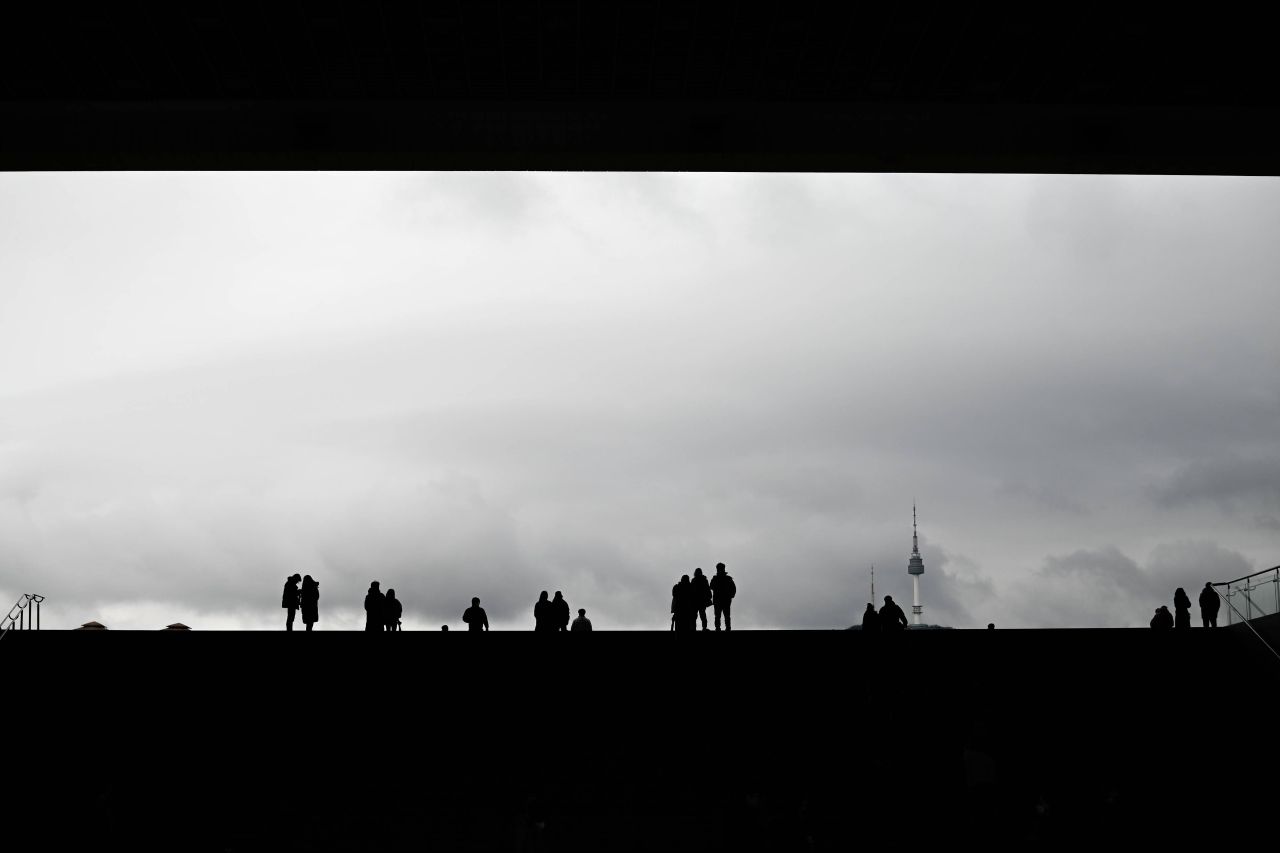
Beyond that single room, the museum’s main hall is home to a towering, intricately carved stone pagoda displayed indoors — one of the most photographed spots in the building, especially when framed against the museum’s glass-and-stone architecture. Outside, the plaza and surrounding grounds hold additional large-scale stone artifacts, including pagodas too massive to fit inside, giving you a reason to step outdoors even if you came purely for the indoor galleries. The museum’s iconic exterior view — the building framed with Namsan Tower visible in the distance — is another frequently photographed moment, best caught from the approach path leading up to the main entrance. Given the sheer scale of the collection, most visitors find it far more satisfying to deliberately choose a handful of galleries — Quiet Contemplation plus one or two historical periods that interest you — rather than attempting a comprehensive sweep in a single visit.
Digital and Immersive Galleries Worth Knowing About
Alongside its traditional collection, the National Museum of Korea has expanded into digital and immersive formats that give visitors a different way to engage with the same history, and these spaces are worth building into your route if you enjoy more interactive museum experiences. Digital gallery installations use large-scale projections and screens to reinterpret select artifacts and historical scenes, offering a change of pace from the static display cases that make up most of the museum. These areas tend to draw shorter dwell times and lighter crowds than the marquee physical galleries, making them a comfortable stop if you need a break from denser foot traffic elsewhere in the building.
These digital and immersive spaces are generally included as part of general admission rather than requiring a separate ticket or advance booking, though specific installations and content can rotate, so it’s worth checking signage on-site for what’s currently running during your visit. If you’re traveling with kids or teens who might find traditional artifact galleries less engaging on their own, pairing a stop in these interactive spaces with the Children’s Museum tends to hold their attention far better than the historical galleries alone.
Visiting the National Museum of Korea with Kids
Families consistently rate the National Museum of Korea as a strong choice for children, particularly through its dedicated Children’s Museum, which is built around hands-on activities and simplified historical storytelling rather than static displays behind glass. It works well for a fairly wide age range — younger children engage with the tactile, activity-based exhibits, while older kids and pre-teens tend to get more out of the main historical galleries once paired with a bit of guided explanation. As with the general museum, entry to the Children’s Museum is free, though it uses timed entry slots that are best reserved online in advance, since slots can fill up during busy periods.
Because the main building is so large, families often do best by treating the visit in two shorter blocks rather than one long stretch — starting in the Children’s Museum or one accessible gallery, then taking a break in the outdoor plaza before deciding whether to continue. The museum is also a practical choice on cold or rainy days in Seoul, since nearly the entire experience is indoors and self-paced, letting families move at a child’s speed without weather working against them.
Planning Your Visit: Time Needed, Lockers, and the Museum Shop
A focused visit to the National Museum of Korea realistically takes two to three hours if you stick to a few chosen galleries, while a more thorough visit covering multiple wings, the Children’s Museum, and a special exhibition can easily fill half a day. Given the museum’s scale, most repeat visitors recommend deciding on your priority galleries before you arrive rather than improvising once inside, since it’s easy to lose an hour simply navigating between wings.
Free lockers are available near the entrance, which is worth using if you’re carrying luggage, shopping bags, or bulky coats — traveling light through the galleries makes the whole visit noticeably more comfortable, especially since bag checks are part of the security screening at entry. Before you leave, the museum’s gift shop is worth a quick browse, stocking design-forward, Korean-themed items that go beyond typical souvenir fare — a good last stop if you’re looking for a gift that doesn’t feel generic. If you’re deciding how to split your time against another Yongsan-area attraction, note that the National Museum of Korea leans toward art, archaeology, and cultural history, while a wartime-focused museum elsewhere in the district covers a narrower, more specific slice of modern history — worth factoring in if you only have time for one.
A Simple First-Visit Route Through the Permanent Galleries
If you only have two to three hours, follow the permanent galleries in chronological order instead of wandering by wing:
- Prehistory and ancient Korea: start with the Silla gold crowns, where most visitors end up staying longer than planned.
- Buddhist sculpture: Unified Silla and Goryeo statues in a softly lit gallery that naturally slows your pace.
- Ceramics: compare the jade-green Goryeo celadon with the plain white Joseon porcelain.
- Joseon paintings: genre scenes by Kim Hong-do and Shin Yun-bok show everyday markets, meals and leisure.
Afterward, the outdoor gardens and Mirror Pond are a good place to rest before your next stop.
Frequently Asked Questions
Is the National Museum of Korea worth visiting if I’m not usually into museums?
Yes — the scale and variety of the collection mean there’s almost always something that lands, from the meditative Room of Quiet Contemplation to the hands-on Children’s Museum. Visitors who aren’t typically museum-goers often say picking just two or three galleries, rather than trying to see everything, is what makes the visit enjoyable rather than exhausting.
Is the National Museum of Korea crowded on weekdays?
It’s generally quieter on weekdays than weekends, with Thursday standing out as the least crowded day based on visitor concentration data. Mornings tend to be busier with school groups and tours, so weekday afternoons — especially after 3 PM — offer the calmest experience.
Is a guided tour recommended?
Many first-time visitors say in hindsight that a guided tour or audio guide would have deepened their understanding of the artifacts, since context isn’t always obvious from the placards alone. If you want a richer experience without committing to a full tour, focusing your visit on fewer galleries gives you more time to read and absorb the available information at each stop.
What age range is the museum suitable for with kids?
The Children’s Museum is designed for younger children with hands-on, activity-based exhibits, while the main historical galleries tend to hold the attention of older kids and pre-teens better, especially with some guidance. Most families find splitting the visit between the two sections works better than sticking to just one.
Should I visit the National Museum of Korea or the War Memorial of Korea?
Both are in Yongsan-gu, but they cover different ground — the National Museum of Korea spans broad Korean history and art, while the War Memorial focuses specifically on military history and the Korean War. If you only have time for one, choose based on which subject interests you more; if you have a full day available, the two can realistically be combined.
In Conclusion
The National Museum of Korea rewards visitors who arrive with a loose plan rather than an open-ended wander: know that Ichon Station gets you there in a five-minute walk, that permanent exhibitions are free, and that Thursdays or a late Wednesday/Saturday evening slot will give you the calmest galleries. Anchor your visit around the Room of Quiet Contemplation, add one or two other sections that genuinely interest you, and use the free lockers to keep the trip comfortable rather than trying to see the entire museum in one pass. Whether you’re traveling with kids, exploring solo, or squeezing it between other Yongsan-area stops, a focused two-to-three-hour visit — or a longer one if a special exhibition catches your eye — is enough to walk away with a real sense of what makes this museum worth the trip.
Discover more from Korea Visiting
Subscribe to get the latest posts sent to your email.