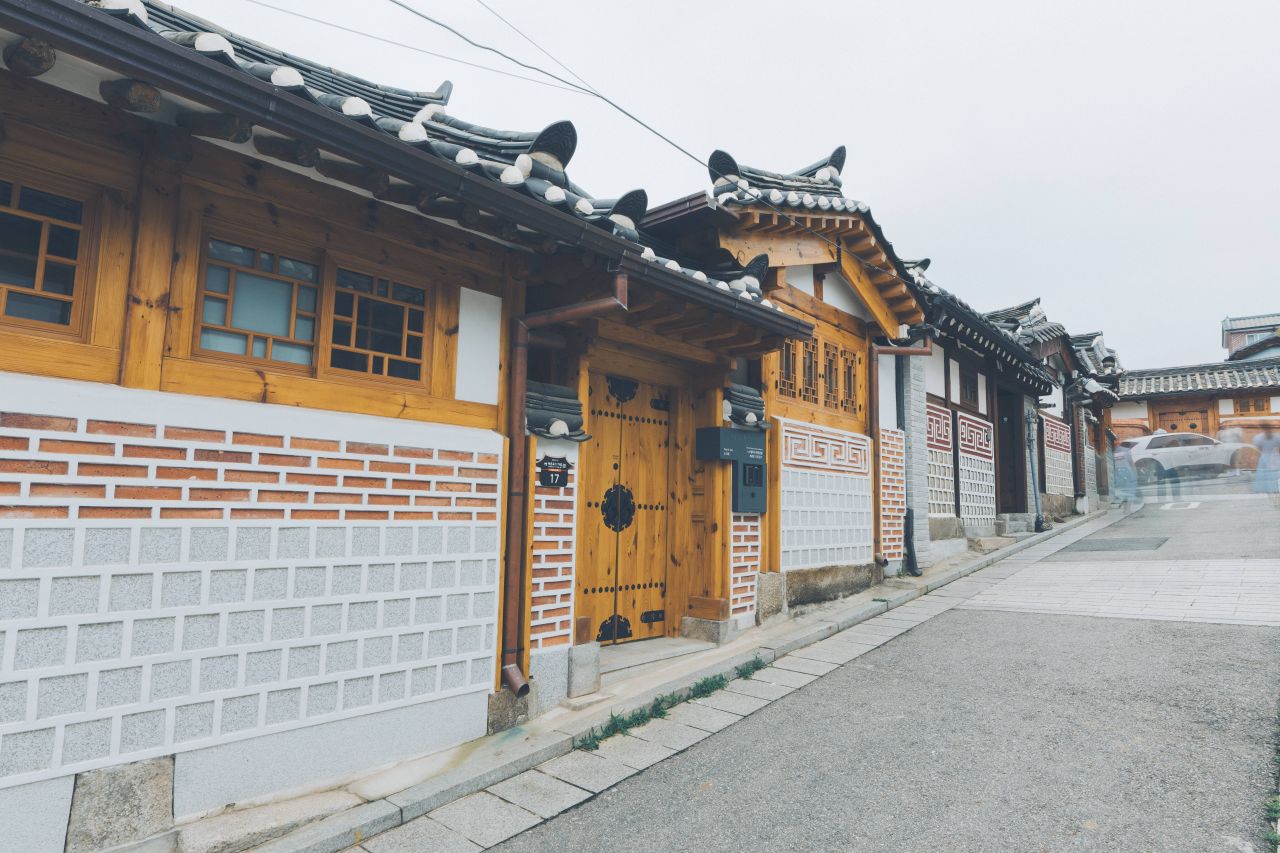
Bukchon Hanok Village restaurants range from decades-old hanjeongsik dining rooms to quiet hanok wine bars, and narrowing that list down can feel overwhelming once you’re standing on one of the sloped alleys between Gyeongbokgung Palace and Changdeokgung Palace. Bukchon is primarily a residential neighborhood of preserved tile-roofed houses, so dining options sit along a handful of streets rather than filling every block — which makes knowing exactly where to go before you arrive genuinely useful. Based on repeated visits to this pocket of Jongno-gu, the restaurants below represent a mix of traditional Korean cooking, contemporary hanok dining, and a couple of Western options tucked into renovated hanok buildings. Each one has a track record of consistent food quality and a setting worth the walk, whether you’re after a quick bowl of dumplings or a slow, multi-course dinner.
Key Takeaways:
- Bukchon Hanok Village restaurants are concentrated on a few streets (Bukchon-ro, Samcheong-ro, Yulgok-ro), not spread evenly through the residential village.
- The list below balances Korean hanjeongsik, dumplings, and stew houses with Italian and French-leaning hanok dining.
- Several restaurants operate inside converted traditional hanok buildings, adding an architectural experience to the meal itself.
- Addresses are listed for each restaurant since Naver Map is the most reliable way to navigate the village’s narrow lanes.
- Nearby Samcheong-dong and Anguk Station offer additional dining if you want to extend the walk beyond this list.
Keun Giwajip (큰기와집)
Featured Menu
Ganjang gejang (soy-marinated raw crab), galbijjim (braised short rib), and eel dishes anchor the menu.
Description
Housed in a traditional tile-roofed hanok on Bukchon-ro, Keun Giwajip serves hanjeongsik-style Korean set dining in a formal, old-fashioned dining room. Over several visits, the ganjang gejang stands out as the dish worth ordering — mixing warm rice with the crab’s roe and paste inside the shell is the customary way to finish it. It suits a proper sit-down lunch or dinner rather than a quick stop, and the setting captures the residential, low-rise character of Bukchon Hanok Village well.
Map
Address: 서울특별시 종로구 북촌로 22 1층
Kkangtong Mandu (깡통만두)
Featured Menu
Mandu jeongol (dumpling hot pot), modeum jeon (assorted pan-fried dishes), and handmade mandu guk (dumpling soup) are the regular draws.
Description
Tucked into a narrow lane just off Bukchon-ro, this dumpling-focused restaurant makes its mandu and noodles by hand daily. In my experience visiting this street multiple times, the mandu jeongol works well for sharing between two or three people, and the modeum jeon makes a good starter if you’re stopping in for an early dinner. It’s a casual, unfussy option in Bukchon Hanok Village’s dining cluster, suited to travelers who want a straightforward Korean meal between stops on a walking tour.
Map
Address: 서울특별시 종로구 북촌로2길 5-6 1층
Bukchon Dodam (북촌도담)
Featured Menu
Beef radish soup (sogogi muguk), pork kimchi stew, bossam beef with house kimchi, stir-fried octopus, and pajeon (green onion pancake) make up the core menu.
Description
Bukchon Dodam occupies a modernized hanok with several separate floor-seating rooms, giving it a quieter, more private feel than many restaurants around Bukchon Hanok Village. The kimchi stew and bossam beef pair naturally with a bottle of makgeolli, and the layout — clean, warm-toned interiors with low tables — makes it a comfortable choice for families or small groups. It works equally well for a mid-afternoon meal after touring the nearby alleys or a relaxed dinner to close out the day.
Map
Address: 서울특별시 종로구 북촌로1길 9
Dugahun (두가헌 레스토랑)
Featured Menu
Set lunch and dinner courses built around steak and other Western-style mains, paired with a curated wine list.
Description
Dugahun operates inside a hanok dating back to the 1910s, run in connection with a nearby gallery space, which gives the dining room an unusual blend of century-old wooden architecture and contemporary Western plating. The course-format menus suit a slower, occasion-worthy meal — a celebratory lunch or an evening reservation rather than a casual drop-in. Its Samcheong-ro address places it close to several of Bukchon Hanok Village’s best-known alleys, making it easy to combine with an afternoon of walking.
View on Naver Map View on Google Maps
Address: 서울특별시 종로구 삼청로 14
Itairijae (이태리재)
Featured Menu
Sea urchin pasta, black truffle pasta, and cicchetti-style small plates are the dishes most worth ordering.
Description
Itairijae sets an Italian kitchen inside a renovated traditional Korean house, with an open kitchen visible from the dining room and a warm, historic atmosphere carried over from the building’s hanok bones. The sea urchin pasta and black truffle pasta are the two dishes that come up most often, and the format suits a date-night dinner or a leisurely weekend lunch. It’s one of the more distinctive dining rooms in Bukchon Hanok Village precisely because the cuisine and the architecture don’t obviously match, yet the combination works.
View on Naver Map View on Google Maps
Address: 서울특별시 종로구 율곡로1길 74-9
The Restaurant (더 레스토랑)
Featured Menu
A French-leaning menu with fusion and Japanese-influenced touches, including steakhouse-style mains.
Description
The Restaurant sits on the upper floor of a multi-level building on Samcheong-ro, with a cafe occupying the ground floor below it. The dining room leans toward refined Western cooking with occasional Japanese and fusion elements, making it a solid option when you want a sit-down meal that isn’t strictly Korean. Its central location along Samcheong-ro puts it within easy walking distance of Bukchon Hanok Village’s main alleys, useful if you’re splitting a day between the two areas.
View on Naver Map View on Google Maps
Address: 서울특별시 종로구 삼청로 54
Frequently Asked Questions
What are the best restaurants to try in Bukchon Hanok Village?
Restaurants like Keun Giwajip for hanjeongsik-style Korean set dining, Kkangtong Mandu for handmade dumplings, and Doore for contemporary Korean tasting menus each represent a different way to eat in the neighborhood. Choosing between them mostly comes down to how much time you have and whether you want a quick meal or a full sit-down course.
Are there affordable dining options in Bukchon Hanok Village?
Yes — casual spots such as Kkangtong Mandu and Bukchon Dodam offer everyday Korean dishes like dumplings, stews, and pancakes that are far more casual than the village’s fine-dining hanok restaurants. For a wider range of budget-friendly cafes and eateries, the surrounding Samcheong-dong and Anguk Station areas are worth a short walk.
Where can I have a solo lunch in Bukchon Hanok Village?
Counter-style or single-dish restaurants work best for solo dining, and Kkangtong Mandu or Bukchon Dodam are both easy to visit alone since their menus are built around one or two shareable dishes rather than a full course format. Fine dining spots like Dugahun and Doore are better suited to two or more people given their course-based menus.
Where can I find ssam (lettuce wraps) near Bukchon Hanok Village?
Ssam isn’t a specialty inside Bukchon Hanok Village itself, since the restaurants here focus more on hanjeongsik, dumplings, and hanok fine dining. Travelers looking for unlimited ssam with grilled meat typically head toward the wider Jongno neighborhood, where several Korean barbecue restaurants specialize in it.
How do I get to restaurants in Bukchon Hanok Village?
The easiest approach is to walk from Anguk Station (Seoul Subway Line 3) toward Bukchon-ro, then use Naver Map to navigate the smaller side streets, since many restaurants sit on lanes that don’t show up clearly on standard map apps. A short taxi or bus ride is also an option if you’d rather not walk uphill from the station.
In Conclusion
Bukchon Hanok Village restaurants aren’t spread evenly across the neighborhood, so knowing which of its narrow lanes to head toward saves a fair amount of backtracking. The seven restaurants above cover most of what a traveler might want on a single trip: a formal hanjeongsik meal at Keun Giwajip, a casual dumpling stop at Kkangtong Mandu, family-style Korean cooking at Bukchon Dodam, Western hanok dining at Dugahun and The Restaurant, Italian pasta at Itairijae, and a seasonal Korean tasting menu at Doore. Rather than trying to fit all of them into one visit, it’s worth picking one or two that match the pace of your day — a quick bite between palace visits, or a slower dinner reservation to close things out. Bring up each address in Naver Map before you set out, since Bukchon’s alleys are easy to lose track of on foot.
Discover more from Korea Visiting
Subscribe to get the latest posts sent to your email.