A Gyeongju day trip from Seoul on the KTX high-speed train packs UNESCO temples, a moonlit palace pond, and 1,300 years of Silla history into roughly 12 hours out the door and back. This itinerary suits travelers who are based in Seoul, don’t have a spare night to spend in Gyeongju, and want to hit the highlights — Bulguksa Temple, the Daereungwon tomb park, Cheomseongdae Observatory, and Donggung Palace and Wolji Pond — without an overnight stay. The route runs in one direction: Seoul Station to Gyeongju Station by KTX in the morning, Bulguksa first, then the walkable historic core in the afternoon, and Wolji Pond after dark before the last train home. I won’t pretend this is a leisurely day — it’s a fast one — but it’s genuinely doable if you sequence the stops correctly and don’t try to add extras.
Key Takeaways
- KTX from Seoul Station to Gyeongju Station takes about 2 hours each way and costs around ₩49,300 (about US$36) one way as of 2026.
- A single day covers Bulguksa, the historic center, and Wolji Pond comfortably — trying to add Seokguram Grotto or Gyeongju World stretches it too thin.
- Save Donggung Palace and Wolji Pond for after dark; the illuminated reflection is the reason most people do this trip.
- Buses between sites run 30–70 minutes; a taxi cuts that to under 20 minutes for about ₩15,000–22,000.
- If you want a slower pace or Seokguram included, one overnight in Gyeongju changes the trip from a sprint to a comfortable visit.
Planning a Gyeongju Day Trip from Seoul by KTX
A Gyeongju day trip from Seoul by KTX starts and ends at Korail‘s Seoul Station, with trains to Gyeongju Station running roughly every half hour from about 05:13 AM to 09:33 PM (2026 schedule, subject to change). The ride itself takes about 2 hours (some trains run closer to 1h50m, others up to about 2h15m depending on stops), and standard-class fares run roughly ₩22,000–55,000 depending on train type and how far in advance you book, with a typical one-way fare around ₩49,300 as of 2026.
I’d book the outbound train for around 7:00–8:00 AM. That gets you into Gyeongju by mid-morning with a full day ahead, and it avoids the tighter midday departures that sell out first on weekends and during cherry blossom or autumn foliage weeks. Book through Korail’s official English booking site or app (see our KTX booking guide) rather than showing up at the counter — same-day standard-class seats on popular departures do sell out, especially Saturday mornings.
One thing that catches first-timers off guard: Gyeongju Station (formerly Singyeongju Station) is not in downtown Gyeongju. It sits well outside the historic center, so the moment you step off the train, you’re not yet anywhere near Bulguksa or the tomb park — you still need a bus or taxi transfer, which I’ve built into the timing below. Check the station location on Naver Map before you go so the distance isn’t a surprise.

Bulguksa Temple — Your First Stop of the Morning
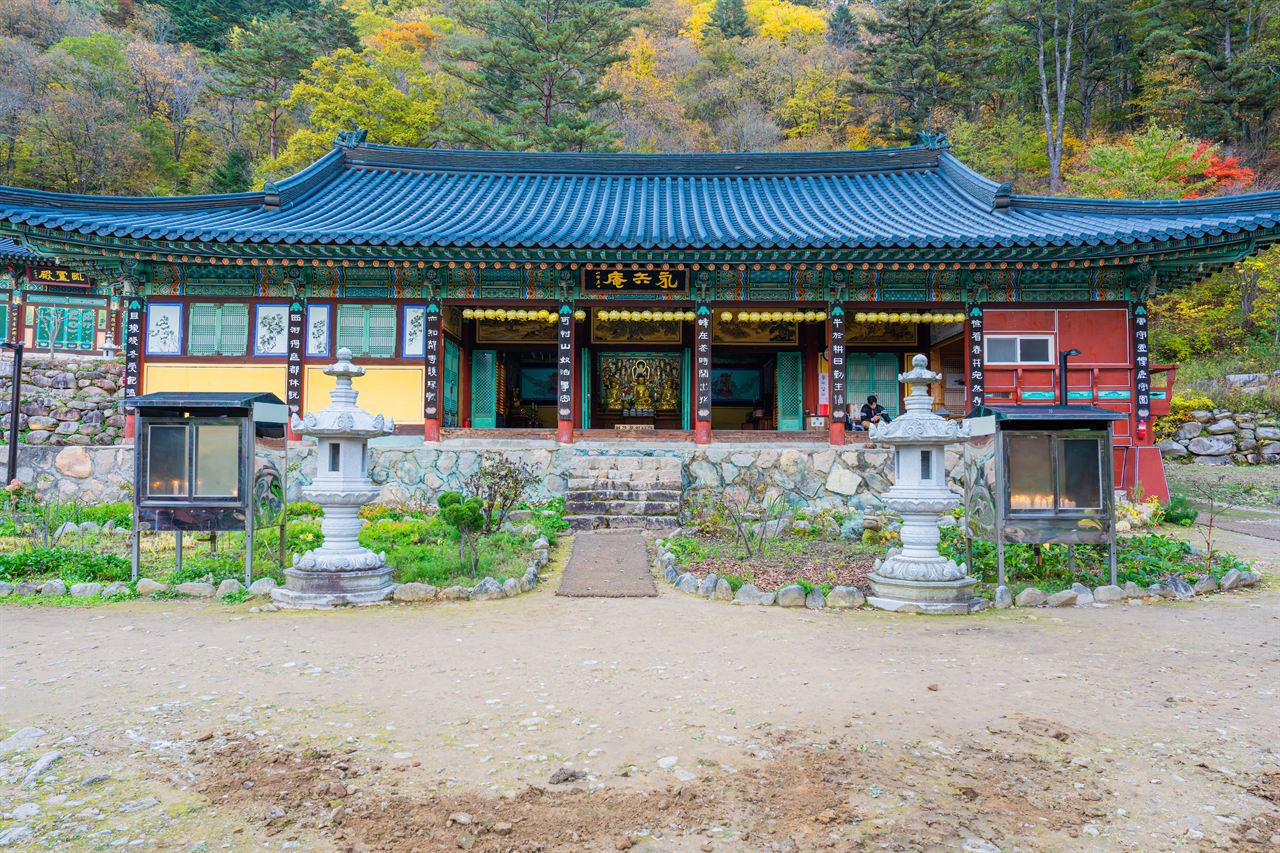
Bulguksa Temple is the single best use of your morning on a Gyeongju day trip, and it’s the one site on this itinerary I wouldn’t cut under any circumstances. From Gyeongju Station, local buses (route 700 runs direct; loop routes 10 and 11 also stop at Bulguksa but need a transfer downtown) reach Bulguksa in about 30–70 minutes for around ₩1,500; a taxi does the same run in 15–20 minutes for roughly ₩15,000–22,000. Given the tight schedule, I’d take the taxi on the way there and save the bus for later once you’re less pressed for time.
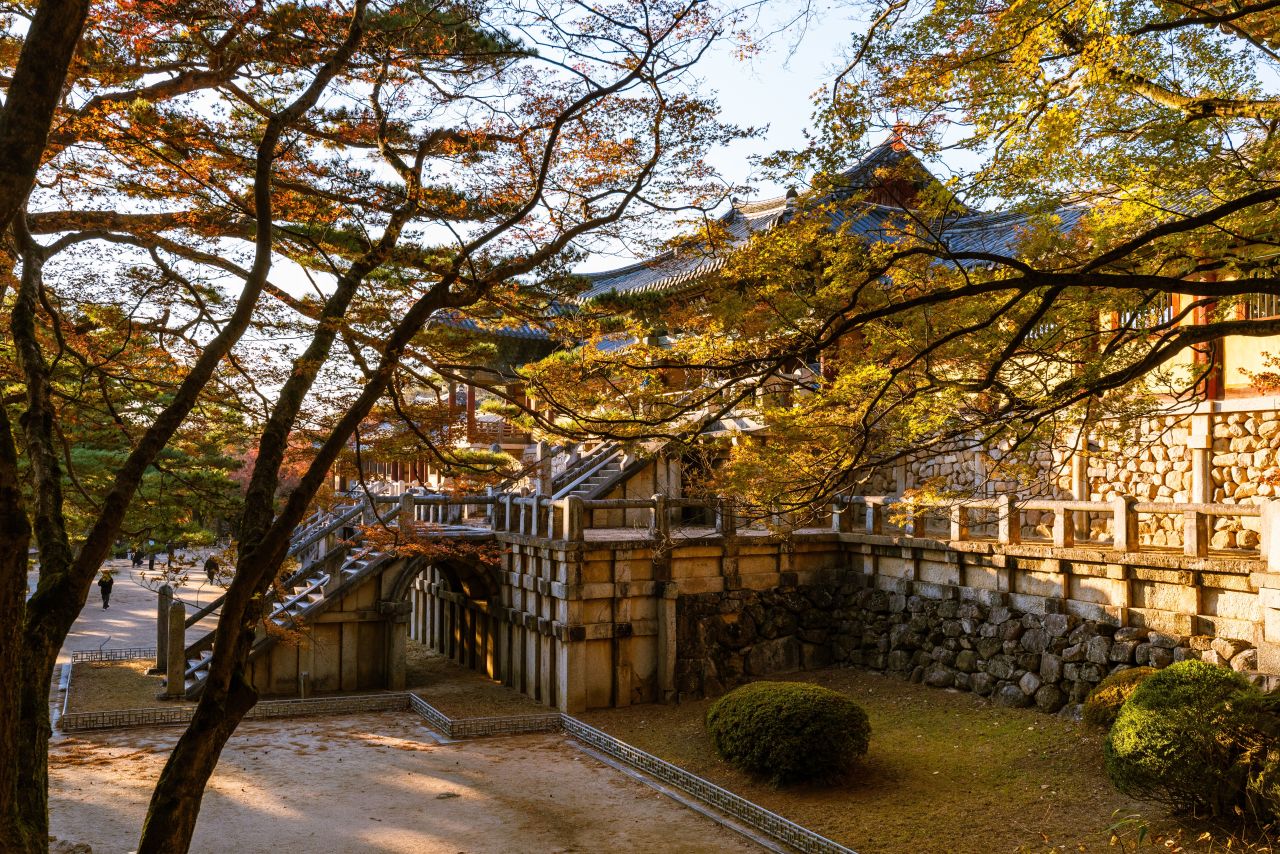
Plan on about 1 to 1.5 hours at the temple grounds. Bulguksa is Korea’s most visited Buddhist temple complex, holding seven national treasures, and the stone terraces and twin pagodas (Dabotap and Seokgatap) are worth slowing down for even on a fast itinerary. Admission is free. The temple is open year-round, with hours varying by season: 07:00–18:00 from March to October, and 08:00–17:30 from November to February. Exit is required one hour after closing. Arriving right at opening keeps you ahead of tour buses, which tend to arrive from mid-morning on. Spring (cherry blossoms) and late October–November (foliage) are the most photographed seasons here, and also the most crowded — expect the paths to feel noticeably tighter on weekend afternoons in those windows. Check the temple’s exact grounds layout on Naver Map or the official Bulguksa site before you go.
Skip Seokguram Grotto on this itinerary — it’s a further bus or taxi ride up the mountain from Bulguksa, and adding it is exactly the kind of overreach that turns a workable day trip into a missed-last-train scramble.
Daereungwon, Cheomseongdae & Hwangnidan-gil in the Afternoon
The afternoon belongs to Gyeongju’s walkable historic core, where Daereungwon, Cheomseongdae, and the Hwangnidan-gil shopping street sit close enough together to cover on foot. From Bulguksa, bus 700 takes about 33–50 minutes to the downtown area (around ₩1,412–1,500), or a taxi covers it in 14–16 minutes for roughly ₩15,000–20,000. I’d take the bus here if you’re comfortable with public transit — the extra time is a reasonable trade for the fare saved, and it drops you close to the historic district.
Daereungwon is a park of massive grass-covered royal tombs from the Silla kingdom, and walking through it takes about 45 minutes to an hour at an unhurried pace. From there it’s a short walk to Cheomseongdae Observatory, a 9-meter stone tower built during Queen Seondeok’s reign (632–647) and considered one of the oldest surviving astronomical observatories in East Asia — it’s compact, so 15–20 minutes is enough unless you want photos at a quieter hour.
This is the natural lunch stop: Hwangnidan-gil is a trendy street of cafés, hanbok rental shops, and small eateries just south of the tomb park. My pick for a fast, satisfying lunch here is Gyeongju beef bulgogi or sundubu (soft tofu stew), both quick to serve and filling enough to carry you through the evening. Save room for hwangnam-ppang, the small red-bean-filled pastry that’s become Gyeongju’s signature souvenir food — bakeries along this street sell it warm, and it travels well if you want to bring some back to Seoul.
Donggung Palace and Wolji Pond at Night
Donggung Palace and Wolji Pond is the payoff stop of this entire day trip, and visiting after dark rather than in daylight is the single most important sequencing decision in this itinerary. The pavilions and their reflection in the pond are lit at night, and that illuminated view — not the daytime version — is what most travelers come to Gyeongju to photograph. From Hwangnidan-gil, it’s a walkable 15–20 minutes, passing near Woljeonggyo Bridge, Korea’s largest reconstructed wooden bridge from the Unified Silla period, which is also lit at night and worth a short detour if you have 10 minutes to spare.
Admission to Donggung Palace and Wolji Pond is ₩3,000 for adults, ₩2,000 for teens, and ₩1,000 for children, and the site stays open until 22:00 with last admission at 21:30 — one of the few Gyeongju attractions built to accommodate evening visitors. Give yourself at least 45 minutes to an hour here; the pond loop is short, but the crowds thicken around the best photo angles in the first hour after sunset, so budget extra standing-and-waiting time if you want a clean shot without other visitors in frame. Check current facility details through the Gyeongju Facilities Management Corporation site before you go, since ticketing details can shift.
From here, budget about 13–14 minutes by taxi back to Gyeongju Station, and add buffer time — you do not want to be the person sprinting for the last KTX around 09:33 PM after losing track of time at the pond.
Getting Around & Practical Tips
Getting around Gyeongju without a car comes down to a choice between city buses (cheap, slower) and taxis (fast, still reasonably priced for short hops) — most travelers on a one-day itinerary end up mixing both depending on how much slack is left in the schedule.
Fast-Paced vs. Relaxed Pacing
The itinerary above is the fast-paced version: Bulguksa, the historic core, and Wolji Pond at night, using taxis for the two longer transfers to buy back time. If you’d rather move at a relaxed pace — lingering at Daereungwon, browsing Hwangnidan-gil shops, or adding a proper sit-down meal instead of a quick lunch — you’ll likely need to drop either the detailed Bulguksa visit or the daytime stroll through the tomb park, since the schedule genuinely doesn’t have slack for both a leisurely pace and every stop. My honest read: if you’re the type who lingers, book an overnight instead of forcing this into one day.
Transit Passes and Apps
A T-money card works on Gyeongju’s local buses the same way it does in Seoul, so there’s no separate pass to buy — just tap on and off. For taxis, ride-hailing apps like KT’s taxi-calling service can be more reliable than flagging one down near the tourist sites, especially in the evening rush after Wolji Pond closes. A national bus-tracking app (sold under names like “National Smart Bus” or similar) can help you check real-time arrival for routes 10, 11, and 700, which cuts down on guessing at unfamiliar stops.
Seasonal Timing and Reservations
Spring cherry blossom season (typically late March–early April) and autumn foliage (late October–mid-November) are Gyeongju’s busiest windows — expect Bulguksa and Daereungwon to feel considerably more crowded on weekends during these stretches. Book your KTX seats in advance for weekend travel in these seasons; standard class on morning departures is the first to sell out. No advance tickets are needed for Bulguksa or Wolji Pond entry — you pay on arrival — but if a special night event or festival coincides with your visit, online ticketing for combined passes (such as Cheonmachong and Wolji Pond together) is worth checking through official Gyeongju tourism channels beforehand.
What People Get Wrong on a Gyeongju Day Trip
The most common mistake is underestimating the Gyeongju Station transfer — because the station sits outside downtown, first-timers who assume it’s a five-minute walk to Bulguksa lose 30–40 minutes they never budgeted, which then compresses everything else in the day.
A close second is trying to add Seokguram Grotto or Gyeongju World theme park to the same itinerary. Both require additional transfers beyond what’s already a tight loop, and the round-trip KTX time alone (about 4 hours) leaves less slack than it looks like on paper — adding either site is what turns a workable day into a genuine rush back to catch the last train.
Booking KTX tickets the morning of travel is another frequent misstep, particularly on weekends or during foliage season: standard-class seats on the most convenient morning departures sell out first, and by the time same-day travelers try to book, only inconvenient off-peak times remain.
Finally, some travelers visit Wolji Pond only during the day and skip the evening return trip — but the daytime pond, while pleasant, isn’t the illuminated reflection view that makes this site famous. Skip the night visit and you’ve effectively missed the reason to include it on the itinerary at all.
Frequently Asked Questions
Is a Gyeongju day trip from Seoul actually feasible in one day?
Yes, it’s feasible if you limit yourself to Bulguksa, the historic core (Daereungwon, Cheomseongdae, Hwangnidan-gil), and Donggung Palace and Wolji Pond at night. With about 2 hours of KTX travel each way plus local transfers, the day runs long — expect to leave Seoul before 8 AM and return after 10 PM — but it covers the highlights that most first-time visitors are looking for.
How much time do I really need in Gyeongju — is a day trip enough?
A day trip is enough to see the core sites, but it doesn’t leave room for Seokguram Grotto, Gyeongju World, or a relaxed pace with long café breaks. If you want to add either of those, or you simply prefer not to rush, one overnight stay turns this from a sprint into a comfortable two-day visit.
Should I visit Bulguksa or the historic center first?
Visit Bulguksa first, in the morning. It’s the site with the widest grounds to cover and benefits most from arriving before tour groups build up, while the historic center (tombs, observatory, shopping street) is compact enough to fit into a shorter afternoon window.
What’s the fastest way to get around Gyeongju without a car?
A mix of taxis for the longer legs (Gyeongju Station to Bulguksa, and Bulguksa to downtown) and walking within the compact historic core is the fastest combination. Local buses (routes 10, 11, and 700) are cheaper but take noticeably longer — worth using only when you have spare time in the schedule.
Is it better to stay overnight in Gyeongju instead of doing a day trip?
An overnight stay is worth it if you want to add Seokguram Grotto, move at a relaxed pace, or see both the daytime and nighttime versions of Wolji Pond without rushing. For travelers with limited time who mainly want the highlight reel, the KTX day trip covers the essentials well.
In Conclusion
A Gyeongju day trip from Seoul by KTX works when you commit to one direction of movement — Bulguksa in the morning, the historic core in the afternoon, Wolji Pond at night — and resist the urge to add Seokguram Grotto or Gyeongju World on top. Book your KTX seats ahead of weekend and foliage-season travel, budget real transfer time out of Gyeongju Station, and treat the illuminated Wolji Pond visit as the non-negotiable finale rather than an optional extra. If your travel style leans toward lingering over checklists, an overnight stay will serve you better than forcing this pace into a single day. Done right, though, this itinerary delivers Bulguksa’s national treasures, Gyeongju’s tomb-studded historic core, and one of Korea’s best night views in a single, well-sequenced day.
Discover more from Korea Visiting
Subscribe to get the latest posts sent to your email.