A Seoraksan day trip from Seoul is doable, but only if you treat it like a logistics problem first and a scenic hike second — the mountain is roughly three hours away each way, and every hour lost to a late bus or a cable car queue is an hour you won’t get back. This itinerary is built for a single, long day: leave Seoul before sunrise, spend your window at Seoraksan National Park, and be back on a bus before the evening traffic thickens on the Yeongdong Expressway. I’ve laid it out hour by hour, with realistic transfer times between the Sokcho bus terminal, the park entrance, the cable car station, and the trailheads, because the biggest mistake people make with this trip isn’t picking the wrong sights — it’s underestimating how much of the day disappears in transit and in line.
Key Takeaways
- A Seoraksan day trip from Seoul takes about 6–7 hours of round-trip travel alone, leaving roughly 5–6 hours at the park itself.
- Catch the earliest express bus (around 6:00 AM from Seoul Express Bus Terminal) — every later departure eats directly into your park time.
- Seoraksan Cable Car tickets are sold on-site only, same-day, with no online pre-booking — arrival order determines your wait.
- National park entrance has been free since May 2023; you’ll only pay for the cable car, local buses, and parking.
- If you can’t commit to a 6 AM start, an overnight stay in Sokcho turns this into a far more relaxed two-day version of the same route.
Getting There — Seoul to Seoraksan National Park
Getting to Seoraksan from Seoul means an intercity bus to Sokcho followed by a short local bus or taxi to the park entrance, with the whole one-way trip taking about 3 to 4.5 hours door to door. Express or intercity buses leave from Seoul Express Bus Terminal (Gangnam) or Dong Seoul Bus Terminal (Gangbyeon) and take about 2.5 to 3.5 hours to reach Sokcho, depending on the route and traffic, at a cost of roughly ₩13,000–₩31,000 one way (2024–2026 pricing). The earliest realistic departure is around 6:00 AM from Seoul Express Bus Terminal — I’d treat this as close to non-negotiable for a day trip, since anything later than 7:30 AM starts to seriously compress your time at the park.
From Sokcho’s bus terminal, local buses 7 or 7-1 run to the Seoraksan park entrance area (Sogongwon) in about 30–45 minutes and cost roughly ₩1,200–₩1,800 with T-money. If you’ve just gotten off a three-hour bus and want to save the wait for a connecting bus, a taxi covers the same distance in about 20–25 minutes for roughly ₩15,000–₩20,000 — worth it if you’re traveling with two or more people splitting the fare, since it buys back nearly half an hour.
Booking your Seoul–Sokcho bus in advance is worth doing, especially on weekends and during autumn foliage season, when popular early departures sell out days ahead. I wouldn’t gamble on walking up to the terminal and getting on the 6:00 AM bus without a reservation.

A Realistic Hour-by-Hour Day Trip Itinerary
The single biggest planning mistake for a Seoraksan day trip is stacking Gwongeumseong Fortress, Sinheungsa Temple, Biryong Falls, and the Ulsanbawi trail into one day — pick two or three, not all four, and build in buffer time for the cable car queue. Here’s a pace that actually works if you’re on the earliest bus out of Seoul.
6:00 AM — Depart Seoul Express Bus Terminal for Sokcho (from Dong Seoul Bus Terminal, the earliest departure is around 7:00 AM).
Around 9:30–10:00 AM — Arrive Sokcho Bus Terminal; transfer to local bus 7/7-1 or a taxi toward Seoraksan National Park entrance (Sogongwon).
Around 10:15–10:30 AM — Arrive at the park entrance. Entry has been free since May 2023, so you walk straight in — no ticket line to budget for here, which is the one part of the day that won’t slow you down.
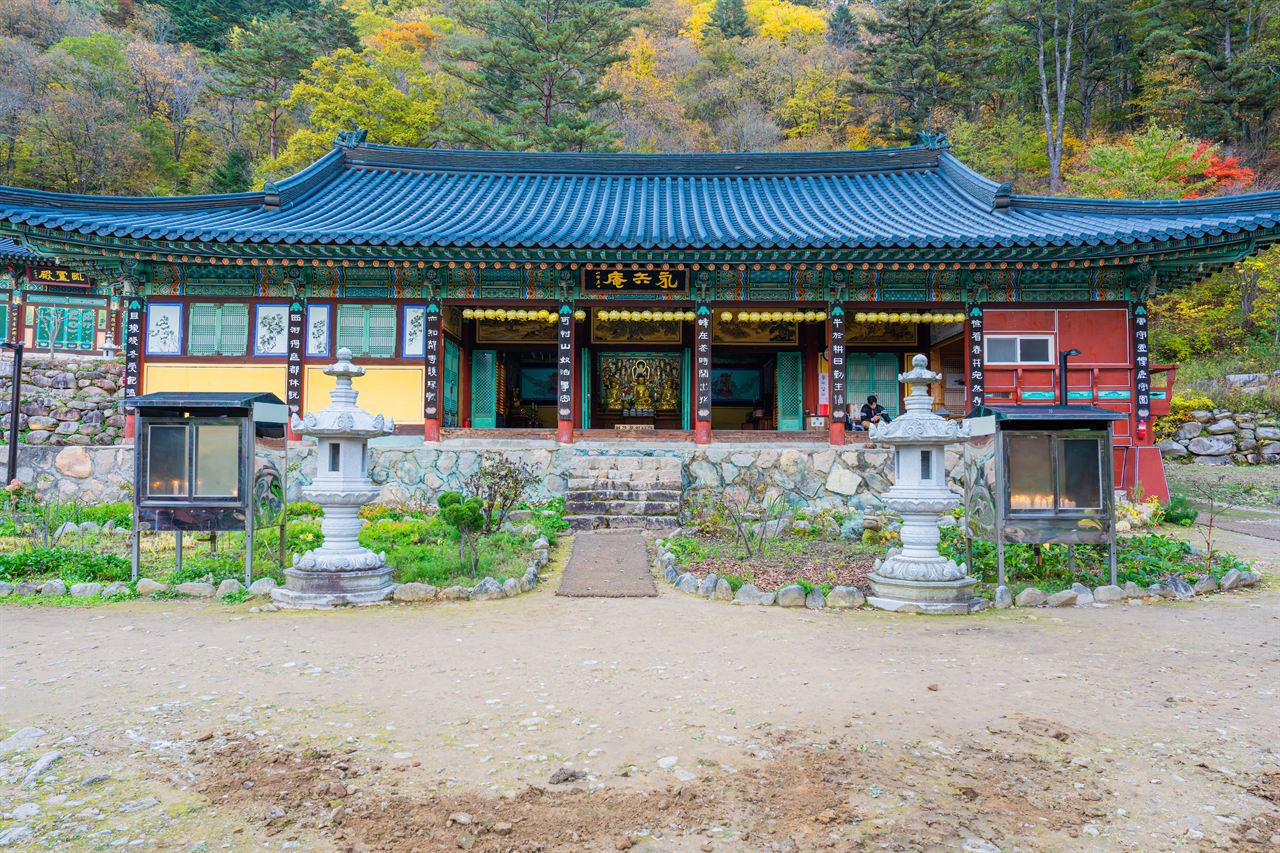
10:30–11:00 AM — Walk to Sinheungsa Temple (Naver Map / Google Maps), a short and flat approach from the entrance. Give it 20–30 minutes to walk the grounds — it’s a working temple, not a long stop, but the Geungnakbojeon Hall and the giant bronze Buddha statue nearby are worth the short detour.
11:00–12:30 PM — Head to the Gwongeumseong Cable Car station. This is where the day’s biggest wildcard sits: tickets are sold on-site only, same day, with no online pre-booking, and the line can easily run 30–60 minutes on a clear autumn weekend. Round-trip is about ₩15,000 for adults and about ₩11,000 for children (37 months–elementary school); senior discounted tickets (about ₩14,000) typically aren’t offered during peak blackout periods such as July 18–August 23 and September 19–November 15, 2026. Ride up, then spend 45–60 minutes walking the short loop to Gwongeumseong Fortress and back — it’s an easy, mostly flat path from the upper cable car station, and the payoff is a wide view over the East Sea and the granite peaks of Outer Seorak.
1:00–2:00 PM — Cable car back down, then lunch near the park entrance (see the Practical Tips section below for what to expect).
2:00–3:30 PM — Choose one: the easy round-trip walk to Biryong Falls (roughly 40–50 minutes each way on a gentle uphill trail, so budget about 1.5–2 hours total), or, if you’re set on hiking rather than sightseeing and have an earlier start under your belt, the lower section of the Ulsanbawi trail. Full return to Ulsanbawi Rock is a demanding 5–6 hour round trip with hundreds of steep steps near the top — that does not fit into this day-trip framework unless you skip the cable car and fortress entirely. My honest read: on a single day trip, Biryong Falls is the better choice for most visitors; save Ulsanbawi for an overnight stay.
3:30–4:00 PM — Walk back to the park entrance and local bus stop.
4:00–4:45 PM — Local bus or taxi back to Sokcho Bus Terminal.
5:00–6:30 PM — Bus back to Seoul (allow extra time here — this route sees the worst traffic of the day).
That schedule leaves essentially no slack, so if your bus out of Seoul runs late or the cable car line is longer than expected, drop Biryong Falls first and head straight back to Sokcho.
Choosing Between Gwongeumseong, Sinheungsa, and Ulsanbawi
For a single day trip, my pick is Sinheungsa Temple plus the Gwongeumseong Cable Car — they pair well because both are short, low-effort stops that still deliver the postcard views of Seoraksan without requiring hours of stair climbing. Sinheungsa costs you almost no time or effort and sits directly on the path in from the entrance, so skipping it barely saves you anything. The Gwongeumseong Fortress loop from the upper cable car station is similarly gentle — mostly flat stone paths — and gives you the widest panoramic view available anywhere in the park without a multi-hour climb.
Skip the full Ulsanbawi hike on a day trip. It’s genuinely one of the most rewarding hikes in the park, but the round trip runs 5–6 hours with a punishing staircase section near the summit, and combining it with the bus journey from Seoul turns your day into a 14–15 hour marathon with almost no buffer for delays. Worth it only if you’re staying overnight in Sokcho and starting the trail by 7 or 8 AM with a full day ahead of you.
Getting Around & Practical Tips
The most important practical rule for a Seoraksan day trip is that nothing about the cable car can be pre-booked — tickets, operating hours (typically about 08:30–17:30, but adjusted daily for weather and posted only one day ahead on the official site), and even senior discount availability all shift day to day, so build in a buffer rather than counting on a fixed schedule. Check the operating hours and any weather-related changes on the day before you go via the official Seoraksan Gwongeumseong Cable Car site.
Seasonal notes: Autumn (mid-October to early November) draws the heaviest crowds by far, when both the bus terminal in Seoul and the cable car line at Sogongwon get noticeably longer — expect the cable car queue to stretch well past an hour on peak weekends. Spring brings a different constraint: certain high-altitude trails are typically closed for fire prevention from early March through May 15, so if you’re planning around a specific trail in spring, confirm it’s open before you build your itinerary around it. Summer (July–August) is humid and prone to sudden mountain fog that can ground the cable car with little warning — always have a plan B that doesn’t depend on it running.
Parking: If you’re driving, the Sogongwon parking area costs about ₩6,000 per day for regular vehicles — cheap enough that it’s rarely the deciding factor between driving and bussing.
Meals near the park: The cluster of restaurants right outside the Sogongwon entrance serves mostly Korean mountain-village staples — think grilled fish, mountain vegetable bibimbap, and pajeon (savory pancakes) meant for hikers refueling before or after a trail. Expect simple, functional food rather than a destination meal; the point of eating here is speed and calories before your next transfer, not a leisurely sit-down.
Should you stay overnight instead? If you can’t lock in that 6:00 AM bus, or you want the full Ulsanbawi hike without rationing every hour, staying one night in Sokcho turns this into a far more comfortable trip — you arrive the evening before, start the park at opening the next morning, and have a full day rather than a compressed 5–6 hour window. Reddit threads on this route consistently land on the same conclusion: locals and repeat visitors lean toward an overnight stay, while first-timers on a tight schedule still pull off the day trip successfully as long as they commit to the early bus.
Common Mistakes on a Seoraksan Day Trip
Most Seoraksan day trip failures trace back to one of three planning errors: a late departure from Seoul, assuming cable car tickets can be booked ahead, or trying to fit in the full Ulsanbawi hike.
Booking a mid-morning bus instead of the earliest one. A 9 or 10 AM departure from Seoul feels reasonable on paper, but by the time you add the 3-hour ride, the local bus transfer in Sokcho, and the walk to the park entrance, you can land after 1 PM — leaving barely enough daylight for the cable car and one short walk before you need to head back for the last comfortable return bus. The math simply doesn’t work backward from a late start.
Assuming you can buy cable car tickets online ahead of time. Seoraksan’s Gwongeumseong Cable Car sells tickets on-site only, same day, and the operating window itself changes daily based on weather — there is no app or website booking flow to fall back on. Travelers who arrive expecting a QR code or pre-purchased slot end up standing in the same walk-up line as everyone else, just with wasted time spent looking for a booking option that doesn’t exist.
Trying to combine Gwongeumseong, Sinheungsa, Biryong Falls, and Ulsanbawi in one visit. Each of these sounds like a quick stop when read as a list online, but together they add up to more walking and queueing time than a single day trip realistically allows once round-trip bus travel is factored in. Pick two, at most three, and accept that Ulsanbawi’s full trail belongs to an overnight itinerary, not a day trip.
Underestimating the return trip traffic. The bus back to Seoul in late afternoon, especially on autumn weekends, can run noticeably longer than the outbound trip due to Yeongdong Expressway congestion. Padding your planned return time by 30–45 minutes avoids a stressful dash to the terminal.
Frequently Asked Questions
Is a Seoraksan day trip from Seoul actually worth it?
Yes, but only if you commit to an early departure — the earliest bus out of Seoul, around 6:00 AM, is what makes a day trip realistic rather than rushed. With that start, you get a genuine 5–6 hours at the park, enough for Sinheungsa Temple, the Gwongeumseong Cable Car and fortress loop, and either lunch or a short walk to Biryong Falls.
Do I need to book the Seoraksan cable car in advance?
No — Gwongeumseong Cable Car tickets are sold on-site only, same day, and cannot be pre-booked online. Arrive as early in your park visit as possible, since the walk-up line grows through the late morning, especially on autumn weekends.
Is Seoraksan National Park free to enter?
Yes, the national park entrance fee was abolished in May 2023, so entry itself is free. You’ll still pay separately for the cable car (about ₩15,000 round-trip for adults) and for parking if you drive (about ₩6,000 per day).
Should I hike Ulsanbawi Rock on a day trip?
Generally no — the full round trip to Ulsanbawi Rock takes about 5–6 hours with a steep staircase section near the top, which doesn’t fit alongside the cable car, temple, and multi-hour bus journey in a single day. It’s a better fit for travelers staying overnight in Sokcho who can start the trail early with a full day free.
What’s the best season to visit Seoraksan on a day trip?
Autumn (mid-October to early November) offers the best scenery but also the heaviest crowds and longest cable car queues, so arrive as early as possible. Spring visitors should check whether their planned trail is affected by fire-prevention closures, which typically run from early March through May 15 on certain high-altitude routes.
In Conclusion
A Seoraksan day trip from Seoul rewards careful sequencing more than ambition — the trip works when you accept that transit alone will consume more than half your day, and plan your park time around that reality rather than around a wishlist of every trail and landmark. Lock in the earliest bus you can, treat the cable car line as an unpredictable variable rather than a fixed stop, and choose two or three sights instead of four. If your schedule can’t absorb a 6:00 AM start, an overnight stay in Sokcho turns the same route into a far more comfortable two-day trip and opens up the full Ulsanbawi hike. Either way, check the cable car’s daily operating status the evening before you go, since weather can shift it with little notice.
Discover more from Korea Visiting
Subscribe to get the latest posts sent to your email.