If you’ve already spent a morning weaving through selfie sticks and hanbok rental crowds at Gyeongbokgung, the idea of another palace visit might sound exhausting rather than exciting — which is exactly why a Gyeonghuigung Palace visitor guide matters before you write off palace-hopping altogether. This is the palace most first-time Seoul visitors walk past without noticing, tucked a few minutes off the main tourist track near Gwanghwamun, and that’s precisely its appeal: no timed-entry lines, no crowd control ropes, no scrambling for a clear photo angle. You won’t get the sprawling grandeur of Korea’s largest royal complex here, and that’s worth knowing upfront so you don’t arrive with the wrong expectations. What you will get is a quiet, walkable courtyard where you can actually hear your own footsteps on the stone path, free admission, and an easy add-on to a Seoul Museum of History visit or a walk toward Deoksugung. Here’s what to know before you go.
Key Takeaways
- Gyeonghuigung Palace offers free admission and is consistently one of the least crowded of Seoul’s five royal palaces.
- It sits within a 7–10 minute walk of Seodaemun or Gwanghwamun subway stations (Line 5).
- Less than 10% of the original palace structures survive, so expect a smaller, more contemplative site than Gyeongbokgung.
- Admission here is already free, so the hanbok discount that applies at paid palaces like Gyeongbokgung won’t add anything extra — but you’ll still get better photo backdrops with fewer people in frame.
- Pairing it with the adjacent Seoul Museum of History turns a 20-minute stop into a half-day cultural outing.
📍 Gyeonghuigung Palace — Essential Information
| Address | 45 Saemunan-ro, Jongno-gu, Seoul |
| Opening hours | 09:00-18:00 |
| Closed | Mondays, January 1 |
| Parking | No dedicated parking lot (public transit recommended) |
| Website | www.heritage.go.kr |
| Best time to visit | Least crowded on Tuesdays; busiest on Thursdays (Korea Tourism Organization crowd forecast) |
| Map | Google Maps · Naver Map |
Gyeonghuigung Palace at a Glance
Why visit: After the crowds of Gyeongbokgung or Changdeokgung, Gyeonghuigung offers something rare in central Seoul — open courtyard space with almost no one else in it, making it easy to slow down and actually look at the architecture instead of navigating around tour groups.
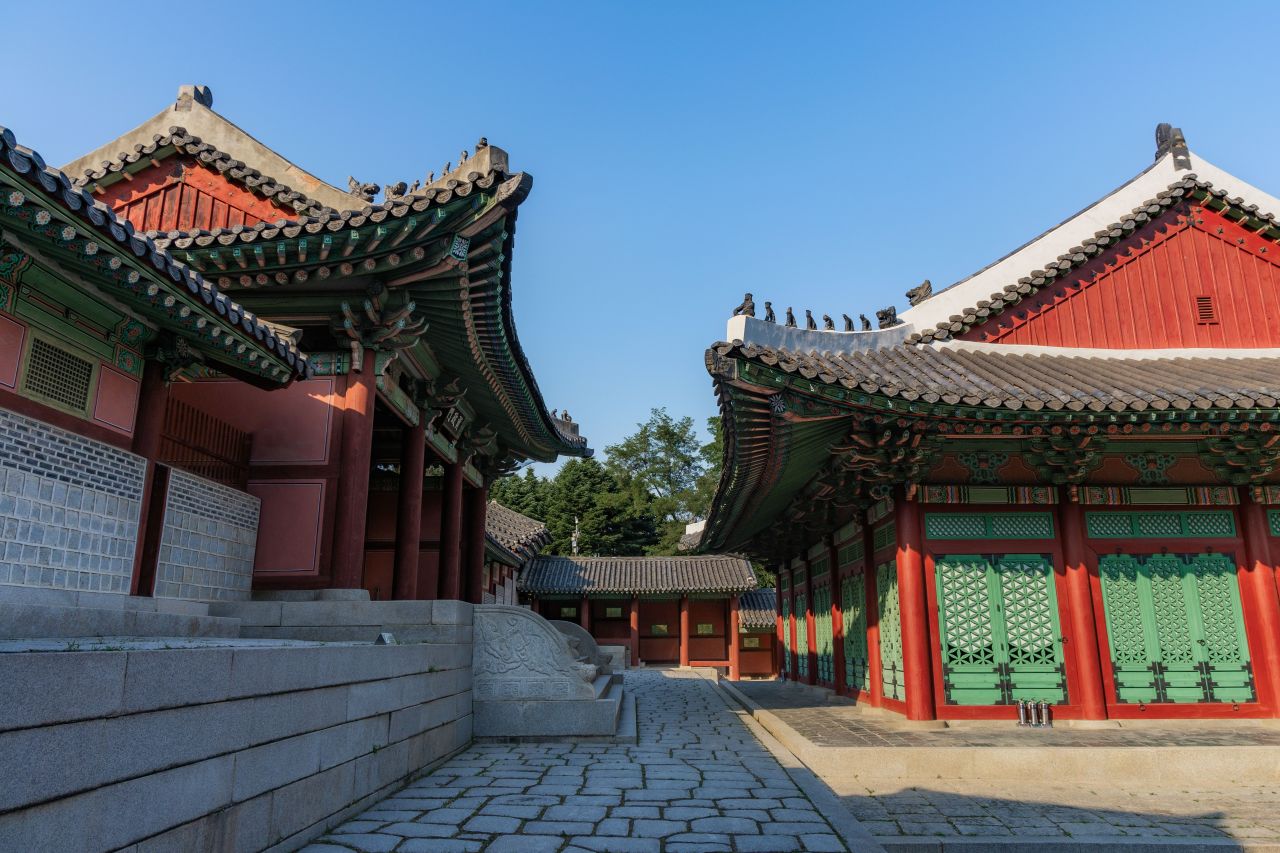
What you will see and experience: A reconstructed main hall (Sungjeongjeon) and surrounding courtyard, stone staircases, and traditional gates set against a backdrop of modern office towers — a visual contrast that photographs well and tells its own story about the site’s history.
Getting there: Most visitors arrive via Seodaemun Station (Line 5), Exit 4, about a 7–10 minute walk, or Gwanghwamun Station (Line 5), Exit 7 or 1, roughly 10 minutes on foot; City Hall Station (Line 2) is about a 15-16 minute walk away.
Tickets and admission: Free for all visitors — no ticket booth, no reservation, no fee to budget for.
Tips from past visitors: Repeat visitors consistently note that going early on a weekday or right after opening yields the emptiest courtyard, and that wearing a hanbok makes for noticeably better, people-free photos.
Nearby spots worth combining: The Seoul Museum of History sits directly next door and is the most natural pairing; Gyeongbokgung Palace is also within reasonable walking distance if you want to compare the grand and the quiet in the same day.

Is Gyeonghuigung Palace Worth Visiting?
Gyeonghuigung Palace is worth visiting if what you want from a palace stop is calm, uncrowded space rather than sheer scale — it will disappoint you if you’re expecting something on the level of Gyeongbokgung. Travelers who’ve already toured several of Seoul’s grand palaces sometimes describe Gyeonghuigung as unremarkable on its own, and it’s true that the reconstructed architecture echoes what you’ve seen elsewhere. But that comparison misses the point of visiting it at all. Gyeonghuigung isn’t competing on grandeur; it’s the palace you visit when your legs are tired from Gyeongbokgung’s sprawling grounds and you still want ten more minutes among traditional buildings without fighting for photo space. It also rewards visitors who care about history over spectacle: this was once known as the “Western Palace,” used as a royal residence from 1616 onward, and understanding that less than 10% of the original structures survived — first lost to an 1829 fire, then dismantled during the Japanese occupation — adds real weight to what looks, at first glance, like a modest courtyard. If your itinerary already includes two or three major palaces, treat Gyeonghuigung as a 20–30 minute detour rather than a standalone destination, and you’ll likely leave satisfied rather than underwhelmed.
How Crowded Does Gyeonghuigung Palace Get?
Gyeonghuigung Palace stays noticeably quieter than Seoul’s major royal sites throughout the week, though it still has its own rhythm of busier and slower days. According to Korea Tourism Organization’s 30-day relative concentration tracking, the palace runs at an average crowd index of about 77.7 out of 100, with Tuesdays consistently the quietest and Thursdays the busiest — a pattern that’s the reverse of what many visitors assume, since Thursday isn’t typically thought of as a peak tourist day. For comparison, Gyeongbokgung’s own crowd data shows Wednesdays as its calmest and Saturdays as its peak, which means a Wednesday visit to Gyeongbokgung followed by a Thursday stop at Gyeonghuigung won’t necessarily line up with your quietest possible schedule — worth checking both if you’re trying to time a low-crowd palace day. In practice, even on a “busy” Thursday, Gyeonghuigung’s courtyard rarely feels crowded compared to the tour-group density at Gyeongbokgung or Changdeokgung; the difference is more about having the space mostly to yourself versus sharing it with a handful of other visitors rather than large-scale congestion.
Best Time to Visit for Photos and Atmosphere
The most photogenic window at Gyeonghuigung tends to fall in the hour after opening, when low morning light hits the courtyard stonework and almost no one else has arrived yet. Spring brings a scattering of cherry blossoms along the palace’s edges — subtler than the dedicated blossom-viewing spots elsewhere in the city, but a nice, uncrowded alternative if you want flowering trees without the crowds that gather at more famous locations. Autumn turns the surrounding trees toward warm color, and because the palace backs onto a skyline of modern buildings, it’s one of the few traditional sites in Seoul where you can frame a single photo that includes both a Joseon-era gate and a glass office tower — a contrast worth deliberately composing for rather than cropping out. For that “old meets new” shot, position yourself near the main courtyard facing the hall, low enough that the rooflines of Sungjeongjeon rise against the towers behind it. Overcast or light-rain days, while not conventionally “ideal” weather, are popular among visitors chasing a quieter, moodier atmosphere — the stone courtyard holds reflections well, and rain naturally thins out foot traffic even further. If your trip coincides with the K-Royal Culture Festival — held each spring and fall, with a traditional parade at Gyeonghuigung — you’ll trade some of that solitude for a rare chance to see costumed performances in the palace setting.
Getting to Gyeonghuigung Palace from Around Seoul
Reaching Gyeonghuigung Palace is straightforward from almost anywhere in central Seoul thanks to its position near three separate subway lines. From Seodaemun Station on Line 5, take Exit 4 and walk roughly 7–10 minutes; this is the most direct route if you’re coming from western Seoul. From Gwanghwamun Station, also on Line 5, Exit 7 or Exit 1 leads to a comparable 10-minute walk, and this option works well if you’re combining the palace with a stop at Gwanghwamun Square beforehand. City Hall Station, served by Line 2, is about a 15-16 minute walk away, and is the better choice if you’re arriving from the Myeongdong or Seoul City Hall area. If you’d rather skip the walk entirely, any bus that stops at “Seoul Museum of History” (서울역사박물관) will drop you essentially at the palace’s front door, since the museum sits directly beside the palace grounds. There’s no palace-specific parking lot to speak of for those driving, so public transit or a short taxi ride is the more reliable option, especially given how central and walkable this part of Jongno-gu is.
Pairing Gyeonghuigung with the Seoul Museum of History and Jeongdong-gil
The single best add-on to a Gyeonghuigung visit is the Seoul Museum of History, which sits immediately adjacent and covers the city’s history from prehistoric settlement through the Joseon era to modern development — useful context if the palace’s own history left you wanting more detail on how Seoul actually grew around it. Because the two sites share a plaza, it’s easy to treat them as a single stop rather than two separate errands: walk the palace courtyard first while the morning light and low crowds are best, then move into the museum for an air-conditioned, sit-down pace once you’ve covered the outdoor grounds. For visitors with more time, the area west of the palace connects toward Jeongdong-gil, a quieter stretch of central Seoul lined with older buildings and a noticeably slower pace than the main Gwanghwamun corridor, eventually leading toward Gyeongbokgung Palace if you want to compare Seoul’s largest palace with its smallest and quietest in a single afternoon. This stretch is less about specific landmarks and more about the walk itself — a rare pocket of central Seoul where the pace slows down between two major historical sites.
How Gyeonghuigung Compares to Seoul’s Other Palaces
If you’re deciding which of Seoul’s palaces deserve your limited time, Gyeonghuigung’s honest selling point is quiet over quantity — it won’t match the scale of Gyeongbokgung or the layered gardens of Changdeokgung, but it also won’t demand the hour-plus you’d spend properly touring either of those. Compared to Gyeongbokgung Palace, which operates on a seasonal schedule and draws Saturday crowds intense enough to require patience navigating the main courtyard, Gyeonghuigung offers a fixed, simpler layout you can fully see in well under an hour. Compared to Changgyeonggung Palace, another palace travelers often ask about when weighing lesser-known options, Gyeonghuigung is more central and easier to combine with a Gwanghwamun-area day, though Changgyeonggung’s rear gardens offer more greenery if that’s what you’re after. The honest takeaway from repeat palace visitors is that Gyeonghuigung works best as a second or third palace on a Seoul itinerary rather than the first — it’s most appreciated by people who already have a comparison point for what a “busy” palace feels like.
Frequently Asked Questions
Is Gyeonghuigung Palace less crowded than other major palaces?
Yes — Korea Tourism Organization crowd data puts Gyeonghuigung at a relative concentration averaging about 77.7/100 over a 30-day period, with Tuesdays quietest and Thursdays busiest, but in practical terms it consistently feels far less crowded than Gyeongbokgung or Changdeokgung on any given day. Most visitors will find the courtyard easy to move through and photograph without waiting for gaps in foot traffic.
Is Gyeonghuigung worth visiting if I’ve already seen Changgyeonggung or other palaces?
It depends on what you’re looking for: if you want more grand architecture, you may find it repetitive, but if you want a quiet, uncrowded space to slow down after a busier palace visit, it’s worth the short detour. Many travelers treat it as a complementary stop rather than a standalone destination.
Is there an entrance fee for Gyeonghuigung Palace?
No — admission is free for all visitors, with no ticket purchase or reservation required.
What remains of the original palace structure?
Less than 10% of the original Gyeonghuigung Palace survives today; most of it was lost to an 1829 fire and later dismantled during the Japanese occupation, with the current buildings, including the main hall, being modern reconstructions. This is worth knowing beforehand so you can appreciate the site’s historical significance rather than expecting an untouched original structure.
Should I wear a hanbok to visit Gyeonghuigung?
Wearing a hanbok is a popular choice among visitors — it typically qualifies for free entry perks at Seoul’s paid palaces, though that perk doesn’t add anything extra here since Gyeonghuigung is already free for everyone. The real benefit at Gyeonghuigung is photographic: noticeably better shots given how few other visitors are usually in the background. It’s a low-effort way to enhance the visit if you’re already renting a hanbok for other palace stops that day.
In Conclusion
Gyeonghuigung Palace isn’t the palace that will leave you in awe of Joseon-era grandeur, but it’s the one that lets you actually enjoy being in a palace courtyard without navigating around crowds. Come here with realistic expectations — a compact, reconstructed site best appreciated in under an hour — and pair it with the neighboring Seoul Museum of History or a walk toward Gyeongbokgung to round out your day. Arrive early on a weekday, bring a hanbok if you’re already renting one elsewhere, and treat this as the calm counterpoint to Seoul’s busier royal sites rather than a headline destination on its own. It’s a short stop, but for many first-time visitors, it ends up being the most peaceful part of an otherwise packed palace-hopping day.
Discover more from Korea Visiting
Subscribe to get the latest posts sent to your email.